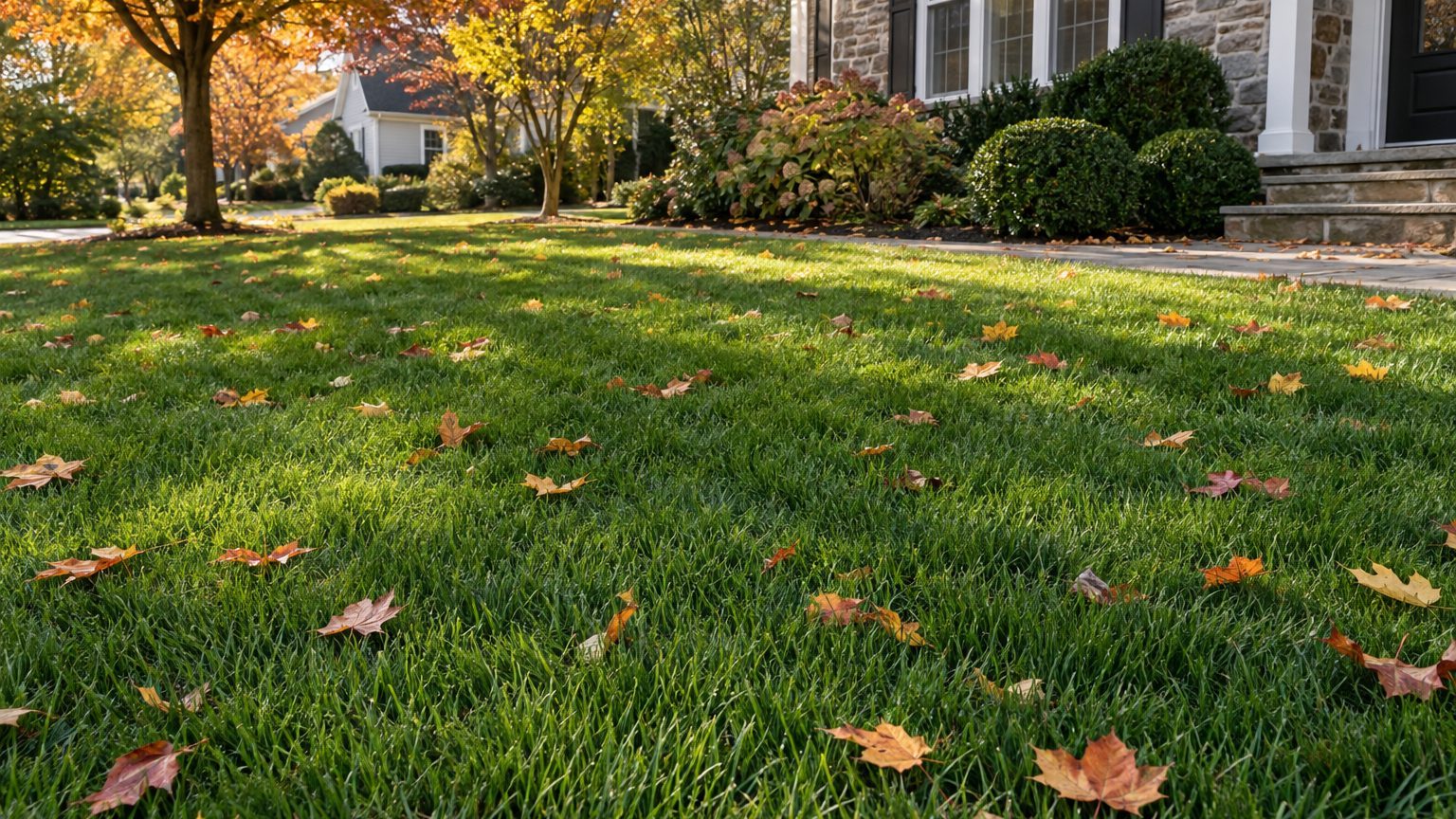
Early spring in Pennsylvania means a few warm afternoons, a lot of mud, and neighbors eyeing their lawns for the first green. The grass wakes slowly, and what you do in each month decides whether it thickens up or fights weeds and heat all summer.
What to Do Each Month in a Pennsylvania Lawn

Pennsylvania lawns are mostly cool-season grasses, which grow hardest in spring and fall and sulk in July. The months below follow that rhythm, with the best time for each job named plainly and backup options noted along the way.
| Month | In the lawn |
|---|---|
| January | Rest. The grass is dormant, so the spreader stays in the shed. |
| February | Rest. Keep foot traffic off frozen grass, and tune up the mower and sharpen the blade. |
| March | Still mostly asleep. If spring runs warm, you can put down crabgrass preventer this month, though April is better. |
| April | Apply crabgrass preventer now, before the seeds sprout. Start mowing as growth picks up. Aeration, dethatching, seeding and sod all work this month too, though they’re not the best time, and fertilizing also works. |
| May | Fertilize now while growth is strong. Keep mowing. Preventer, aeration, dethatching, seeding and sod work as backups if April slipped by. |
| June | Mow regularly and begin watering as the heat builds. Skip heavy work, since cool-season grass is starting to slow down. |
| July | Water deeply and mow. Brown patches in a dry spell are the grass resting, not always dying. |
| August | Time to renovate. Aerate, dethatch only if thatch is thicker than about an inch, seed, and lay sod. Keep watering and mowing. |
| September | In September, you can seed, lay sod, aerate, dethatch and fertilize. Warm soil and cooler nights help new roots. |
| October | Keep mowing, and clear fallen leaves so they do not smother the grass. Sod can go down this month too. |
| November | Mow until growth stops. A last fertilizer feeding also works this month, and it must go on before the ground freezes. |
| December | Rest. The grass is dormant. |
Pennsylvania — the year and the numbers
- State
- Pennsylvania
- USDA zones
- 5a-7b
- Last spring frost
- March 29 to April 6
- First fall frost
- November 5 to November 16
- Annual rain
- 44 in
- Lawn type
- cool-season
- Source
- NOAA NCEI U.S. Climate Normals 1991-2020, 32F freeze probabilities · Philadelphia
When Does the Lawn Season Start and End in Pennsylvania?
Grass wakes up when the soil warms, not when the calendar says spring. Cool-season seed sprouts once the soil sits between 50 and 65 °F. That makes spring seeding workable. September’s warm ground makes fall an even better window. Warm-season grasses need 65 to 70 °F, and they are uncommon in Pennsylvania yards.
Frost dates tell a different story. In Philadelphia, the last spring freeze usually lands between March 29 and April 6, and that matters mainly for young seedlings, which are tender. Seed put down too early can get nipped by a late cold snap.
In Philadelphia, the first fall freeze arrives between November 5 and November 16. Seed sown in August or September can take root before that, which is the logic of a late-summer start. Growth fades well before the freeze and the mower keeps working until the grass stops.
How the Lawn Calendar Shifts Across Pennsylvania
Philadelphia is the mildest corner of the state, so the dates above lean early, and the rest of Pennsylvania moves later in spring and earlier in fall depending on where you live.
- Philadelphia and the southeast: Spring work generally starts earlier here, and the fall renovation window tends to stay open longer. Summer heat stress can also be a concern.
- The northern tier: Spring runs weeks behind the southeast, so preventer, seeding and the first mowing all wait. Fall seeding should begin at the early end of the window so roots form before hard frost.
- The Alleghenies: Elevation holds the soil cold well into spring and brings frost back sooner in autumn. Treat the later months of each spring window as your best bet and seed early in August.
- Pittsburgh and the southwest: Timing sits between the southeast and the high ground, with the same spring and fall rhythm.
Hardiness zones in the state range from 5a to 7b on the USDA system, reflecting differences in winter cold rather than the full climate.
Lawn Care Timing Mistakes to Avoid in Pennsylvania
Fertilizing Too Late in the Year

State law now blocks lawn fertilizer from December 15 to March 1, and on frozen or snow-covered ground at any time. Feed in May and September instead, with November as a backup.
Spring Seeding in Summer’s Shadow
Seed sown in May has less time to establish before summer heat and drought, and seedlings can struggle in July. If you can, wait for August and September, when warm soil and cooler air let roots settle before winter.
Crabgrass Preventer Applied Late
Preventer works only before crabgrass seed sprouts. Put it down in April; March and May also work, because once the weed is up the product does nothing. Many crabgrass preventers also stop new grass seed from sprouting, so check the label before combining the two.
Where to Get Lawn Advice in Pennsylvania
Local conditions vary enough that a neighbor’s advice from the next valley may not fit your yard. Nearby guidance can fill the gaps in a general schedule.
- Penn State Extension publishes lawn guides on seeding, fertilizing and the state’s fertilizer rules, and it is a good first stop before any big renovation.
- Your county extension office can answer questions about local soil, and it can arrange a soil test before you buy lime or fertilizer in late summer.
Common Questions
Should You Mow a Pennsylvania Lawn Short Before Winter?
Mow at your normal height until growth stops, with the last cut in November. Scalping the lawn does not help, and it leaves crowns exposed to cold.
Can You Seed a Lawn in Spring in Pennsylvania?
Yes, April and May both work, though they’re not the best choice. Seedlings must fight weeds and summer heat before they are established, so they need regular watering.
Do You Need to Water a Pennsylvania Lawn in Winter?
No. Dormant grass needs no watering in winter, and watering matters most from June through August, when heat and dry spells stress the turf.