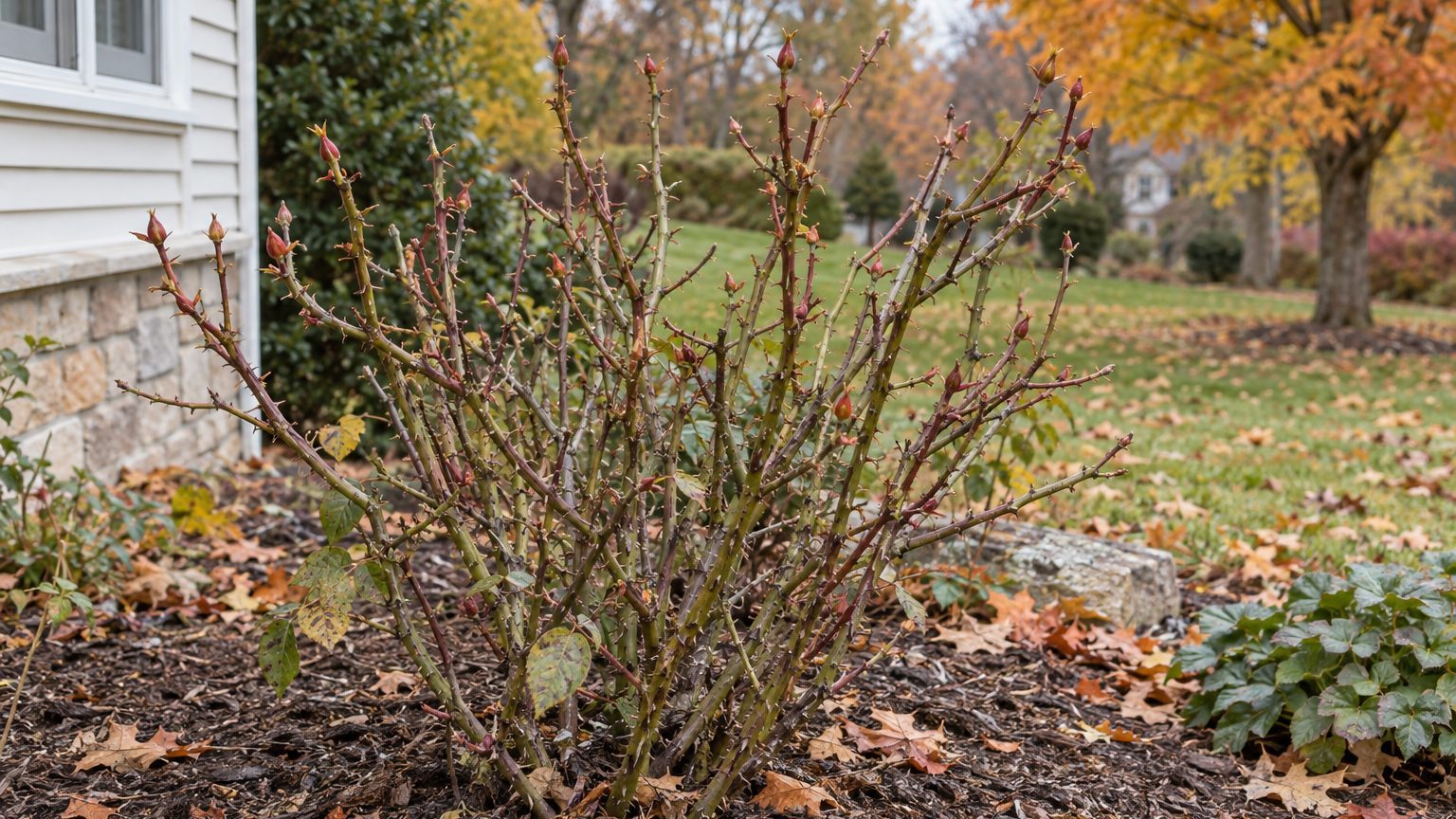
Pruning shears come out when the buds on a rose cane start to plump up after a gray Pennsylvania winter. For most garden roses that moment falls in spring, but a few kinds are cut at a completely different time. Knowing which kind you grow decides whether you get a good flush of bloom or snip off the flowers before they open.
When to Prune Roses in Pennsylvania

In Pennsylvania, prune repeat-blooming roses in March and April. The cut can also be made in February, once the forsythia is in bloom and the winter protection is off the plants.
Hybrid teas, floribundas and modern shrub roses flower on the growth they make this season. A spring cut, made as the canes wake up, sends the plant’s energy into fresh stems that will carry the summer flowers.
| Type of rose | When to prune in Pennsylvania | Why |
|---|---|---|
| Repeat-blooming roses (hybrid teas, floribundas, modern shrub roses) | March and April, or February in early spring | They bloom on new growth, so the cut comes before the season’s canes start to grow |
| Once-blooming roses (old garden roses, ramblers, many climbers) | Right after they bloom, never in spring | They flower once a year on last year’s wood, and a spring cut removes the buds |
Repeat-blooming climbers flower again through the summer, so they follow the spring group and get their cut once winter protection comes off. The timing here suits the Philadelphia area, which is milder than much of the rest of the state. Colder parts of Pennsylvania wait a little longer, and the last section of this article sorts out how much.
Pennsylvania — the year and the numbers
- State
- Pennsylvania
- USDA zones
- 5a-7b
- Last spring frost
- March 29 to April 6
- First fall frost
- November 5 to November 16
- Annual rain
- 44 in
- Lawn zone
- transition-season
- Source
- NOAA NCEI U.S. Climate Normals 1991-2020, 32F freeze probabilities · Philadelphia
How to Tell When Your Roses Are Ready to Prune
The plant gives better signals than the calendar page on the kitchen wall, and a few quick checks in the yard will tell you when the shears can come out.
- Buds along the canes swell and show a touch of color, which means the rose is waking up and the cut will land just as new growth starts.
- Forsythia bushes in the neighborhood open their yellow flowers, a familiar sign that early spring pruning can begin.
- Winter lows are no longer forecast to dip below 20°F, the point at which Pennsylvania guidance says it is safe to uncover roses.
- The ground has thawed and the winter mound can be pulled gently away from the base of the plant, usually in March or April.
- Cane tips that were exposed all winter show green tissue under the bark, so you can see how far back dead wood reaches and cut to healthy growth.
A late cold snap after pruning is a risk, so when the forecast still looks shaky, hold off a little longer rather than cut early.
Should You Prune Roses in Fall or Winter in Pennsylvania?
Mostly no. In fall, the only cut that makes sense is shortening very long canes so the wind does not whip the plant around and loosen its roots. Leave the real pruning for spring, since a severe cut before the plant has settled into dormancy invites new growth that winter will kill.
What the roses need in late fall is protection, not pruning. Hold off on mounding and covering until several killing freezes have passed, which usually means mid-November on. December works too if the freezes arrive late.
Once the canes are covered, leave them alone until spring. The pruning then waits for the signs described above, and leaving extra cane through winter will not harm the rose.
How Rose Pruning Dates Shift Across Pennsylvania
Pennsylvania stretches from the coastal plain to the mountains, and the pruning window slides with it, always in the same direction.
- Philadelphia and the southeast: Milder than the northern parts of the state, so roses wake up earlier here than in the north. Pruning can begin early in the March to April window, and February is a fair choice when the forsythia opens.
- The Northern Tier: Spring arrives noticeably later here than around Philadelphia, so wait until April and let the buds swell before you cut.
- The Allegheny Mountains: Elevation keeps the ground cold well into spring, and winter protection stays on longer. Plan for the later end of the window.
In every region, the swelling buds and the removed winter mound are the cue to start, whatever the date.
Where to Get Rose Advice in Pennsylvania
Local help is close by. Penn State Extension publishes guidance written for Pennsylvania roses, and every county has an office with people who know the conditions where you live.
- Its website has articles on protecting roses through Pennsylvania winters, worth reading before winter protection goes on.
- Your county extension office can answer questions about a specific rose and its pruning, best asked in February or March.
Common Questions
Can You Plant Bare-Root Roses in Pennsylvania in Spring?
Yes. Bare-root roses go in during March and April, before growth starts. Potted roses can be planted later, and May through July also works for them.
When Should You Feed Roses After Pruning?
Start feeding in April, after pruning, and continue through July. Stop after July so the plant does not push soft growth that winter can damage.
Do All Roses Need Winter Protection in Pennsylvania?
No. Hybrid teas, floribundas and grandifloras need protection in cold winters. Hardy shrub roses such as Knock Out or the Explorer series perform well without extra protection.