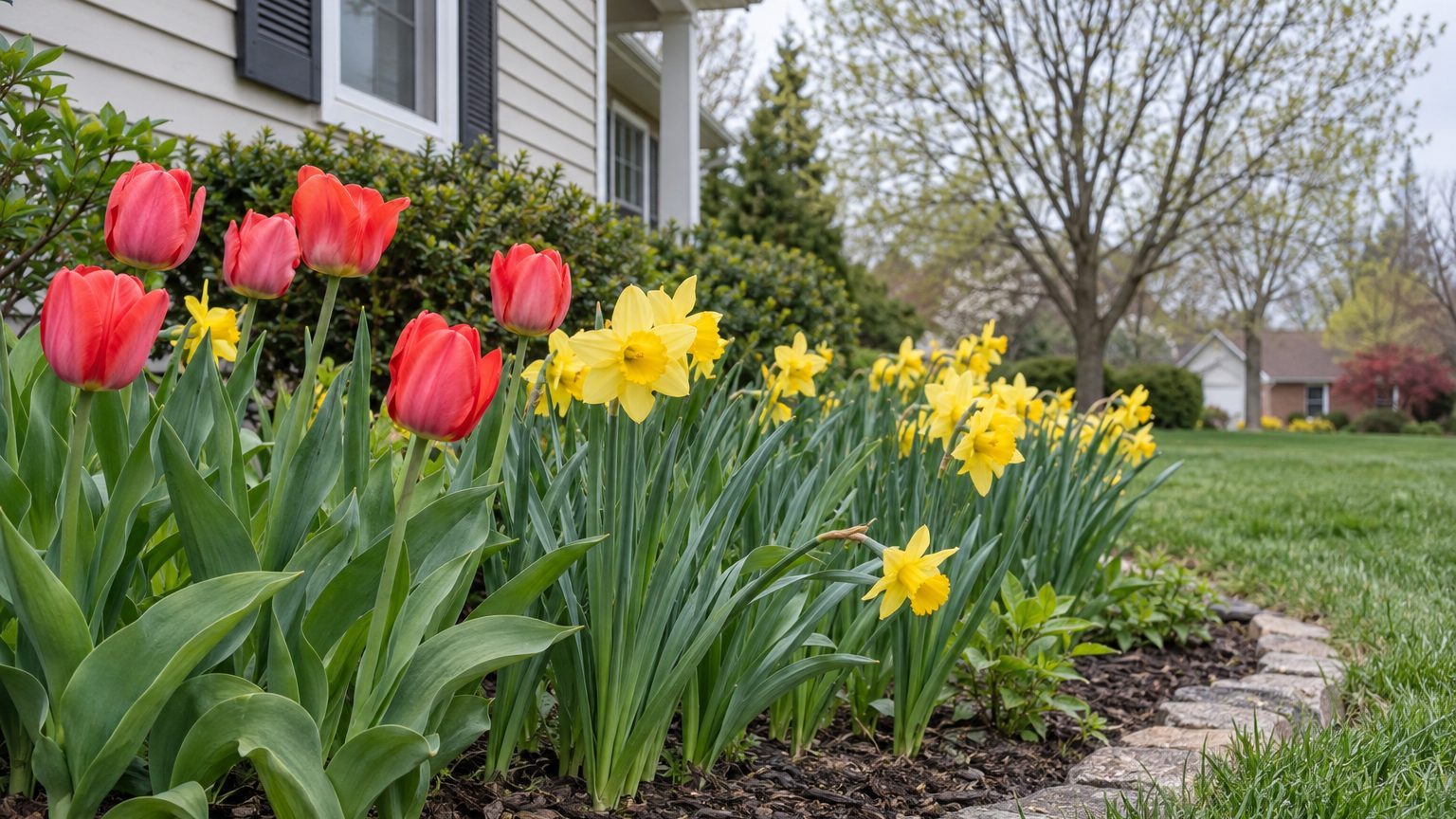
Daffodils nodding along a fence line while the lawn is still brown are one of the surest signs that spring has arrived in Pennsylvania. The bulbs behind that show go into the ground in autumn, and some handle the state’s winters, hungry deer and clay soil far better than others.
Best Spring Bulbs to Grow in Pennsylvania

Daffodils are the dependable choice here, with alliums, hyacinths, fritillaria and scilla close behind because deer, squirrels and rabbits tend to leave them alone. Pennsylvania spans USDA hardiness zones 5a to 7b, so cold-hardiness matters, and these bulbs cope with it. Tulips and crocus can still earn a place, with some protection.
Daffodils
The daffodil is a hardy bulb that overwinters in USDA zones 3 through 8, which covers every corner of Pennsylvania. Plant them in scattered clumps and they naturalize, and they never have to be dug up. They are also rabbit and deer resistant.
After bloom, remove only the faded flowers. Leave the leaves standing until they turn brown, because they feed the bulb for next year.
Alliums
Ornamental onions finish the bulb season, and deer and squirrels pass them by. In Maryland, they are named among the bulbs to pick when deer or squirrels visit the garden, and that advice carries over to Pennsylvania yards with the same visitors.
Hyacinths
Hyacinths belong on the same deer-proof list. Their dense, fragrant spikes work well near a front walk or entry, where you will notice them every time you pass.
Fritillaria
Fritillaria is another bulb that deer and squirrels leave alone. It suits gardeners who want something less common than a tulip, planted in the same season and the same way as the others.
Scilla
Scilla rounds out the animal-resistant group. Tuck it in drifts among daffodils, and the planting stays low-risk where wildlife browses freely.
Tulips and Crocus
Voles, squirrels, rabbits and deer eat tulips and crocus. Tulips are also often short-lived in the garden, so plan to replace them now and then. Plant them near the house or in a protected bed, and lean on daffodils for the long haul.
Pennsylvania — the year and the numbers
- State
- Pennsylvania
- USDA zones
- 5a-7b
- Last spring frost
- March 29 to April 6
- First fall frost
- November 5 to November 16
- Annual rain
- 44 in
- Lawn zone
- transition-season
- Source
- NOAA NCEI U.S. Climate Normals 1991-2020, 32F freeze probabilities · Philadelphia
How to Choose Spring Bulbs for Your Pennsylvania Garden
The right bulb depends on what your yard throws at it. Winter cold, wildlife and the time you want to spend all push the choice in different directions.
Plant in October for most bulbs. September and November also work, depending on how fast the soil cools, and the whole stretch runs from mid-September to late November.
| Your situation | What suits it in Pennsylvania | Why |
|---|---|---|
| Very cold winter | Daffodils | They are hardy bulbs that overwinter in USDA zones 3 through 8 |
| Deer, squirrels or rabbits in the yard | Daffodils, hyacinths, alliums, fritillaria, scilla | Animals leave them alone, while tulips and crocus get eaten |
| Little time to spend | Daffodils | They naturalize in clumps, never need digging and return year after year |
| Short on winter cold | Alliums need cold | They need a chill period to bloom, like tulips and hyacinths |
Tulips fit best where you can protect them and accept a shorter life. Pennsylvania winters usually supply the cold most bulbs need, so chilling is rarely a worry here.
Which Spring Bulbs Suit Different Parts of Pennsylvania
Pennsylvania is not one climate, and the gap between the southeast corner and the high country changes how your bulbs behave.
- Philadelphia and the southeast: This part of the state has an earlier spring than the north, with the last spring frost around March 29 to April 6. Bulbs here wake early, so an early warm spell can expose new shoots to a late freeze.
- The Northern Tier and the Alleghenies: Spring arrives later, so bulbs bloom later than in the southeast. Daffodils are the safest pick in these colder districts because of their hardiness.
Wherever you garden, start from the same planting window and let the local season decide when the flowers open.
Spring Bulb Buying Mistakes to Avoid in Pennsylvania
Planting While the Soil Is Warm
Bulbs set out too early can sprout in the fall, and the tender growth then suffers in winter. Wait until the soil has cooled below about 60°F, which gives roots time to form before the ground freezes without pushing top growth.
A bag of bulbs still unplanted is better planted late than stored. Plant as long as the ground can be dug.
Counting on Tulips to Return
Tulips are often short-lived in the garden, and many yards see fewer blooms each year. Daffodils last longer and are the more reliable perennial bulb. If you love tulips, treat them as a seasonal treat and let daffodils carry the long-term planting.
Cutting the Leaves Too Soon
Green leaves after bloom are still working. Tulips and daffodils flower on the energy their leaves store, so cutting or tying them early shrinks next spring’s show. Let them turn yellow or brown, then clear them away. Hide the fading foliage behind later-leafing perennials.
Where to Get Spring Bulb Advice in Pennsylvania
Penn State Extension publishes guidance on bulbs, including daffodil care. Your county extension office can speak to the soil and conditions in your own neighborhood.
- Penn State Extension offers articles on daffodils and other bulbs, handy to read before you shop for the fall planting season.
- The county office, often with a master gardener program, can answer questions about local soil and wildlife pressure, and a visit in late summer leaves time to act before planting.
Common Questions
When Do Tulips and Daffodils Bloom in Pennsylvania?
Most flowers open from March through May, and the first can appear as early as February in a mild spell. Where you live in the state shifts the timing a little.
How Much Cold Do Spring Bulbs Need to Flower?
Most spring-flowering bulbs need about 12 to 16 weeks of cold. According to Iowa State University Extension, alliums are not the exception: they need a chill period to bloom.
Which Spring Bulbs Start and End the Season?
Snowdrops and winter aconites open the season, and ornamental onions (alliums) close it. Mixing them with daffodils and hyacinths keeps flowers coming through spring.