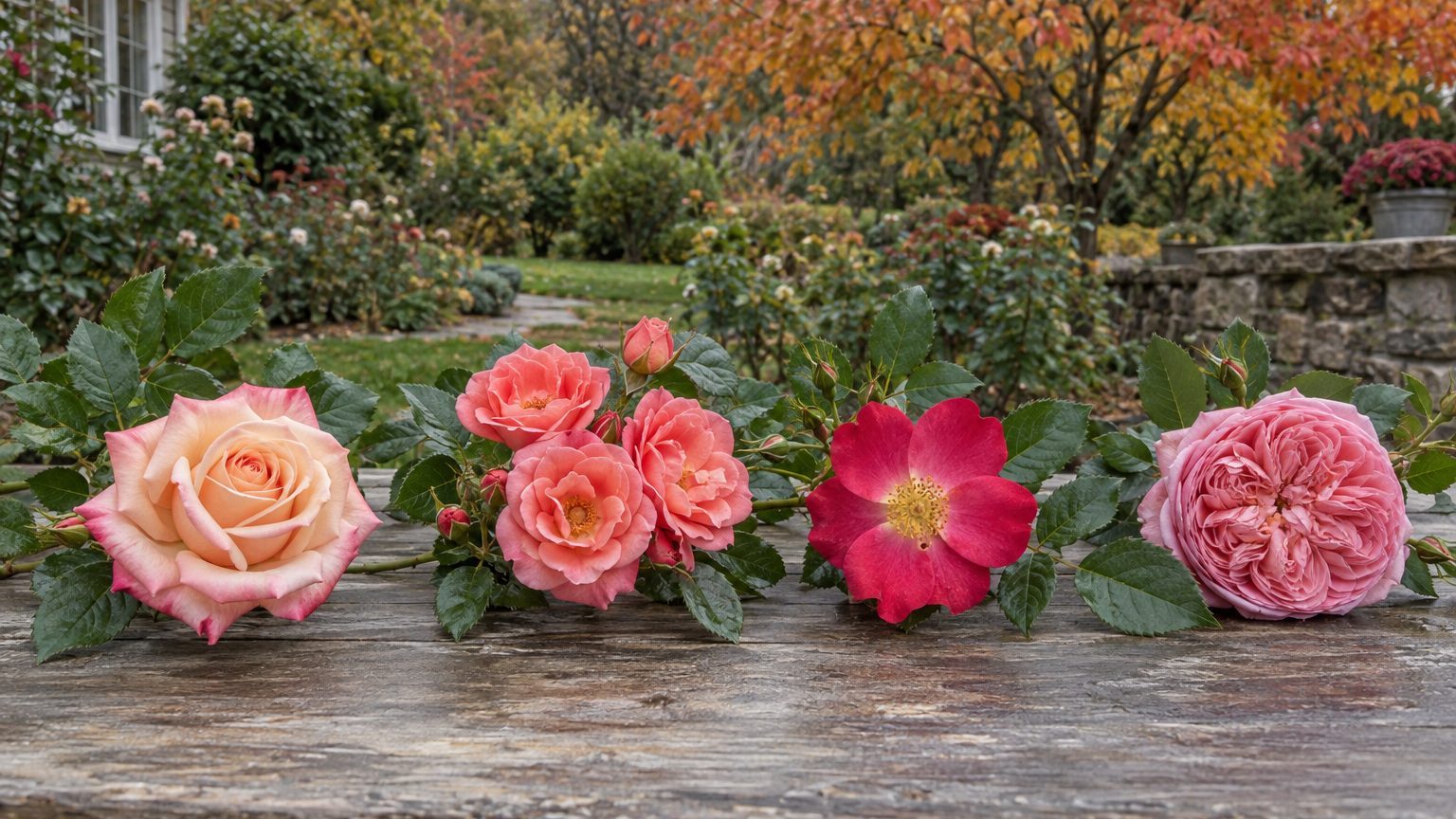
Hybrid tea canes mounded with mulch after several killing freezes tell you something about gardening in Pennsylvania: the roses that need that effort are a choice, not a requirement. Plenty of roses come through the winters here without it.
Best Roses to Grow in Pennsylvania

Hardy shrub roses and many old garden roses tolerate Pennsylvania winters well, while hybrid teas and their relatives need protection; own-root roses may also need protection if they are not hardy enough for the local zone. Pennsylvania spans USDA zones 5a to 7b, so cold hardiness decides more than heat or humidity. Humid summers also make disease resistance as important as bud shape.
Knock Out and Explorer Shrub Roses
Hardy shrub roses such as Knock Out or the Explorer series perform well without extra protection. That makes them the low-effort route for a front yard. Knock Out roses perform well without extra protection.
Old Garden Roses
Many old garden roses are extremely tolerant of cold, while hybrid teas can suffer considerable damage in the same winter. Most shrub, species and old garden roses need little winter preparation. Prune the once-blooming kinds right after they flower, never in early spring, because they bloom on last year’s wood.
Hybrid Teas, Floribundas and Grandifloras
These are the roses most people picture in a cutting garden, and they are not reliably winter hardy. Plan on protecting them every year. If you love the form, plant a few and let hardy shrubs carry the rest of the bed.
Own-Root Roses
An own-root rose grows from a cutting rather than being grafted onto a different rootstalk. If the canes die back in winter, new ones will often emerge from the deep roots. Depending on hardiness compared with your zone, an own-root rose may still want protection.
Climbing Roses
Some climbers are reliably hardy, and others are not. An own-root climbing ‘Cecile Brunner’ has been grown in an exposed site in a USDA zone 6b Pennsylvania garden, but hardiness still depends on the cultivar and site. Give a climber a sheltered wall if you are unsure.
Roses Bred for Colder Zones
A cultivar specially bred to be hardy in zone 4 needs little to no added protection in a zone 7b garden. Check the hardiness rating on the tag and aim lower than your zone. Your margin for a hard winter grows with every zone of difference.
Pennsylvania — the year and the numbers
- State
- Pennsylvania
- USDA zones
- 5a-7b
- Last spring frost
- March 29 to April 6
- First fall frost
- November 5 to November 16
- Annual rain
- 44 in
- Lawn zone
- transition-season
- Source
- NOAA NCEI U.S. Climate Normals 1991-2020, 32F freeze probabilities · Philadelphia
How to Choose a Rose for a Pennsylvania Garden
Start with the winter you actually get, then the summer. A rose rated for a colder zone than yours gives you more winter margin, and a variety bred to resist leaf disease can reduce the need for spraying.
Your own site matters too. An exposed corner is harsher than a sheltered wall, even in the same zone.
| Your situation | What suits it in Pennsylvania | Why |
|---|---|---|
| Very cold winter | Shrub, species or old garden roses, or a cultivar bred for zone 4 | They are reliably hardy and need little winter preparation |
| Humid summer | Knock Out cultivars or other disease-resistant varieties | They resist black spot, and varieties differ widely in disease susceptibility |
| Little time | Hardy shrub roses such as Knock Out or the Explorer series | They perform well without extra protection |
| Love for hybrid teas | Hybrid teas, floribundas or grandifloras with winter protection | They are not reliably winter hardy and are damaged by cold |
For a small space, look at miniature and polyantha roses, since some are reliably hardy. Confirm the rating before you buy, because others in those groups need protection. For advice on heat and drought, ask your county office about local conditions.
Which Roses Suit Different Parts of Pennsylvania
Winter cold and spring timing change from corner to corner of the state, and that shifts how much protection a rose needs.
- Philadelphia and the southeast: the last freezing risk here falls between March 29 and April 6, earlier than in the northern parts of the state. Hybrid teas are easier to keep here, though they still want protection.
- The northern tier: spring arrives later than in Philadelphia, and winters are colder. Lean on hardy shrub roses and old garden roses, and leave winter protection on longer.
- The Allegheny Mountains: spring also runs later here than in the southeast. Exposed sites call for very hardy roses, and a sheltered spot helps any climber.
Wherever you garden, choose by your own hardiness zone first and your site second.
Rose Buying Mistakes to Avoid in Pennsylvania
Buying Tender Roses Without a Plan
Hybrid teas, floribundas and grandifloras are damaged by cold winters. Left unprotected, they lose canes and bloom poorly. Put protection on in November, after several killing freezes have put the plant into dormancy. It can also go on in December. Take it off between March and April, once the ground thaws and lows are no longer forecast below 20°F.
Choosing Disease-Prone Varieties
Hundreds of hybrid roses and cultivars exist, and they vary in how susceptible they are to disease. In humid summers, a prone variety means spotted leaves and regular treatment. Seek out disease-resistant varieties before you buy, and consider Knock Out cultivars if black spot is your concern.
Ignoring Own-Root Roses
A rose on its own roots may be the smarter buy where winters are hard. If the canes die back, new ones often emerge from the deep roots and the plant carries on. Even so, own-root roses can need protection depending on how their hardiness compares with your zone. Match the rating to your garden, then decide how much cover to give.
Where to Get Rose Advice in Pennsylvania
Penn State Extension publishes advice on roses and winter protection written for Pennsylvania gardens, and your county office can speak to local conditions.
- The extension site has an article on protecting roses through Pennsylvania winters, worth reading before November.
- Your county extension office can tell you how your area differs, so call in late winter before you order or prune.
- Bring a cane or leaf sample to the county office when you see spotting in summer.
Common Questions
When Should You Prune Roses in Pennsylvania?
Prune repeat-blooming roses such as hybrid teas, floribundas and modern shrub roses in March or April. It can also be done in February, in early spring when the forsythia blooms and the winter protection is off. Once-blooming roses are pruned right after they flower.
Can You Plant a Rose in July?
Yes, if the rose is in a container. Container roses go in from April through midsummer. Bare-root roses are planted in March or April, before growth starts, though they can also go in during May.
When Should You Feed Roses?
Feed from April through July: after pruning, at first bloom and again in mid-July. Stop by mid-August so new growth can harden off before winter.