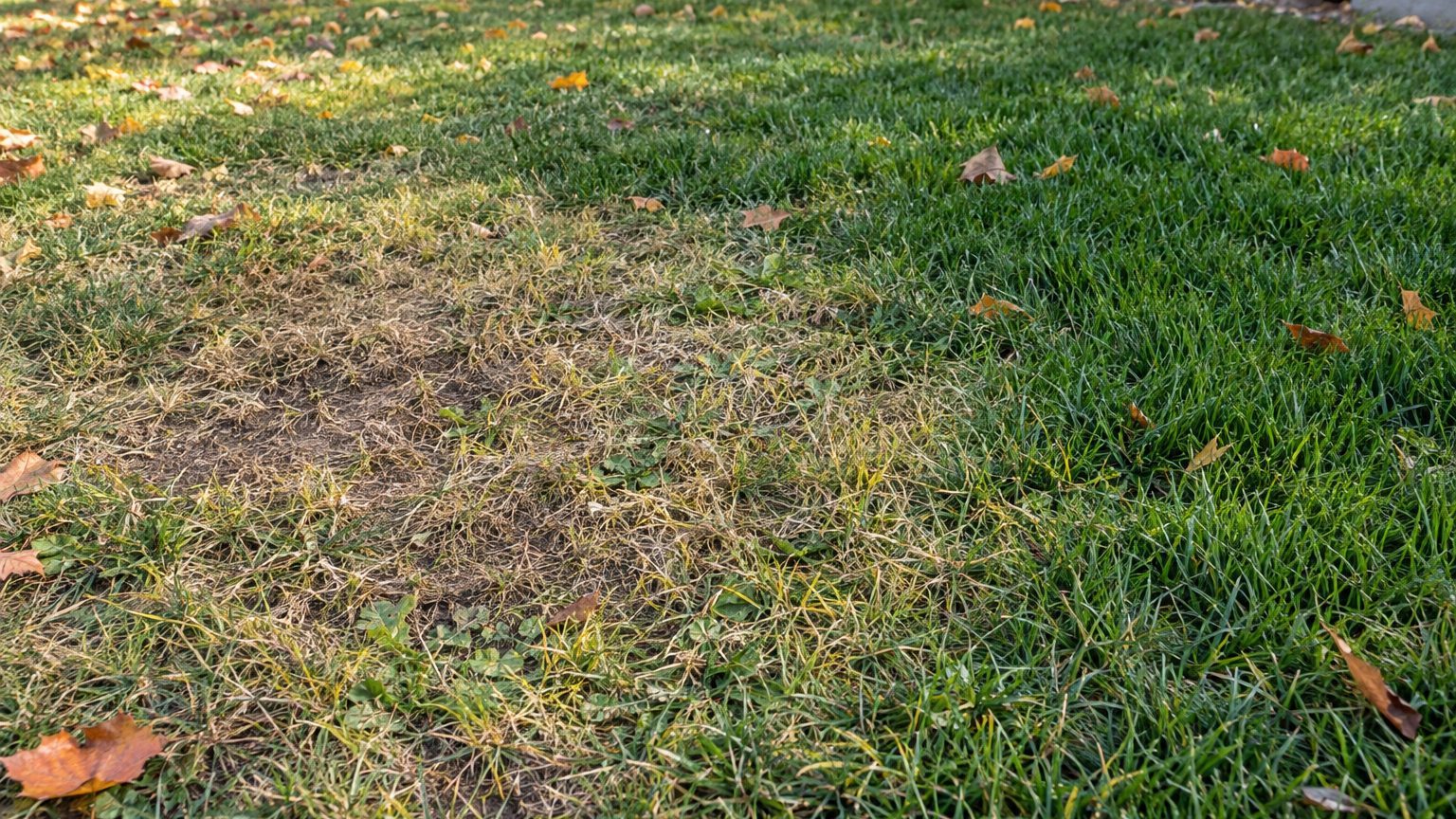
Matted gray circles show up where the last snowbank melts in spring, and by midsummer a few brown patches usually follow. Most lawn trouble in Montana comes from long winters, dry summers, and a few pests and diseases that exploit stressed grass. Knowing what each one looks like, and when it appears, makes the fix simple.
Lawn Pests and Diseases in Montana
Snow Mold

Snow mold appears as the snow melts, leaving round patches of matted, gray or pinkish grass, often where drifts piled up longest. It is common here because snow often sits on unfrozen ground for a long stretch.
Rake the patches gently to fluff the blades and let air in. Healthy grass usually grows back on its own as the soil warms.
Dandelions
Dandelions often appear in thin Montana lawns, with a deep taproot and a flat rosette of toothed leaves. They move into thin turf where the grass can’t crowd them out.
Pull them when the soil is damp so the whole root comes out. A dense lawn does most of the long-term work, so seed thin spots when the calendar allows.
Crabgrass
Crabgrass is a pale green, coarse-bladed grass that spreads flat from the center and fills gaps in summer. It sprouts from seed in warming soil, so the window to stop it comes before you see any.
A pre-emergence preventer goes down in April, and May still works. After it sprouts, pull small plants by hand before they set seed.
Necrotic Ring Spot
This disease leaves rings or crescents of dead, straw-colored grass with a patch of healthy green in the middle. It tends to show up in summer on Kentucky bluegrass lawns that are stressed by heat and dry spells.
Water deeply during the summer months and keep the mower blade high. The damaged rings recover slowly, so reseeding the dead areas is the usual repair.
White Grubs
Grubs are fat, C-shaped, creamy larvae that chew grass roots in late summer. The sign is turf that feels spongy and peels back like a loose carpet, often with birds or skunks digging at it.
Tug at a brown patch. If the grass lifts with no roots holding it, check the soil below for grubs. Healthy, deeply rooted turf tolerates a few of them without much trouble.
Montana — the year and the numbers
- State
- Montana
- USDA zones
- 3a-6a
- Last spring frost
- April 29 to May 10
- First fall frost
- October 1 to October 14
- Annual rain
- 14 in
- Lawn type
- cool-season
- Source
- NOAA NCEI 1991-2020 Climate Normals, 32F freeze probabilities · Billings
How to Tell Which Lawn Problem You Have
Brown grass can mean several things, so compare the shape of the patch with the time of year before settling on a cause. Then tug on the grass to see if it comes up. Roots that let go easily point to insects underground. Roots that hold fast make grub damage less likely, but they do not by themselves distinguish disease from drought.
Symptoms can appear at different times in Montana’s valleys as local soil and weather conditions change.
| What you see | When and where | Likely problem |
|---|---|---|
| Matted gray or pink circles | Right after snowmelt, under old drifts | Snow mold |
| Flat rosettes with deep roots | Spring, in thin turf | Dandelions |
| Coarse, pale clumps spreading outward | Summer, along hot driveways and bare spots | Crabgrass |
| Rings with green centers | Midsummer, in sunny bluegrass | Necrotic ring spot |
| Turf that peels up with no roots | Late summer, with animals digging | White grubs |
A spongy, bouncy feel underfoot with no patchy browning is a different issue, thatch. A layer up to 1/2 inch is healthy. Above that, dethatch or core aerate. Shade matters too, since thin grass under trees is usually a light problem before it is a pest problem.
Where Lawn Problems Are Worst in Montana
Elevation and exposure change how long the growing season lasts, which shifts which problems dominate from one part of the state to another.
- Billings and the Yellowstone Valley: Summers run hot and dry, so drought stress, crabgrass in thin turf and grub damage are the usual complaints. This is one of the milder valleys, so spring comes earlier here than in most of the state.
- Gallatin Valley around Bozeman: Higher ground and a shorter season mean frost can return late, and snow mold is common where drifts linger. Seedlings need extra patience in cold spring soil.
- Flathead Valley near Kalispell: The lake and mountain moisture bring more shade and dampness, which suits moss and disease in tree-covered yards.
- The Hi-Line and eastern plains: Wind and low rainfall dry out the turf quickly, so watering habits matter more than pest control.
Check how your own yard compares with the nearest valley floor before copying a neighbor’s schedule.
Lawn Care Mistakes That Invite Problems in Montana
Mowing Too Short
Scalped grass has little leaf to feed its roots, which lets weeds like dandelions and crabgrass move in. Mowing runs from April through November here, so there is plenty of time to get it wrong.
Raise the deck and cut often enough that you never remove much of the blade at once. Taller grass shades the soil and holds moisture through hot spells.
Shallow Daily Watering
Light, frequent sprinkling keeps roots near the surface and the thatch damp, which suits disease. The main watering season runs June through August, when summer heat dries the soil fast.
Water deeply and less often so roots follow moisture downward. A dry stretch then hurts less, and ring-shaped dieback becomes less likely.
Feeding at the Wrong Time
A heavy spring feeding pushes lush top growth just as frost can still return. Billings, for example, usually sees its last freeze between April 29 and May 10, and colder valleys run later.
Fertilize in September and November instead, when the grass stores energy for winter. May also works if you missed the fall window, but go lightly.
Where to Get Lawn Advice in Montana
Local soil and elevation shape what works, so ask someone who knows your valley. Montana State University Extension is the state’s university-based source, and each county has its own office.
- Start with the extension site for lawn and weed guides written for Montana’s climate, ideally before the spring thaw ends.
- Call your county extension office with photos or a sample of the damaged turf when patches first appear.
- Ask about soil testing in late summer, before you plan fall seeding or fertilizing.
Common Questions
When Should You Seed a Lawn in Montana?
August and September are the usual months, since warm soil and cooler air help seedlings root before winter. If you miss that window, April and May also work.
When Should You Core Aerate in Montana?
September is the preferred month, when the grass recovers quickly. April and May also work if fall slips by.
When Can You Dethatch a Montana Lawn?
August and September suit most lawns, when turf regrows fast. April is a fallback if fall passes without time to do it.