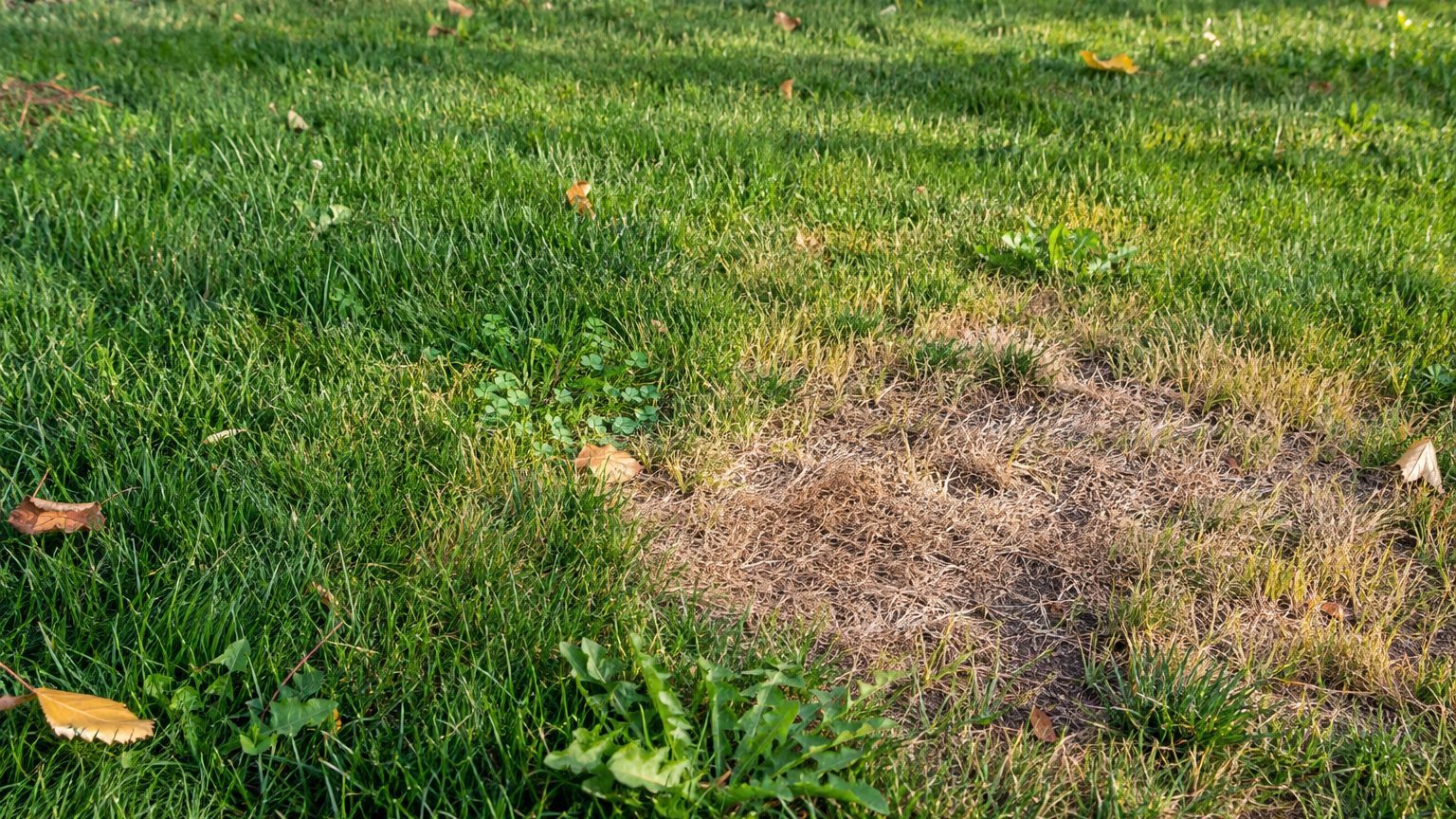
A lawn in Idaho can look fine in June and fall apart by August, and the cause is often a familiar lawn problem. Matted patches after the snow melts, coarse crabgrass in thin spots, and grubs feeding under the sod are worth checking. These problems are often shaped by the climate and by how the lawn is watered, mowed and fed.
Lawn Pests and Diseases in Idaho
Snow Mold

Where snow lies on unfrozen ground, grass can come out of winter in matted, straw-colored circles, sometimes with a gray or pink web on the blades. It is common in the mountain towns and on shaded north sides of houses. Rake the patches gently to fluff the blades and let the lawn dry out. Turf can recover on its own once the area dries.
Crabgrass
Crabgrass shows up as pale, coarse clumps that spread flat along the ground, mostly where the lawn is thin and the sun is hot, such as strips beside driveways. It sprouts from seed as the soil warms. A preventer goes down in April, and it also works in May. Once crabgrass is up, building a thicker lawn is a useful long-term response.
Dollar Spot
Dollar spot leaves small, sunken, straw-colored spots about the size of a silver dollar, and on dewy mornings you may see fine cobweb threads across them. It tends to hit lawns that are underfed and watered lightly. Water deeply but not often, and feed on a sensible schedule. Healthy grass grows out of the damage.
White Grubs
Grubs are fat, C-shaped, cream-colored larvae that chew grass roots. The sign is turf that feels spongy, then lifts like a loose carpet, usually in late summer and into fall. Peel back a corner of sod and check the soil around the roots. Finding grubs does not by itself mean the lawn needs treatment. Confirm that grubs are causing active damage before choosing a treatment.
Idaho — the year and the numbers
- State
- Idaho
- USDA zones
- 3b-7b
- Last spring frost
- April 23 to May 7
- First fall frost
- October 7 to October 21
- Annual rain
- 12 in
- Lawn type
- cool-season
- Source
- NOAA NCEI 1991-2020 Climate Normals, 32F freeze probabilities · Boise
How to Tell Which Lawn Problem You Have
A brown patch can have different causes, so look for another clue before you decide. Check the shape of the spot, the time of year, and whether the grass stays rooted when you tug it.
Sun or shade matters too, because the same color of damage means different things in different light.
| What you see | Where and when | Likely cause |
|---|---|---|
| Matted, straw-colored circles, sometimes with a gray web | Right after snowmelt, often in shade or drifts | Snow mold |
| Coarse, pale clumps spreading flat | Hot, thin, sunny spots from late spring on | Crabgrass |
| Small sunken tan spots, cobwebs on dewy mornings | Early summer into fall, on lightly watered lawns | Dollar spot |
| Turf lifts like a carpet, roots chewed off | Late summer into fall | White grubs |
| Bluish-gray grass, footprints that stay | Hot afternoons, along pavement and on slopes | Drought stress |
If the grass pulls up with roots chewed away, grubs are a possibility. If it stays firmly rooted and just looks tan, think disease or dry soil. A screwdriver pushed into the ground tells you a lot, because it sinks easily in moist soil and stops short in dry, hard ground.
Where Lawn Problems Are Worst in Idaho
Idaho runs from low irrigated valleys to cold mountain basins, so the problems shift with elevation and rainfall.
- Treasure Valley: Around Boise, the low-valley season is relatively long, with the last spring frost falling between April 23 and May 7. Heat and dry summers bring drought stress, crabgrass and dollar spot.
- Magic Valley and the Snake River Plain: Hot, dry summers and irrigation water make watering habits important, and shallow watering shows up fast as thin, stressed turf.
- Panhandle: Around Coeur d’Alene and Sandpoint, more rain and shade favor moss, thatch and snow mold.
- Mountain towns such as McCall, Ketchum and Island Park: Short seasons and deep snow cover make snow mold the usual spring chore, and slow growth means damage takes longer to repair.
Boise dates do not carry over to the high country, which stays colder much longer.
Lawn Care Mistakes That Invite Problems in Idaho
Mowing Too Short
Scalped grass has little leaf to feed its roots, and it lets sun reach bare soil where crabgrass seed sprouts. Mow regularly and avoid removing too much of the blade at once. Raise the mower deck during the hottest weeks so the turf shades its own roots.
Watering Lightly and Often
Short daily sprinkles keep roots shallow and the surface damp enough for dollar spot. Water deeply and less often, mainly in June, July and August, so roots chase moisture downward. A tuna can set on the lawn is a simple way to see how much your sprinklers deliver.
Feeding at the Wrong Time
Heavy spring nitrogen pushes soft top growth and builds thatch. A layer up to 1/2 inch thick is healthy, but above that you should dethatch or core aerate. Shift your main feeding to fall, when roots are building strength for winter.
Where to Get Lawn Advice in Idaho
Local conditions vary so much between valleys and mountain basins that a nearby expert often beats general advice. Local help is close at hand.
- The University of Idaho Extension offers lawn guides and pest identification help, so check there before you buy any treatment.
- Your county extension office can look at a turf sample and advise on soil tests, which are worth doing before any big fertilizing change.
Common Questions
When Should You Aerate a Lawn in Idaho?
September is the best time, while the grass is growing strongly and the soil is still warm. If you miss it, April and May also work.
When Is the Right Time to Reseed Bare Patches?
August and September give seed the best chance to root before winter. If that window passes, April and May still work, though young grass must then face summer heat.
Should You Fertilize an Idaho Lawn in November?
Yes, November is a good time for a late feeding, alongside September. Spring feeding is a fallback in May, but go light.