In Billings, the hydrangea problems that show up most are winter dieback, aphids, powdery mildew, and leaf spot, all shaped by a climate that swings from zone 3a to 6a. None of them are exotic. What decides whether a shrub blooms or sits bare is timing, not luck, and the calendar tells you which problem you’re actually looking at.
Hydrangea pests and diseases Montana: The Short Answer
NOAA NCEI 1991-2020 Climate Normals puts Billings’ last spring freeze between April 29 and May 10, and the USDA hardiness map spreads the state from zone 3a to 6a, which is exactly why the same shrub can look healthy in one county and burned in the next.
No flowers after a hard winter
Bigleaf types set next year’s buds in fall, and a hard snap anywhere in the 3a to 6a range can kill them before they ever open. If the stem flexes and the pith is green, leave it. Cut only where the wood is brown and brittle, and expect blooms lower on the plant next season.
Leaf edges scorched by dry wind

Montana’s low humidity and open plains pull moisture out of leaves faster than roots can replace it, especially on a shrub planted in full sun. The fix is a thick mulch ring and a slow soak twice a week rather than a daily sprinkle. Move exposed plants closer to a wall or hedge line.
Aphids clustering on new growth
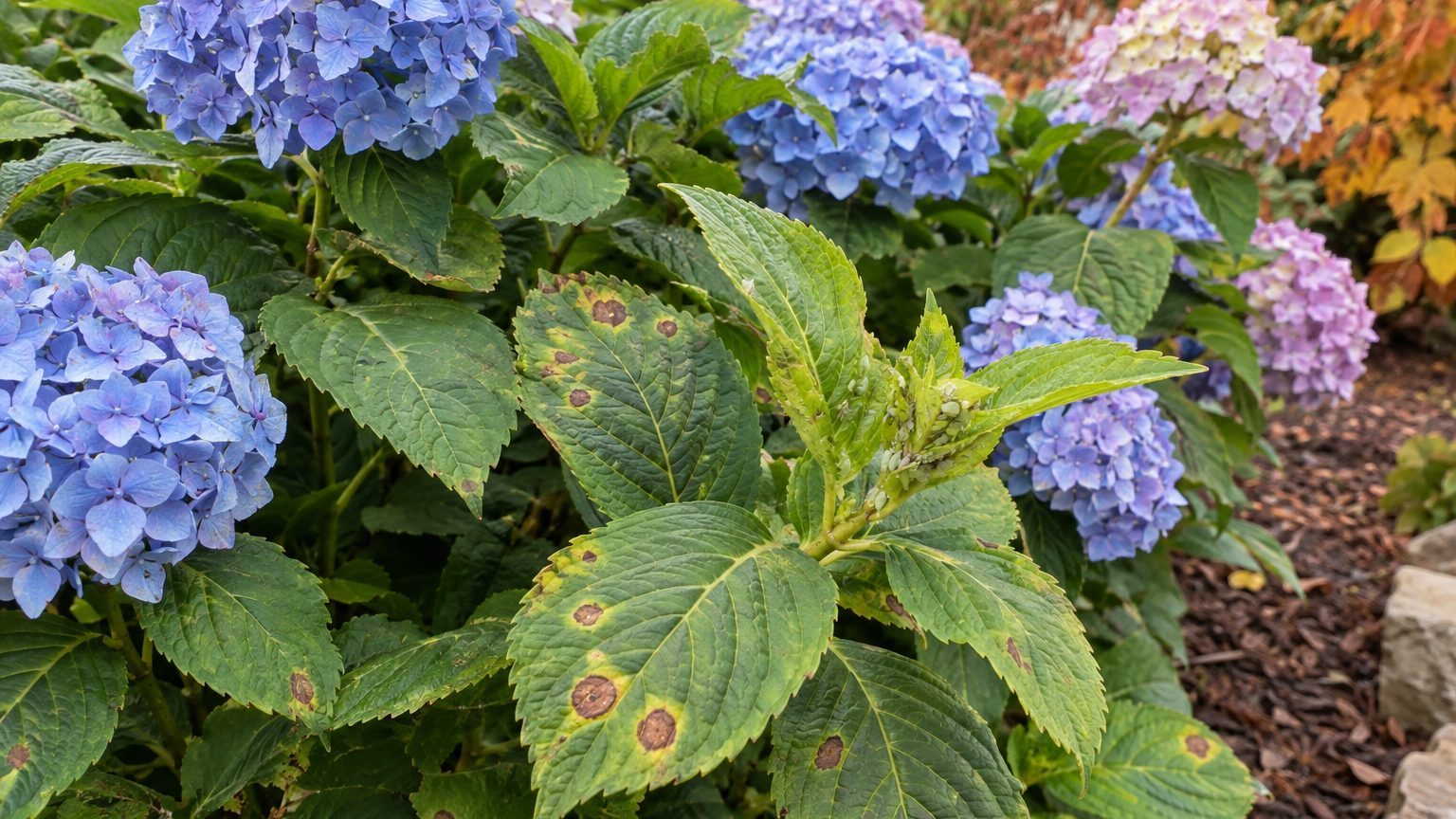
Small pale green or black insects crowd the soft tips in early summer, leaving a sticky residue that draws ants and sometimes black sooty mold. A strong water spray knocks most of them off. Insecticidal soap handles the rest, and ladybugs usually clean up whatever is left within a couple of weeks.
Powdery mildew on older leaves

A gray white coating shows up on lower leaves during humid stretches, usually where air can’t move through a crowded shrub. Space plants for airflow and water the soil, not the foliage. Existing spots won’t clear, but a fungicide labeled for hydrangeas keeps new growth clean through the rest of summer.
Cercospora leaf spot working upward

Purple brown circles appear on the lowest leaves first and climb the plant as spores splash upward in rain or overhead watering. Strip the worst leaves and clear fallen debris at the base. Drip irrigation instead of a sprinkler head is the single change that slows this the most.
Botrytis blight after a wet spell

Cool damp weather near the October 1 to 14 frost window can turn flower buds and stem tips gray and mushy. Cut affected tips back to clean wood and skip watering for a few days to let the shrub dry out. Don’t compost the trimmings.
Montana — the year and the numbers
- State
- Montana
- USDA zones
- 3a-6a
- Last spring frost
- April 29 to May 10
- First fall frost
- October 1 to October 14
- Annual rain
- 14 in
- Lawn zone
- transition-season
- Source
- NOAA NCEI 1991-2020 Climate Normals, 32F freeze probabilities · Billings
How to Work Out the Dates for Your Own Yard
NOAA NCEI 1991-2020 Climate Normals sets Billings’ last spring freeze at April 29 to May 10, and matching the date a symptom appeared to that window does most of the diagnostic work before any product gets involved.
- Mark the date you noticed it: symptoms that appear before Billings’ last spring freeze of April 29 to May 10 point toward cold damage rather than any fungus or insect, since nothing has had time to establish yet.
- Check which leaves are affected first: lower, older leaves usually mean a soil-splashed fungus such as Cercospora, while damage on the newest tips points more toward aphids or a late frost.
- Look for insects before treating anything: turn a few leaves over and check the stem tips, since a fungicide won’t touch an aphid problem and insecticidal soap won’t slow down mildew.
- Compare the timing to the fall frost window: damage that shows up between October 1 and October 14 during a wet spell usually points to botrytis rather than a pest at all.
- Note where your yard sits in the state’s range: a shrub near the cold edge of Montana’s 3a to 6a band carries more winter dieback risk than one in a sheltered Billings yard.
- Call before spraying anything broad: a county extension office can usually confirm a fungus or pest from a description or photo, saving a treatment that wouldn’t have worked in the first place.
None of this requires special equipment. A phone photo with the date, held next to Billings’ frost windows, tells you more than a guess ever will. It’s also exactly what a county extension agent will ask for first, before recommending any spray, cut, or wait and see approach.
Montana North to South: How the Dates Shift
USDA Plant Hardiness Zone Map spans Montana from zone 3a to 6a, and where a yard falls inside that band decides which problem shows up first and how early it arrives.
- Western valleys (Bitterroot, Flathead, Missoula): milder pockets near lakes and rivers keep humidity higher through summer, so mildew and leaf spot tend to outrank outright winter kill here.
- South central plains (Billings, Laurel, Columbus): open and windy, and closer to the mild end of the state’s range, so dry wind scorch and aphids often show up before any dieback does.
- Eastern plains (Miles City, Glendive, Sidney): colder extremes and less natural shelter push winter bud death to the top of the list in most years, even on otherwise healthy shrubs.
- Mountain valleys and high towns (Bozeman, Whitefish, Red Lodge): frost can arrive in almost any month here, so botrytis and late freeze damage overlap far more than they do around Billings.
Whichever part of the state a yard sits in, the calendar for this state still starts from Billings’ dates, and a yard in a colder pocket should shift every one of them earlier.
Mistakes Montana Punishes
Pruning too early in spring
Cutting bigleaf stems back before new growth confirms which wood actually survived removes live flower buds right along with the dead ones. Wait for the calendar’s June or July pruning window, after leaves show exactly where the plant is alive, then shape from there instead of guessing in March.
Watering overhead in the evening
Wetting foliage right before a cool night gives Cercospora and botrytis exactly the damp window they need to spread across a shrub. Switch to a soaker hose at soil level in the morning instead, and both problems noticeably slow down within a single season of doing it differently.
Planting in full, unbroken sun
A shrub with no afternoon shade against Montana’s dry wind loses moisture faster than its roots can pull it back, showing up as scorched leaf edges every summer without fail. Choose a spot with some afternoon shelter from a wall or hedge, or plan on extra watering right through July.
Montana Extension Offices and County Contacts
Billings’ numbers are a starting point, not the final word, since soil, elevation, and shelter change block by block across the state. Montana State University Extension and the county office nearest a yard fill in the rest of the picture.
- Montana State University Extension: county-by-county contacts and horticulture agents who can confirm a pest or disease from a description or a photo before any treatment starts.
- Which ones hold up here: the variety guide for this state, for choosing a hydrangea suited to a yard’s zone before problems even start.
- The planting and pruning calendar: the month-by-month page for this state, for timing every cut, fertilizer round, and treatment around the frost windows.
Start with a call or a photo before the next spray, cut, or big decision.
Common questions
What is the most common hydrangea problem in Montana?
Winter bud death is the problem homeowners report most often, since Montana’s 3a to 6a hardiness range means the flower buds set the previous fall can freeze out before spring even arrives, with no pest or fungus involved at all.
Do hydrangeas need spraying every year in Montana?
Most yards don’t need routine spraying every year. Powdery mildew and leaf spot tend to show up in wetter, shadier pockets more than in open Billings yards, so a fungicide is only worth reaching for once symptoms actually appear on the leaves.
When should I stop worrying about frost damage?
Once a shrub is past Billings’ last spring freeze window of April 29 to May 10, new growth is generally out of danger, though mountain valleys elsewhere in the state can still see a frost show up in almost any month of the year.