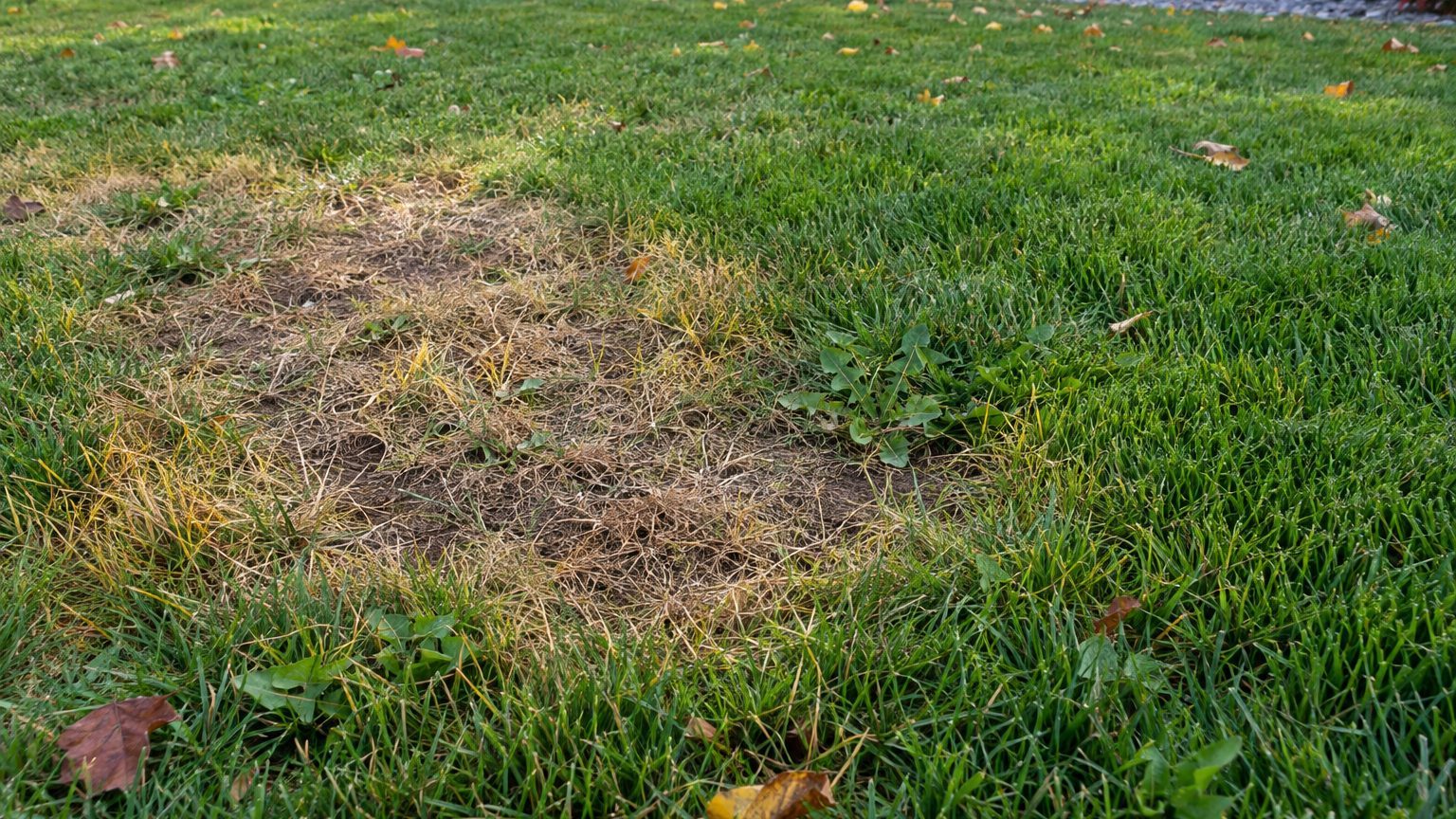
Brown rings left after the snow melts, yellow rosettes in May, and spongy turf that tugs up like carpet in August all point to a short list of causes in Wyoming. The high, dry, windy climate sets which pests and diseases show up, and when. Knowing the usual suspects in order saves a lot of guessing.
Lawn Pests and Diseases in Wyoming
Snow Mold

Snow mold appears as matted, grayish or pinkish circles once a long snow cover melts. It often develops where drifts linger on shaded north sides and along fences. Rake the flattened patches gently so air reaches the crowns. Lawns often recover on their own as growth picks up.
Dandelions
Dandelions arrive with the first warm spells, rooting through thin turf with a long taproot. A dense lawn crowds them out, so overseed bare spots when the weather allows. In April and May, seeding is still an option. Pull young plants when the soil is moist, getting as much taproot as you can.
Crabgrass
Crabgrass shows up in midsummer as coarse, pale green clumps spreading flat across thin, sunny edges. It dies with the first hard frost but leaves seeds behind. A pre-emergence preventer goes down in April, and May still works. After that, hand-pull young plants before they set seed.
White Grubs
Grubs are fat, C-shaped, cream-colored larvae that chew grass roots in late summer. Turf goes dull, then lifts like a loose rug because nothing anchors it. Peel back a small flap of sod and look. Healthy, deeply watered turf tolerates a few grubs, while a heavy infestation needs treatment.
Thick Thatch
Thatch is the tan, springy layer between green blades and soil. Up to 1/2 inch is healthy, but above that it blocks water and holds disease. Dethatch in August or September, or in April if you miss that window. Core aeration is the gentler alternative.
Wyoming — the year and the numbers
- State
- Wyoming
- USDA zones
- 3a-6a
- Last spring frost
- May 7 to May 18
- First fall frost
- September 24 to October 5
- Annual rain
- 15 in
- Lawn type
- cool-season
- Source
- NOAA NCEI 1991-2020 Climate Normals, 32F freeze probabilities · Cheyenne
How to Tell Which Lawn Problem You Have
Appearance alone rarely settles it. Pair what the patch looks like with where and when it appears, then do a simple tug test. Grass that lifts easily has lost its roots, while grass that stays put points to something on the surface or to dry soil.
| What you see | Where and when | Points to |
|---|---|---|
| Matted gray or pink circles | Shaded drifts, right after snowmelt | Snow mold |
| Rosettes with deep taproots | Thin turf, spring through summer | Dandelions |
| Coarse, pale clumps spreading flat | Hot, sunny edges, midsummer | Crabgrass |
| Turf peels back like carpet | Irregular patches, late summer | White grubs |
| Spongy feel, water runs off | Whole lawn, any season | Thick thatch |
Straw-colored grass that stays rooted and crunches underfoot, especially along pavement or on a windy slope, usually means thirst rather than disease. Water deeply and watch whether it greens up.
Where Lawn Problems Are Worst in Wyoming
Wyoming spans high plains, mountain basins and valleys, so the same lawn trouble looks different from one town to the next.
- Cheyenne and the southeast plains: Wind and dry air stress turf in summer, and thin lawns invite dandelions and crabgrass. Deep watering helps the turf withstand these conditions.
- Laramie and the high basin: Cold, late springs and lingering snow make snow mold more likely, and growth starts late.
- Big Horn Basin around Cody and Powell: Lower and warmer, so summer drought and crabgrass pressure run higher than in the mountains.
- Jackson Hole: Deep, long-lasting snowpack favors snow mold, and frost can return after the grass has greened.
Wherever you live, shaded, drift-prone spots and compacted edges are especially vulnerable.
Lawn Care Mistakes That Invite Problems in Wyoming
Scalping the Lawn
Cutting low weakens roots and opens bare soil to dandelions and crabgrass. Mowing runs from April through November, so keep the blades set high and cut regularly. Tall grass shades the soil, holds moisture in dry wind and crowds out weeds.
Shallow Daily Sprinkling
Light, frequent watering keeps roots near the surface and leaves turf vulnerable to dry conditions. Water deeply and less often instead, mainly in June, July and August when the plains bake. Soak the soil so roots chase moisture downward, then let the top dry between sessions.
Feeding at the Wrong Time
A heavy dose of fertilizer in the heat pushes soft, thirsty growth and adds stress during dry weather. Feed in September and November, when roots are building, and use May as a fallback. Fall feeding fuels recovery without a flush of leaf growth.
Where to Get Lawn Advice in Wyoming
Local help fits Wyoming better than general advice, since elevation changes the answer. University of Wyoming Extension publishes research-based turf guidance, and your county office applies it to nearby conditions.
- Call the county extension office when a patch will not fit any description, ideally while it is still active.
- Bring a small cut-out of affected sod in a bag so staff can examine roots and blades.
- Ask about local timing for seeding and aeration before you start.
Common Questions
When Should You Seed Bare Spots in a Wyoming Lawn?
August and September give seed warm soil and cooler air to root before winter. April and May also work if you miss that window. Keep the seedbed evenly moist until the new grass is established.
Does Frost in May Hurt New Grass?
The last spring frost around Cheyenne falls between May 7 and May 18, and higher elevations can see frost later. Established turf shrugs off a light frost. Tender new seedlings can suffer, so avoid seeding right before a cold snap.
When Should You Aerate a Wyoming Lawn?
September is ideal because roots recover quickly in cooling soil. April and May also work. Aerating relieves compaction and thins thatch, which helps water reach the roots in dry summers.