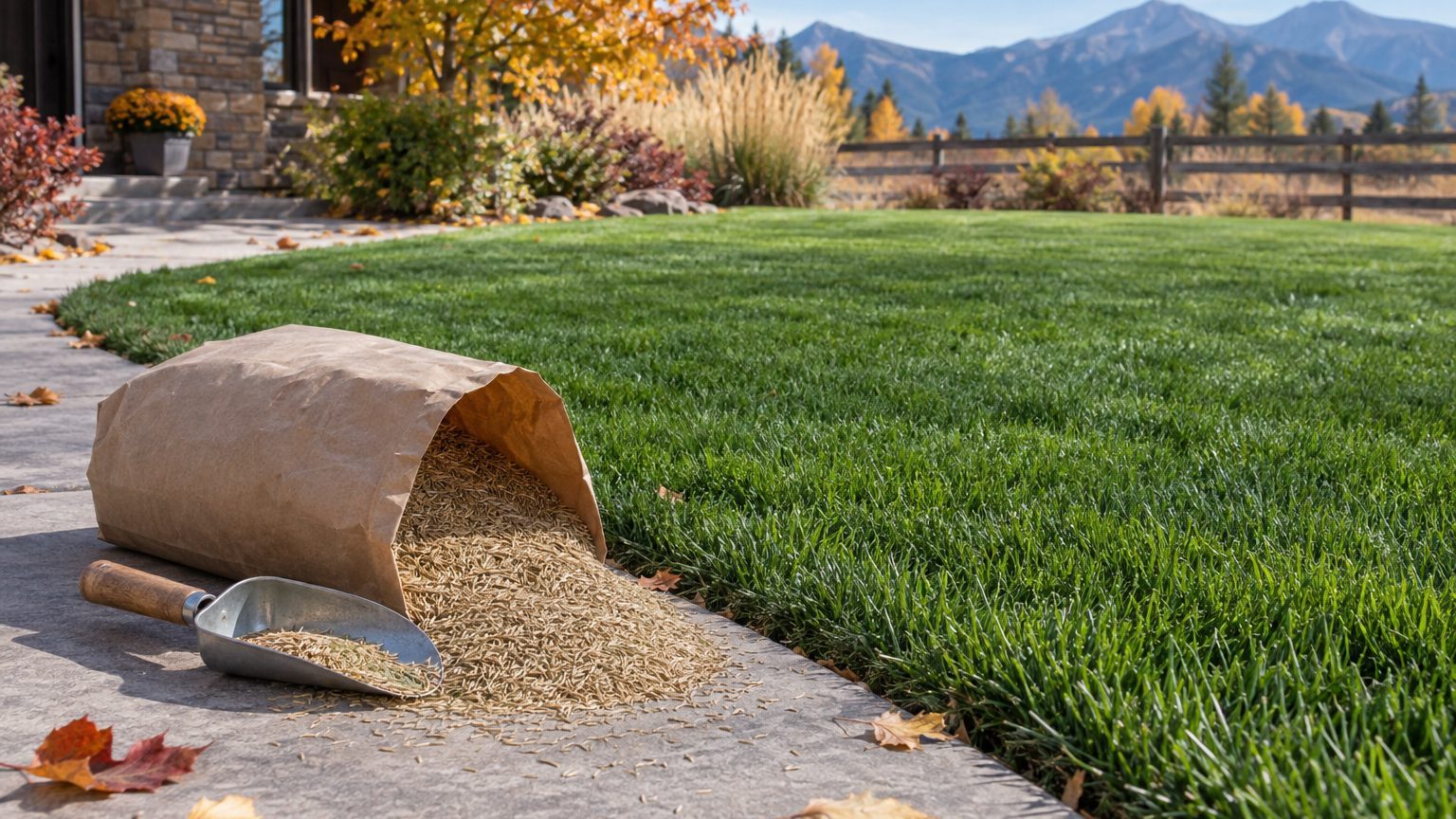
Walk a Montana lawn in late May and you will often find the bluegrass green and dense while nearby ground still feels cold underfoot. That cold is the reason cool-season grasses win here, and some of them clearly deserve your seed money more than others.
Which Grass Grows Best in Montana?
Cool-season grasses are the reliable choice in Montana, whose USDA hardiness zones range from 3a to 6a; warm-season turf is not dependable through the state’s winters. The main lawn grasses here differ mostly in how they handle shade, wear and drought.
Kentucky Bluegrass
This is the dependable choice for a sunny Montana lawn. It shrugs off deep winter cold and spreads by underground stems, so it fills thin spots by itself once it is established.
It is slow to germinate, so give it patience and keep the seedbed evenly moist until the seedlings are up.
Fine Fescues
Creeping red, chewings and hard fescue all handle cold well and need less fertilizer and water than bluegrass. They are the grasses to reach for under spruce and pine, where bluegrass thins out.
They look best left a little taller and mowed without fuss.
Tall Fescue
Tall fescue brings deep roots and good drought tolerance, which helps through dry July and August stretches. It grows in clumps rather than spreading, so overseed bare patches instead of waiting for them to heal.
In the coldest valleys it carries more winter risk than bluegrass or fine fescue, so use it where winters are milder.
Perennial Ryegrass
Ryegrass sprouts fast, which makes it handy for quick cover and high-traffic spots. Perennial ryegrass can winterkill in a hard season.
Treat it as a small share of a mix rather than the whole lawn.
Montana — the year and the numbers
- State
- Montana
- USDA zones
- 3a-6a
- Last spring frost
- April 29 to May 10
- First fall frost
- October 1 to October 14
- Annual rain
- 14 in
- Lawn type
- cool-season
- Source
- NOAA NCEI 1991-2020 Climate Normals, 32F freeze probabilities · Billings
How to Choose Grass Seed for a Montana Yard
Start with the light, then think about foot traffic and how much water you can supply. A blend of compatible grasses often copes better with a patchy yard than an unmixed lawn.
Seed no deeper than 0.25 inch. Press it into the soil so each seed touches ground, because buried seed struggles to come up.
| Your yard | Grass to favor | Why |
|---|---|---|
| Full sun, regular watering | Kentucky bluegrass | Dense, hardy and self-repairing |
| Shade under conifers | Fine fescues | Tolerate low light and thin soil |
| Dry, limited watering | Tall fescue | Deep roots ride out dry spells |
| Busy play area | Bluegrass with some ryegrass | Ryegrass fills fast, bluegrass repairs |
| Low mowing effort | Fine fescues | Slow growth, fewer cuts |
Shady yards that also take traffic are the hard case. Fine fescues tolerate the shade but not heavy play, so keep the play zone small and reseed it as needed.
Which Grasses Grow Where in Montana
Montana is large and its climate shifts with elevation and distance from the mountains, so the same seed does not behave identically across the state.
- Billings and the Yellowstone Valley: Among the milder spots in the state, with the last spring frost falling between April 29 and May 10. Bluegrass does well, and tall fescue is a reasonable addition.
- Bozeman, Butte and the high mountain valleys: Cold arrives early and lingers, and frost can come in any month. Stick with bluegrass and fine fescues, and skip ryegrass-heavy mixes.
- Missoula and the western valleys: Shade from big conifers is common, so fine fescues earn their place in the mix.
If your yard sits higher or colder than the nearest town, lean toward the hardier grasses.
Grass Seed Mistakes to Avoid in Montana
Choosing a Grass That Cannot Take the Winter
A mix heavy in ryegrass or warm-season grass may look fine in summer but can thin badly after a hard winter. Read the seed tag and pick bluegrass and fescues as the backbone.
Sowing at the Wrong Time
Seed in August or September, when soil is warm and the seedlings have time to root before cold sets in. Fall frost often arrives between October 1 and October 14 in Billings, and young grass needs those weeks of growth. If you miss that window, April and May also work, though weeds compete harder in spring.
Spreading Too Much or Too Little
Thin seeding leaves gaps where weeds settle, and heavy seeding makes seedlings crowd and weaken each other. Follow the rate on the bag, spread it evenly, and cover it lightly, then water gently so the seed stays in place.
Where to Get Lawn Advice in Montana
Local conditions vary enough that a quick conversation with a nearby expert pays off before you buy seed.
- The Montana State University Extension offers lawn guides and soil testing information, which is worth reading before late summer seeding.
- Your county extension office can speak to your valley’s frost pattern, local weeds and soil, so call it before buying.
Common Questions
Can You Grow Bermuda or Zoysia in Montana?
Not reliably. Warm-season grasses go dormant in cool weather and often die in Montana winters, so cool-season species are the safer choice.
Is Spring or Fall Better for New Grass Seed in Montana?
Fall is better, with August and September giving the strongest start. April and May still work if you missed fall.
Should You Aerate Before Overseeding a Montana Lawn?
Aeration helps seed reach the soil, and September is the recommended time for it. April and May also work if you are seeding in spring.