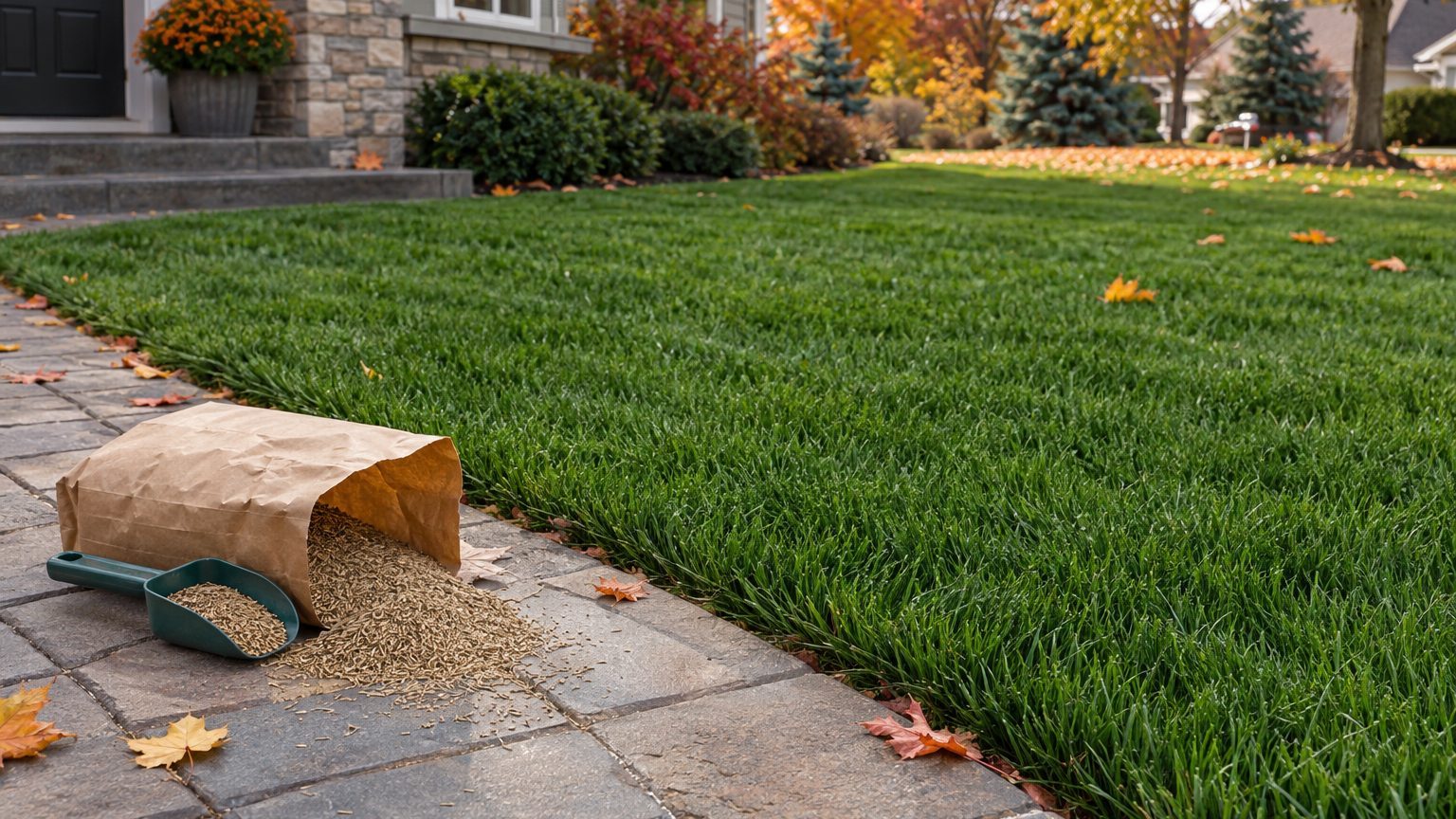
Frost-heaved bluegrass greening up in April, then browning in a hot August if nobody waters, is the pattern across much of Idaho. The best grass seed for Idaho is a cool-season type: Kentucky bluegrass, fine fescues, perennial ryegrass or tall fescue. Which one suits your yard depends on sun, traffic and how much water you can give it.
Which Grass Grows Best in Idaho?
Cool-season grasses win here, and warm-season lawns do not belong. Idaho runs from zones 3b to 7b on the USDA hardiness system, so winters in the mountains and the high plateaus are brutal, and warm-season grasses go dormant and tend to die out. Cool-season species grow in spring and fall and rest through summer heat.
Kentucky Bluegrass
This is the classic Idaho lawn. It handles hard winters, spreads by underground stems to fill thin spots, and forms a dense, deep green carpet. It wants full sun and regular summer water, and it slips into brown dormancy if you skip watering in July and August.
Fine Fescues
Creeping red, chewings and hard fescue handle shade and poorer soil better than bluegrass. They need less water and less fertilizer, and they stay fine-textured. Foot traffic wears them down faster, so they suit quiet corners better than a play area.
Perennial Ryegrass
Ryegrass sprouts fast, which makes it a good partner in a mix and a quick fix for bare patches. On its own it is less certain through severe Idaho winters, so use it as a supporting player in colder areas rather than the whole lawn.
Tall Fescue
Deep roots let tall fescue ride out summer heat and dry spells with less watering than bluegrass. It grows in clumps rather than spreading, so overseed bare spots as they appear. Tall fescue can thin out in colder, higher parts of the state.
Idaho — the year and the numbers
- State
- Idaho
- USDA zones
- 3b-7b
- Last spring frost
- April 23 to May 7
- First fall frost
- October 7 to October 21
- Annual rain
- 12 in
- Lawn type
- cool-season
- Source
- NOAA NCEI 1991-2020 Climate Normals, 32F freeze probabilities · Boise
How to Choose Grass Seed for an Idaho Yard
Start with the light and the traffic, then think about your hose. A sunny yard with kids and a dog calls for something that repairs itself. A shaded side yard calls for something that tolerates low light.
Mowing habits matter too. Grasses that grow slowly and stay fine need fewer trips with the mower, while dense bluegrass rewards a regular schedule.
| Your yard | Grass | Why |
|---|---|---|
| Full sun, heavy play | Kentucky bluegrass | Spreads to heal worn spots |
| Shade or under trees | Fine fescues | Tolerate low light and dry soil |
| Limited watering | Tall fescue | Deep roots hold up in summer heat |
| Bare patch needing quick cover | Perennial ryegrass | Sprouts fast, then blends in |
| Low mowing effort | Fine fescues | Grow slowly and stay fine |
Many yards benefit from a blend, such as bluegrass with a little ryegrass for speed, or fine fescues mixed in where trees cast shade. Read the label for the species names and skip bags that do not list them.
Which Grasses Grow Where in Idaho
Elevation and latitude can change how a lawn behaves from one part of the state to another.
- Boise and the Treasure Valley: The low valley floor has a long growing season, so cool-season grasses have more time to establish here. Tall fescue can suit this area, while bluegrass needs steady summer water.
- Idaho Falls and the Snake River Plain: Colder winters favor Kentucky bluegrass and fine fescues, which are hardy. Tall fescue and ryegrass are less reliable.
- Coeur d’Alene and the Panhandle: Cooler and wetter, with more shade from tall conifers. Fine fescues and bluegrass blends fit well.
- Sun Valley and the Wood River Valley: High and cold, with a short season. Choose cold-tolerant bluegrass or fine fescue seed.
Coming from a low valley, assume yards in the mountains are colder and the season shorter than anything you are used to.
Grass Seed Mistakes to Avoid in Idaho
Picking a Grass That Cannot Take the Winter
Buying seed because it sounds drought-proof can backfire in high country, where cold thins out less hardy types. Match the species to your elevation, and lean on bluegrass and fine fescues in the colder places.
Seeding at the Wrong Time
August and September give seed warm soil and cooling air, so it roots before winter. If you miss that window, April and May still work. Avoid seeding in June or July; August begins the main seeding window, and seed sown too late may not establish before frost.
Burying or Overspreading Seed
Cover seed no more than 0.25 inch, and press it firmly against the soil so it makes contact. Deeper seed struggles to emerge. Follow the rate on the bag rather than guessing, since thick sowing leads to crowded, weak seedlings and thin sowing leaves gaps for weeds.
Where to Get Lawn Advice in Idaho
Local soil, elevation and water supply vary a lot, so local advice helps you choose seed with confidence.
- University of Idaho Extension publishes lawn guidance for the state, and it is useful before you buy seed.
- Your county extension office can answer questions about your own soil and elevation, so call before seeding season starts.
- Ask the office about a soil test, then take your sample before you shop for seed.
Common Questions
Can You Grow Bermudagrass or Zoysia in Idaho?
Both are warm-season grasses that are poorly suited to Idaho’s cold winters. Stick with cool-season species, which stay green through spring and fall and survive winter.
Is a Seed Blend Better than a Single Grass?
A blend spreads the risk. If one species struggles with a dry spell or a shady corner, another fills in. Check the label to confirm the species are suited to your yard.
Do You Need to Rake Before Seeding?
Loosening the surface helps seed reach soil. Rake out dead grass and thatch first, and core aeration in September opens compacted ground before overseeding.