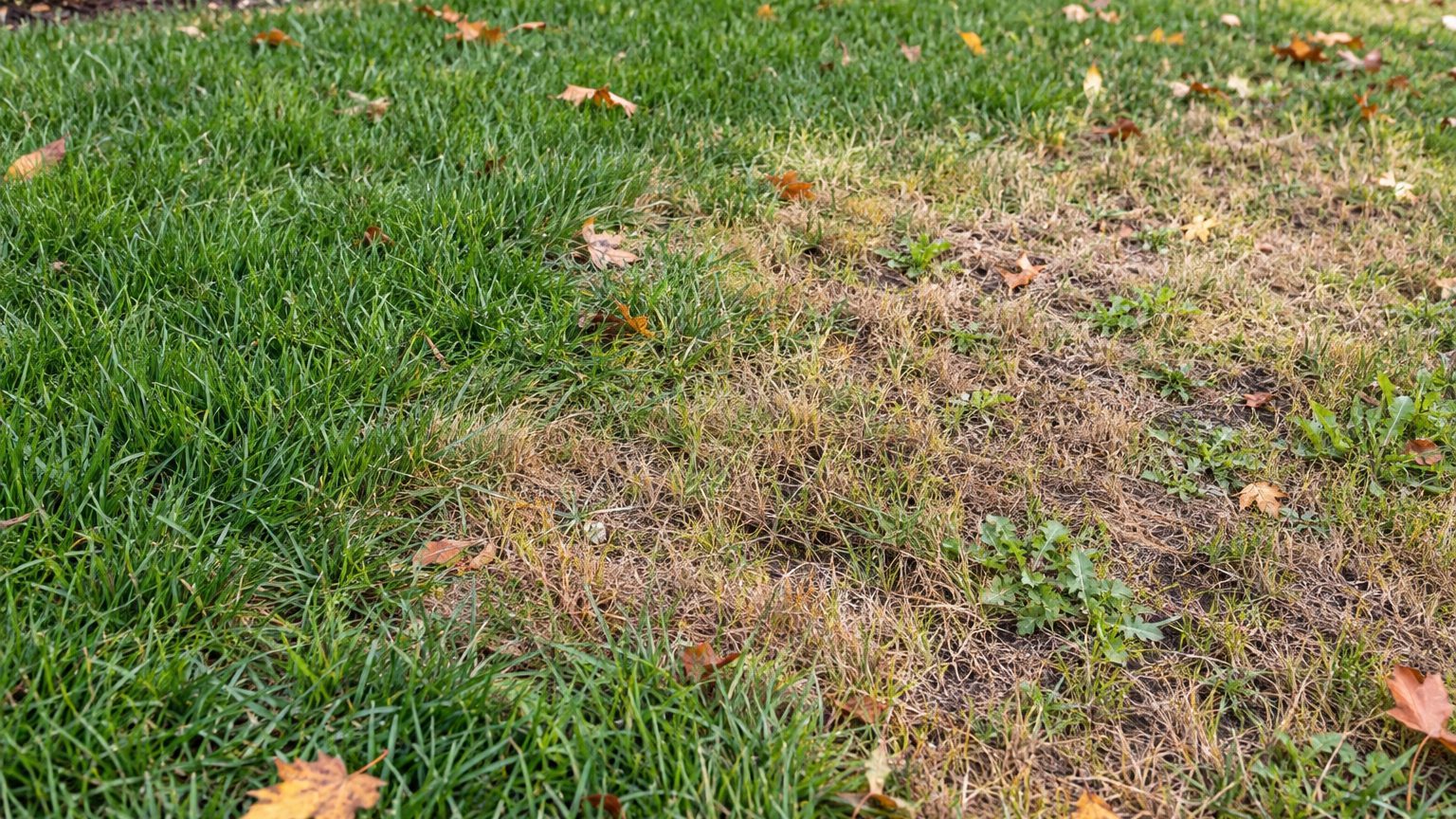
Thin grass under a Douglas fir, a spongy green carpet of moss where turf used to be, pink-tinged patches after a drizzly spring: Washington lawns tell you what is wrong if you know how to read them. Most trouble west of the Cascades comes from wet, mild weather and shade, while the dry east brings its own set of problems.
Lawn Pests and Diseases in Washington
Moss in Wet Winters
Moss creeps in where grass is thin, shaded, compacted or poorly drained, and western Washington’s long wet season gives it plenty of help. It is a symptom more than an invader. Raking it out clears the surface, but the grass only returns once light, drainage and soil firmness improve.
Open up the canopy, aerate compacted ground, and overseed the bare spots when the seed has time to root.
Crabgrass in Warm Weather

Crabgrass shows up as coarse, light green clumps that sprawl flat across thin turf and bare soil, usually after the ground warms. It dies with the first hard frost but leaves seed behind for next year.
A pre-emergence preventer goes down in April, and it still works in May. Applied later, it misses the seeds that have already sprouted.
Dandelions and Clover
Dandelions send up a taproot and a rosette of toothed leaves, and clover spreads in low, creeping mats. Both gain ground wherever turf is thin or mowed too short.
Pull dandelions after rain, when the root slides out whole. A thicker lawn, helped along by overseeding, crowds out most of the rest.
Red Thread Patches
Red thread appears as irregular tan or pinkish patches, and if you look closely you can see thin red, needle-like strands growing off the grass blades. It favors cool, damp weather in spring and fall, and it often points to hungry soil.
It rarely kills the lawn. A properly timed feeding in September usually helps the grass outgrow it.
Crane Fly Larvae
European crane fly larvae are gray-brown, legless grubs that chew grass roots and crowns through the cool, wet months. Patches turn thin and brown, and crows or starlings tear at the turf to reach the grubs. Tug the grass. If it lifts like loose carpet and you find grubs near the soil surface, you have found the cause.
Healthy, well-watered turf tolerates light feeding. Heavy damage is worth a call to your county extension office before you treat.
Thatch Buildup
Thatch is a spongy mat of stems and roots between green blades and soil. A layer up to 1/2 inch thick is healthy, but anything thicker blocks water and breeds disease.
Dethatch or core aerate once it passes that mark. Dethatch in August or September; if you miss that window, April also works. Aerate in September; April and May also work if you miss fall.
Washington — the year and the numbers
- State
- Washington
- USDA zones
- 4a-9a
- Last spring frost
- February 27 to March 18
- First fall frost
- November 13 to November 30
- Annual rain
- 39 in
- Lawn type
- cool-season
- Source
- NOAA NCEI 1991-2020 Climate Normals, 32F freeze probabilities · Seattle
How to Tell Which Lawn Problem You Have
Pair what the patch looks like with where and when it appears. Patch color alone can mislead, since different problems turn grass brown.
Tug on the grass, check the shade, and notice the season. Tug on the grass, check the shade and notice the season to narrow the list quickly.
| What you see | Where or when | Likely problem |
|---|---|---|
| Soft green mat, grass thinning | Shade, soggy or packed soil, winter and spring | Moss |
| Coarse, light green sprawling clumps | Thin sunny turf, warm weather | Crabgrass |
| Pink-tan patches with red strands | Cool, damp spells in spring and fall | Red thread |
| Brown turf that peels up like carpet | Cool, wet months, with birds digging | Crane fly larvae |
| Spongy feel underfoot, water runs off | Whole lawn, building up over time | Thatch |
Dandelions and clover are easy to spot by their leaves alone. Wherever they take over, look first at how thin the grass is and how short it is mowed.
Where Lawn Problems Are Worst in Washington
Washington’s climate splits sharply at the Cascades, so the problems you face depend on which side you live on.
- Puget Sound lowlands: Seattle, Tacoma and Everett get mild, wet winters and long cool springs. Moss, red thread and crane fly damage are the usual trouble, especially under conifers.
- Olympic Peninsula and the coast: Frequent dampness and fog favor moss, and soils drain slowly in many spots. Raised, sunny, well-aerated ground supports healthier grass.
- Spokane and the Columbia Basin: Summers are dry and hot, and winters are colder than on the west side. Drought stress and weeds in thin, underwatered turf matter more than moss.
- Yakima Valley: Irrigated lawns here face dry heat and compaction, so watering habits are especially important.
Timing advice for spring and fall differs on each side of the mountains, so adjust any date to your own side.
Lawn Care Mistakes That Invite Problems in Washington
Mowing Too Short
Scalped grass has little leaf to feed its roots, so weeds and moss move into the gaps. Mowing runs from April through November in Washington, and lawns in the wetter west often keep growing through much of that stretch.
Raise the mower deck, cut often enough that you remove only a small part of the blade, and keep the blade sharp.
Watering a Little Every Day
Shallow, frequent watering keeps roots near the surface and the thatch damp, which suits disease and weeds. Rain handles most of the job in the west for much of the year, and lawns there need extra water mainly from June through August.
Water deeply but less often, and early in the morning so blades dry quickly.
Feeding at the Wrong Time
Heavy spring feeding pushes soft, fast growth that feeds disease and means more mowing. Fertilize in September or November; May also works if you miss the fall window.
Follow the label rate, and skip feeding when heavy rain is coming, since it washes nutrients toward storm drains.
Where to Get Lawn Advice in Washington
Local expertise fits the problem to your soil and your side of the mountains. Start with Washington State University Extension, then reach out to the office closest to you.
- State extension pages cover turf diseases, weeds and lawn care for Washington conditions, and they are worth a read before you buy anything.
- Your county extension office can look at a sample of damaged turf or a soil question, so go when a patch appears and you cannot name the cause.
- Take a photo and a small plug of grass, roots included, along with a note on shade and watering.
Common Questions
When Should You Aerate a Lawn in Washington?
Aerate in September; April and May also work if you miss fall. April and May also work if you missed fall.
When Should You Seed a Lawn in Washington?
August and September give new seed warm soil and cooling air. If you miss that window, April and May still work.
Why Does Moss Keep Coming Back After You Rake It Out?
Raking removes the moss but not what let it settle: shade, packed or soggy soil, and thin grass. Fix those and overseed, or the moss returns.