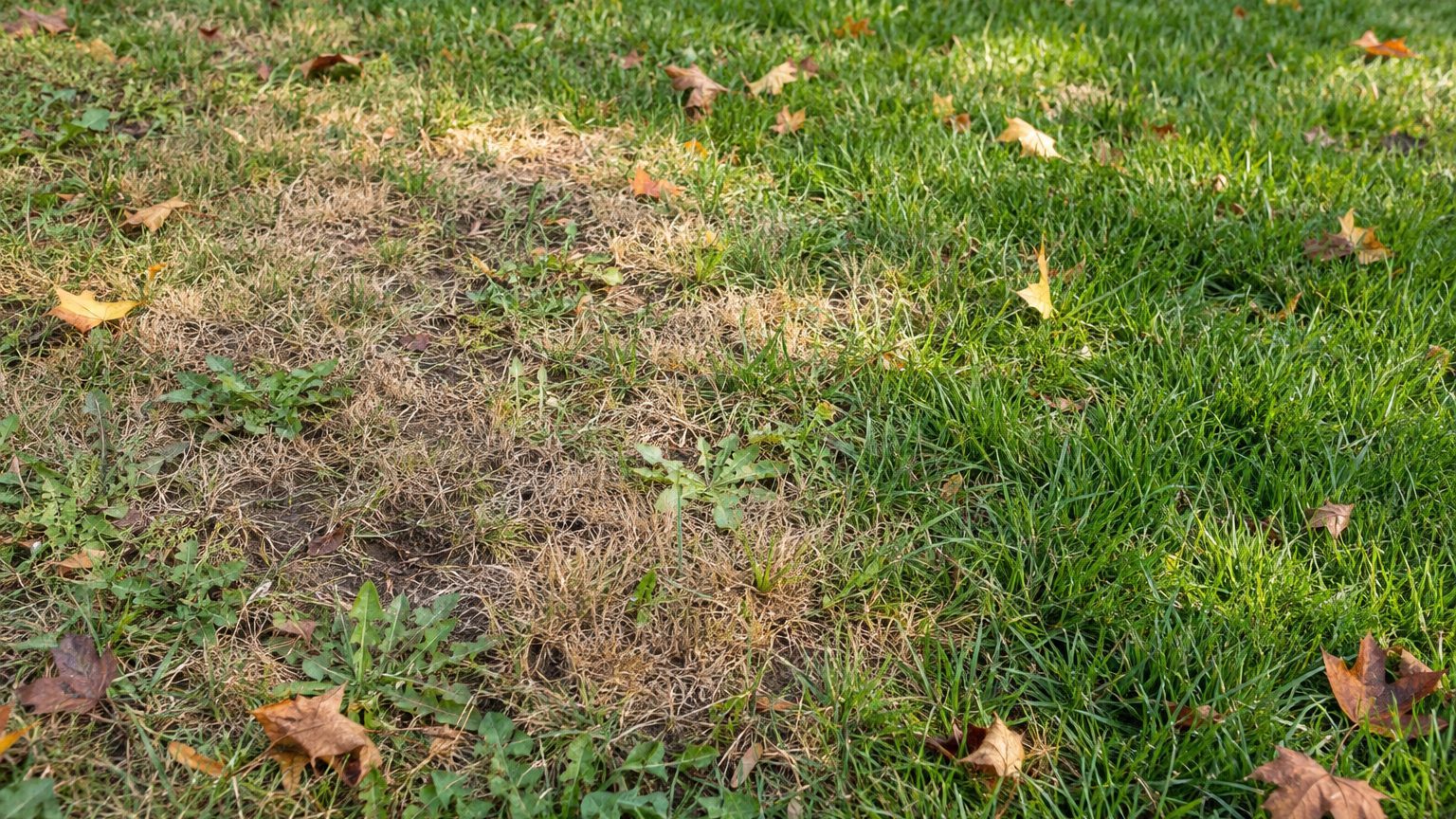
Spongy green moss, tan circles that spread in summer, and crabgrass crowding the driveway edge show up in Oregon lawns year after year. These problems often trace back to wet winters, dry summers, shade, or everyday mowing, watering, and feeding habits. Knowing which problem you have, and when it appears, decides what you do about it.
Lawn Pests and Diseases in Oregon

Moss in Wet Winters
Moss is a soft, dark green mat that fills thin spots in shade and on soggy ground. West of the Cascades, long rainy winters give it a head start. It is a symptom of weak grass, so scraping it out only helps if you also fix the shade, drainage, or compaction. Core aerating in September helps, and April and May also work.
Crane Fly Larvae
These gray-brown grubs chew grass crowns and roots from the soil surface, mostly in the cool, damp months. You see thinning, yellowing patches, and birds or skunks digging at them. Peel back a piece of sod in a patch’s edge and look for the grubs. Healthy, well-fed turf tolerates light feeding without much damage.
Red Thread in Cool, Damp Weather
Look for pinkish-red threads sticking out of tan patches of grass blades, usually in spring and early summer. Red thread tends to strike lawns that are low on nitrogen. A fertilizer application in September or November builds strength for the following year, and May also works if the patches appear.
Crabgrass in Summer Heat
Crabgrass is a light green, coarse annual that sprawls outward from a central crown and thrives in thin, sunny turf. It sprouts as the soil warms, so a preventer goes down in April, and May also works. Once the weeds are up, pulling young plants and thickening the lawn in late summer works better than chasing them later.
Dry Summer Brown Patches
Western Oregon summers are dry, and unwatered cool-season grass goes tan and dormant. Dormant turf bounces back when rain returns. Stressed grass is also where weeds and disease gain ground, so watering in June, July, and August keeps the lawn dense enough to crowd them out.
Oregon — the year and the numbers
- State
- Oregon
- USDA zones
- 4a-9b
- Last spring frost
- March 6 to March 21
- First fall frost
- November 11 to November 27
- Annual rain
- 37 in
- Lawn type
- cool-season
- Source
- NOAA NCEI U.S. Climate Normals 1991-2020, 32F freeze probabilities · Portland
How to Tell Which Lawn Problem You Have
Appearance alone is rarely enough for a diagnosis. Pair what the patch looks like with when it appeared and whether it sits in sun or shade. Then tug on the grass. Turf that lifts like a loose carpet points to root feeders, while turf that holds firm points to disease, drought, or compaction.
| What you see | When and where | Likely problem |
|---|---|---|
| Soft green mat over thin grass | Wet months, shade or poor drainage | Moss |
| Yellow patches, grass lifts easily | Cool, damp months, anywhere | Crane fly larvae |
| Tan patches with pink threads | Spring to early summer, low-fed turf | Red thread |
| Coarse, sprawling light green clumps | Summer, thin sunny areas | Crabgrass |
| Straw-colored turf that stays firm | Dry summer, sunny and unwatered | Summer dormancy |
A spongy feel underfoot adds another clue. A thatch layer up to 1/2 inch thick is healthy, and anything thicker calls for dethatching or core aeration. Dethatch in August or September, and April also works.
Where Lawn Problems Are Worst in Oregon
Oregon holds a wide spread of climates, from 4a to 9b on the USDA hardiness system, so the main trouble changes with where you live.
- Willamette Valley: Moss, red thread, and crane fly larvae thrive in the damp months, and shady yards in Portland, Salem, and Eugene take the brunt.
- Oregon Coast: Frequent coastal moisture and fog favor moss and fungal patches, and salt wind can scorch grass edges.
- Bend and Central Oregon: Cold winters, dry air, and a short growing season mean drought stress and slow recovery matter far more than moss.
- Eastern Oregon: High desert heat and little rain make summer watering and crabgrass in thin turf the main headaches.
The calendar dates are written for western Oregon. Mountain and desert yards should start spring work later and finish fall work sooner.
Lawn Care Mistakes That Invite Problems in Oregon
Mowing Too Short
A scalped lawn exposes soil, lets sunlight reach weed seeds, and weakens roots before dry summers. Raise the mower deck so you remove only a small portion of each blade. Mowing runs from April through November here, so consistent mowing habits matter throughout the growing season.
Watering Lightly and Often
Short, frequent sprinkles keep the surface wet, which favors moss and disease and keeps roots shallow. Soak the lawn deeply in June, July, and August; west of the Cascades, skip watering during the rainy months. Water in the morning so blades dry out during the day.
Feeding at the Wrong Time
A heavy spring dose pushes soft top growth just as weeds wake up. Feed in September and November instead, so roots build strength before winter. May is a fallback if you missed those months. Fed grass crowds out crabgrass and resists red thread.
Where to Get Lawn Advice in Oregon
Oregon State University Extension Service offers research-based guidance for the state’s climates, and your county office knows local soils and pests.
- The extension website has lawn care and weed identification pages worth reading before you buy anything.
- Your county office can help identify a stubborn patch if you bring a small sample of turf.
- A soil test before a fall seeding tells you what the lawn needs, so order one ahead of time.
Common Questions
When Should You Reseed Bare Patches in Oregon?
August and September give new grass warm soil and cooler air. April and May also work if you missed the fall window, though summer dryness will test young seedlings.
Does Aerating Help a Lawn on Heavy Clay?
Yes, pulling plugs relieves compaction and helps water reach the roots. September is the preferred month, and April and May also work.
Can You Mow Through Winter in Oregon?
Mowing is on the calendar from April through November. In the coldest months, grass growth slows, so leave it alone.