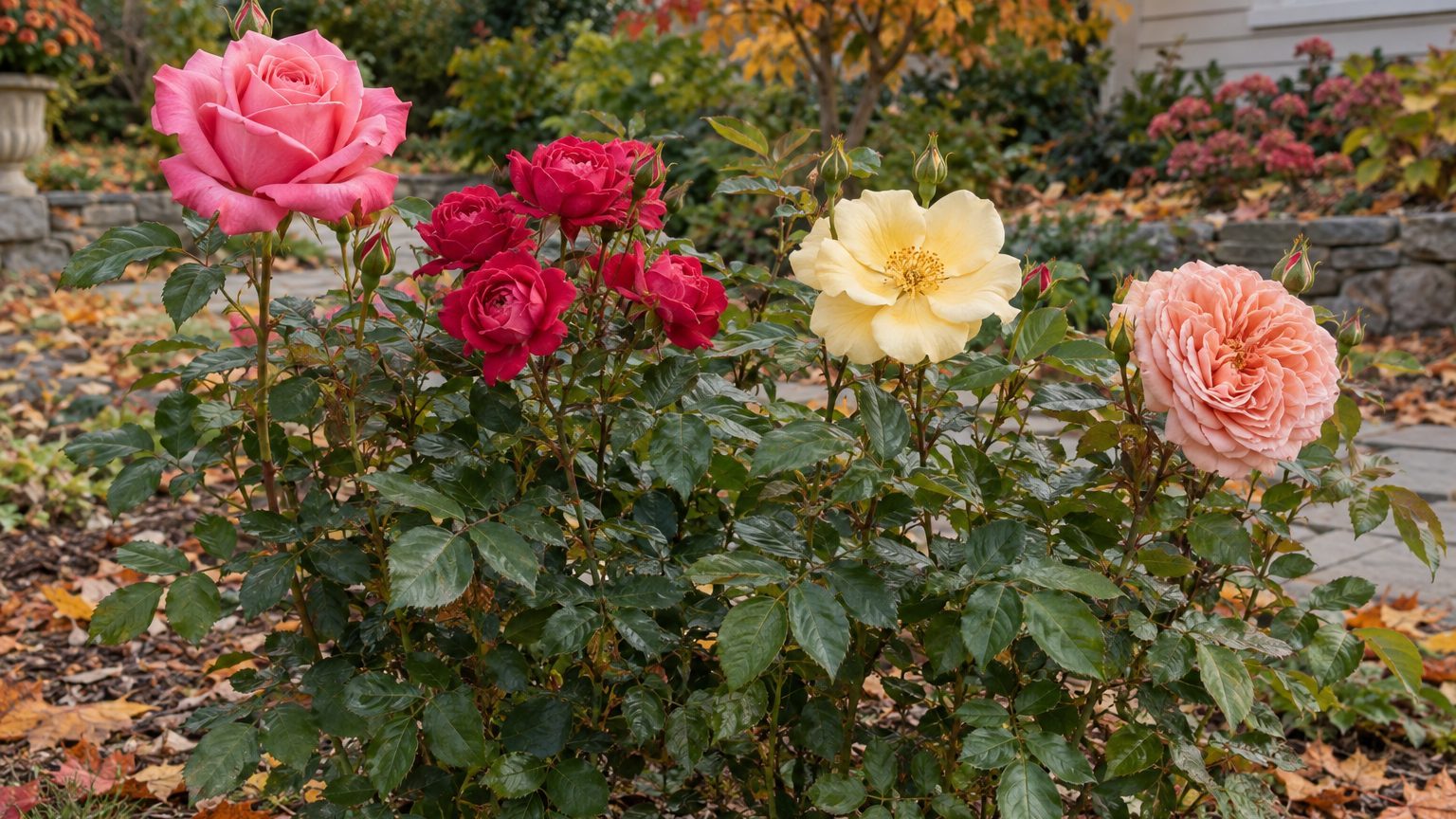
Canes that turn black and brittle by spring usually mean a rose was not built for the winter it got. Idaho winters decide which roses last, so hardy shrub roses are the dependable choice, with tender types kept for the milder spots. Knowing which kinds earn their place saves you a lot of replanting.
Best Roses to Grow in Idaho

Hardy shrub roses do well across Idaho because winter, more than summer heat or humidity, sets the limit. The USDA hardiness zone system puts the state anywhere from 3b to 7b, and the tougher kinds need little care under those conditions.
Hybrid Kordesii and Hybrid Rugosa Roses
Among shrub roses, the hybrid kordesii, hybrid rugosa and shrub groups have produced cultivars adapted to cold. Most are hardy and vigorous. Their cold tolerance makes them worth considering for colder parts of the state.
Knock Out and Explorer Series
Knock Out and the Explorer series perform well without extra winter protection. That makes them a sound pick if you would rather skip the November mounding chore. Plant them where they have room, since shrub roses fill out rather than staying tidy and upright like a hybrid tea.
Simplicity and Meidiland Roses
Simplicity roses are a series of shrub roses that repeat bloom the entire growing season and resist pests and diseases. Meidiland is another series that works well in the landscape. These roses suit a front yard where you want lasting color without a demanding spray schedule.
Alpine and Nootka Roses
Alpine and Nootka roses are less cold tolerant than their names might suggest. They do better in warmer areas and have survived on protected planting sites. In Idaho, keep them to sheltered spots in lower, milder ground rather than exposed open yards.
Hybrid Teas and Grandifloras
The hybrid tea is a widely grown garden rose, and floribundas, a cross between a hybrid tea and a polyantha, repeat bloom each season. Hybrid teas and grandifloras need extra winter protection. They reward the effort in a mild valley yard but are a gamble on a cold, exposed site.
Repeat-Blooming Climbers
Climbing hybrid teas and climbing grandifloras are generally not recommended, because most bloom only on the previous year’s growth. Repeat-blooming, large-flowered climbers are the better choice. Most of them bloom on new wood, so a hard winter that kills back the canes does not cost you the flowers.
Idaho — the year and the numbers
- State
- Idaho
- USDA zones
- 3b-7b
- Last spring frost
- April 23 to May 7
- First fall frost
- October 7 to October 21
- Annual rain
- 12 in
- Lawn zone
- transition-season
- Source
- NOAA NCEI 1991-2020 Climate Normals, 32F freeze probabilities · Boise
How to Choose a Rose for an Idaho Garden
Start with how cold your own yard gets and how much time you want to spend, then match the rose to that. A rose that suits a sheltered valley lot can fail at a higher elevation.
Winter protection is the main dividing line. Roses that need it ask for a November chore, and roses that do not leave you free.
| Your situation | What suits it in Idaho | Why |
|---|---|---|
| Very cold winter | Hybrid kordesii and hybrid rugosa shrub roses | Some tolerate winter lows of -45°F |
| Humid or disease-prone summer | Simplicity roses | They resist pests and diseases and repeat bloom all season |
| Little time | Knock Out or the Explorer series | They perform well without extra winter protection |
| Small space | Miniature roses | They are naturally dwarf and popular in small garden spaces |
| Mild, sheltered yard and a wish for classic blooms | Hybrid teas and grandifloras | They bloom well but need extra winter protection |
Alpine and Nootka roses fit the last row too, as long as the planting site is protected. Climbers follow the rule from the first section: choose repeat-blooming, large-flowered types.
Which Roses Suit Different Parts of Idaho
Elevation is an important part of the picture, and it pushes your choices toward hardier roses as you climb.
- Boise and the Treasure Valley: this is a low valley, and the last spring freeze usually falls between April 23 and May 7. Hybrid teas, grandifloras and the warmer-area Alpine and Nootka roses can work here with protection and a sheltered spot.
- McCall and the Sawtooth valleys: higher ground means colder winters and a much shorter season. Stay with hardy hybrid rugosa, hybrid kordesii and Explorer-type shrub roses, and leave tender types out.
- Idaho Falls and the upper Snake River Plain: higher and colder than Boise, so the mountain approach applies. Choose shrub roses that need no extra protection.
If your yard sits between these places, lean toward the hardier list. A rose that is a little too tough costs you nothing, while one that is too tender can die.
Rose Buying Mistakes to Avoid in Idaho
Buying Tender Roses Without a Plan
A hybrid tea or grandiflora planted with no thought for winter often dies back hard. These roses need extra protection, which means mounding soil over the crown in November, after nights have dropped to 20°F for several days. Skip that step, or choose a hardy shrub rose instead.
Take the mound off gradually in April, after the danger of hard frost has passed. It can also wait until May if frost lingers.
Choosing a Disease-Prone Variety
Some roses invite pests and disease, especially in a humid summer, and they leave you spraying or watching leaves spot and drop. The fix is to pick a rose bred to resist trouble. Simplicity roses are resistant to pests and diseases, and Knock Out and the Explorer series give you tougher options.
Planting a Grafted Rose Where Winter Kills the Graft
A grafted rose is only as hardy as its union. In a cold winter, canes that die to the ground can take the graft with them, and what regrows is the rootstock, a different rose entirely. Look for bare-root plants on their own roots, graded Number 1, so whatever regrows from the base is the rose you bought.
Where to Get Rose Advice in Idaho
Local growers know which roses survived the last hard winter in your own neighborhood. The following sources are worth a call or a visit before you spend money on plants.
- University of Idaho Extension offers research-based rose and garden guidance, and a good time to read it is winter, before you order bare-root plants.
- Your county extension office can tell you what grows at your elevation, so call it in early spring before the planting window opens in April.
Common Questions
When Should You Prune Roses in Idaho?
Prune repeat-blooming roses such as hybrid teas, floribundas and modern shrub roses in April, and it can also be done in May. Once-blooming roses, including old garden roses, ramblers and many climbers, flower on last year’s wood, so prune them right after they bloom and never in early spring.
When Should You Plant Bare-Root Roses in Idaho?
April and May are the months, in early spring as soon as the ground can be worked. Potted roses can go in later. Planting while bare-root plants are still dormant gives them a better start.
When Should You Feed Roses in Idaho?
Feed from May through July, and April or August work too. Feed regularly through the growing season and stop after mid-August, so soft new growth does not form just before the first frost.