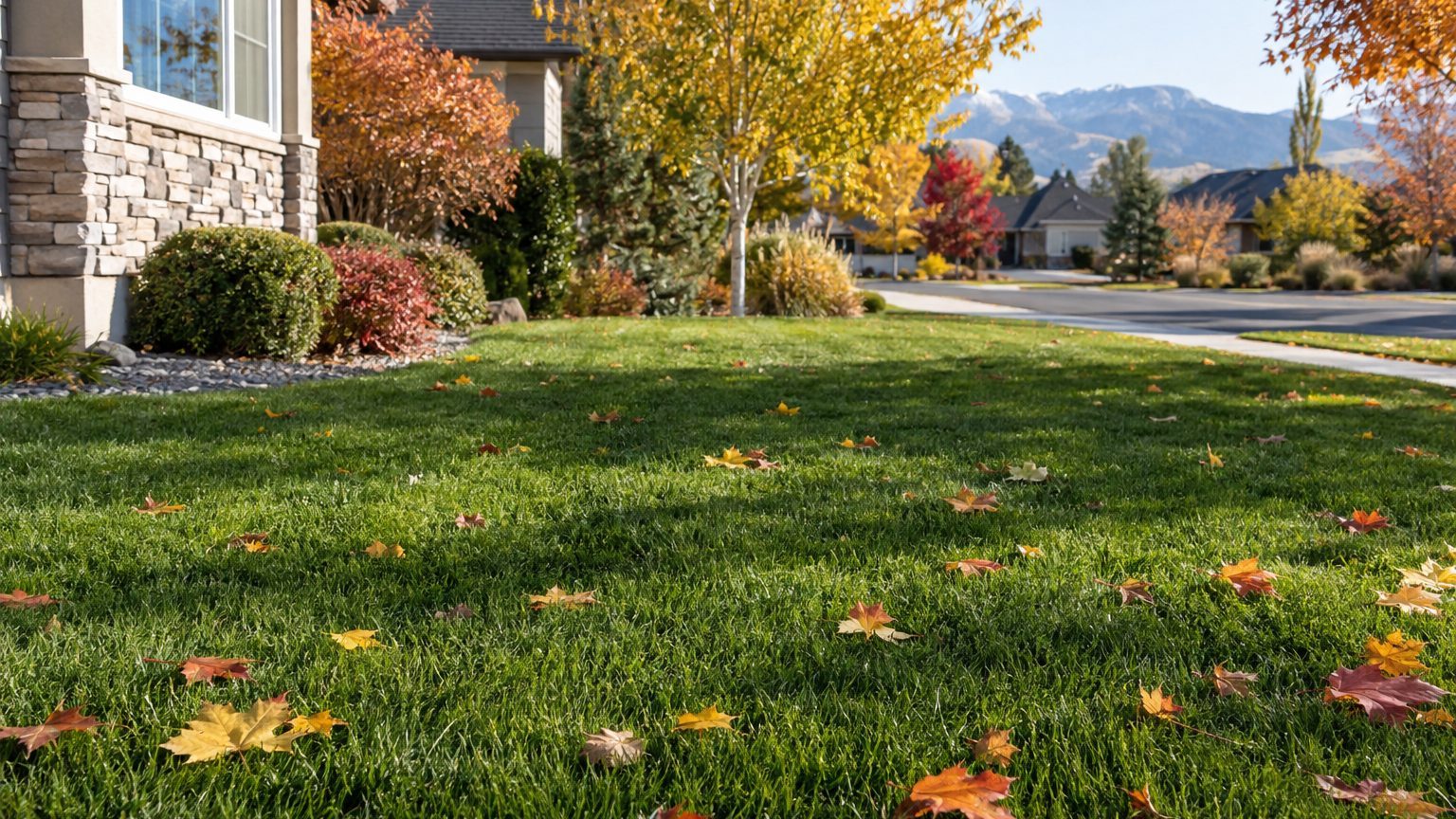
Around Boise, frost can sparkle on the blades in October while mowing may continue into November. That long season shapes the lawn year there: a spring push, a quiet hot summer, and a fall that does most of the real work.
What to Do Each Month in an Idaho Lawn
Most of the work lands in spring and fall, when cool-season grass grows hardest. Summer is for watering and mowing, and winter is for staying off the turf. The months below speak of Boise, a low valley, so higher towns run later in spring and earlier in fall.
| Month | In the lawn |
|---|---|
| January | Rest. The grass is dormant, so keep foot traffic light on frozen turf. |
| February | Rest. Dormant grass needs nothing, and walking on frost-stiff blades only bruises them. |
| March | Rest, and watch. The lawn is still waking, so wait for the soil to warm before any work. |
| April | Put down crabgrass preventer before the weed seed sprouts, and start mowing as growth picks up. Core aeration, dethatching and seeding also work now if fall slipped by. |
| May | Mow regularly as spring growth peaks. If you missed April, preventer still works, and so do aeration, seeding and a light feeding. |
| June | Mow, and begin deep watering as the heat builds so roots chase moisture downward. |
| July | Keep mowing and watering through the hottest weeks, since the dry air pulls moisture fast. |
| August | Dethatch and seed as the heat eases, while the soil is still warm enough for quick sprouting. Keep watering and mowing. |
| September | The big month. Core aerate, dethatch, seed and fertilize while the soil is warm and the nights are cooling. |
| October | Keep mowing as long as the grass grows, and rake leaves so they do not smother new turf. |
| November | Give the last feeding of the year, then mow until growth stops. |
| December | Rest. The grass is dormant, so stay off frozen turf. |
September packs in a whole list of lawn tasks at once, which is why it earns its reputation. If a task slips, check the table before moving it, because the fallback month depends on the job.
Idaho — the year and the numbers
- State
- Idaho
- USDA zones
- 3b-7b
- Last spring frost
- April 23 to May 7
- First fall frost
- October 7 to October 21
- Annual rain
- 12 in
- Lawn type
- cool-season
- Source
- NOAA NCEI 1991-2020 Climate Normals, 32F freeze probabilities · Boise
When Does the Lawn Season Start and End in Idaho?
Grass starts when the soil warms, not when the calendar says spring. Cool-season seed sprouts in soil at 50 to 65 °F, while warm-season grass wants 65 to 70 °F. Most Idaho lawns are cool-season types, so growth wakes early and keeps going into late fall.
Frost dates speak only to the risk for young seedlings. In Boise, the last spring freeze usually falls between April 23 and May 7, so tender spring seedlings can still get nipped in that stretch.
In Boise, the first fall freeze tends to arrive between October 7 and October 21. Seed sown in August and September has time to root before that, which is why fall beats spring for new grass. Mowing continues after the first freeze until the blades stop growing.
How the Lawn Calendar Shifts Across Idaho
Elevation drives most of the difference, and Idaho’s hardiness zones, in the USDA system, run from 3b to 7b. Boise’s dates reflect a low-valley location rather than Idaho’s full range of conditions.
- Treasure Valley: The schedule above is written for Boise; nearby lawns may still need local timing adjustments.
- Magic Valley and Twin Falls: Cold snaps can linger longer in spring, so start preventer and seeding toward the later end of the windows.
- Coeur d’Alene and the Panhandle: Cooler, wetter conditions slow the start of spring, and summer watering needs run lighter.
- Sun Valley, McCall and the mountain towns: Seasons are far shorter, so push spring work later and finish fall seeding early.
When in doubt, let the soil and the local frost pattern set the start, and let the calendar set the order.
Lawn Care Timing Mistakes to Avoid in Idaho
Seeding Too Late in Fall

Seed that sprouts just as hard freezes arrive may not establish enough roots to survive winter. Finish seeding in August and September so the grass is established before the first fall freeze.
Skipping the Spring Preventer Window
Crabgrass preventer works only before the weed seed sprouts. Applied after the plants appear, it does nothing, so put it down in April, with May as the backup.
Watering Shallow in Summer
Light daily sprinkles keep roots near the surface, where July heat bakes them. Water deeply and less often in June through August, so roots reach down where the soil stays cooler.
Where to Get Lawn Advice in Idaho
Idaho’s climate swings widely from one valley to the next, so local advice helps fine-tune these months for your town.
- University of Idaho Extension offers turf guidance written for Idaho conditions, useful before you plan the fall work.
- Your county extension office can speak to local soil and elevation, so call when spring timing is unclear.
Common Questions
Can You Mow Idaho Grass in Winter?
Not usually. The grass is dormant from December through March, so there is nothing to cut, and walking on frozen blades can damage them.
Is Spring a Good Time to Fertilize in Idaho?
May works for a light feeding, but September and November are the stronger times, because fall feeding builds roots and prepares the lawn for the next spring.
Should You Aerate in Spring or Fall?
September is the better choice, as the grass recovers quickly in warm soil. April and May still work if fall passes by.