Mulching Hydrangeas: When, How Deep and What to Use

Mulching Hydrangeas: When, How Deep and What to Use

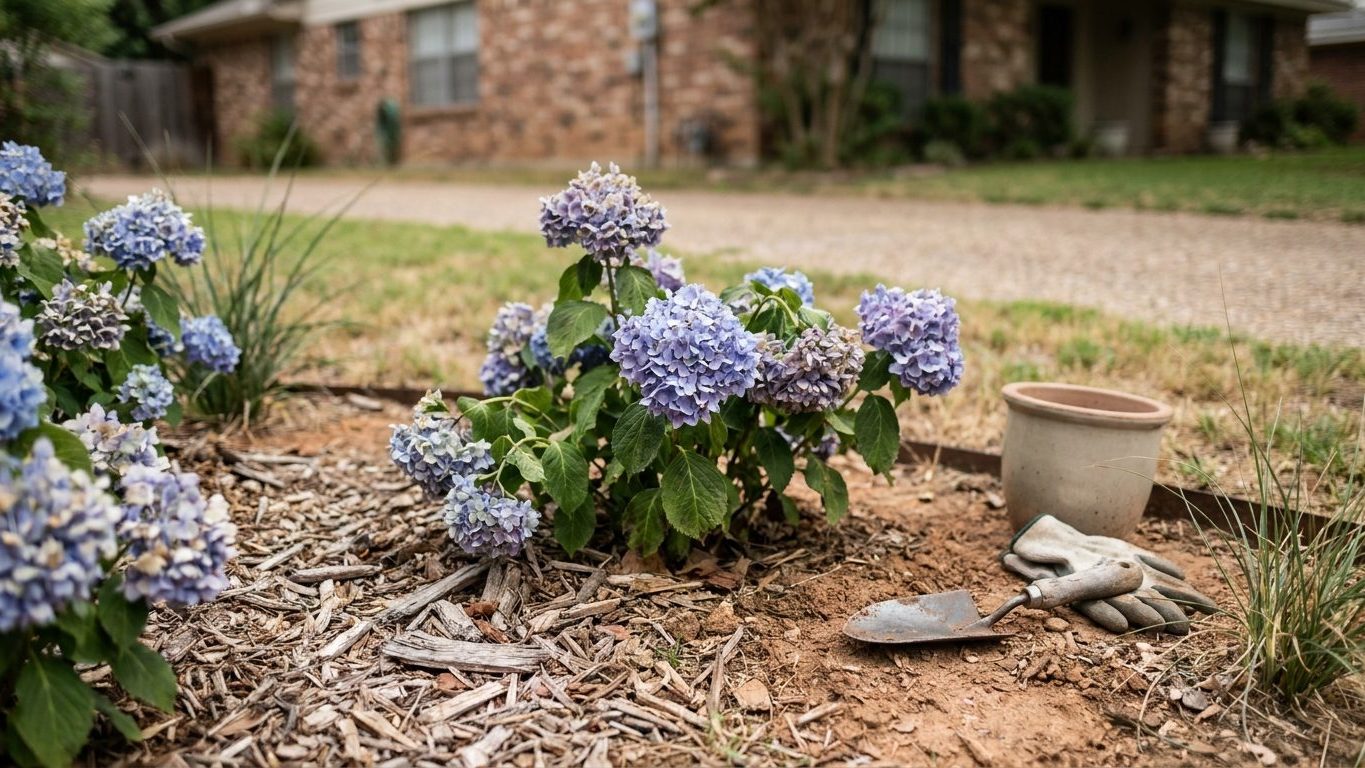
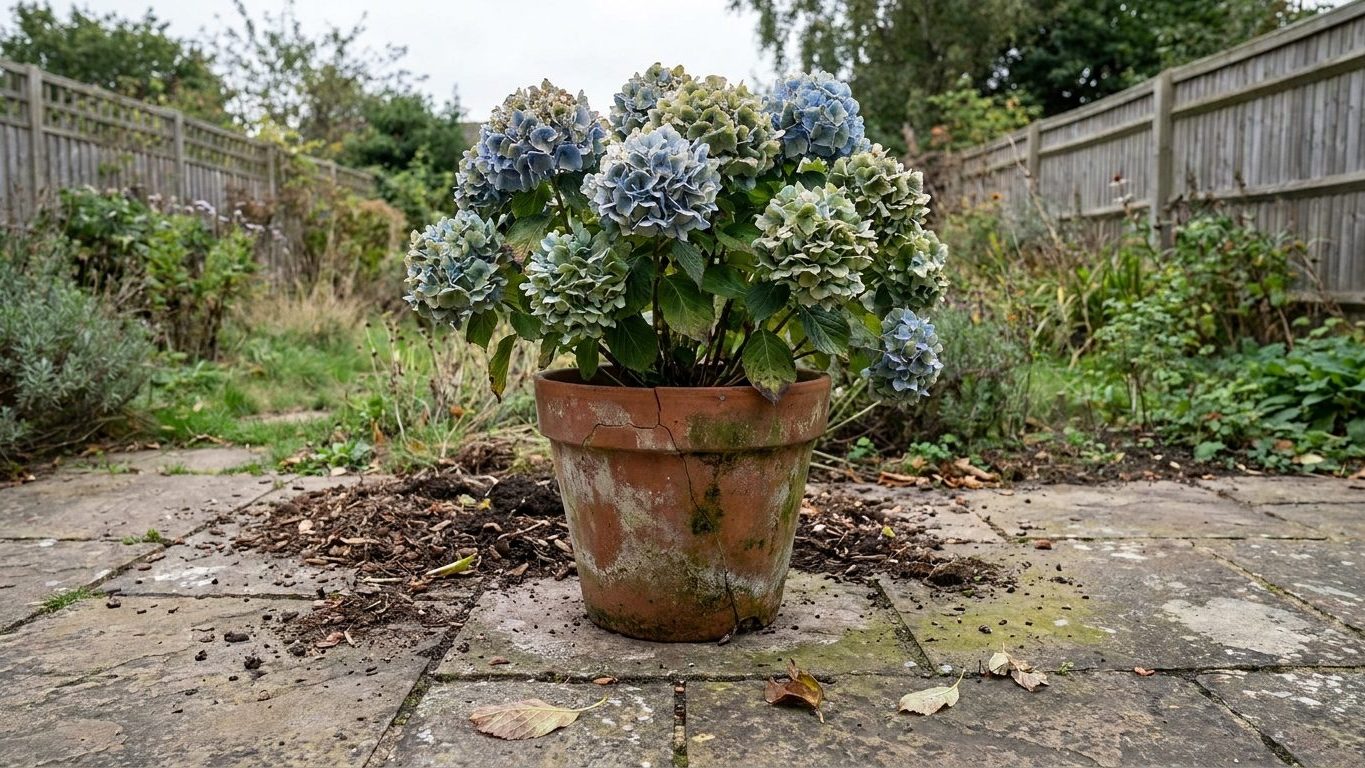
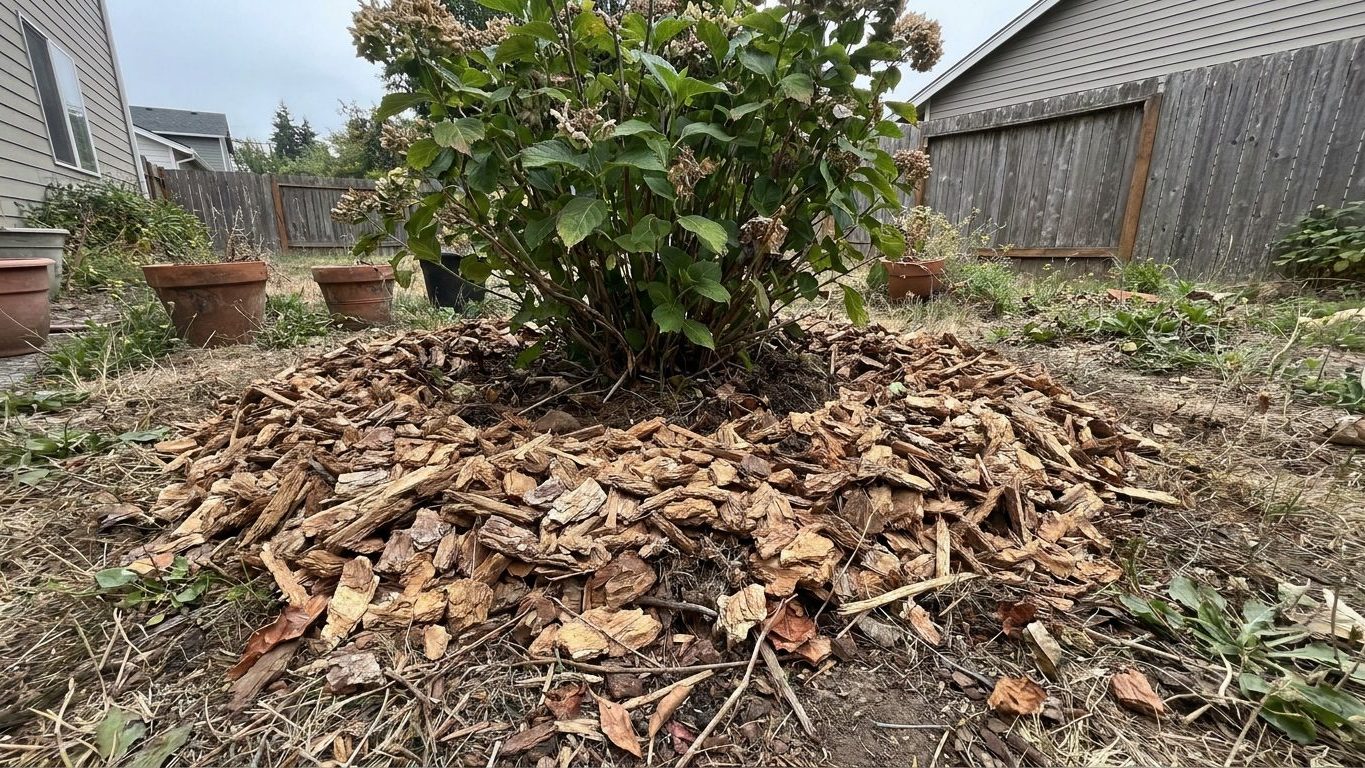
A 2 to 4 inch layer of shredded bark or chopped leaves, pulled back an inch from the stems, is the standard for every hydrangea type. When you lay it down shifts with your zone: cool-climate gardeners mulch in late fall to protect the root zone through winter, while warm-zone gardeners often mulch again in late spring to hold moisture through summer heat.

Mulching Hydrangeas: The Short Answer

NC State Extension Gardener Plant Toolbox lists the hydrangea genus across USDA zones 3a through 9b, but that range means little on its own. The right zone, and the right mulching window, depend entirely on which hydrangea you grow.

Bigleaf and panicle hydrangeas are both shallow-rooted, so a mulch layer protects the roots from heaving and drying out. The genus overall needs low maintenance once it’s established and mulched.

The state selector below this section carries the frost dates and mulching window for where you garden. Pick your state and skip straight to the numbers that apply to your yard.

Mulching Hydrangeas, Step by Step

Mulching Hydrangeas: When, How Deep and What to Use

Mulching a hydrangea is less about a single date and more about a sequence, six gestures done in order, whichever type you grow.

  1. Wait until the soil matches the season: mulch a cool-climate shrub once the first hard frost has stopped active growth, and mulch a warm-zone shrub as summer heat sets in, never onto frozen or bone-dry ground.
  2. Clear the base first: rake back old leaves and last year’s mulch to the drip line so the crown is visible, since bigleaf and panicle hydrangeas are both shallow-rooted and their surface roots sit close to whatever gets piled on top.
  3. Lay 2 to 4 inches, no more: a thicker layer holds too much moisture against shallow roots and invites the leaf spot and powdery mildew this genus is prone to.
  4. Keep an inch of bare soil at the stem: mulch touching the crown traps moisture against the bark and encourages bacterial wilt, so pull the layer back before walking away.
  5. Water once, deeply, after spreading: this settles the mulch and closes the air pockets that dry out shallow feeder roots faster than bare soil would.
  6. Check the layer again before the wood ripens: a hydrangea’s wood ripens through the season, it doesn’t harden off, and a layer washed thin by then won’t protect the root zone through whatever comes next.

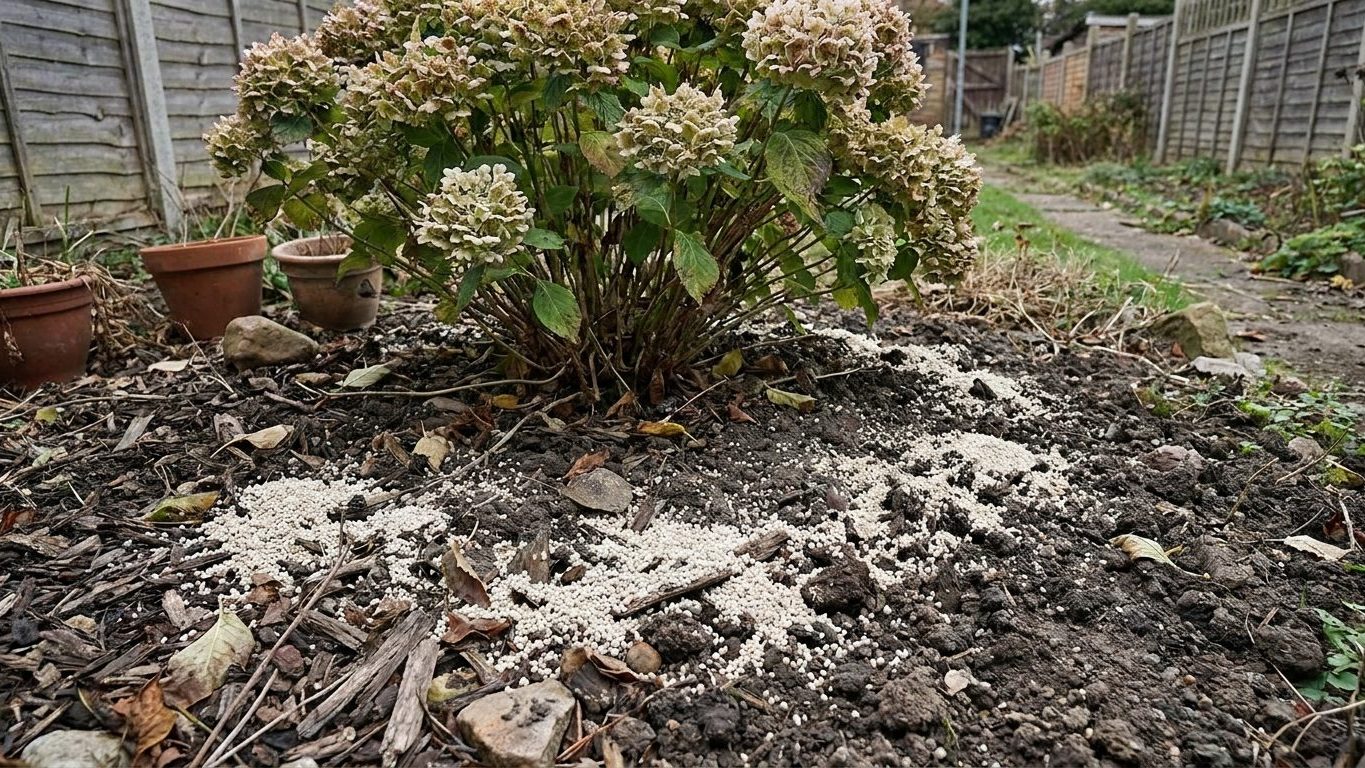
None of this changes what goes under the mulch. Shredded bark, chopped leaves and pine straw all work; what matters is the depth and the gap at the stem, not the brand of material. Skip fresh wood chips that haven’t started breaking down, since they can tie up nitrogen right at the surface where the shallow roots are feeding.

Mulching Hydrangeas by Hydrangea Type

The table below only fills in where the type has both a zone range and a light preference on record. Two hydrangea types meet that bar, and they’re also the two gardeners mulch most differently across the year.

NC State Extension Gardener Plant Toolbox puts bigleaf at 6a to 11b, flowering on last year’s wood, so a hard freeze after bud set removes the blooms. Panicle spans 3a to 8b and flowers on the current season’s growth, so a hard late-winter cutback won’t cost a single bloom.

Kind Flowers on USDA zones Sun
Bigleaf (mop-head, lacecap) Last year’s wood 6a–11b Part shade, protect from afternoon sun
Panicle (peegee) Current season’s growth 3a–8b Full sun, the only one that takes it well

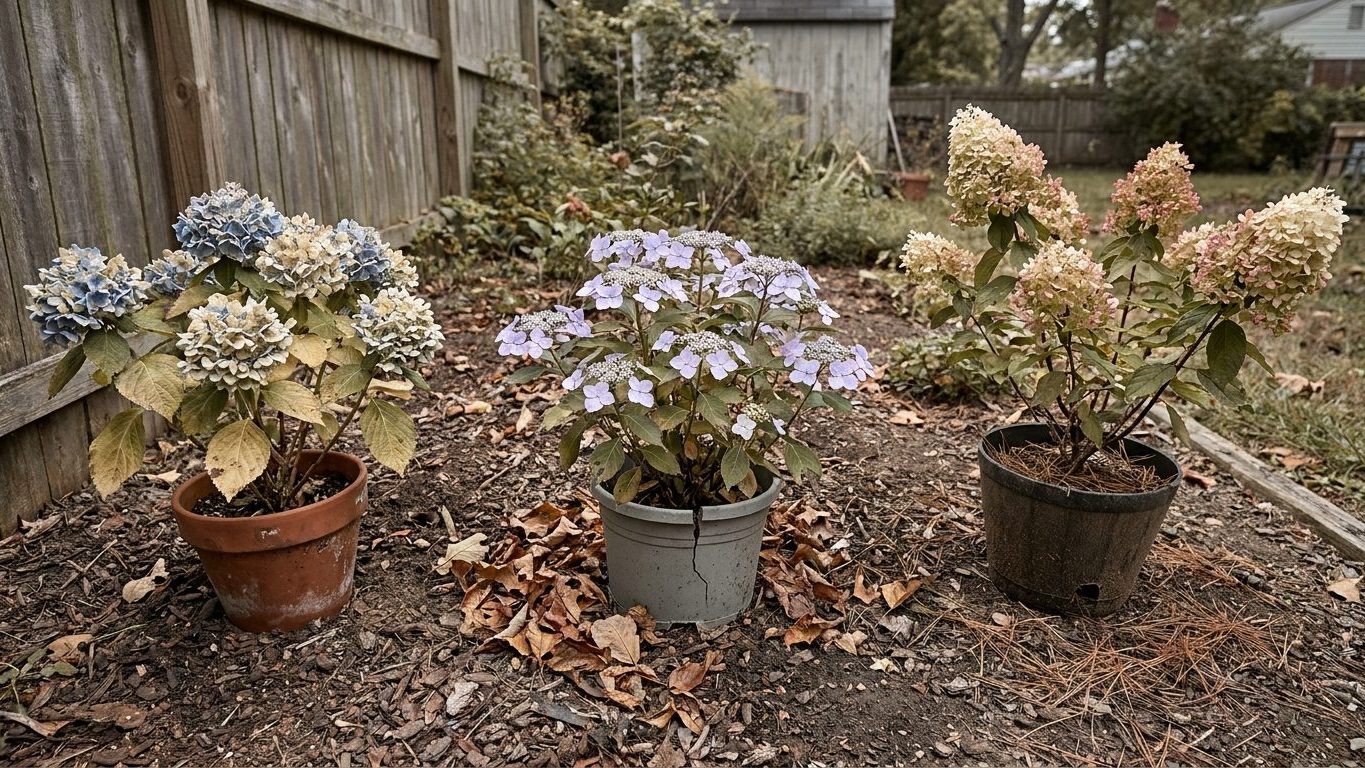
Smooth, oakleaf, mountain and climbing hydrangeas each mulch the same way, 2 to 4 inches, kept off the crown, but their pruning windows and cold tolerance differ enough that they’re covered on their own pages within the hydrangea guide rather than squeezed into this table.

Mulching Hydrangeas: Mistakes That Cost a Season

Mulch piled against the crown

Mulch piled against the crown — Mulching Hydrangeas: When, How Deep and What to Use

A thick cone of mulch against the stems holds moisture right where the bark meets the soil, and bacterial wilt, one of the diseases named for this genus, starts in exactly that kind of damp. Pull the layer back an inch from every stem, and check the diseases page if leaves wilt despite regular water.

Fresh wood chips spread too deep

Fresh wood chips spread too deep — Mulching Hydrangeas: When, How Deep and What to Use

Unaged chips piled past 4 inches tie up nitrogen at the surface and stay wet against bigleaf and panicle’s shallow roots, the same damp conditions behind leaf spot and powdery mildew. Keep the layer at 2 to 4 inches and let chips sit a season before spreading them fresh.

Treating every type on one calendar

Mulching a panicle and a bigleaf on the same date ignores that one flowers on new wood and the other on last year’s growth, so a schedule built for one costs blooms on the other. Check the pruning page for the window that actually matches what’s growing in the yard.

Mulching Hydrangeas in Your State

The national window here won’t tell you when to mulch in your own yard. Your state’s frost dates and the hydrangea types sold locally change both the timing and the depth, so the numbers live on the state page instead of here.

  • Your state page: the frost dates and the mulching window for where you live.
  • Which types hold up here: whether bigleaf survives your winters unprotected or needs the extra insulation mulch provides.
  • Your extension office: the local service that can confirm soil pH and disease pressure specific to your county.

Common questions

Does the mulch color change flower color?

No. Mulch dye has no effect on bloom color. Only bigleaf and mountain hydrangeas shift between blue, purple and pink, and that shift tracks soil pH and available aluminum, not what sits on top of the soil. Panicle, smooth, oakleaf and climbing hydrangeas keep their color regardless of pH.

Can I use grass clippings instead of bark mulch?

Fresh clippings mat down and can smother the shallow roots that bigleaf and panicle depend on, so a thin, dried layer works better than a thick, fresh one. Shredded bark or chopped leaves still make the more reliable choice around the crown.

Should I remove mulch in spring?

Pull back the old layer to check the crown for rot, then refresh it rather than stripping it away entirely. A hydrangea’s wood ripens through the season, and a bare root zone right as new growth starts leaves shallow roots exposed to swings in moisture.
Growing Hydrangeas in Texas: Dates and Varieties

Growing Hydrangeas in Texas: Dates and Varieties

Yes, hydrangeas grow in Texas, but the state’s frost dates swing by weeks from the Gulf Coast to the Panhandle, and that swing decides which kind blooms and when to cut it back. Houston’s growing season stretches from early February to mid-December. Farther north and west, the window shrinks fast. Match the dates and the species to your corner of the state, and hydrangeas hold up fine here.

Hydrangeas Care Calendar for Texas

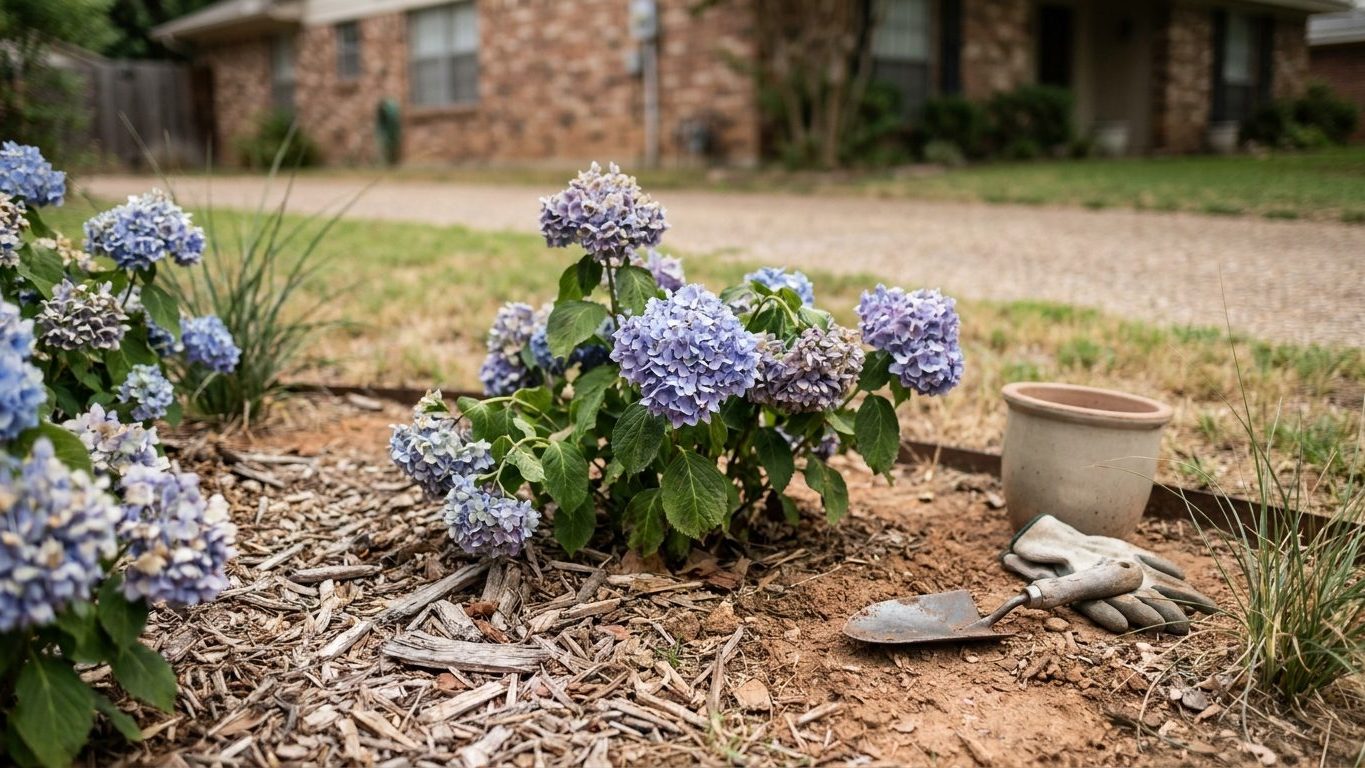
Hydrangeas in a Texas home landscape

Houston’s IAH station shows the last spring frost falling between February 4 and March 1, and the first fall frost between December 1 and December 19, per NOAA NCEI’s 1991-2020 Climate Normals. Texas spans USDA zones 6a to 10a, per the USDA Plant Hardiness Zone Map, and that decides which hydrangea survives where you live.

  • Dormancy: the safe window to dig up or move a plant, roots undisturbed, runs while the shrub sits bare between the December frost and the February thaw.
  • Planting: new shrubs go in during February and March, once the worst frost risk has cleared, or again in October and November as the fall heat finally breaks.
  • Fertilizing: feed in March, May, and July, matching the spring growth push and the two flushes that follow the summer heat.
  • Bud set: next spring’s flower buds form on this year’s wood through late summer, so nothing gets cut back carelessly come August or September.
  • Pruning bigleaf: trim spent blooms in June and July, right after flowering, and never in fall or winter.
  • Frost watch: once the first freeze lands, somewhere between December 1 and December 19, pile mulch at the base and let top growth die back on its own.
  • Recovery: a shrub that skipped its June cutback usually still leafs out fine the next spring, it just carries fewer blooms.

Miss one of these windows and the plant almost always survives, it just skips a year of flowers.

Best Hydrangeas for Texas

Texas’s 6a to 10a range, per the USDA Plant Hardiness Zone Map, covers everything from Panhandle winters to Gulf Coast humidity, so no single hydrangea works everywhere in the state. The kind that thrives in Houston’s shade can sulk in Amarillo, and the one that shrugs off a Panhandle freeze can scorch near the coast.

Four kinds cover most Texas yards. The rest, from climbing hydrangea to newer reblooming crosses, are rare enough here that they get their own page rather than a line in this table.

Kind Verdict here Why
Bigleaf (mophead/lacecap) Best on the Gulf Coast, iffy inland Wants steady moisture and part shade, struggles in West Texas heat and wind
Panicle Solid statewide pick Blooms on new wood, tolerates more sun and the harshest stretch of summer
Oakleaf Strong in East Texas woodland gardens Native to the Gulf South, handles part shade and humid summers well
Smooth (‘Annabelle’ type) Better toward North Texas and the Panhandle Cold-hardy but wilts fast in deep South Texas heat

Climbing hydrangea and the reblooming bigleaf types are the ones I get asked about most after these four, but they stay niche enough in Texas conditions to cover on a dedicated page.

When to Plant, Prune and Feed Hydrangeas in Texas

Three windows matter more than the rest of the calendar. Planting, feeding, and cutting back bigleaf wood each follow their own logic, tied to how fast the ground warms and how long the heat holds on.

The planting and pruning months come from the state’s own calendar. The frost dates anchoring them are NOAA NCEI’s 1991-2020 Climate Normals for Houston’s IAH station, the last freeze falling between February 4 and March 1.

Task Window here Counted from
Planting February, March, then October, November Starts once the last frost clears, Feb 4 to March 1, and again before the first frost, Dec 1 to 19
Fertilizing March, May, July Set to the spring growth flush and the two heat-season pushes that follow
Pruning bigleaf June, July Right after the spring bloom fades, before next year’s buds start forming

Panicle and smooth hydrangeas skip the bigleaf pruning rule since they flower on new wood. That timing lives on the state’s month by month calendar page rather than here.

Hydrangeas Problems in Texas and What Causes Them

No blossoms the spring after planting

This usually traces back to pruning at the wrong end of the calendar. Cut bigleaf wood outside the June and July window and the shrub sacrifices next year’s buds. Stick to that window and skip any fall cutback.

Leaves crisped on the hottest exposure

Full sun through a Gulf Coast summer stresses bigleaf hydrangea past what part shade allows. Move it east-facing or under high canopy, and water deep rather than often once the heat settles in for good.

Bud dieback far from the Gulf

Away from Houston’s mild end of the state’s 6a to 10a range, a late cold snap after buds swell kills the flower show even though the shrub itself survives. Mulch heavy through the last stretch before the local last frost date.

Texas North to South: How the Dates Shift

Houston’s last freeze, February 4 to March 1, sits at the mild end of the state’s spread, per NOAA NCEI’s Climate Normals for the IAH station, and every other region shifts from there.

  • Gulf Coast (Houston, Corpus Christi, Beaumont): the mildest end of the range, frost arrives latest and leaves earliest, favoring shadier, wetter conditions bigleaf hydrangea prefers.
  • East Texas Piney Woods (Lufkin, Tyler, Nacogdoches): close to Houston’s timing but with more filtered light under pine canopy, suiting oakleaf and bigleaf both.
  • Hill Country and Central Texas (Austin, San Antonio): mid-range on the state’s zone spread, with harsher sun and thinner, more alkaline soil pushing gardeners toward panicle.
  • North Texas (Dallas-Fort Worth): frost comes weeks earlier and lingers weeks later than on the coast, shortening the safe planting windows on both ends.
  • Panhandle and West Texas (Amarillo, Lubbock): the coldest corner of the state’s 6a to 10a range, where smooth hydrangea’s cold tolerance matters more than any other trait.

Whatever corner of Texas this is, the state’s own calendar page lines up the exact months for that spot.

Texas Extension Offices and County Contacts

The 6a to 10a range and the Houston frost dates above are a starting point, not a substitute for what’s happening on one specific block. A county extension office, or Texas A&M AgriLife Extension Service, can confirm what holds true where a particular yard sits.

  • Your state page: the frost dates and the pruning window laid out above, in one place.
  • Which ones hold up here: a longer look at bigleaf, panicle, oakleaf, and smooth side by side.
  • What goes wrong here: the pests and diseases that show up on Texas hydrangeas specifically, beyond the climate issues covered above.

This month, the move is simple: check the calendar table above and match the next task to whichever window is open right now.

Common questions

Can hydrangeas survive Texas summers?
Yes, especially panicle and oakleaf types. Bigleaf hydrangea needs part shade and consistent water once Houston-area heat settles in past the spring bloom.

What month should I prune hydrangeas in Texas?
For bigleaf, June and July, right after the flowers fade. Panicle and smooth types tolerate a late-winter cut instead, since they bloom on new wood.

Do hydrangeas need acidic soil in Texas?
Bigleaf hydrangea’s bloom color shifts with soil pH, and many Texas soils run more alkaline than the Southeast, which is part of why blue blooms are harder to hold onto here.

When to Fertilize Hydrangeas, and What to Use

When to Fertilize Hydrangeas, and What to Use

Fertilizing hydrangeas means feeding as new growth starts each spring and easing off well before the plant needs to slow down for the year. The right window shifts by hardiness zone and by which hydrangea you grow, since bigleaf types set next year’s blooms on old wood while panicle types flower on new growth entirely. Type decides more than the calendar does.

Fertilizing Hydrangeas: The Short Answer

NC State Extension Gardener Plant Toolbox puts the genus at USDA zones 3a through 9b, but that depends entirely on the type. Bigleaf hydrangeas run 6a to 11b, while panicle types stretch from 3a to 8b, so the same calendar month reads differently in each zone.

The general rule feeds new growth in spring and stops before the plant sets next year’s flower buds. Bigleaf hydrangeas bloom on last year’s wood and get pruned before August 1, so a late feeding pushes soft growth right when the plant needs to stop.

Panicle hydrangeas flower on the current season’s growth instead, so they tolerate a longer feeding window and a hard cutback in late winter. The type you grow decides more than the calendar does.

The table below, one state per box with its months and its zone, gives the fertilizing window where you live.

Fertilizing Hydrangeas, Step by Step

When to Fertilize Hydrangeas, and What to Use

Feeding a hydrangea well means acting in this order, from the first flush of new growth to the last mulch of the season.

  1. Identify the bloom wood: bigleaf and mountain hydrangeas set flower buds on last year’s wood, while panicle and smooth types bloom on the current season’s growth, and that difference decides how much room there is to push new growth with a feeding.
  2. Feed as new leaves emerge: this is when a medium to rapid grower like macrophylla or paniculata actually uses the nitrogen, instead of it sitting unused in cold soil.
  3. Match the fertilizer to the color, on bigleaf and mountain only: NC State Extension Gardener Plant Toolbox puts blue at below about pH 5.5, and pink above about pH 6.5, with purple in between.
  4. Skip high-phosphorus formulas on a blue hydrangea: phosphorus locks up the aluminum the plant needs for blue color, which pushes flowers toward pink even when the soil pH hasn’t moved at all.
  5. Mulch right after feeding: both macrophylla and paniculata are shallow-rooted, so a mulch layer holds moisture and nutrients near the roots instead of letting them wash past.
  6. Stop before the prune date for your type: bigleaf hydrangeas get pruned before August 1 since next year’s buds are already forming, while panicle types tolerate feeding later since they get cut back hard in late winter.

Coffee grounds and citrus peel are a widely held belief for turning flowers blue, but the pH shift they cause is too small to matter much. What actually moves the color is available aluminum in the soil, and a proper amendment reaches it far more reliably.

Fertilizing Hydrangeas by Hydrangea Type

NC State Extension Gardener Plant Toolbox lists bigleaf hydrangea at USDA zones 6a to 11b, blooming on last year’s wood, while panicle hydrangea covers zones 3a to 8b on the current season’s growth.

Color follows the same split. Bigleaf and mountain hydrangeas shift between blue and pink with soil pH, while panicle, smooth, oakleaf and climbing types stay white, cream, pink or green as the season ages, regardless of what’s in the soil.

Kind Flowers on USDA zones Sun
Bigleaf Last year’s wood 6a–11b Part to deep shade
Panicle Current season’s growth 3a–8b Full sun

Smooth, oakleaf, mountain and climbing hydrangeas are on their own pages, since the source gives each only one of these figures rather than the full set shown here.

Fertilizing Hydrangeas: Mistakes That Cost a Season

No flowers on an otherwise healthy bigleaf

No flowers on an otherwise healthy bigleaf — When to Fertilize Hydrangeas, and What to Use

Bigleaf hydrangeas form next year’s flower buds the previous summer, so a spring prune or a late frost removes them before they ever open. The fix is timing any cut before August 1 and checking which type is actually planted, since panicle hydrangeas forgive that same cut.

A blue hydrangea turning pink for no reason

High-phosphorus fertilizer, the kind sold for roses and blooms, locks up the aluminum a bigleaf or mountain hydrangea needs for blue color, pushing flowers toward pink even if the soil pH hasn’t changed at all. Checking the fertilizer label solves what looks like a soil problem.

Acidifying soil under a panicle hydrangea

Panicle, smooth, oakleaf and climbing hydrangeas don’t change color with soil pH, so aluminum sulfate or a pile of coffee grounds does nothing but shift soil chemistry for no reason. Save the color amendments for bigleaf and mountain hydrangeas, the only two that respond to them.

Fertilizing Hydrangeas in Your State

The national rule doesn’t hand out a date, since bigleaf and panicle hydrangeas span several hardiness zones between them, and the frost that ends one state’s growing season hasn’t touched the ground yet in another. Your state page fills in the exact window.

  • Your state page: the frost dates and the pruning window where you live.
  • Which type grows there: whether your zone supports bigleaf, panicle, or both at once.
  • Your local extension office: a soil test and a fertilizer recommendation matched to your actual soil, not the national average.

Common Questions

Can I use the same fertilizer on every hydrangea in my yard?

Only if flower color doesn’t matter to you. Color-neutral fertilizers work fine on panicle, smooth, oakleaf and climbing hydrangeas, but bigleaf and mountain hydrangeas need the color effect factored in, since phosphorus locks up the aluminum that keeps flowers blue.

Do coffee grounds actually turn hydrangeas blue?

Barely. NC State Extension Gardener Plant Toolbox notes that coffee grounds and citrus peel can acidify soil enough to shift color, but the effect is small next to a proper aluminum sulfate application, and what the plant needs most is available aluminum, not just a lower pH number.

Is it safe to fertilize hydrangeas if I have pets in the yard?

The fertilizer itself isn’t the pet risk, the plant is. Only bigleaf hydrangea is documented toxic, and only if large quantities are eaten, causing nausea, stomach pain and vomiting in pets and people alike. Fertilizer labels carry their own separate pet warnings worth reading too.

Growing Hydrangeas in Ohio: Dates and Varieties

Growing Hydrangeas in Ohio: Dates and Varieties

In central Ohio, hydrangeas bloom reliably from spring planting through fall color, provided the kind matches a zone that runs 5b to 6b and a frost window that lands in May, then again in October. Panicle and smooth types shrug off the swings. Bigleaf needs a warmer pocket and some shelter. The right pick depends less on the flower color and more on which wood survives winter.

Hydrangeas Care Calendar for Ohio

Hydrangeas in a Ohio home landscape

Columbus sits in USDA zone 6a, and Ohio State University Extension’s Ohio Gardening Calendar puts the last spring frost there between May 5 and May 15, with the first fall frost returning between October 5 and October 15. The wider state runs 5b to 6b, from the Lake Erie shoreline down to the Ohio River, but Columbus is the reference point behind the dates below.

  • Dormancy: the safe window to move or divide a hydrangea, roots undisturbed, runs through the cold months before growth restarts.
  • Planting: wait two to three weeks past the last spring frost window, so soil has warmed enough for new roots to take hold.
  • Bud break: new leaves show up within a couple of weeks of that same frost window, and that’s the cue for the first feeding.
  • Early summer growth: bigleaf types set next year’s flower buds now, so any pruning has to happen right after this year’s bloom fades.
  • Peak bloom and second feed: midsummer heat calls for another round of fertilizer and steady watering, not a dry stretch.
  • Frost prep: mulch heavy before the first fall frost arrives, protecting buds already set for next spring.

Miss the planting window and the plant still survives, it just spends its first year catching up instead of filling out.

Best Hydrangeas for Ohio

Ohio’s 5b to 6b range, per the USDA Plant Hardiness Zone Map, favors hydrangeas that flower on new wood over ones betting everything on stems that survived winter. That single distinction decides more than sun, soil, or color ever will.

Bigleaf remains popular for its big mophead blooms, but it carries real risk in a 5b winter. Panicle, smooth, and climbing types carry almost none.

Kind Flowers on Fares in 5b to 6b Sun
Bigleaf (H. macrophylla) Old wood Marginal, buds often killed Part shade
Panicle (H. paniculata) New wood Reliable end to end Full sun to part shade
Smooth (H. arborescens) New wood Reliable, native to Ohio woodlands Part shade
Oakleaf (H. quercifolia) Mostly old wood Borderline, safer near Lake Erie Part shade
Climbing (H. anomala petiolaris) Old wood Hardy through the range Part shade to shade

Reblooming bigleaf hybrids and mountain hydrangea are less common here and get their own coverage. For a sense of how differently this plays out in a colder, drier climate, the same comparison runs on the Colorado hydrangea page.

When to Plant, Prune and Feed Hydrangeas in Ohio

Ohio State University Extension’s Ohio Gardening Calendar sets three windows that matter more than anything printed on a plant tag: when to plant, when to prune bigleaf, and when to feed.

Planting stretches across spring and late summer, pruning stays tight to bigleaf’s old wood, and feeding brackets the season’s heaviest growth.

Task Window here Counted from
Plant May, June, August, September After soil warms past frost, or before fall’s cool spell sets in
Prune bigleaf June, July Right after bloom fades, before next year’s buds form
Fertilize May, July Bracketing the peak growth push

Panicle and smooth hydrangeas prune on a different schedule entirely, in late winter instead of after bloom, and that month by month sequence lives on its own page.

Hydrangeas Problems in Ohio and What Causes Them

No blooms after a hard winter

Bare, woody stems with swollen leaf buds but no flower buds forming; branch tips may show brown, shriveled, dried-out nubs where flower buds should be

Bigleaf sets its flower buds on old wood the summer before, and a sharp cold snap in a zone 5b pocket kills them outright. Plant in a sheltered spot, or lean on a kind that blooms on new wood instead.

Leaves scorched on the sunny side

Leaf edges and tips on the sun-exposed side turn crisp brown or tan, with a sharp contrast against the still-green shaded side; texture is dry, papery

Afternoon sun and heat bouncing off pavement or siding burn leaf edges by midsummer, especially on plants set against a south or west wall. Part shade in the afternoon solves this before it starts.

Wilting despite regular watering

Leaves and stems droop and go limp despite moist soil; foliage may appear dull, slightly darker green or grayish rather than crisp bright green, somet

Ohio’s clay soil holds water, then bakes hard between storms, so roots sit soggy one week and starved the next. Working in organic matter at planting time evens that out for good.

Ohio North to South: How the Dates Shift

Ohio’s 5b to 6b range doesn’t sit flat across the state. Lake Erie and the Ohio River push the edges warmer, while the northeast interior holds onto winter longer than the rest.

  • Lake Erie shoreline (zone 6b): the lake delays both frosts, giving bigleaf buds better odds of making it through winter than almost anywhere else in the state.
  • Northeast snowbelt and interior uplands (zone 5b): cold air pools in these valleys, and gardeners here do better sticking with panicle and smooth types.
  • Ohio River Valley and the south (zone 6b): frost clears earliest in this stretch, opening the planting window a little sooner than the rest of the state.

For the county level detail behind these zones, the Ohio page breaks the state down further.

Ohio Extension Offices and County Contacts

Ohio’s zone 5b to 6b range is a starting point, not a final answer, since soil, wind, and one yard’s microclimate change the picture fast. USDA NIFA’s Land-Grant University Extension directory names Ohio State University Extension as the state’s contact for that finer detail.

  • Ohio State University Extension: extension.osu.edu connects to the county office nearest you and a horticulturist who knows your soil.
  • The hydrangea guide: the full species breakdown covers bloom wood and sun needs kind by kind, past what fits here.
  • Your county’s frost dates: worth confirming directly, since May 5 to 15 is a range, not a promise for every yard.

This month, the move is simple: check the calendar table above, and match it to whatever’s still dormant or already blooming in the yard right now.

Common questions

Can hydrangeas survive Ohio winters without protection?

Panicle, smooth, and climbing types generally do, since they flower on new wood that regrows each spring regardless of winter cold. Bigleaf is the exception, and in a 5b pocket it can lose its buds most years without a sheltered spot.

When is the best time to plant hydrangeas in Ohio?

May, June, August, and September are the windows the Ohio Gardening Calendar sets, giving roots time to settle before either summer heat or winter cold arrives.

Do hydrangeas need full sun in Ohio?

Most do better in part shade here, since Ohio summers bring enough heat and humidity to scorch leaves in a full sun spot, especially against a wall that holds afternoon heat.

Hydrangea Diseases: Leaf Spot, Mildew, Wilt and Rot

Hydrangea Diseases: Leaf Spot, Mildew, Wilt and Rot

Leaf spot, powdery mildew, bacterial wilt, and a crown that turns soft and rots at the soil line: these are the problems that show up on hydrangeas across the country. None of them ends a shrub outright, but each one costs a season of bloom if it’s ignored. What decides the outcome is the type of hydrangea in your yard and the humidity around it, not a single spray.

Hydrangea Diseases: The Short Answer

NC State Extension Gardener Plant Toolbox places the hydrangea genus across USDA zones 3a through 9b, and that spread is exactly why disease pressure shifts so much from yard to yard. Humidity and airflow matter more than the calendar.

The source names three diseases for the whole genus: leaf spot, bacterial wilt, and powdery mildew. Panicle hydrangeas pick up two more, rust and bud blight, because their flower buds sit exposed on new wood all summer.

Type decides more than zone does. A bigleaf hydrangea holds its flower buds through winter on old wood, which puts frost damage and fungal spotting on the same plant at the same time.

The state selector below this section leads straight to your state’s page, where the local pressure and the pruning window are laid out.

Hydrangea Diseases, Step by Step

Hydrangea Diseases: Leaf Spot, Mildew, Wilt and Rot

Work through the plant in this order, from the leaves down to the roots, before reaching for any spray.

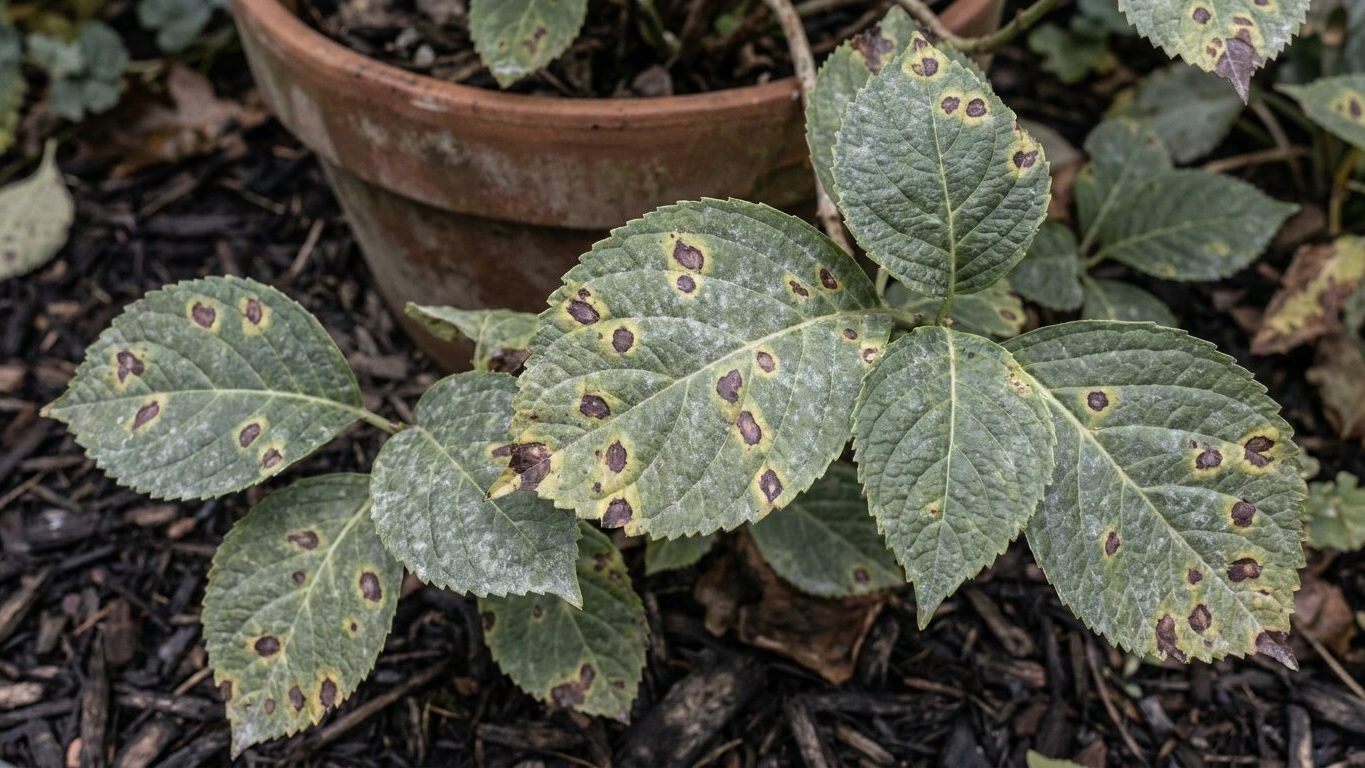
  1. Check the leaf pattern first: NC State Extension Gardener Plant Toolbox names leaf spot as one of three diseases that reach across the genus, showing as brown or purple rings scattered on older leaves rather than new growth.
  2. Look for a white or gray coating: powdery mildew sits on top of the leaf like flour dust and thickens in still, humid air, especially on shrubs pressed against a fence or wall.
  3. Test for wilt that water doesn’t fix: bacterial wilt drops the whole shoot even when the soil underneath is damp, the tell that separates it from ordinary drought stress.
  4. Press the base of the stem: a crown that feels soft or dark under the mulch points to rot from soil that never drains, since the source lists good drainage as a requirement even where occasional wet soil is tolerated.
  5. Rule out pests before blaming disease: aphids, scales, mites, and nematodes turn up on the same plant, but the source calls them rarely a problem next to the fungal and bacterial issues above.
  6. Match the fix to your type: a bigleaf hydrangea and a panicle hydrangea don’t share a treatment calendar, so the next section sorts out which pressure applies to which shrub.

None of these six checks needs a lab. A hand lens for the mildew, a thumbnail press on the crown, and a look at where the wilt starts tell you most of what a diagnostic clinic would.

Hydrangea Diseases by Hydrangea Type

Disease pressure and pruning risk trace back to one fact: does the shrub bloom on last year’s wood or this year’s growth? NC State Extension Gardener Plant Toolbox puts bigleaf at 6a to 11b, flowering only on wood set the previous summer, so a late frost erases the whole show.

Panicle hydrangea flowers on the current season’s growth instead, and it can take a hard cut back in late winter without losing a single bloom. It’s also the only type in the group that handles full sun well.

Kind Flowers on USDA zones Sun
Bigleaf Last year’s wood 6a–11b Part shade, protect from afternoon sun
Panicle Current season’s growth 3a–8b Full sun

Smooth, oakleaf, mountain, and climbing hydrangeas all set their buds on old wood too, but each carries its own quirks, from oakleaf’s wine-red fall color to climbing hydrangea’s slow start. Those four are on their own pages, where zone and timing specifics are laid out type by type.

Hydrangea Diseases: Mistakes That Cost a Season

Watering the leaves at dusk

Wet foliage overnight is what lets leaf spot and powdery mildew take hold, since both need standing moisture on the leaf surface to establish. Aim water at the soil instead, and check your type’s page for how much a mature shrub actually needs.

Pruning an old-wood type in spring

Bigleaf, oakleaf, mountain, and climbing hydrangeas set their flower buds the summer before, so a spring cut removes the very wood that was about to bloom. Save the shears for right after flowering, and let your state page settle the exact window for your zone.

Feeding for growth instead of color

A high-phosphorus fertilizer locks up the aluminum a bigleaf or mountain hydrangea needs to turn blue, so a plant fed for bigger blooms can drift pink even in acid soil. Coffee grounds and citrus peel move the pH too little to matter, whatever the yard talk says.

Hydrangea Diseases in Your State

The genus spans USDA zones 3a through 9b, too wide a range for one national answer on disease timing or pruning risk. Your zone and your hydrangea’s type decide the rest.

  • Your state page: the frost dates and the pruning window that apply where you live.
  • Which types hold up here: whether a bigleaf or a panicle hydrangea is the better bet for your winters and summers alike.
  • Your local extension office: the fastest way to confirm a diagnosis before treating the wrong problem.

Common Questions

Is leaf spot the same as powdery mildew?

No. Leaf spot shows as brown or purple rings on the leaf surface, while powdery mildew looks like a dusting of flour sitting on top of the leaf. Both thrive in still, humid air, but they’re separate problems with separate causes.

Can a hydrangea with bacterial wilt be saved?

The shoot that wilts despite damp soil is already lost, and the source lists bacterial wilt alongside leaf spot and powdery mildew as one of the genus’s named diseases. Removing the affected stems and improving airflow around the rest of the plant is the practical response.

Does soggy soil always mean rot?

Not always, but it’s the first thing to check. The source lists good drainage as a requirement even where occasional wet soil is tolerated, so a crown that stays wet for days rather than hours is the pattern worth watching.

Growing Hydrangeas in Michigan: Dates and Varieties

Growing Hydrangeas in Michigan: Dates and Varieties

Michigan runs from USDA zone 4a to 6b, with a last spring frost around April 30 near Detroit and a first fall frost between October 6 and October 21 farther out across the Lower Peninsula. That spread favors panicle and smooth hydrangeas in nearly every yard in the state, while bigleaf types need a sheltered spot, a warm microclimate, and some luck to bloom reliably each summer.

Hydrangeas Care Calendar for Michigan

Growing Hydrangeas in Michigan: Dates and Varieties

Detroit’s last spring frost falls around April 30, and MSU Extension’s Frost-Free Dates puts the rest of the Lower Peninsula into early or mid May. Fall’s first frost lands October 6 to October 21, inside zone 6a, and the state spans USDA zone 4a to 6b. That spread decides when I move a hydrangea out.

  • Dormancy: the one safe window to move a plant, roots undisturbed, runs from late fall until buds swell in spring.
  • Planting: get the shrub in the ground once soil has warmed past the last spring frost, not before.
  • Watering-in: soak deeply twice a week for the first few weeks after planting, while roots settle.
  • First feeding: apply once new growth is clearly underway, well after the last spring frost has passed.
  • Pruning bigleaf: wait until leaves show which stems survived winter before cutting anything back.
  • Mulching for winter: pile mulch a few inches deep as the first fall frost approaches, to buffer root temperatures.
  • Bud protection: after the first hard freeze, wrap or cage bigleaf types if last winter’s buds were lost.

In a state spanning two full hardiness zones, the safest rule is to count from frost dates, not from a fixed date on the wall, and to treat bigleaf as the variety needing the most winter care.

Best Hydrangeas for Michigan

USDA’s Plant Hardiness Zone Map puts Michigan across zone 4a to 6b, and that spread is why bloom wood matters more here than in milder states. Kinds that set buds on new spring growth shrug off a hard winter with little fuss.

Kinds that keep last year’s wood are the ones that struggle. Panicle and smooth types hold up from the Upper Peninsula down to Detroit, while bigleaf and oakleaf lean riskier the farther north or inland a yard sits.

Kind Verdict here Why
Panicle Reliable statewide Flowers on new wood, tolerates the cold end of the 4a to 6b range
Smooth Reliable statewide Dies back and rebounds fine each spring, also blooms on new wood
Bigleaf Risky in the north, better near Lake Michigan Many varieties set buds on old wood, which the coldest nights kill
Oakleaf Marginal, needs shelter Borderline hardy at the colder edge of the state’s zone range

The other kinds, like climbing hydrangea, are on their own pages, since they need site-by-site judgment this table can’t capture.

When to Plant, Prune and Feed Hydrangeas in Michigan

Michigan State University Extension’s Garden Calendar sets three windows for hydrangeas here: planting, feeding, and pruning bigleaf types. Each one counts from the last spring frost, which lands around April 30 in Detroit and later farther north.

Planting opens once soil has warmed past that frost date and reopens again in late summer, ahead of the first fall frost between October 6 and October 21. Feeding follows its own rhythm through the growing season.

Task Window here Counted from
Plant April, May, then again August, September After the last spring frost, or ahead of the first fall frost
Feed March, May, July Before growth starts, then through the growing season
Prune bigleaf June, July Once leaf-out reveals which wood survived winter

Bigleaf is the only kind that needs a strict rule on pruning, since cutting before leaf-out risks removing next year’s blooms. Panicle and smooth tolerate a wider window and can be shaped anytime after that same leaf-out.

Hydrangeas Problems in Michigan and What Causes Them

No flowers on an otherwise healthy bigleaf

No flowers on an otherwise healthy bigleaf — Growing Hydrangeas in Michigan: Dates and Varieties

This usually means winter killed the old wood buds, a common outcome in the colder pockets of the state’s 4a to 6b range. Choose a reblooming variety or protect buds through winter, and see which kinds hold up here.

New growth blackened after it looked fine

New growth blackened after it looked fine — Growing Hydrangeas in Michigan: Dates and Varieties

A late frost is the likely cause, since the last spring frost can land into early or mid May across the Lower Peninsula. Hold off uncovering plants too early, and check the calendar page for this state’s exact windows.

Buds cut off before they ever opened

Buds cut off before they ever opened — Growing Hydrangeas in Michigan: Dates and Varieties

Pruning bigleaf outside its June to July window strips wood that hasn’t yet set next year’s flowers. Wait for leaf-out to show which stems are alive before cutting anything back.

Michigan North to South: How the Dates Shift

Frost timing and winter cold don’t land the same way across the state, and that changes what a hydrangea can handle from one yard to the next.

  • The Upper Peninsula: the coldest ground in the state, where bigleaf struggles and panicle or smooth do the heavy lifting.
  • The Lake Michigan shoreline: the lake moderates swings enough that bigleaf gets a slightly better shot than inland spots at the same latitude.
  • Southeast Michigan and the Detroit area: the mildest corner of the state, closest to the reference frost dates used above.
  • The northern Lower Peninsula interior: colder and slower to warm than the shoreline, closer in behavior to the Upper Peninsula.

None of that changes the state’s zone range, only how close a given yard sits to its warm or cold edge, so check timing against your own local frost date rather than the state average.

Michigan Extension Offices and County Contacts

Michigan State University Extension runs county offices across the state, reachable through its outreach network. That’s the fastest way to check a frost date for your exact town, not just the reference city used above.

  • Your county MSU Extension office: local frost dates and soil questions answered close to home.
  • Which ones hold up here: the sibling page ranking Michigan hydrangea varieties in more detail.
  • What goes wrong here: the page covering pests and disease beyond frost and zone.

Common questions

What USDA zone is Michigan for hydrangeas?

The state spans USDA zone 4a to 6b, according to the USDA Plant Hardiness Zone Map. That range decides which kinds bloom reliably and which need extra winter protection.

When is it safe to plant hydrangeas in Michigan?

Planting windows fall in April, May, and again in August and September, once soil has warmed past the last spring frost and before the first fall frost arrives.

Do hydrangeas need winter protection in Michigan?

Bigleaf types often do, especially away from the moderating effect of Lake Michigan, since their old-wood buds can die in a hard winter. Panicle and smooth types generally don’t need it.

Growing Hydrangeas in Containers: Pot Size, Soil, Water

Growing Hydrangeas in Containers: Pot Size, Soil, Water

A pot works for most hydrangeas, but the container has to match the type growing in it. Bigleaf needs a wide pot and shade from afternoon sun, while panicle tolerates full sun and a hard late-winter cut.

Soil, water and pot size all follow from that one choice, and the details shift with hardiness zone as much as with type.

Hydrangeas in Pots: The Short Answer

A container works for almost any hydrangea, but the type sets the rule. NC State Extension Gardener Plant Toolbox lists genus hardiness from zone 3a to 9b, yet bigleaf sits at 6a to 11b while panicle runs 3a to 8b.

Bigleaf flowers on last year’s wood, so a pot that freezes hard can lose the whole season. Panicle blooms on the current season’s growth, so a hard late-winter cut still leaves flowers behind.

Root depth matters as much as zone. Both bigleaf and panicle are shallow-rooted, which is why a wide container suits them better than a deep, narrow one.

  • Drainage holes, since good drainage is a soil need across the genus.
  • A wide pot, sized to the shallow root system rather than the nursery container.
  • Mulch on top, which the source recommends for both bigleaf and panicle.

The state selector below leads to your state’s page, with the frost dates and pruning window that decide the rest.

Hydrangeas in Pots, Step by Step

Growing Hydrangeas in Containers: Pot Size, Soil, Water

Potting a hydrangea is the same job every time, in this order.

  1. Match the pot to the type’s mature size: NC State Extension Gardener Plant Toolbox lists bigleaf at 3 to 6 feet tall and wide, so size the container to that spread rather than the small root ball it ships in.
  2. Check the light before you commit: bigleaf wants dappled sun or partial to deep shade, protected from afternoon sun, while panicle is the one type in the genus built for full sun.
  3. Fill with a well-drained mix: the source accepts clay, loam or sand as long as drainage is good, so a pot with drainage holes matters more than the exact blend inside it.
  4. Set the pH for the color you want: on bigleaf and mountain hydrangea only, below about pH 5.5 turns flowers blue, above about pH 6.5 turns them pink, purple sits in between.
  5. Water before the surface dries out: both bigleaf and panicle are shallow-rooted, so a container dries faster than a garden bed and needs closer watching through summer.
  6. Mulch the surface and plan to size up: a layer on top holds moisture and shields the shallow roots, and the plant eventually needs a bigger pot as those roots fill the one it’s in.

Bigleaf hydrangea is the only type the source documents as toxic in large amounts, causing nausea, stomach pain and vomiting in people, and the same reaction in cats, dogs and horses, so keep a potted specimen out of reach where animals graze.

Hydrangeas in Pots by Hydrangea Type

The type decides two things a pot can’t fix: when the flower buds form, and how much sun the plant can take. NC State Extension Gardener Plant Toolbox puts bigleaf at 6a to 11b, flowering only on last year’s wood, so a late frost on a potted bigleaf strips the coming season’s blooms.

Panicle sits at the other end, hardy to 3a and flowering on the current season’s growth, which is why the source calls it a substitute for bigleaf where that species isn’t winter hardy. Sun tolerance follows the same split, since panicle is the only type built for full sun.

Kind Flowers on USDA zones Sun
Bigleaf Last year’s wood 6a–11b Dappled sun to deep shade
Panicle Current season’s growth 3a–8b Full sun

The other kinds are on their own pages: smooth hydrangea blooms on new wood and is the hardiest of the genus, oakleaf keeps its old-wood buds and turns wine-red in fall at about 5 feet, mountain hydrangea’s buds tolerate late frost better than bigleaf’s, and climbing hydrangea flowers on old wood too but is slow to start, eventually reaching 15 feet and more.

Hydrangeas in Pots: Mistakes That Cost a Season

No flowers after a hard prune

No flowers after a hard prune — Growing Hydrangeas in Containers: Pot Size, Soil, Water

Cutting a bigleaf or mountain hydrangea back in spring removes buds set the summer before, since both flower on old wood. NC State Extension Gardener Plant Toolbox sets the cutoff at prune before August 1, so next year’s buds have time to form.

Roots sitting in a wet saucer

Roots sitting in a wet saucer — Growing Hydrangeas in Containers: Pot Size, Soil, Water

Good drainage is a soil need across the genus, and a saucer that never empties keeps shallow roots wet long after watering, which invites the leaf spot and bacterial wilt the source names. Empty the saucer within an hour of a soak.

Blue flowers fading toward pink

Blue flowers fading toward pink — Growing Hydrangeas in Containers: Pot Size, Soil, Water

High-phosphorus fertilizer locks aluminum in the soil out of the plant’s reach, and blue color on bigleaf and mountain hydrangea depends on that aluminum being available. A routine feeding can push flowers toward pink with no change in pH at all.

Hydrangeas in Pots in Your State

Zone, pruning date and winter protection depend on where the pot actually sits, not on one national rule, so the specifics live one click away.

  • Your state page: the frost dates and pruning window for the zone you’re really in.
  • Which type holds up there: whether bigleaf survives outdoors or needs to come off the porch for winter.
  • Local extension office: soil test results and pest reports specific to the county.

Start with the type already growing in the pot, then check the state page against it.

Common questions

Can a potted hydrangea stay outside all winter?

It depends on the type and the zone. Panicle is hardy to 3a and often stays put, while bigleaf’s range of 6a to 11b means a pot in a colder zone needs the protection described on the state page.

Why did my hydrangea’s flower color change?

Only bigleaf and mountain hydrangea change color, and it tracks soil pH and available aluminum, not coffee grounds or citrus peel, which shift pH too little to matter. A high-phosphorus feeding can also push blue flowers toward pink.

Are potted hydrangeas dangerous to pets?

Only bigleaf hydrangea is documented as toxic, and only if eaten in quantity, causing nausea, stomach pain and vomiting in people and in cats, dogs and horses. Keep a potted bigleaf out of a pet’s reach.

Growing Hydrangeas in Georgia: Dates and Varieties

Growing Hydrangeas in Georgia: Dates and Varieties

Georgia’s hardiness range runs 6a to 9b, wide enough that nearly any hydrangea sold at a nursery survives winter here. The real question is bloom, not survival: whether a plant’s buds dodge a late frost, and whether the calendar you follow matches your own corner of the state rather than Atlanta’s.

Hydrangeas Care Calendar for Georgia

Growing Hydrangeas in Georgia: Dates and Varieties

NOAA NCEI’s 1991-2020 Climate Normals put Atlanta’s last spring frost at March 11 to March 29 and its first fall frost at November 13 to December 1, with the state’s own hardiness range running 6a to 9b, and every task on a hydrangea’s year bends around those two windows.

  • Dormancy: the one safe window to move a plant, roots undisturbed and leaves down.
  • Planting: two to three weeks after the last frost, once soil has warmed enough to work.
  • First feeding: a light round as new growth pushes, timed to the state’s early spring window.
  • Bud set and bloom: bigleaf types flower on last year’s wood through early summer, so pruning waits.
  • Midsummer feeding: a second round carries color and vigor through the hottest stretch of the year.
  • Fall planting: six to eight weeks before the first frost, giving roots time to settle before cold.
  • Frost watch: as the first frost nears, mulch protects roots and any buds still forming.

Whichever month it lands in on paper, each step here counts from one of those two frost dates, not from a fixed date on a wall calendar.

Best Hydrangeas for Georgia

USDA’s Plant Hardiness Zone Map puts Georgia at 6a to 9b, a range broad enough that survival isn’t the filter. The filter is whether a plant blooms on old wood or new, since old wood carries more risk after a mild winter here.

New-wood bloomers sidestep that risk entirely, flowering on stems the plant grows fresh each spring regardless of what winter did. Old-wood bloomers can still work, but they need a steadier hand and a sheltered spot.

Kind Verdict here Why
Bigleaf Mixed, better toward the south Old wood buds risk a late frost in the state’s northern reach
Panicle Reliable statewide Blooms on new wood, comfortable across the full 6a to 9b range
Smooth (Annabelle-type) Reliable statewide New-wood bloomer, tolerant of the state’s whole zone spread
Oakleaf Strong pick Bred for southeastern heat and humidity, holds up end to end
Climbing Workable, slow Hardy through the range, just takes years to cover a wall

The other kinds, including reblooming bigleaf cultivars bred to flower on new growth after a frost takes the old wood, get a fuller look on the which-ones-hold-up-here page, since the state’s zone range gives them more room than a quick verdict allows.

When to Plant, Prune and Feed Hydrangeas in Georgia

Georgia’s calendar gives hydrangeas three fixed windows: planting in March, April, September, or October, fertilizing in March, May, and July, and pruning bigleaf types in June or July, right after bloom fades.

Every one of those months is set against Atlanta’s frost dates, since NOAA NCEI’s climate normals put the last spring frost at March 11 to March 29, giving spring planting a firm starting line each year.

Task Window here Counted from
Plant March to April, or September to October Spring soil warms after the last frost, fall closes six to eight weeks before the first
Fertilize March, May, July Spring growth push, then again at the height of summer heat
Prune bigleaf June, July Right after bloom fades, before next year’s buds start forming

Prune bigleaf and oakleaf types only in that window, never in fall or winter, since next year’s flowers are already set inside the stems by late summer.

Hydrangeas Problems in Georgia and What Causes Them

No flowers on a healthy shrub

No flowers on a healthy shrub — Growing Hydrangeas in Georgia: Dates and Varieties

Bigleaf and oakleaf types set next year’s buds on old wood by late summer, and a mild stretch followed by a hard freeze inside the March 11 to March 29 window can kill those buds before they open. Skip fall pruning, and check the what-goes-wrong page for reblooming cultivars.

Leaves scorched on the sunny side

Leaves scorched on the sunny side — Growing Hydrangeas in Georgia: Dates and Varieties

Georgia summers push well past what a bigleaf hydrangea tolerates in full afternoon sun, especially in the state’s warmer zones near the coast. Afternoon shade and deep, infrequent watering keep leaves from crisping by August.

Roots sitting in heavy clay

Roots sitting in heavy clay — Growing Hydrangeas in Georgia: Dates and Varieties

Much of the Piedmont holds thick red clay that drains slowly, and roots left wet through a humid summer rot before the plant shows any wilt. Raised beds or compost worked into the planting hole fix drainage before stress ever shows.

Georgia North to South: How the Dates Shift

Georgia’s 6a to 9b range isn’t one climate, it’s three, and the shift from mountain to coast changes both frost timing and how safely a hydrangea holds old wood through winter.

  • North Georgia and the mountains (bordering Tennessee and North Carolina): frost lingers later here than the Atlanta dates suggest, so old-wood bloomers carry more risk.
  • The Piedmont around Atlanta: this is the reference climate behind the state’s own numbers, with NOAA NCEI’s climate normals placing the spring frost window at March 11 to March 29 right here.
  • The coastal plain toward Savannah (sharing weather with coastal South Carolina): frost arrives later in fall and clears earlier in spring, easing pressure on old-wood buds.

For how these same shifts play out somewhere with a real winter, the Michigan hydrangea page runs a frost calendar months earlier than Georgia’s.

Georgia Extension Offices and County Contacts

Georgia’s extension network, run through the University of Georgia, adjusts the state’s broad 6a to 9b range down to what actually happens in your yard.

  • Your state page: the frost dates and pruning window for Georgia, gathered in one place.
  • Which ones hold up here: a deeper look at cultivars suited to the state’s zone range and heat.
  • What goes wrong here: the pests and soil issues tied to Georgia’s clay and humidity.

September sits inside the state’s fall planting window, so a call to your county office at extension.uga.edu before you dig is the fastest way to get it right. For the full picture across every kind of hydrangea, the hydrangeas guide covers the rest.

Common questions

When should I plant hydrangeas in Georgia?

Stick to March or April in spring, or September and October in fall, so roots have mild weather to settle in before either summer heat or winter cold arrives.

Do hydrangeas need pruning every year in Georgia?

Bigleaf and oakleaf types only need it in June or July, right after bloom, since they set next year’s buds soon after. Panicle and smooth types tolerate a late winter cut instead.

Which hydrangea handles Georgia’s heat best?

Oakleaf and panicle types hold up across the whole 6a to 9b range without much fuss. Bigleaf types do better with afternoon shade, especially south of Atlanta where summers run longest.

How to Choose a Hydrangea for Your Yard, Zone by Zone

How to Choose a Hydrangea for Your Yard, Zone by Zone

The right hydrangea for your yard depends on which type you pick, not just where you live. The genus spans USDA zones 3a through 9b overall, but bigleaf tops out well short of that range in cold climates while panicle handles far colder winters. Match type to zone and sun first, then let color and pruning follow from that choice.

Choosing a Hydrangea: The Short Answer

NC State Extension Gardener Plant Toolbox puts bigleaf at 6a to 11b, while panicle survives down to 3a. That gap is the whole story: the type decides the zone, not the other way around.

Sun, water, and pruning timing all follow from which type you plant. Pick a type your zone allows, then a spot that matches its sun and shade needs.

Maintenance stays low across the genus once the type fits its zone. Soil can be clay, loam, or sand, with drainage that keeps roots from sitting wet for long.

The state selector below this section leads to your state’s page. That page carries the frost dates and pruning windows this national page can’t cover.

Choosing a Hydrangea, Step by Step

How to Choose a Hydrangea for Your Yard, Zone by Zone

Work through the choice in the order a yard actually presents it, from space down to color.

  1. Count the sun hours: bigleaf wants dappled or partial to deep shade and scorches in direct afternoon sun, while panicle is the one type in the group that takes full sun well.
  2. Check your zone against the type: NC State Extension Gardener Plant Toolbox lists bigleaf at 6a to 11b and panicle at 3a to 8b, so a cold zone that rules out bigleaf still leaves panicle, smooth, or oakleaf on the table.
  3. Measure the mature size before you dig: bigleaf spreads 3 to 6 feet, oakleaf tops out near 5 feet, and panicle can run 8 to 25 feet, so a foundation bed and a fence line call for different plants entirely.
  4. Decide if you want to steer flower color: only bigleaf and mountain hydrangeas shift with soil pH, running blue below about pH 5.5 and pink above about pH 6.5, with purple in between.
  5. Match pruning to the wood the flowers grow on: bigleaf, oakleaf, mountain, and climbing types set buds on last year’s wood and need a tighter pruning window, while panicle and smooth bloom on new growth and tolerate a hard late-winter cut.
  6. Plan for wildlife, pets, and cleanup: native bees nest in dead hollow stems, so cutting back to 12 to 24 inches and leaving the stubs standing helps more than clearing the bed flat, and only bigleaf is documented toxic if eaten in quantity by pets or horses.

None of these steps overrides the others. A plant that fits the zone but not the sun will survive and sulk, and one that fits both but not the space will need moving in a few years anyway.

Choosing a Hydrangea by Hydrangea Type

Old wood and new wood split the genus into two practical groups. Bigleaf, oakleaf, mountain, and climbing hydrangeas set buds the summer before, so a late frost or a spring prune removes that year’s flowers. Panicle and smooth hydrangeas build buds on the current season’s growth, which lets them take a hard cutback in late winter.

NC State Extension Gardener Plant Toolbox calls panicle a good substitute for the mop-head hydrangea in areas where that species isn’t winter hardy, since panicle runs 3a to 8b against bigleaf’s 6a to 11b.

Kind Flowers on USDA zones Sun
Bigleaf Last year’s wood 6a-11b Dappled, partial to deep shade
Panicle Current season’s growth 3a-8b Full sun

Smooth, oakleaf, mountain, and climbing hydrangeas fill in the rest of the genus, each flowering on old or new wood in its own pattern. The other kinds are on their own pages. Color control by soil pH works only on bigleaf and mountain, since the rest stay white, cream, pink, or green as the season ages regardless of soil.

Choosing a Hydrangea: Mistakes That Cost a Season

No flowers on a healthy shrub

No flowers on a healthy shrub — How to Choose a Hydrangea for Your Yard, Zone by Zone

Bigleaf, oakleaf, mountain, and climbing hydrangeas set their buds the summer before, so a spring prune or a late frost strips next year’s blooms even on a plant that looks fine. NC State Extension Gardener Plant Toolbox puts the cutoff for bigleaf before August 1, and your state page carries the exact frost window.

Full sun spot for the wrong type

Full sun spot for the wrong type — How to Choose a Hydrangea for Your Yard, Zone by Zone

Bigleaf hydrangea scorches on its sunny side once it’s planted where afternoon sun hits it directly, since it wants dappled or partial shade. Panicle is the one type built for full sun, so swap the spot or swap the plant instead of fighting leaf burn every summer.

Coffee grounds instead of a soil test

Coffee grounds or citrus peel are a widely held trick for turning flowers blue, but the pH shift they cause is too small to move color reliably. What the plant needs is available aluminum, which only comes from actually acidifying the soil, and it only matters on bigleaf and mountain anyway.

Choosing a Hydrangea in Your State

The national zone range doesn’t set a pruning date or a frost window for your yard specifically. Your state’s page and its extension service narrow that down to your county’s climate.

  • Your state page: the frost dates and the pruning window where you live.
  • Which types hold up here: a zone-by-zone read on bigleaf, panicle, and the rest for your winters.
  • Your local extension office: soil test results and pest reports specific to your county.

Common questions

What’s the easiest hydrangea to grow?

Panicle and smooth hydrangeas ask the least. They bloom on new wood, so a hard late-winter cut can’t remove flowers, and panicle handles zones as cold as 3a and full sun without complaint.

Why did my hydrangea’s flowers change color on their own?

If it’s bigleaf or mountain, soil pH moved. Flowers run blue below about pH 5.5 and pink above about pH 6.5, driven by how much aluminum the soil makes available. Other types change with the season, not the soil.

Are hydrangeas safe to have around pets?

Only bigleaf is documented toxic, and only if a large quantity is eaten. Bark, flowers, leaves, and stems all carry the compound, and symptoms include nausea, stomach pain, vomiting, and sweating in pets, horses, and people alike.

Growing Hydrangeas in Colorado: Dates and Varieties

Growing Hydrangeas in Colorado: Dates and Varieties

Colorado hydrangeas do best when matched to a short, high-altitude season. Along the Front Range, that means a hardy panicle or smooth variety, planted after the last spring freeze, given afternoon shade, and pruned to the wood that actually carries next year’s blooms. Bigleaf types need real winter protection to bloom here at all.

Hydrangeas Care Calendar for Colorado

Growing Hydrangeas in Colorado: Dates and Varieties

Denver’s last spring freeze lands between May 1 and May 11, and the first fall freeze shows up between September 30 and October 12, according to NOAA NCEI 1991-2020 Climate Normals for station USW00003017. That stretch, inside a statewide hardiness range of zone 3b to 7b, sets every date below.

Here is how the year runs for a hydrangea planted along the Front Range.

  • Dormancy: late fall through winter is the one safe window to move a plant, roots undisturbed.
  • Planting: wait until frost risk from that May 1 to 11 window has passed, and keep planting through August.
  • Fertilizing: feed lightly in May and again in July, matching the two bursts of active growth.
  • Pruning bigleaf: cut spent wood in June or July, after bloom, never in fall.
  • Shading: rig afternoon shade by mid-June as the high-altitude sun turns harsh.
  • Fall protection: mound mulch over the crown once the first freeze hits between September 30 and October 12.

Miss the May window and a bigleaf plant enters winter without established roots, a risk this state’s short season rarely forgives.

Best Hydrangeas for Colorado

Colorado’s short season and statewide zone range of 3b to 7b reward types that bloom on new wood. Anything setting buds the previous fall gambles those buds against a lingering spring freeze or an early fall one.

Panicle and smooth hydrangeas shrug off both ends of that risk. Bigleaf, oakleaf, and climbing hydrangeas, all old-wood bloomers, need more coddling than most Colorado yards give them.

Kind Verdict here Why
Panicle Reliable Blooms on new wood, tolerates cold snaps across the 3b to 7b range.
Smooth Reliable Also a new-wood bloomer, recovers fast after a hard freeze.
Bigleaf Struggles without protection Old-wood buds often die in the May 1 to 11 freeze window or an early fall one.
Oakleaf Marginal Sets buds on old wood, needs a milder pocket than the state’s coldest zones.

Climbing hydrangea and reblooming bigleaf hybrids are the other kinds, on their own pages, since neither performs consistently across this state’s elevation swings.

When to Plant, Prune and Feed Hydrangeas in Colorado

Three windows matter more than the other nine months combined, and one of them counts from Denver’s last freeze, measured by NOAA NCEI at May 1 to May 11.

Planting stretches the longest, four months, while feeding and pruning bigleaf each get two.

Task Window here Counted from
Planting May through August Starts once the last freeze has passed
Fertilizing May and July Matches spring growth and a second push before fall
Pruning bigleaf June and July After spring bloom, before next year’s buds set

Push planting past August and a young shrub has too little time to root before the first fall freeze arrives between September 30 and October 12.

Hydrangeas Problems in Colorado and What Causes Them

No blooms despite a healthy shrub

No blooms despite a healthy shrub — Growing Hydrangeas in Colorado: Dates and Varieties

Bigleaf sets its buds the fall before, and a shrub that loses that growth to a killing frost near the September 30 to October 12 window, or gets pruned in fall, wastes a full year of buds. Switch to a reblooming type or see which kinds hold up here.

New shoots blackened in May

New shoots blackened in May — Growing Hydrangeas in Colorado: Dates and Varieties

A late cold snap inside the May 1 to 11 window catches tender new growth still unfolding, and tips blacken within a day. Hold off pulling winter mulch back until that window has passed, and expect stems to resprout lower on the plant.

Leaves crisped on the sunny side

Leaves crisped on the sunny side — Growing Hydrangeas in Colorado: Dates and Varieties

Front Range air runs thin and dry at elevation, and full afternoon sun scorches leaf edges even on kinds rated for more light elsewhere. Site the shrub where a wall or taller planting breaks up mid-afternoon exposure, and mulch to hold soil moisture through dry spells.

Colorado North to South: How the Dates Shift

The frost window above comes from Denver on the plains, and it shifts hard the moment elevation or latitude changes.

  • Front Range cities (Denver, Colorado Springs, Fort Collins): closest to the frost dates above, with the longest hydrangea season the state offers.
  • Mountain towns (Vail, Aspen, Leadville): frost can arrive any month at altitude, compressing or erasing the safe planting window.
  • Western Slope (Grand Junction, Montrose): milder winters than the mountains, but a different soil and rainfall pattern than the Front Range.
  • Southern and eastern plains (Pueblo, Trinidad, Lamar): flatter land runs a touch warmer than Denver, easing the fall side of the calendar.

Check a hyperlocal frost forecast before leaning on the statewide dates, especially above 7,000 feet.

Colorado Extension Offices and County Contacts

The zone 3b to 7b range and the frost dates above are a starting point, not a substitute for what a local office sees each season.

  • Your county extension office: soil test results and frost timing specific to your address.
  • Colorado State University Extension: statewide fact sheets on hydrangea care and pest identification.
  • This month’s task: match the calendar above to the closest window before you plant, prune, or feed.

Common questions

Can hydrangeas survive Colorado winters?

Panicle and smooth types survive across the state’s 3b to 7b range without extra protection. Bigleaf and oakleaf need mulch over the crown and a sheltered spot to make it through consistently.

What month should I plant hydrangeas in Colorado?

Plant anytime from May through August, once the last spring freeze, May 1 to 11 in Denver, has passed and the soil has warmed.

Why did my hydrangea not bloom this year?

A bigleaf variety likely lost its old-wood buds to a late spring freeze or an early fall one, or it was pruned at the wrong time. A new-wood bloomer like panicle or smooth rarely has this problem.