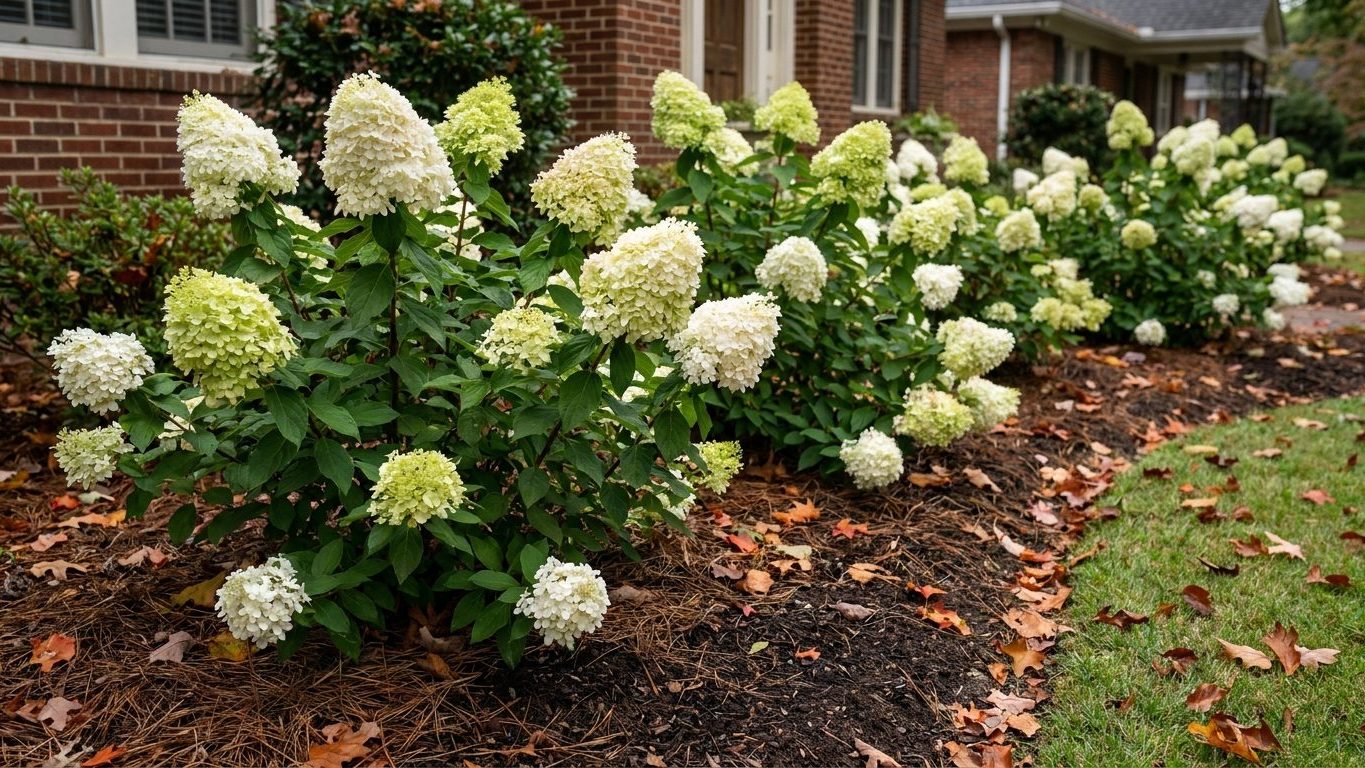
Cold, wind and thin dry air injure Wyoming hydrangeas far more often than insects or fungus do. Around Cheyenne, most damage that gardeners call a disease turns out to be frost, sun scorch or thirst, and timing fixes it. Real pest and disease trouble does show up now and then, and the county extension office should confirm it before anything gets sprayed.
Hydrangea pests and diseases Wyoming: The Short Answer
In Cheyenne, NOAA NCEI 1991-2020 Climate Normals put the last spring freeze at May 7 to May 18 and the first fall freeze at September 24 to October 5, leaving roughly 130 frost-free days at 6,000 feet. That short season, not a named bug or blight, explains most of what looks like disease here.
Buds blackened by a late frost

Freezes still land inside that May window, and a hard one after leaf-out kills tender buds and new shoots. Keep frost cloth near the shrub until well past May 18, then wait for new growth to show live wood. Month windows sit on When to Plant and Prune Hydrangeas in Wyoming.
Stems dead after winter
Many bigleaf types bloom on old wood, so winter cold that kills stems also kills the season’s flowers. Leave dead-looking stems alone until leaves emerge, then cut back to green wood. Types that flower on new wood recover faster, and Hydrangeas That Grow Well in Wyoming sorts them.
Leaves scorched on the sunny side
Wind and strong sun at 6,000 feet pull water from leaves faster than roots can replace it, leaving crisp brown edges on the exposed side. Give the shrub morning sun with afternoon shade and a windbreak, and mulch the root zone. Site notes are in Hydrangeas in Wyoming.
No flowers on a healthy shrub
Green leaves with no blooms usually mean the flower buds froze while the plant itself survived. Feeding won’t bring them back. Fertilize in May and July only, so growth hardens before fall, and mulch the base once the ground freezes. Timing is in When to Plant and Prune Hydrangeas in Wyoming.
Spotted or chewed leaves
Spots and holes can come from insects, fungus, hail or sun, and guessing wastes money. Seal one affected leaf in a bag and take it to your county extension office before spraying anything. The office can name the cause and say whether it needs treating at all. Contacts are listed below.
Drooping leaves in dry spells
Wilting in Wyoming’s dry air usually means thirst, not disease. Push a finger into the soil near the roots before reaching for a fungicide. If it’s dry, water deeply, then mulch. If it’s soggy, the roots are the problem and the fix is drainage. Bed choices are covered in Hydrangeas in Wyoming.
Wyoming — the year and the numbers
- State
- Wyoming
- USDA zones
- 3a-6a
- Last spring frost
- May 7 to May 18
- First fall frost
- September 24 to October 5
- Annual rain
- 15 in
- Lawn zone
- cool-season
- Source
- NOAA NCEI 1991-2020 Climate Normals, 32F freeze probabilities · Cheyenne
How to Work Out the Dates for Your Own Yard
A symptom only makes sense once it is pinned to the calendar, and the frost window is the pin.
- Start with the frost window: NOAA NCEI 1991-2020 Climate Normals give Cheyenne a last spring freeze of May 7 to May 18 and a first fall freeze of September 24 to October 5, and everything below counts from those two ranges.
- Count back from the fall range: Subtract four weeks and September 24 to October 5 becomes August 27 to September 7. A shrub planted after that range gets under a month of root growth before the first freeze, even though the planting months run May through August.
- Count forward from the spring range: Add two weeks to May 7 to May 18 and you land on May 21 to June 1. That is when I judge winter dieback, just ahead of the June and July bigleaf pruning months.
- Match each chore to its month: fertilize in May and July, plant May through August, prune bigleaf in June and July. A warm week in April changes none of it.
- Read the pattern on the shrub: a scorched side points to wind and sun, blackened buds inside the May range point to frost, drooping over dry soil points to thirst, and spots on single leaves point to a sample for the county office.
- Log the date you first see it: damage that appears inside the May range is usually frost, while damage that shows up in July heat leans toward water or sun.
The ranges above belong to Cheyenne at 6,000 feet, and yards higher up will shift every one. Treat the arithmetic as a template, swap in your own freeze dates, and keep frost cloth within reach all season.
Wyoming North to South: How the Dates Shift
The USDA Plant Hardiness Zone Map, built only on winter minimums, runs from 3a to 6a across Wyoming, and elevation does most of the shifting: higher ground means a later spring and an earlier fall freeze.
- Southeast plains and foothills (Cheyenne, Wheatland, Torrington): the reference dates fit best here, though open ground gives wind free rein, so scorch and dry leaves show up before any pest does.
- High plains and southwest (Laramie, Rawlins, Rock Springs): higher and windier than the reference city, these places run a later spring and an earlier fall freeze, which makes late planting the riskiest move.
- Central and northeast basins (Casper, Lander, Sheridan): lower ground can run a little kinder in the growing season, but cold air pools on clear nights and late frosts still catch new growth.
- Northwest mountain valleys (Jackson, Pinedale, Dubois): the shortest seasons in the state, with frost possible in any month, so frost cover and a sheltered spot matter most.
The Hydrangeas in Wyoming page holds the state-level frost dates and zones for comparison.
Mistakes Wyoming Punishes
Pruning bigleaf in early spring
Spring pruning cuts off buds that would have flowered and opens stems to the next freeze. Bigleaf pruning belongs to June and July, when live wood is easy to see. The dates sit on When to Plant and Prune Hydrangeas in Wyoming.
Planting too close to fall frost
NOAA NCEI 1991-2020 Climate Normals show roughly 130 frost-free days at 6,000 feet, so a shrub planted late in August has only weeks before the first freeze of September 24 to October 5. Plant from May through July. Mulch and cover any August planting. See Hydrangeas in Wyoming for the wider picture.
Buying by bloom, not hardiness
A hydrangea in full flower at a garden center is a spring impulse, not a winter plan. Many bigleaf types struggle with Wyoming’s cold, and the tag rarely says so. Check your local USDA zone, then pick from Hydrangeas That Grow Well in Wyoming before you buy.
Wyoming Extension Offices and County Contacts
Cheyenne’s dates are a starting point, and the University of Wyoming Extension (uwyo.edu/uwe), listed in the USDA NIFA Land-Grant University Extension directory, points you to the county office that knows your soil, wind and local pest reports.
- Hydrangeas in Wyoming: the frost dates and the hardiness zones across the state.
- Hydrangeas That Grow Well in Wyoming: which types hold up to the cold and the wind.
- When to Plant and Prune Hydrangeas in Wyoming: the month windows to check before you cut, then a leaf sample to your county office if the symptom doesn’t fit.
Common questions
Is frost the biggest hydrangea threat in Wyoming?
For most yards, yes. Late spring freezes, early fall freezes and wind do more damage than insects or fungus, and at higher elevations frost is possible in any month. Cover buds on cold spring nights and shelter the shrub from wind.
Should I spray when leaves spot or get chewed?
Not yet. Spots and holes have several look-alike causes, including hail and sun scorch, and the wrong product wastes money and can stress the plant. Take a bagged leaf to your county extension office, and treat only what they confirm.
When do I cut back damaged bigleaf stems?
In the June and July window, once new growth shows which wood is alive. Cutting earlier risks removing buds that would still bloom. Stems that stay brown and brittle after the leaves emerge can be cut back to green wood then.