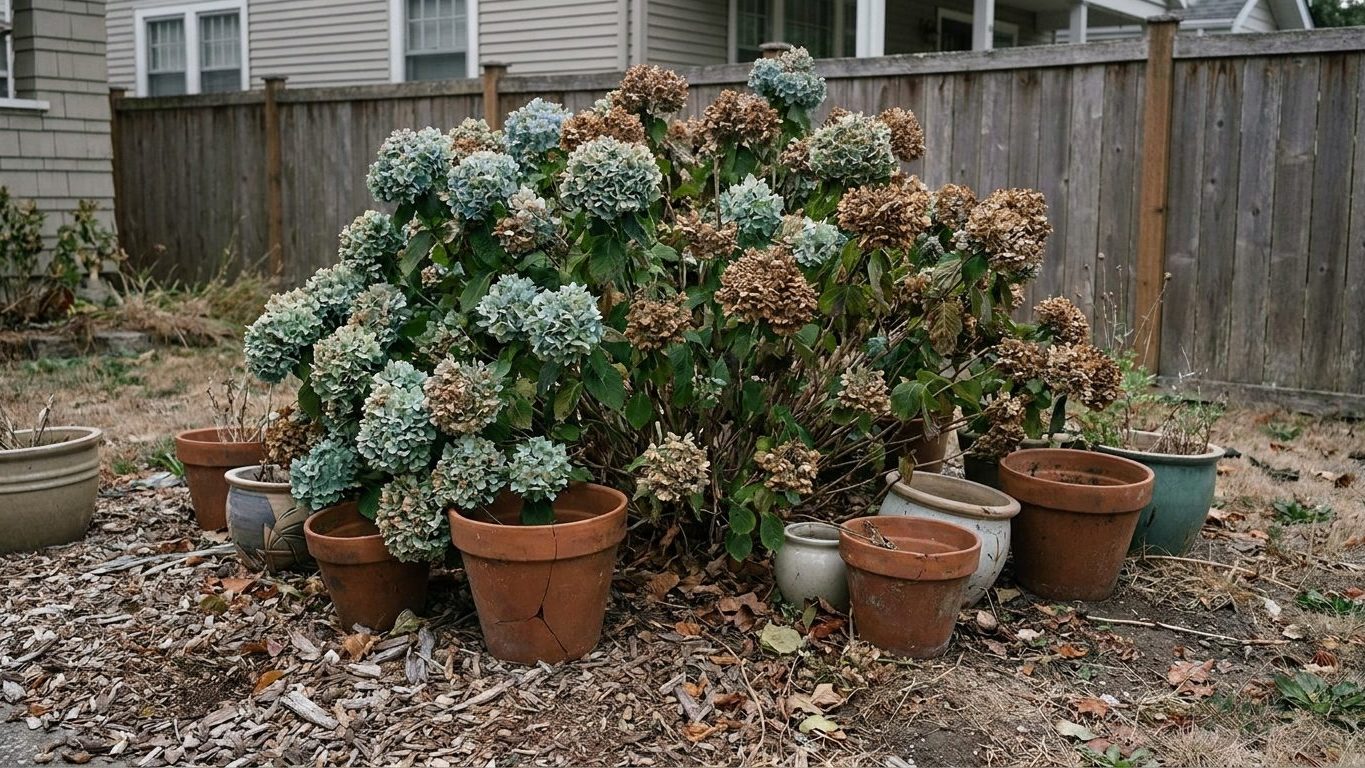
Why Hydrangeas Don’t Bloom, and How to Get Flowers Back

Why Hydrangeas Don’t Bloom, and How to Get Flowers Back

A hydrangea usually skips its bloom for one of two reasons: the flower buds were pruned off, or they froze after breaking dormancy. Bigleaf and mountain types set their buds on last year’s wood, so timing matters more than fertilizer or sun ever will. Panicle and smooth types bloom on new growth and forgive far more. Which explanation fits your yard depends on the type you planted and the zone it sits in.

Hydrangea Not Blooming: The Short Answer

NC State Extension Gardener Plant Toolbox puts the whole hydrangea genus at USDA zones 3a through 9b, but that range means little on its own. Whether your shrub blooms depends on which type you planted and whether its buds made it through winter.

Bigleaf and mountain hydrangeas set next year’s flowers on last year’s wood, so a hard prune or a late frost strips the blooms before they open. Panicle and smooth hydrangeas bloom on new growth, so they forgive a hard cut in late winter.

Zone alone doesn’t explain a bare shrub either. A plant well inside its safe range can still skip a season if its buds were cut off, frozen, or shaded out before they had a chance to form.

The state selector below this section leads to your state’s frost dates and pruning window. Those two dates decide more of the bloom than anything else you do in the yard.

Hydrangea Not Blooming, Step by Step

Why Hydrangeas Don't Bloom, and How to Get Flowers Back

NC State Extension Gardener Plant Toolbox notes that bigleaf hydrangeas need pruning done before August 1, and every gesture below exists to protect that timing.

  1. Identify the type before you touch pruners: bigleaf hydrangeas bloom on last year’s wood while panicle hydrangeas bloom on the current season’s growth, and mixing up the two is the most common reason a shrub goes bare.
  2. Prune bigleaf and mountain types right after bloom, never past August 1: cutting later removes buds that are already forming for next year, since these types set them the previous summer.
  3. Cut panicle hydrangeas back hard in late winter instead: because they flower on new growth, a hard cut only pushes more wood, and more wood means more flowers by midsummer.
  4. Watch for a late frost after buds break: bigleaf and mountain hydrangeas carry their flower buds through winter, and a cold snap once they’ve broken dormancy can kill the flower while the leaf survives untouched.
  5. Mulch the root zone: both bigleaf and panicle hydrangeas root shallowly, and a layer of mulch keeps that zone from swinging between soggy and bone dry, a swing that stresses bud formation before it starts.
  6. Skip high-phosphorus fertilizer near blue bigleaf blooms: it locks up the aluminum the plant needs for blue color and pushes flowers toward pink, a feeding choice that shows up later as a color problem rather than a bloom problem.

None of these gestures carry much weight on their own. The pruning date only helps if the type is right, and the mulch only matters because the roots were shallow to begin with.

Hydrangea Not Blooming by Hydrangea Type

Not every hydrangea keeps the same calendar. NC State Extension Gardener Plant Toolbox puts bigleaf hydrangea at USDA zones 6a through 11b, blooming on last year’s wood, while panicle hydrangea covers the colder zones 3a through 8b on the current season’s growth.

The two behave almost like opposites. Bigleaf keeps its buds waiting through winter and loses them to a hard frost, panicle rebuilds its flowering wood every spring and shrugs off a much colder yard.

Kind Flowers on USDA zones Sun
Bigleaf Last year’s wood 6a-11b Part shade
Panicle Current season’s growth 3a-8b Full sun

Panicle is even called a good substitute for the mop-head hydrangea in areas where that species isn’t winter hardy. Smooth, oakleaf, mountain and climbing hydrangeas each have their own bloom habits and are on their own pages.

Hydrangea Not Blooming: Mistakes That Cost a Season

Pruning after the flower buds form

Pruning after the flower buds form — Why Hydrangeas Don't Bloom, and How to Get Flowers Back

Bigleaf hydrangeas set next year’s flower buds the summer before, so a prune after August 1 removes them along with the top growth. The shrub leafs out fine the following spring but stays bare of flowers. Cut back right after the current bloom fades instead.

Chasing blue color with coffee grounds

Coffee grounds and citrus peel shift soil pH only slightly, and blue color depends on available aluminum, not a small acid boost from the kitchen. The trick works, if at all, over years and only on bigleaf and mountain types. Aluminum sulfate moves color faster and more reliably.

Feeding blooms with the wrong fertilizer

A high-phosphorus fertilizer meant for more flowers locks aluminum in the soil instead, pushing blue bigleaf blooms toward pink whether or not that was the goal. What looks like a color problem started as a feeding decision months earlier. Skip the phosphorus boost near blue flowers.

Hydrangea Not Blooming in Your State

The rule above holds across the country, but the date it depends on differs by region. Your state page and your local extension office carry the frost dates and pruning windows this national page can’t.

  • Your state page: the frost dates and the pruning window where you live.
  • Which types hold up here: which hydrangeas survive your winter without protection.
  • Your local extension office: a call or visit settles zone questions specific to your yard.

Common questions

Why does my hydrangea have lots of leaves but no flowers?

On a bigleaf or mountain hydrangea, this almost always traces back to buds that were pruned off after they’d formed, or a late frost that killed them after they broke dormancy. Panicle and smooth types rarely fail this way since they bloom on new growth.

Can I turn any hydrangea blue with aluminum sulfate?

No. Only bigleaf and mountain hydrangeas change color with soil pH, going blue below about pH 5.5 and pink above about pH 6.5. Panicle, smooth, oakleaf and climbing hydrangeas stay white, cream, pink or green as they age, regardless of soil treatment.

Are hydrangeas toxic to pets?

Only bigleaf hydrangea is documented as toxic, and only if large quantities of bark, flowers, leaves or stems are eaten. The toxic compounds are hydracyanosides, and symptoms include nausea, stomach pain, vomiting and sweating in people, cats, dogs and horses alike.
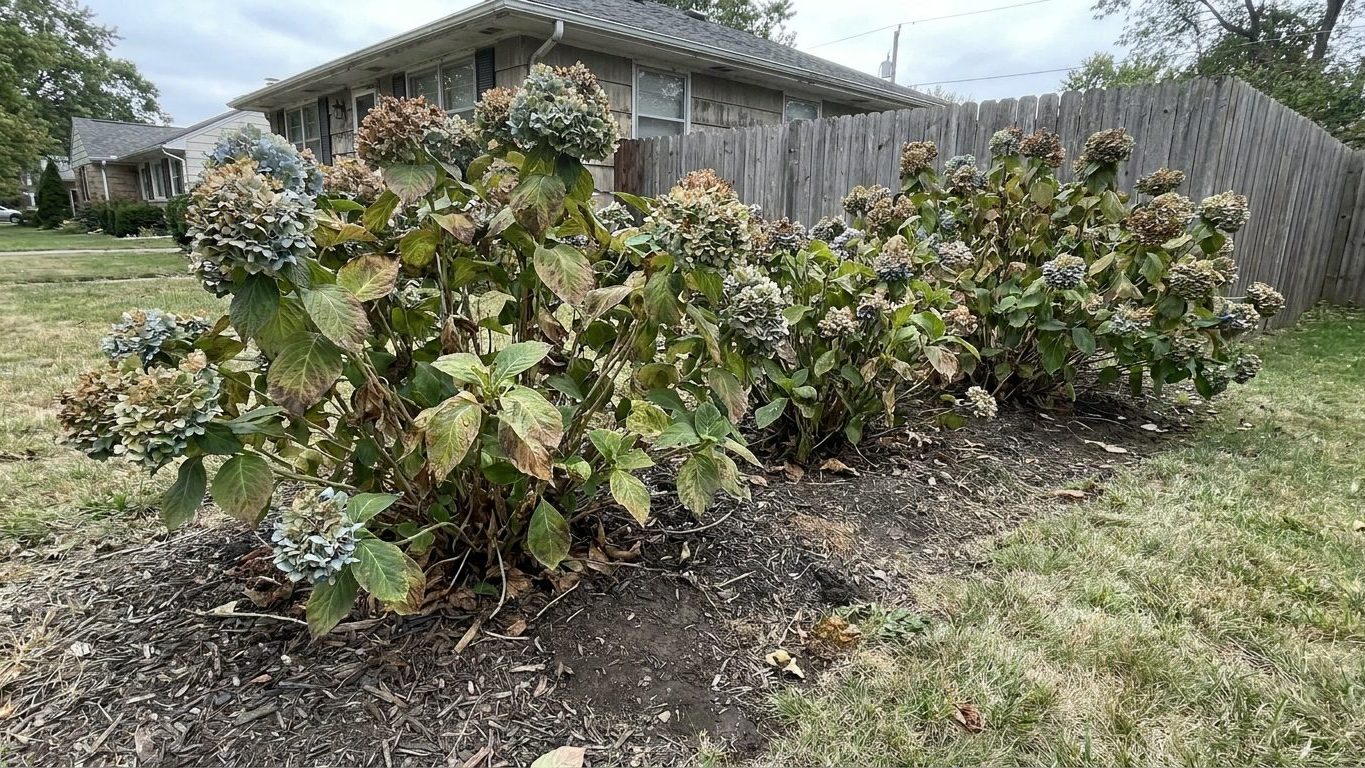
How to Grow Hydrangeas: Types, Care and Dates by State

How to Grow Hydrangeas: Types, Care and Dates by State

Six shrubs share the name hydrangea, and no single answer fits all of them. Bloom time, pruning date, hardiness, and even flower color depend on which type is in the ground and which USDA zone it sits in. Here is the year each one follows, the types themselves, and where to find your state’s exact window.

Hydrangeas Care Calendar, Month by Month

The hydrangea year moves through the same turns everywhere, only the calendar dates shift with latitude. NC State Extension Gardener Plant Toolbox lists the genus as hardy from USDA zone 3a through 9b, and that spread is exactly why one town prunes in February while another waits for April.

  • Dormancy: the one safe window to move or transplant a shrub, roots undisturbed and no leaves to lose.
  • Planting: new stock goes in once soil has thawed and drains freely, ahead of summer heat.
  • Bud set: old-wood types form next year’s flowers on this year’s stems, so an early misstep here echoes for a full season.
  • Bloom: flowers open on schedule for the type and zone, and this is when bigleaf and mountain hydrangeas show the soil’s pH in their color.
  • Pruning: the cut, when there is one, comes right after bloom for old-wood types and in late winter for new-wood types.
  • Summer heat: shade keeps bigleaf leaves from scorching while panicle types hold up in full sun.
  • Fall and winter prep: mulch goes down over shallow roots before the ground freezes, and dead stems stay standing for nesting bees.

The table just below sorts this same year by state, one box per state with its own months and its own zone.

Types of Hydrangeas and How to Tell Them Apart

Six shrubs share the name hydrangea, and the split that matters most is where each one sets its buds. Old-wood types bloom from growth made the previous summer, new-wood types bloom from growth made this spring, and mixing up the two costs a season of flowers.

Bigleaf and mountain hydrangeas are the old-wood types most homeowners plant for color. NC State Extension Gardener Plant Toolbox puts bigleaf at 6a to 11b and panicle at 3a to 8b, the widest hardiness gap in the genus, which is why panicle stands in for bigleaf where winters run harder.

Kind Flowers on USDA zones Sun
Bigleaf Last year’s wood 6a-11b Dappled to deep shade
Panicle Current season’s growth 3a-8b Full sun

Smooth hydrangea, the hardiest of the six, blooms on new wood and shrugs off a hard late-winter cut. Oakleaf carries wine-red foliage into fall and tops out around 5 feet. Mountain hydrangea blooms on old wood like bigleaf, but its buds tolerate a late frost better. Climbing hydrangea clings to walls by aerial rootlets, can top 15 feet, and is notoriously slow to start flowering. The other kinds are on their own pages.

Best Hydrangeas by USDA Zone and Region

Which hydrangea earns a spot in the yard comes down to the zone at the low end, since panicle and smooth tolerate cold that bigleaf never sees.

  • Great Lakes and the North (Michigan, Minnesota, Wisconsin): panicle and smooth are the safe bets, both hardy well into zone 3a where bigleaf’s 6a floor shuts it out.
  • The Northeast (New York, Massachusetts, Pennsylvania): panicle and smooth still lead, though warmer pockets near the coast can carry bigleaf and mountain with winter protection.
  • The South (Georgia, Texas, the Carolinas): bigleaf and oakleaf thrive in milder winters, and panicle still takes the full sun that Southern summers bring.
  • The Plains (Nebraska, Kansas, the Dakotas): panicle does the heavy lifting here, its 3a floor and full-sun tolerance suited to both the cold and the open exposure.
  • The West (Colorado, Utah, Idaho): dry air and swinging elevation favor panicle and smooth over the moisture-loving bigleaf.
  • The Pacific Coast (Washington, Oregon, California): mild, humid winters let bigleaf and climbing hydrangeas reach their full range, up to 11b in the warmest pockets.

Your state page carries the exact zone and the pruning window that go with it, not just the region.

Common Hydrangeas Problems and What Causes Them

No flowers on a healthy shrub

No flowers on a healthy shrub — How to Grow Hydrangeas: Types, Care and Dates by State

An old-wood type like bigleaf or mountain lost its buds to a late frost or a prune that came too early, since those buds form the summer before. Skip pruning until right after bloom next year, and check your state’s calendar for the safe window.

Leaves scorched on the sunny side

Leaves scorched on the sunny side — How to Grow Hydrangeas: Types, Care and Dates by State

Bigleaf hydrangea wants dappled to deep shade, and afternoon sun burns its leaves brown at the edges. Move new plantings out of direct afternoon light, and give panicle hydrangea the full sun spot instead, since it is the one type built for it.

Blue flowers fading toward pink

Blue flowers fading toward pink — How to Grow Hydrangeas: Types, Care and Dates by State

This only happens on bigleaf and mountain hydrangeas, and it usually traces to a high-phosphorus fertilizer that locks up soil aluminum, or to pH drifting above about 6.5. Coffee grounds shift pH too little to matter, aluminum sulfate does the real work.

Spotted or powdery leaves

NC State Extension Gardener Plant Toolbox names leaf spot and powdery mildew as the genus’s common diseases, with rust and bud blight showing up on panicle types specifically. Improve airflow, avoid wetting foliage, and check the disease notes on your type’s page.

Hydrangeas Guides by State

The type, the zone, and the region narrow the field. What’s left is the exact frost date and pruning week where you actually garden.

  • Your state page: the frost dates and the pruning window for your zone.
  • Which kinds hold up here: a shortlist matched to your state’s low temperature and summer sun.
  • The monthly task calendar: what to do this month, from mulching to the last safe cut.

Common questions

Do all hydrangeas change color with soil pH?

No. Only bigleaf and mountain hydrangeas shift color with pH, blue below about 5.5 and pink above about 6.5. Panicle, smooth, oakleaf, and climbing hydrangeas age from white to cream, pink, or green regardless of the soil.

When should I prune my hydrangea?

It depends entirely on the type. Old-wood types like bigleaf and mountain get pruned right after bloom, before August 1 at the latest. New-wood types like panicle and smooth can be cut back hard in late winter instead.

Are hydrangeas toxic to pets?

Only bigleaf hydrangea is documented toxic, and only if a large quantity is eaten. Bark, flowers, leaves, and stems all carry the compound, causing nausea, stomach pain, vomiting, and sweating in people, dogs, cats, and horses.

Why didn’t my hydrangea bloom this year?

The two usual causes are a late frost that killed the buds or a prune that removed them, both specific to old-wood types like bigleaf and mountain. New-wood types like panicle rarely fail to bloom this way.