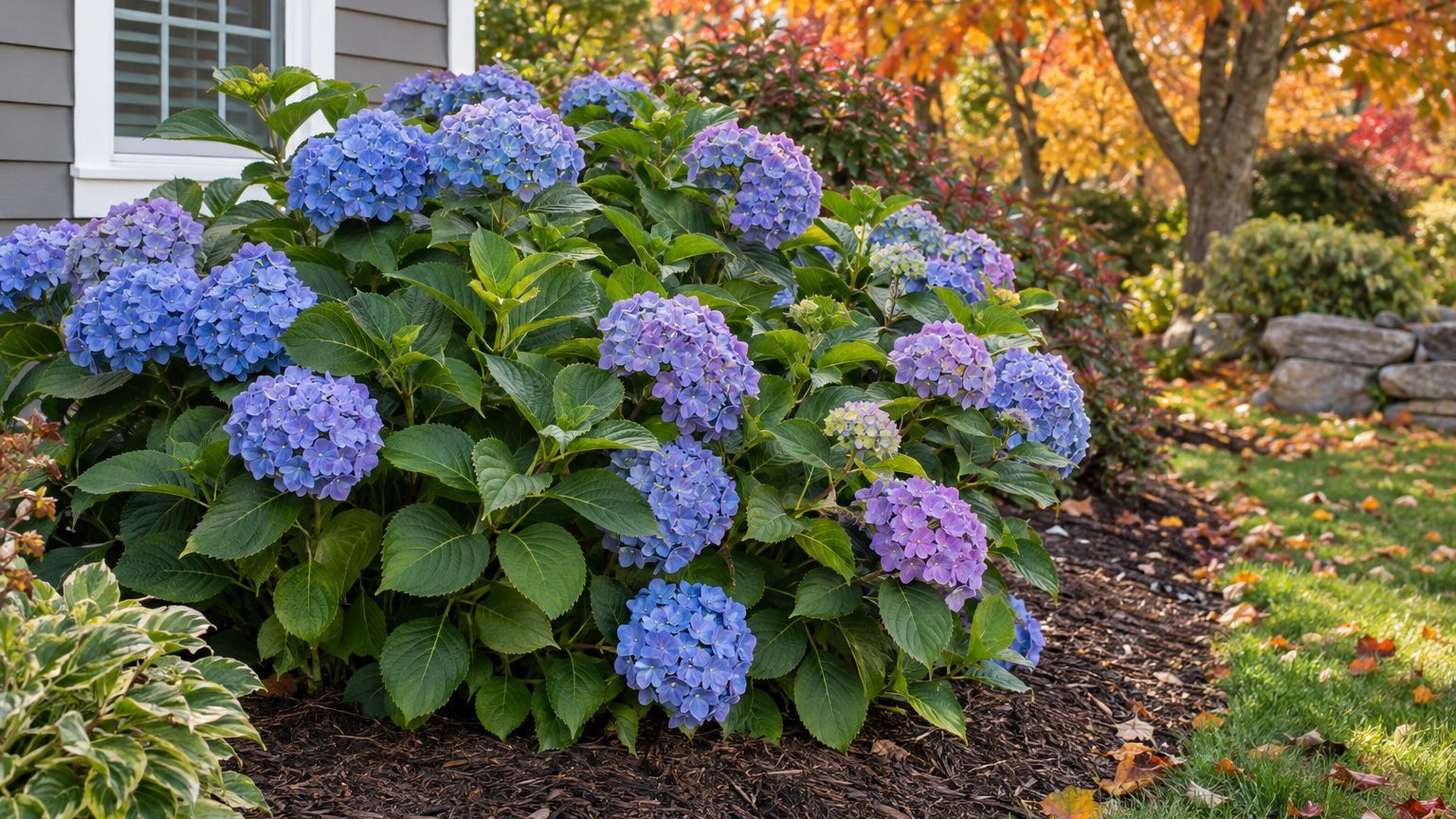
In western Washington, the planting window falls in February, March, September, and October, timed around Seattle’s last spring frost of February 27 to March 18 and first fall frost of November 13 to November 30. Prune bigleaf hydrangeas in June and July, right after bloom, never in fall. East of the Cascades, the season runs shorter and colder.
When to prune hydrangeas in Washington: The Short Answer
Seattle’s frost calendar decides everything here. NOAA NCEI 1991-2020 Climate Normals puts the last spring frost at February 27 to March 18 and the first fall frost at November 13 to November 30, which is why the site’s planting window sits in February, March, September, and October rather than the traditional spring rush.
- January: The ground is still cold and wet, so this is not a planting month here. Wrap the root zone in mulch and leave pruning tools in the shed.
- February: Planting opens even though the last frost hasn’t cleared yet, because container stock can settle into cool, workable soil. Water in well and skip fertilizer until the ground warms.
- March: Planting continues and the first fertilizer round of the year lands now. The tail end of frost risk means new leaves can still get nipped, so hold off on cutting anything back.
- April: No planting, fertilizing, or pruning task is scheduled this month for Washington. Spend it watching new growth and pulling weeds before they compete for water.
- May: The second fertilizer feeding of the season goes down now. Buds are forming on old wood, so this is not the month to prune anything.
- June: Bigleaf pruning opens as soon as the first flush of blooms fades. Cut just above a healthy bud pair and stop there, since next year’s flowers are already setting.
- July: Pruning continues alongside the third and final fertilizer round of the year. Water deeply during any dry stretch, since summer heat here is short but real.
- August: No listed gesture falls in August. Keep watering consistent and let the shrub finish its bloom cycle undisturbed.
- September: The fall planting window opens, roughly two months ahead of the first frost. Roots still have time to establish before the ground cools.
- October: Planting wraps up this month, the last safe stretch before frost risk climbs. Get any new shrub in the ground early in the month rather than late.
- November: The first frost arrives somewhere between the 13th and the 30th. Mulch the base heavier once the ground starts to chill.
- December: The shrub is fully dormant. Leave it alone until the calendar turns back to February.
That’s twelve months of gestures pinned to a single station’s frost data, but Washington is a state of microclimates, and the next two sections show how far these dates can drift and how to translate them onto your own ground.
Washington — the year and the numbers
- State
- Washington
- USDA zones
- 4a-9a
- Last spring frost
- February 27 to March 18
- First fall frost
- November 13 to November 30
- Annual rain
- 39 in
- Lawn zone
- transition-season
- Source
- NOAA NCEI 1991-2020 Climate Normals, 32F freeze probabilities · Seattle
How to Work Out the Dates for Your Own Yard
Your own frost date might differ from Seattle’s by a week or more, so here’s how to adjust the calendar above to your actual yard.
- Find your local frost window: check a nearby station or ask your county extension office rather than assuming Seattle’s range applies if you garden inland or at elevation.
- Count back from planting: if your last frost lands later than the Sound’s window, push the February planting start back by however many weeks separate you from that range.
- Watch the soil, not just the calendar: cold, wet clay holds spring planting back well past the last freeze, so wait until the ground crumbles rather than clumps in your hand.
- Time pruning to bloom, not to the month: bigleaf hydrangeas get cut back in June and July here because that’s right after the first flush fades, so a later-blooming shrub earns a later cut.
- Check your hardiness zone: USDA Plant Hardiness Zone Map places Washington between 4a and 9a, and a shrub rated for the low end of that range needs less winter cover than one rated for the high end.
None of this replaces watching your own yard. A south-facing bed against a brick wall warms weeks ahead of an open lawn, and that gap matters more than any single date.
Washington North to South: How the Dates Shift
Washington’s hydrangea calendar shifts hard between the wet west side and the dry east side, and elevation adds another layer on top of that.
- Puget Sound lowlands (Seattle, Tacoma, Olympia): the mildest, wettest corner of the state, where the frost windows above apply most directly and shrubs can lean toward the earlier end of each planting month.
- Olympic Peninsula and the coast (Aberdeen, Port Angeles): ocean influence keeps winters even milder than the Sound, though near-constant rain means drainage matters more than frost timing.
- Cascade foothills and higher elevation (North Bend, Cle Elum): every few hundred feet of elevation pushes both frost dates outward, shrinking the planting window from both ends.
- Eastern Washington (Spokane, Yakima, the Columbia Basin): high desert conditions mean colder winters, hotter summers, and a shorter season overall, closer to the cold end of the state’s hardiness range than the mild Sound.
If you’re east of the Cascades, treat every date as a starting point and lean on the state guide for how far it moves in your county.
Mistakes Washington Punishes
No flowers after fall pruning

Bigleaf hydrangeas set next year’s buds on old wood by late summer, so cutting them back in September or October removes the very growth that would have bloomed. Prune only in June and July, right after the first flush fades.
Root rot in wet clay
Western Washington’s rain keeps native clay soaked through winter, and roots sitting in standing water rot before spring arrives. Plant on a slight mound or work in coarse material, especially in low spots that stay soggy longest.
Planted too early, stalled all spring
February technically opens the planting window, but cold, wet soil holds root growth back for weeks even after frost risk fades. Wait until the ground crumbles rather than clumps before digging, which usually pushes real planting closer to March.
Washington Extension Offices and County Contacts
The frost windows above come from one Seattle-area station, but soil, elevation, and microclimate vary by county, and your local extension office fills that gap with numbers tuned to your yard.
- Your state page: the frost dates and the pruning window where you live.
- Which ones hold up here: the hydrangea varieties suited to Washington’s range of climates.
- WSU Extension: county-level contacts for soil tests and planting advice specific to your area.
Common questions
Can I plant hydrangeas in fall in Washington?
Yes, September and October are part of the state’s planting window, giving roots about a month or more to settle in before the first frost arrives between November 13 and November 30 in the Seattle area.
What month is best for planting hydrangeas in Seattle?
March tends to work best for most yards, since the last spring frost falls between February 27 and March 18 and the soil has usually warmed enough by then to stop holding roots back.
Do hydrangeas need winter protection in Washington?
It depends on where in the state you garden. Western Washington’s mild, maritime conditions rarely require extra winter cover, but areas toward the cold end of the state’s 4a to 9a range should mulch the base heavier before November.