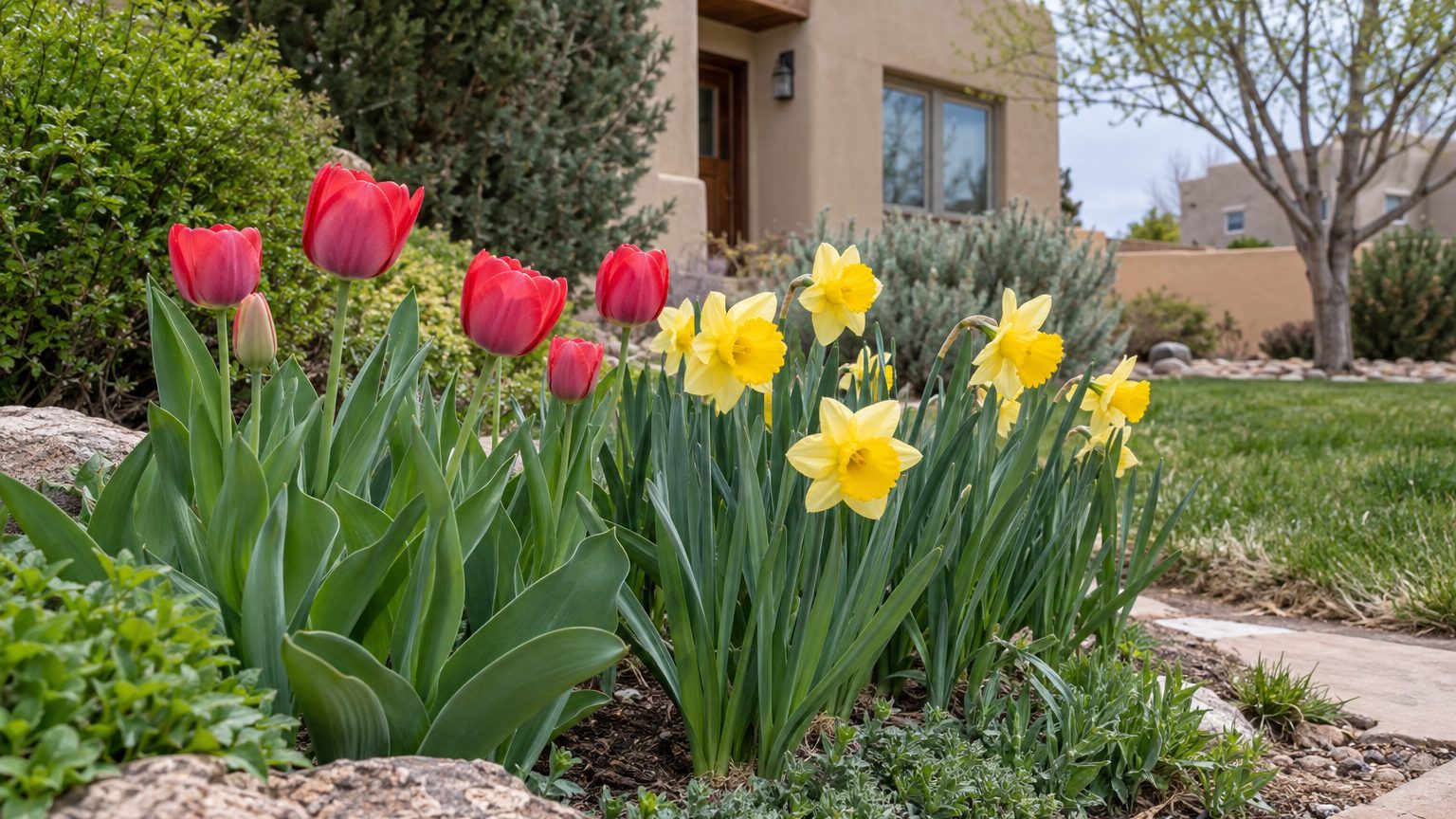
A patch of daffodils nodding in the cold light of a New Mexico morning is one of the first signs that winter is loosening its grip. The bulbs that make that happen were planted months earlier, in fall. For New Mexico yards, daffodils, tulips, alliums and crocus all earn a place, and a few habits decide whether they come back.
Best Spring Bulbs to Grow in New Mexico

Tulips and daffodils are fairly adaptable across the region, and alliums, crocus and hyacinths join them in the September and October planting window. Plant once the soil has cooled below about 60°F. Roots then form before the ground freezes, and the bulbs do not sprout too early. Hardy spring bulbs flower between January and May.
Daffodils
Daffodils are the more reliable perennial bulb, lasting longer in the garden than tulips. Voles, squirrels, rabbits and deer leave them alone, which matters in yards bordering open land.
Give them full sun and loosen the planting hole with compost so water drains away from the bulb.
Tulips
Tulips adapt well here, but they are often short-lived, so treat them as a seasonal splash and plan on replacing some. Mix compost into the hole to add organic matter and help drainage.
Keep them out of low spots that stay wet in spring, and expect rodents and deer to take an interest.
Alliums
According to Iowa State University Extension, alliums need the cold of winter to bloom. They finish the spring succession, opening after the earliest bulbs have faded.
Plant them in September or October like the rest, in sun and well-drained soil.
Crocus
Crocus belong to the same fall planting group and bring color at the start of the bulb season. Voles, squirrels, rabbits and deer eat them, so protect the planting or choose a spot out of their regular routes.
Tuck them into amended soil in sun, where water does not pool.
Hyacinths
Hyacinths go into the ground in September or October alongside tulips, and they appreciate the same compost-enriched, free-draining hole. Where winters are too mild to chill them, they need a stint in the refrigerator before planting.
Full sun and a spot that dries out between storms keep the bulbs from rotting.
New Mexico — the year and the numbers
- State
- New Mexico
- USDA zones
- 4b-9a
- Last spring frost
- March 31 to April 12
- First fall frost
- October 29 to November 9
- Annual rain
- 9 in
- Lawn zone
- transition-season
- Source
- NOAA NCEI U.S. Climate Normals 1991-2020, 32F freeze probabilities · Albuquerque
How to Choose Spring Bulbs for Your New Mexico Garden
Your yard, not the catalog, should drive the choice. Soil drainage, how much winter cold your site gets and how much animal pressure you face narrow the field quickly.
The match below starts from the problem you are most likely to have.
| Your situation | What suits it in New Mexico | Why |
|---|---|---|
| Little time for upkeep | Daffodils | They last longer than tulips and are the more reliable perennial bulb |
| Deer, rabbits, voles or squirrels | Daffodils | Animals leave them alone, while tulips and crocus get eaten |
| Heavy or slow-draining soil | Tulips or daffodils in a compost-amended hole | Compost loosens the soil and helps drainage, and both do well in full sun |
Hyacinths and crocus do not fit neatly into one situation. Choose them for early color, give them the same amended soil, and shield crocus from hungry animals.
Which Spring Bulbs Suit Different Parts of New Mexico
New Mexico spans USDA hardiness zones 4b to 9a, so the right bulb depends on where you garden.
- Santa Fe and Taos: Higher ground means colder winters and later spring frost, which suits daffodils and the tulips that need real chill. Plant in the same September and October window and expect spring growth to run later than in the valleys.
- Albuquerque: At the airport, the last spring frost falls between March 31 and April 12. Suburban and rural gardens, and any garden at higher elevation, typically see it later, so check your own county before trusting that range.
- Las Cruces and the warm south: Winters here may be too mild to chill tulips and hyacinths on their own, and alliums also need the cold of winter to bloom. Daffodils remain a dependable second plan.
If you garden between these places, lean on the nearer description and adjust for your elevation.
Spring Bulb Buying Mistakes to Avoid in New Mexico
Expecting Tulips to Come Back Forever
Tulips are often short-lived, and animals that eat them shorten the run further. Budget for replacements, or put daffodils in the spots where you want a lasting display.
Skipping the Chill Where Winters Run Mild
Most spring bulbs need about 12 to 16 weeks of cold to flower. Where winters cannot deliver that, chill tulips and hyacinths in the refrigerator before planting, and alliums also need the cold of winter to bloom.
Planting in a Wet Low Spot
Bulbs set where water collects, especially in spring, sit in soggy soil and fail. Choose a sunny, higher spot and work compost into the hole, which loosens heavy ground and improves drainage.
Where to Get Spring Bulb Advice in New Mexico
Local conditions vary enough that a nearby expert saves guesswork. New Mexico State University Extension backs gardeners statewide, and each county has its own office.
- The NMSU Extension site carries garden guidance written for New Mexico, worth reading before you order bulbs in late summer.
- Your county Extension office can tell you what suits your elevation and soil, so call or visit before the September planting window opens.
Common Questions
Can You Plant Spring Bulbs After October in New Mexico?
Yes. Bulbs still in the bag are better planted late than stored over the winter, so plant them as long as the ground can be dug.
When Do Spring Bulbs Bloom in New Mexico?
Hardy spring bulbs bloom between January and May. Snowdrops and winter aconites open at the start of the season, and ornamental onions (alliums) come at the end.
When Can You Remove the Leaves After Spring Bulbs Bloom?
Take off only the faded flowers. Leave the leaves until they turn brown, because they feed the bulb for next year’s flowers.