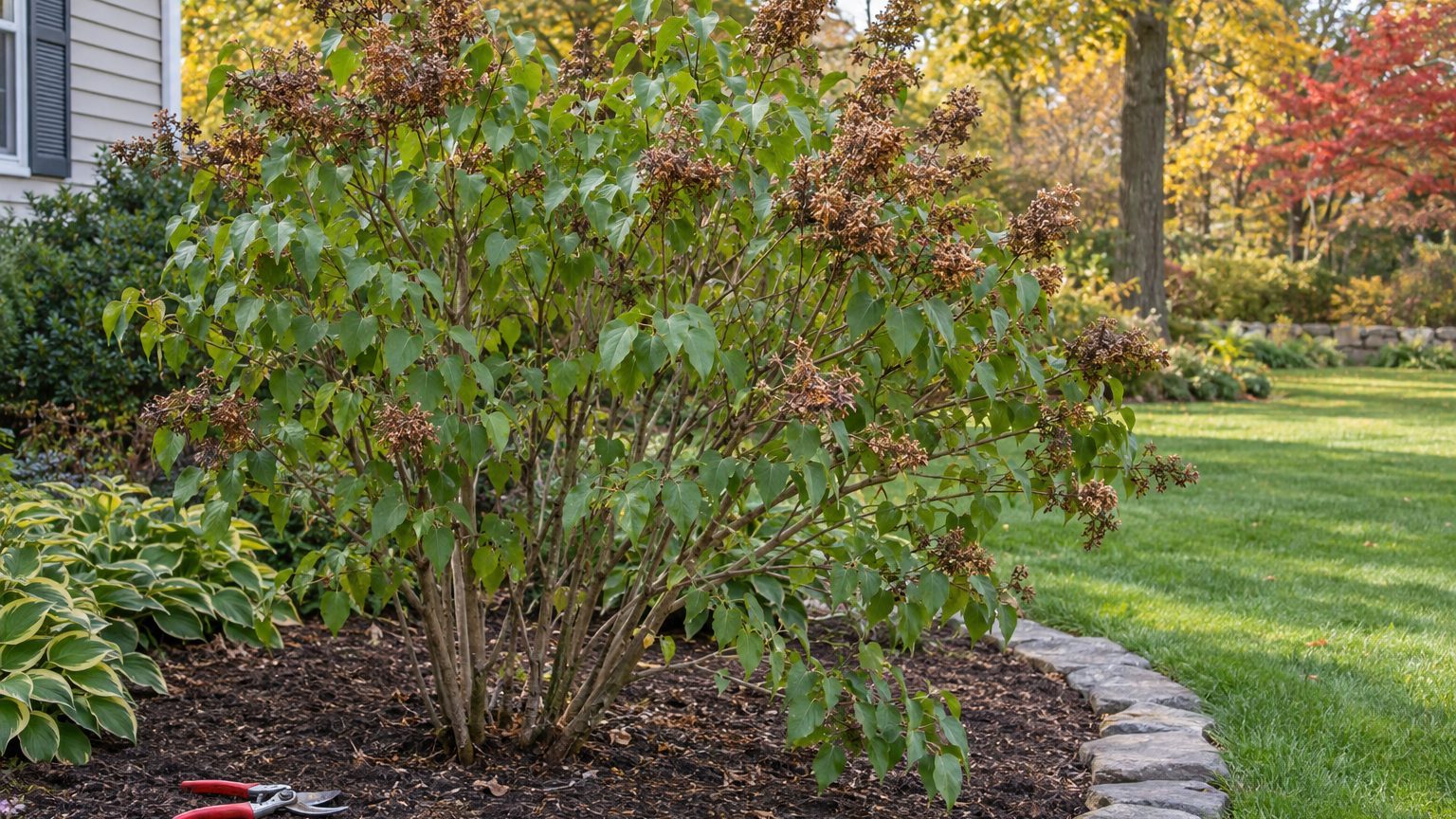
Lilac blooms fade to brown, and the shrub looks tired for a while. That is the moment the pruning shears come out in Colorado, because the next year’s flowers are already being set. The fading flowers provide a reliable cue across Colorado’s varied climates.
When to Prune Lilacs in Colorado

Prune lilacs in June, right after the flowers fade. July works as a fallback. Lilacs bloom on last year’s wood and set next year’s flower buds in summer, soon after flowering, so cutting later in the season removes the spring display.
| Type of pruning | When in Colorado | Why |
|---|---|---|
| Routine shaping and removal of spent blooms | June, right after the flowers fade (July also works) | Buds for next year form in June and July, so early cuts protect them |
| Hard renovation of an overgrown lilac | March to April, while the plant is dormant | Cutting back hard in late winter costs the next flowers, and the shrub will not flower for a few years afterward |
For reblooming lilacs, prune right after the flowers fade. The renovation cut is a drastic option for a shrub that has grown tall and bare at the base, because the trade is a few years without flowers in exchange for a fresh start.
Colorado — the year and the numbers
- State
- Colorado
- USDA zones
- 3b-7b
- Last spring frost
- May 1 to May 11
- First fall frost
- September 30 to October 12
- Annual rain
- 15 in
- Lawn zone
- transition-season
- Source
- NOAA NCEI 1991-2020 Climate Normals, 32F freeze probabilities · Denver
How to Tell When Your Lilacs Are Ready to Prune
The shrub gives clearer instructions than the calendar, and in Colorado the signs show up as the bloom season closes in late spring into June.
- The flower clusters turn brown and dry, which tells you the show is over and cutting will not sacrifice any bloom.
- Petals drop and the panicles look limp, so snip them off just below the cluster to keep the plant from putting energy into seed.
- New green growth is pushing out below the spent flowers, a sign the plant is already building the wood that will carry next year’s blooms.
- Small buds are starting to form for the following spring, and since they develop in June and July, that is your cue to finish pruning soon.
- Leaves are fully open and the shrub holds its shape, so you can see which stems are crossing, dead or crowding the center.
If these signs have passed and July is over, hold the shears until the next bloom has come and gone.
Should You Prune Lilacs in Fall or Winter in Colorado?
No. Cutting in fall or winter removes the flower buds that are already formed for next spring, so you trade a season of fragrance for a tidier outline. The shrub will grow back, but the blooms will not.
Late winter is the exception for a drastic reset. An overgrown lilac can be cut back hard in March or April while still dormant. For this renewal cut, cut the overgrown plant back hard while it is dormant, knowing that it will not flower for a few years afterward.
For a lilac that still flowers decently, skip the winter cut and wait for June. A shrub that is merely leggy can be thinned gradually right after bloom instead, which spares the flowers.
How Lilac Pruning Time Shifts Across Colorado
Colorado spans plains, foothills, high mountain towns and the western slope, so the same shrub reaches bloom on very different dates. Follow the flowers rather than the date on the calendar.
- Denver and the Front Range plains: Lilacs here bloom in May, and Denver’s last spring frost falls between May 1 and May 11. June pruning follows soon after the flowers fade.
- Mountain towns: Seasons run far shorter and frost can return even in July, so bloom comes later and pruning moves later with it. Watch the flowers, not the month.
- Western slope: The climate differs again from the plains, so let the fading blooms set your timing instead of borrowing a Front Range date.
Lilacs do well across much of the state because they need a cold winter rest to mature their flower buds, and they struggle in hot, humid summers.
Where to Get Lilac Advice in Colorado
For questions about an old lilac, a shrub that will not bloom or a local timing call, local help is available. Colorado State University Extension publishes research-based plant guidance, and your county office can speak to conditions at your elevation.
- Its site has plant guides and gardening answers, so check there before you plan a big cut.
- Your county extension office can advise on your elevation and microclimate, which is useful in late spring before the flowers fade.
Common Questions
Can You Cut Lilac Flowers for a Vase?
Yes. Cutting some stems at bloom is a light form of pruning, since the buds for next year have not yet formed. Take stems from beside the spent clusters rather than the main framework.
Why Is a Colorado Lilac Not Blooming?
Look at when it was last cut and how much sun it gets, together. A shrub pruned in late summer, fall or winter loses its buds. A lilac also thrives in sunny sites with good air circulation, so heavy shade also reduces flowers.
Which Lilacs Suit Colorado Yards?
Common lilacs are hardy across much of the state’s range, which runs from zone 3b to 7b on the USDA system. Hyacinthiflora hybrids bloom earlier, which leaves their flowers more exposed to late frosts.