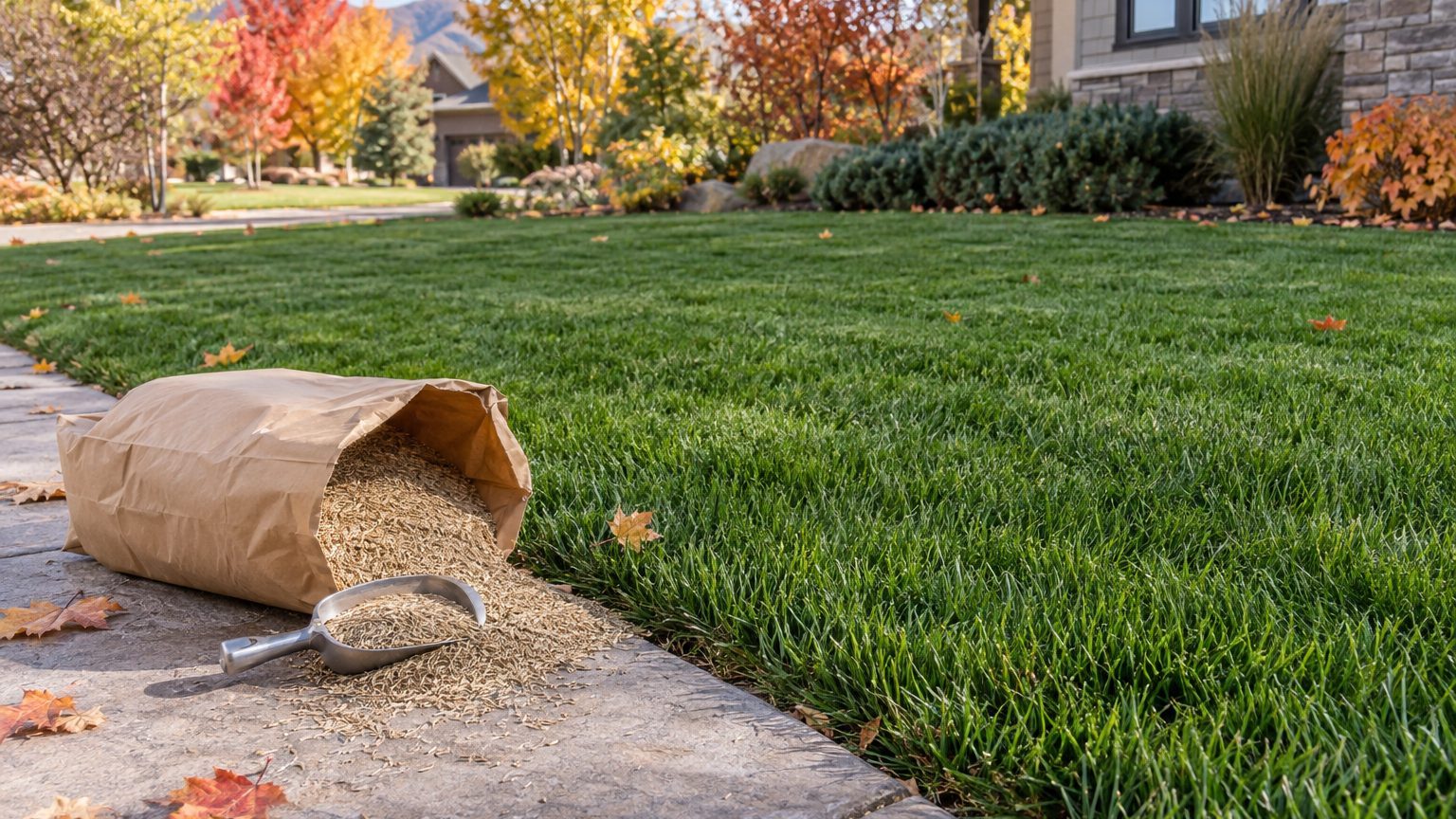
A Colorado lawn in July shows how well its grass fits the site: bluegrass and fescue can stay green with regular water, while thin, tan patches call for a closer look at irrigation and turf health. For Colorado yards, choose a cool-season grass such as Kentucky bluegrass, tall fescue, fine fescue or perennial ryegrass, and sow it in late summer.
Which Grass Grows Best in Colorado?
Cool-season grasses suit Colorado, because winters are cold across the state (hardiness zones run 3b-7b in the USDA system) and the growing season on the Front Range is short enough that warm-season turf spends much of the year dormant and brown. These grasses grow hardest in spring and fall, when soil is cool, and they take the winters in stride. Here are the main choices and the tradeoffs each brings.
Kentucky Bluegrass
This is the classic Colorado lawn. It handles hard winters, spreads by underground stems to knit together thin spots, and makes a dense, soft turf in full sun.
It wants regular water through summer, and it fills in slowly from seed, so give it patience after sowing.
Tall Fescue
Tall fescue sends roots deep, which helps it ride out dry spells better than bluegrass does. It grows in clumps, so it looks a bit coarser, but it holds up well on busy lawns.
Sow it thickly enough to fill in, because it does not spread much to patch bare spots on its own.
Fine Fescues
Creeping red, chewings and hard fescue make a fine, soft lawn and handle shade and poorer soil better than bluegrass. They also get by on less water and fertilizer.
They dislike heavy foot traffic, so they suit quiet corners and low-maintenance yards more than a play area.
Perennial Ryegrass
Ryegrass sprouts fast, which makes it useful for quick cover and for mixing with slower grasses. On its own it is the least dependable of these in Colorado’s coldest winters, since it is less tolerant of deep cold than the others.
Use it as a partner in a mix rather than the whole lawn, especially at higher, colder elevations.
Colorado — the year and the numbers
- State
- Colorado
- USDA zones
- 3b-7b
- Last spring frost
- May 1 to May 11
- First fall frost
- September 30 to October 12
- Annual rain
- 15 in
- Lawn type
- cool-season
- Source
- NOAA NCEI 1991-2020 Climate Normals, 32F freeze probabilities · Denver
How to Choose Grass Seed for a Colorado Yard
Start with how the yard is used. Sun, shade, kids, a sprinkler system and your appetite for mowing all point toward a different grass, and a blend of species often covers a wider range of conditions.
Seed labels list the species by name, so read them. A bag that names the grasses you want beats a vague bag with a pretty photo on the front.
| Your yard | Grass to look for | Why it fits |
|---|---|---|
| Full sun, regular watering | Kentucky bluegrass | Dense turf that repairs itself |
| Full sun, limited watering | Tall fescue | Deep roots handle dry spells |
| Shade or poor soil | Fine fescues | Tolerate low light and little feeding |
| Heavy foot traffic | Tall fescue or bluegrass | Tough blades, strong recovery |
| Quick cover on bare soil | Perennial ryegrass in a mix | Sprouts fast while slower grasses catch up |
| Less mowing | Fine fescues | Grow slowly and stay low |
Few yards fit a table row exactly. A sunny front lawn with a shady side can take a bluegrass and fescue blend, with the fine fescues carrying the dim spots.
Which Grasses Grow Where in Colorado
Growing conditions vary widely across Colorado. Altitude and the mountains reshape the season, and the same seed bag can perform very differently across the state.
- Denver: Bluegrass, tall fescue and fine fescue blends are cool-season options for yards on the plains at 5,280 feet. Late summer is the dependable window for new seed, with frost holding off until the end of September or into October.
- Mountain towns such as Breckenridge and Vail: Seasons are far shorter and frost can show up in July, so cold-hardy bluegrass and fine fescues get the nod. New seed has little time to establish, so plan early.
- Grand Junction and the western slope: Conditions differ again, with a hotter, drier climate that favors drought-tolerant tall fescue and careful irrigation.
If you live between these places, ask neighbors with healthy lawns what they grow, and lean toward the hardier option when in doubt.
Grass Seed Mistakes to Avoid in Colorado
Planting the Wrong Grass
Warm-season turf looks tempting in the summer heat, but it turns straw-colored for much of the year here. Stick to cool-season species, and choose among them by sun, shade and water.
Seeding at the Wrong Time
Seed does best when sown in August or September, while soil is still warm and cold nights are not far off. If you miss that, April and May also work, though summer heat and weeds will test young grass.
Spring-sown lawns need steady water as summer arrives.
Burying or Skimping on Seed
Cover seed with no more than 0.25 inch of soil and press it down so it touches the ground firmly. Buried seed struggles to sprout, and seed left on top dries out or washes away.
Follow the rate printed on the bag. Thin sowing invites weeds, and heavy sowing crowds seedlings into weak, patchy turf.
Where to Get Lawn Advice in Colorado
Local experts can sort out soil, elevation and watering questions that a seed bag cannot. Start with these.
- Colorado State University Extension has research-backed lawn and turf guidance for the state, useful before you buy seed in late summer.
- Your county extension office can speak to local soil and elevation, so call before you plan an overseed.
Common Questions
Can You Grow Bermuda or Zoysia Grass in Colorado?
You can on warmer, lower-elevation sites, but these warm-season grasses go dormant and turn brown for much of the year. A cool-season lawn generally stays green longer.
Is It Better to Overseed or Start Over?
If grass still covers much of the yard, overseeding thin areas is usually enough. Core aeration in September opens the soil so seed reaches the ground, and fertilizing in September or November feeds new growth.
Do You Need to Dethatch Before Seeding?
A thick thatch layer blocks seed from the soil, so dethatching in August or September helps if the lawn feels spongy underfoot. If the lawn is thin and the thatch is slight, skip it.