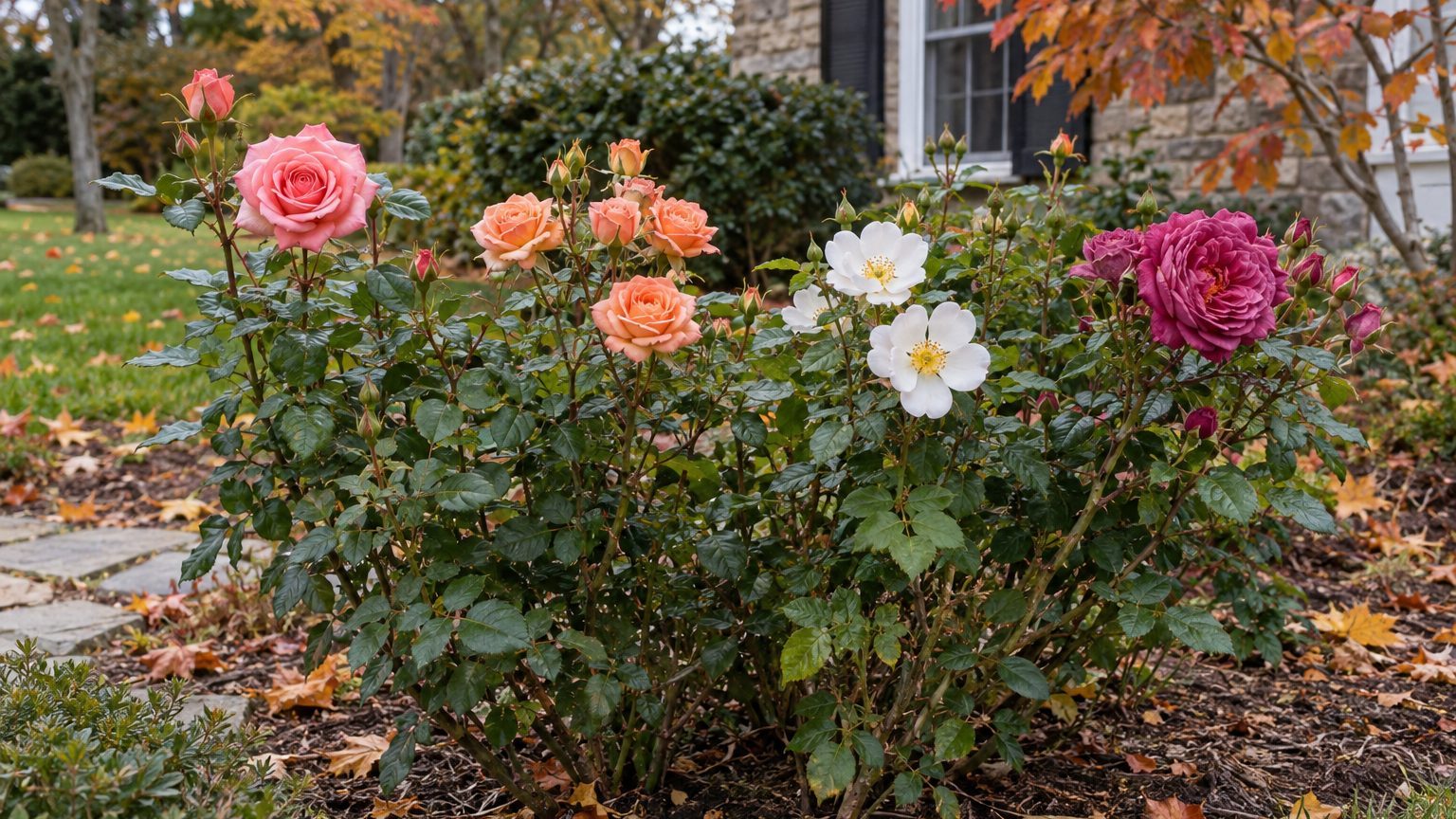
Roses in Colorado face a long, hard winter and a dry, bright summer, and the ones that thrive are the tough shrub types and a few repeat-blooming climbers. Fussier garden roses can still work, with some protection. Choosing the type before you choose the color saves the most trouble.
Best Roses to Grow in Colorado

Hardy shrub roses hold up best here, because they take cold and little care in stride, while hybrid teas and grandifloras need extra protection to get through winter. USDA hardiness zones in Colorado run from 3b to 7b, so the cold you plan for depends on where you garden.
Hardy Shrub Roses

Many shrub roses are hardy and vigorous and need little care under severe conditions. Knock Out and the Explorer series perform well in Colorado without extra winter protection.
Hybrid Rugosa and Kordesii Types
Of the main divisions of shrub roses, hybrid kordesii, hybrid rugosa and plain shrub roses have adapted cultivars. Choose from these groups when you want a rose that shrugs off cold and asks for little in return.
Simplicity and Meidiland Series
Simplicity roses are shrub roses that repeat bloom the entire growing season and resist pests and disease. The Meidiland series is also useful in the landscape. Both suit a yard where you want color without constant spraying.
Repeat-Blooming Large-Flowered Climbers
Climbing hybrid teas and climbing grandifloras are generally not recommended for most of Colorado, because most bloom only on the previous year’s growth. Repeat-blooming, large-flowered climbers do well here. Most bloom on the current year’s growth, which means a hard winter does not take the flowers with it.
Hybrid Teas and Floribundas
The hybrid tea is a widely grown garden rose, and floribundas, a cross between a hybrid tea and a polyantha, typically repeat bloom each season. Both reward you, but they need winter protection in cold winters. Mound soil over the crown before the deep freeze.
Miniature Roses
Miniatures are naturally dwarf roses and remain popular in small garden spaces. A pot or a narrow bed holds one easily, which makes them a good fit for a patio or a small front yard.
Colorado — the year and the numbers
- State
- Colorado
- USDA zones
- 3b-7b
- Last spring frost
- May 1 to May 11
- First fall frost
- September 30 to October 12
- Annual rain
- 15 in
- Lawn zone
- transition-season
- Source
- NOAA NCEI 1991-2020 Climate Normals, 32F freeze probabilities · Denver
How to Choose a Rose for a Colorado Garden
Start with the winter you actually get and the time you actually have. A rose that needs mounding every fall suits a gardener who enjoys the chore. A hardy shrub rose suits everyone else.
Once-blooming roses, such as old garden roses, ramblers and many climbers, flower on last year’s wood. Prune them right after they bloom, never in early spring, or you cut off the season’s flowers.
| Your situation | What suits it in Colorado | Why |
|---|---|---|
| Very cold winters | Hardy shrub roses, hybrid rugosa or kordesii types | Hardy shrub roses can handle severe conditions with little care |
| Little time to spare | Knock Out or the Explorer series | Hardy and able to perform without extra winter protection |
| Small space | Miniature roses | Naturally dwarf and popular in small garden spaces |
| A fence or trellis to cover | Repeat-blooming large-flowered climbers | Most bloom on new wood and flower repeatedly |
| You want classic cut flowers | Hybrid teas, floribundas | Popular and repeat blooming, but they need winter protection |
Buying bare-root? Plants on their own roots and graded Number 1 are the best. Plant them in April or May, as soon as the ground can be worked.
Which Roses Suit Different Parts of Colorado
Colorado’s elevation strongly shapes the choice, so match the rose to the cold your own spot gets.
- Denver and the Front Range: Sitting at 5,280 feet on the plains, this area supports choices ranging from hardy shrubs to hybrid teas with winter mounding.
- Mountain towns: Seasons run far shorter and frost can arrive in July, so lean on hardy shrub roses and skip tender types.
- The Western Slope: Conditions differ again from the plains, so ask a local grower which cultivars have held up in your valley before you buy.
Whatever your elevation, a rose labeled hardy to your USDA zone is a safer buy than one chosen on looks alone.
Rose Buying Mistakes to Avoid in Colorado
Choosing a Type Too Tender for Winter
Hybrid teas and grandifloras often need extra winter protection, and without it they can die back hard. Either plan to mound soil eight to ten inches deep over the crown around Thanksgiving, once nights drop to 20°F for several days, or pick a hardy shrub rose instead.
Buying a Climber That Blooms on Old Wood
A climbing hybrid tea may leave you with a handsome green plant and no flowers, since many bloom only on the previous year’s growth. Buy a repeat-blooming, large-flowered climber that flowers on new wood instead.
Ignoring Disease and Pest Resistance
A rose that needs constant care becomes a chore fast. Series bred to resist pests and disease, such as Simplicity, keep the work down. Matching a tough variety to your summer saves spraying later.
Where to Get Rose Advice in Colorado
Colorado State University Extension publishes rose guides written for the state’s conditions, and your county office knows which cultivars survive in your own elevation and soil.
- The state extension site has guides on selecting, planting, pruning and winter care, useful before you shop in spring.
- Your county extension office can answer local questions, so ask before you begin pruning or planting.
Common Questions
When Should You Prune Roses in Colorado?
Repeat-blooming roses such as hybrid teas, floribundas and modern shrub roses are best pruned in April, and May also works.
When Should You Feed Roses in Colorado?
May through July suits feeding, and April or August also work. An all-purpose fertilizer such as 8-10-8 goes on every four to six weeks in the growing season. Stop after mid-August so late, soft growth does not meet the first frost.
When Do You Take Off Winter Protection?
April is the best month, and May also works. Remove it gradually once the danger of hard frost has passed.