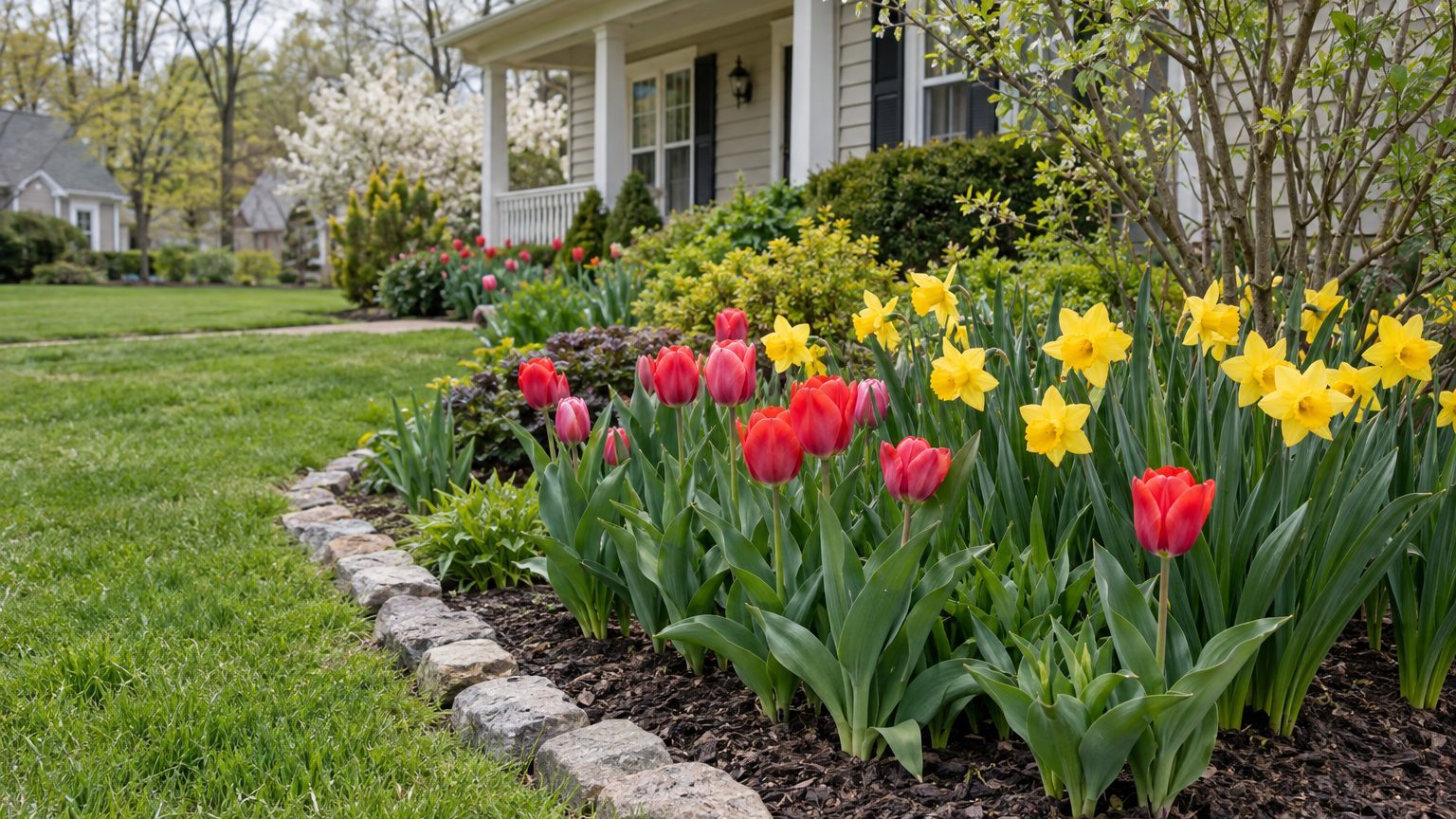
Daffodils pushing up through cold ground, then a drift of alliums as spring winds down: that is the rhythm a well-planned New Jersey bed can hold. Bulbs planted in fall do the work through winter and show up on their own. New Jersey gardens have plenty of choice, and the right picks depend on who else is visiting your yard.
Best Spring Bulbs to Grow in New Jersey

Daffodils, hyacinths, alliums, fritillaria and scilla all do well here, and the reason is as much about animals as about weather. New Jersey sits in USDA zones 6a to 7b, which is cold enough to satisfy bulbs. Voles, squirrels, rabbits and deer decide which ones survive.
Daffodils
Daffodils are the dependable core of a New Jersey bulb planting. They are hardy perennial bulbs that return year after year, and in Pennsylvania they overwinter in USDA zones 3 through 8, which covers every part of New Jersey with room to spare.
Rabbits and deer leave them alone, so they suit naturalizing: scatter clumps through a lawn edge or under trees and leave them undisturbed.
Hyacinths
Hyacinths are among the bulbs that deer and squirrels pass over. That makes them a sensible choice for a front walk or foundation bed where the yard sees a lot of wildlife traffic.
Plant them in groups so the fragrance builds, and expect them to take the same fall planting as the rest.
Alliums
Alliums, the ornamental onions, are also left alone by deer and squirrels. They carry the bulb season toward its end, after the early bloomers fade.
They do not need a chill period to bloom, which makes them forgiving if winter is uneven.
Fritillaria
Fritillaria belongs on the list of bulbs that deer and squirrels dislike. It suits gardeners who want something different from the usual daffodil and tulip pairing.
Treat it like any other fall-planted bulb and give it a spot where animals have already lost interest in your beds.
Scilla
Scilla is another bulb that deer and squirrels pass by. It is a small plant, so tuck it into spots where larger bulbs would crowd or draw attention.
Plant it in fall with the others, once the soil has cooled.
Tulips
Tulips grow here, but they come with a catch. Voles, squirrels, rabbits and deer eat them, and they tend to be short-lived in the garden compared with daffodils.
Plant them where you can watch over them, such as near a door or in a fenced bed, and think of them as a seasonal treat rather than a permanent fixture.
Crocus
Crocus are tasty to the same animals that eat tulips. Where squirrels and voles are active, crocus may disappear before they ever flower.
If your yard has little animal pressure, they are a pleasant early addition. If it does, lean on daffodils and the other resistant bulbs instead.
New Jersey — the year and the numbers
- State
- New Jersey
- USDA zones
- 6a-7b
- Last spring frost
- March 29 to April 6
- First fall frost
- November 4 to November 16
- Annual rain
- 47 in
- Lawn zone
- transition-season
- Source
- NOAA NCEI U.S. Climate Normals 1991-2020, 32F freeze probabilities · Newark
How to Choose Spring Bulbs for Your New Jersey Garden
Start with what visits your yard and how much upkeep you want. Animal pressure and a taste for low effort steer most of the choices here, and the cold rarely limits you.
Bulbs ask for a stretch of winter cold to flower, and New Jersey winters generally supply it. The table pairs common situations with bulbs that fit.
| Your situation | What suits it in New Jersey | Why |
|---|---|---|
| Deer, squirrels or rabbits in the yard | Daffodils, hyacinths, alliums, fritillaria, scilla | Animals tend to leave these alone, while tulips and crocus get eaten |
| Very cold winter nights | Daffodils | They overwinter in USDA zones 3 through 8, well beyond New Jersey’s 6a to 7b |
| Little time for upkeep | Daffodils | They never have to be dug and return year after year |
| Worry about enough winter cold | Alliums | Most spring bulbs need about 12 to 16 weeks of cold, and alliums, like other spring bulbs, need the cold of winter to bloom |
| Want a lasting planting | Daffodils rather than tulips | Tulips are often short-lived, while daffodils are the more reliable perennial bulb |
A mixed planting works well when you want color across the season. Spring bulbs bloom in a long succession, from snowdrops and winter aconites at the start to alliums at the end, so combining types stretches the show.
Which Spring Bulbs Suit Different Parts of New Jersey
Winter cold and the arrival of spring vary across the state, and that shifts the choice a little. Daffodils and the animal-resistant bulbs work everywhere, but timing and expectations change.
- Northwest highlands: Higher ground gets colder winters and later spring frost, so bulbs wake later here. Daffodils are the safest pick, and tulips need even more protection from deer.
- Newark and the northeast suburbs: The last spring frost at Newark falls between March 29 and April 6, but suburban yards usually see it later. Check your own county before trusting that range.
- South Jersey and the Shore: Winters are milder than in the highlands. Bulbs still get cold, so the usual picks hold, and daffodils and alliums remain easy.
Wherever you garden, the zone range of 6a to 7b means winter cold is rarely the limit, and animals are the bigger question.
Spring Bulb Buying Mistakes to Avoid in New Jersey
Planting Tulips and Crocus Without Protection
Voles, squirrels, rabbits and deer eat tulips and crocus. Spend money on a big drift and you may see it dug up or nibbled before spring.
Put daffodils, hyacinths and alliums in open beds, and keep tulips near the house or behind fencing.
Planting While the Soil Is Still Warm
In New Jersey, spring bulbs go in from mid-September through October once the soil falls below 60°F. October is the main month, and November works too.
Plant too early and bulbs sprout in fall, which wastes their energy. Waiting for cool soil lets roots form before the ground freezes.
Holding Unplanted Bulbs Over Winter
A bulb still in the bag does better in the ground late than stored until next year. Plant as long as the soil can be dug, even if the calendar says it is getting late.
Keep the bag somewhere cool and dry until planting day, and do not give up on bulbs because fall slipped by.
Where to Get Spring Bulb Advice in New Jersey
Local help is easy to reach, and it can answer questions about your soil, your county and the animals in your neighborhood.
- Rutgers Cooperative Extension publishes fact sheets on spring flowering bulbs, worth reading before fall planting.
- Your county extension office can speak to local frost timing and soil, so call it when you are choosing varieties.
Common Questions
When Do Tulips and Daffodils Bloom in New Jersey?
Bloom runs from March through May, and some bulbs can start in February. Daffodils and tulips fill the middle of that stretch.
What Should You Do with Bulb Leaves After Bloom?
Remove only the faded flowers and leave the leaves in place until they turn brown. They feed the bulb for next year, so cutting or tying them while green weakens the next show.
Do You Need to Chill Bulbs in the Refrigerator?
That step is for places where winters are too mild to give bulbs the cold they need, usually with tulips and hyacinths. In New Jersey’s colder zones, planting them in fall soil lets winter do the work.