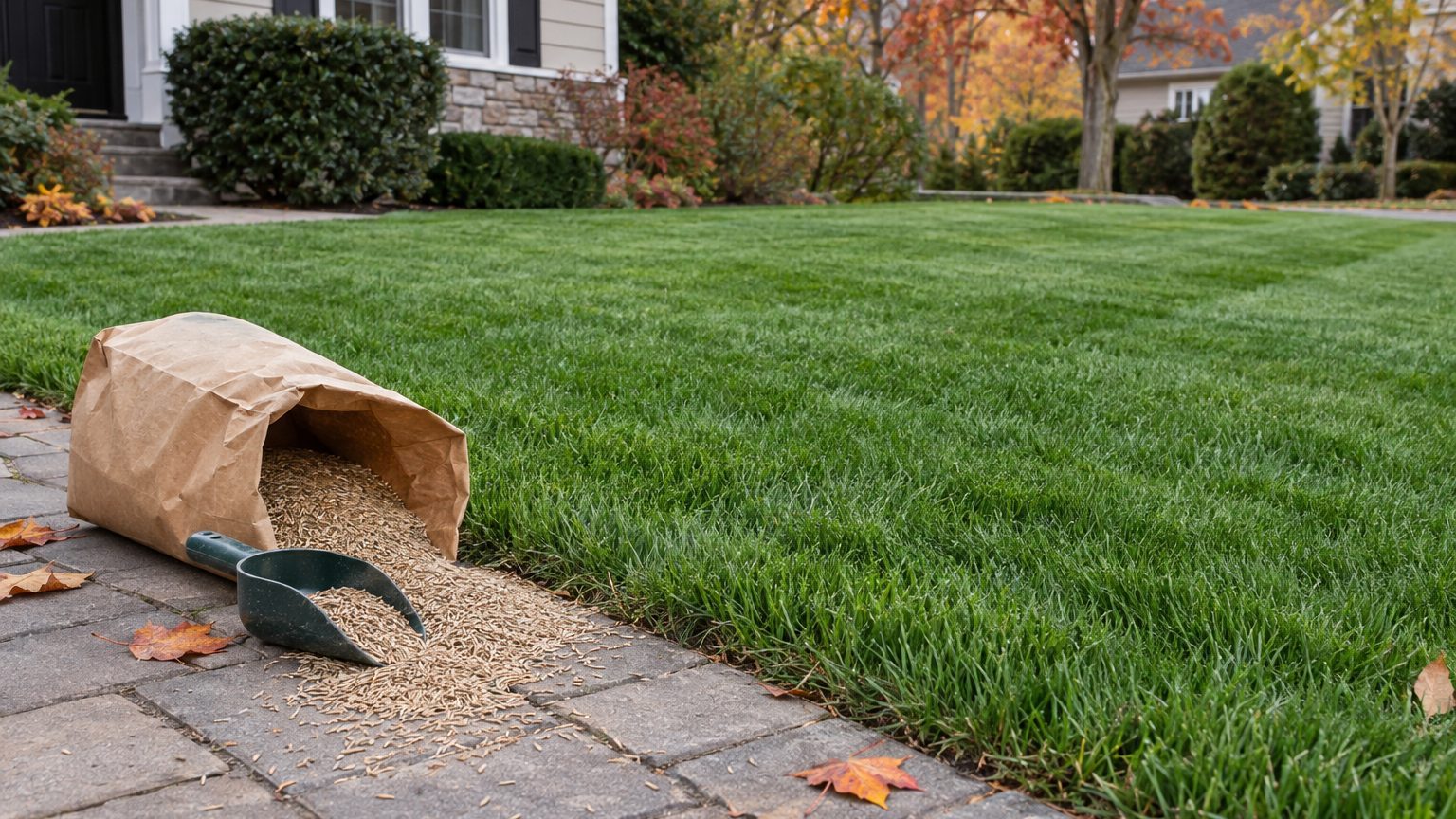
A thin, patchy lawn in a New Jersey backyard usually traces back to the wrong grass for the spot, not to a lack of effort. Cool-season grasses suit the state, with Kentucky bluegrass, tall fescue, fine fescues and perennial ryegrass doing the work. Which one belongs in your yard depends on sun, traffic and how much you want to water.
Which Grass Grows Best in New Jersey?
Cool-season grasses grow best here, because New Jersey sits in the cool-season belt where winters are cold enough to push warm-season turf into dormancy for months (hardiness zones run from 6a to 7b on the USDA system). Cool-season species grow hardest in spring and fall, and fall seeding gives them the easiest start. Each one has different strengths, so the right choice depends on the yard.
Tall Fescue
Tall fescue puts down deep roots, which helps it through New Jersey’s humid summers and dry spells. It takes foot traffic and some shade. Its coarse blades look different from bluegrass, which some homeowners accept happily and others never warm to.
Kentucky Bluegrass
Kentucky bluegrass gives the dense, dark green carpet many people picture. It spreads by underground stems and heals its own wear, but it wants full sun and more water in July and August. Planted alone in a hot, dry yard, it browns early.
Fine Fescues
Creeping red, chewings and hard fescue are the grasses for shade and poor, dry soil. They need less fertilizer and less mowing than the others. They fade under heavy traffic, so keep them to quiet corners and tree-lined edges.
Perennial Ryegrass

Perennial ryegrass sprouts quickly, which makes it handy for quick cover and for mixing with slower grasses. On its own, it can struggle with hard winters and long summer heat. Treat it as a partner in a mix rather than the whole lawn.
New Jersey — the year and the numbers
- State
- New Jersey
- USDA zones
- 6a-7b
- Last spring frost
- March 29 to April 6
- First fall frost
- November 4 to November 16
- Annual rain
- 47 in
- Lawn type
- cool-season
- Source
- NOAA NCEI U.S. Climate Normals 1991-2020, 32F freeze probabilities · Newark
How to Choose Grass Seed for a New Jersey Yard
Start with the light your lawn gets and the feet that cross it. Those questions quickly narrow the field.
Then think about your habits. If you will water in dry spells and mow regularly, bluegrass pays you back. If you would rather do less of both, fescues are the easier path.
| Your yard | Grass | Why it fits |
|---|---|---|
| Full sun, kids and pets | Tall fescue | Tough, deep roots, handles wear and heat |
| Full sun, showpiece lawn | Kentucky bluegrass | Dense turf that repairs itself, with regular water |
| Shade under trees | Fine fescues | Tolerate low light and thin soil |
| Mixed sun and shade | Tall fescue with fine fescue | Covers both conditions without separate seeding |
| Bare patch that needs fast cover | Perennial ryegrass in a mix | Sprouts quickly while slower grasses fill in |
Low-maintenance yards lean on fine fescues and tall fescue, since both ask for less mowing and feeding than bluegrass. Whatever you choose, read the tag for the species list and skip bags that do not name them.
Which Grasses Grow Where in New Jersey
New Jersey is small, but the weather shifts from one end to the other, and the shifts nudge your choice of grass.
- Sussex and Warren counties: Hills and higher ground in the northwest run colder, with an earlier fall chill. Bluegrass and fine fescue do well, and seeding sooner in the season gives roots time before cold arrives.
- Central New Jersey: Mixed yards here suit tall fescue blends and bluegrass in sunny spots. Summer heat is enough to stress shallow-rooted turf.
- The Shore and Cape May: Sandy soil drains fast and sea air dries the grass, so deep-rooted tall fescue is a practical choice.
- South Jersey and the Pinelands: Warmer, sandy, acidic soil favors tall fescue and fine fescue over thirsty bluegrass.
Frost arrives later near the coast and earlier inland and uphill. Check your own county’s dates before you mark the calendar.
Grass Seed Mistakes to Avoid in New Jersey
Choosing the Wrong Species
Bluegrass in deep shade or fine fescue on a ball field both end badly. Match the grass to the light and the traffic before you buy, and read the species on the tag. A mix of suited grasses beats a bag built around the wrong species.
Seeding at the Wrong Time
Seed sown in the heat of summer struggles, and weeds beat it to the soil. In New Jersey, seed in August or September, when warm soil and cooler air help seedlings root. If you miss that window, April and May still work. Crabgrass preventer blocks germination of grass seed too, so skip it in any area you are seeding.
Burying or Overspreading the Seed
Grass seed is small and needs steady moisture and good soil contact. Cover it with no more than 0.25 inch of soil and press it firmly so it touches the ground. Follow the rate on the bag. Heavy piles of seed crowd each other and invite disease, while thin scatterings let weeds in.
Where to Get Lawn Advice in New Jersey
Local advice beats general advice, and New Jersey has solid sources for it. Soil, shade and rainfall differ from town to town, so a local opinion carries weight.
- Rutgers New Jersey Agricultural Experiment Station publishes turf guidance written for the state, useful before you buy seed.
- Your county’s Rutgers Cooperative Extension office can answer questions about your own soil and your own yard.
- Ask about a soil test in late summer, before seeding, so the results can shape what you buy.
Common Questions
Can You Mix Grass Seed Types in New Jersey?
Yes. Blends of tall fescue with fine fescue, or bluegrass with ryegrass, cover varied light and wear in a single yard. Check the tag to see that each species is named.
Is St. Augustinegrass an Option in New Jersey?
No. It is a warm-season grass that does not tolerate the state’s winters, and it is never sold as seed anyway. Sod of warm-season types is a poor bet here.
Is Spring a Good Time to Seed a New Jersey Lawn?
April and May work as a fallback if you missed the fall window. Seedlings face summer heat and weeds sooner, so plan on regular watering through June, July and August.