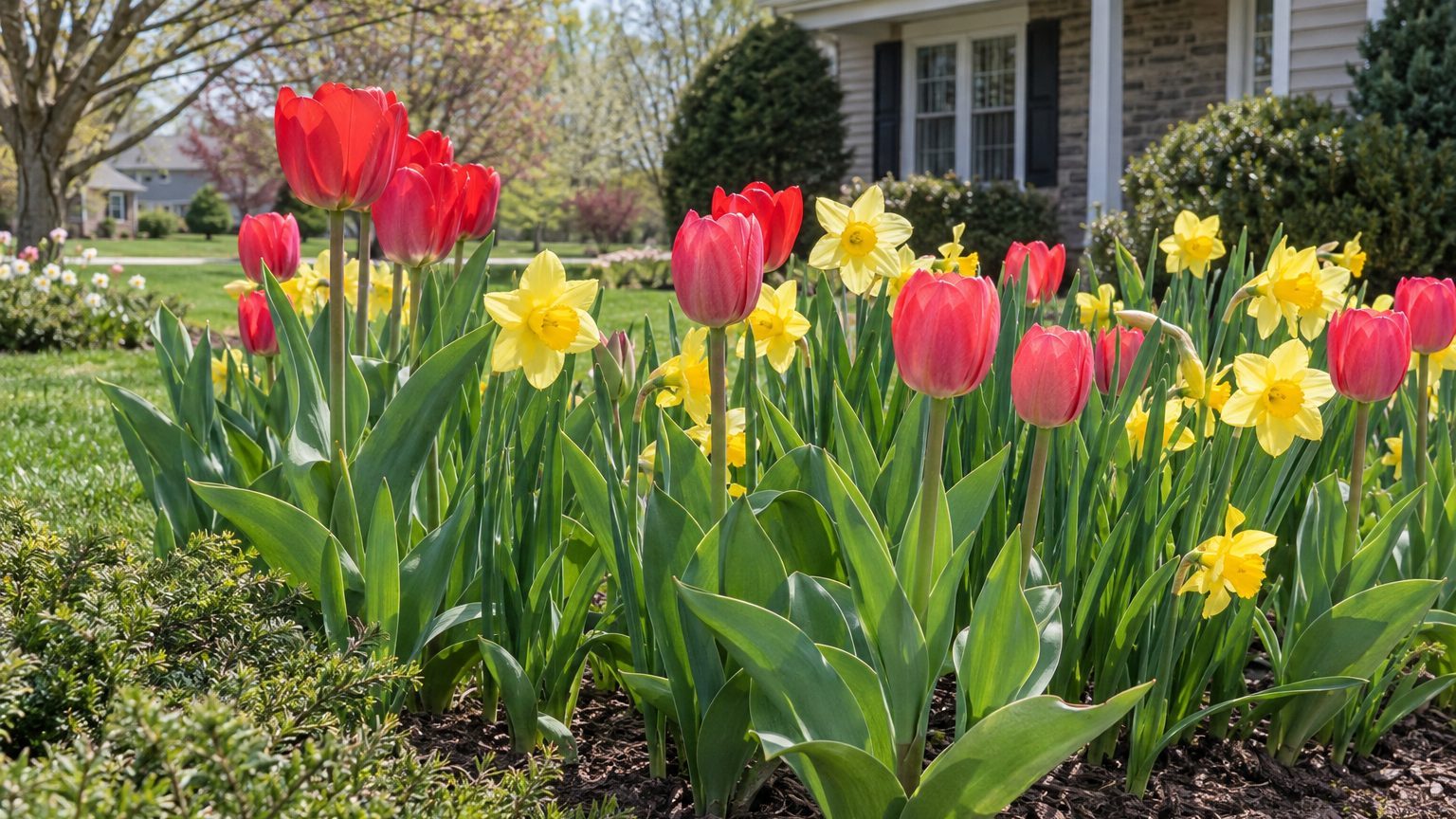
Daffodils pushing up through cold, bare soil are one of the surest signs of spring in a Delaware yard, and they are the bulb that keeps coming back year after year. Planted in the fall, they need no fuss and no protection from the animals that raid other beds.
Best Spring Bulbs to Grow in Delaware

Daffodils
Daffodils are the dependable choice here. They are hardy perennial bulbs that overwinter in USDA zones 3 through 8, and Delaware sits in zones 7a to 8a, well inside that range, so they return year after year.
Plant them in October, once the soil has cooled below about 60°F. Roots then form before the ground freezes, and the bulbs stay below ground until spring.
Daffodils for Naturalizing
Scatter daffodils in clumps through a lawn edge, under trees or along a fence line, and they spread into a natural drift. They never have to be dug to keep blooming.
After bloom, remove only the faded flowers. The leaves stay until they turn brown, because they feed the bulb for next spring.
Hyacinths
Hyacinths are among the bulbs that deer and squirrels leave alone, which makes them a safe pick for beds that wildlife visits. They bloom in the long run of spring flowers that stretches from February to May.
Most spring bulbs need about 12 to 16 weeks of cold to flower.
Alliums
Alliums, the ornamental onions, are another bulb that deer and squirrels pass over. They do not need a chill period to bloom, so they are forgiving if your planting date slips.
They sit at the far end of the bulb season, after the early flowers have faded, and keep a bed interesting later in spring.
Fritillaria and Scilla
Fritillaria and scilla round out the list of bulbs that deer and squirrels dislike. They suit gardeners who have lost bulbs to animals before and want something that survives without netting or repellent.
Plant them alongside daffodils in the same fall window and leave the foliage alone after bloom.
Tulips
Tulips are the showiest bulb here and also the one most often eaten. Voles, squirrels, rabbits and deer all go after them, and tulips tend to be short-lived in the garden compared with daffodils.
Grow them where you can protect them, such as near the house or in a fenced bed, and treat them as a seasonal treat rather than a permanent fixture.
Delaware — the year and the numbers
- State
- Delaware
- USDA zones
- 7a-8a
- Last spring frost
- April 3 to April 14
- First fall frost
- October 26 to November 7
- Annual rain
- 45 in
- Lawn zone
- cool-season
- Source
- NOAA NCEI 1991-2020 Climate Normals, 32F freeze probabilities · Wilmington
How to Choose Spring Bulbs for Your Delaware Garden
The right bulb depends on what your yard throws at it. Wildlife pressure, the time you have and the room available matter more than any catalog photo.
Most of the choosing comes down to who else in the neighborhood wants to eat them.
| Your situation | What suits it in Delaware | Why |
|---|---|---|
| Deer and squirrels visit the yard | Daffodils, hyacinths, alliums, fritillaria, scilla | Animals tend to leave these bulbs alone |
| Voles, rabbits or squirrels dig in the beds | Daffodils | Tulips and crocus get eaten, daffodils are left alone |
| Little time for upkeep | Daffodils | They never have to be dug and return year after year |
| Mild spell or doubt about the chill | Alliums | They need a chill period to bloom |
| Cold winters with a long wait for spring | Daffodils and hyacinths | The cold they need arrives on its own, about 12 to 16 weeks of it |
Crocus and tulips are worth planting only where animals are not a problem. If you want them anyway, put them close to the house, where there is more activity and fewer visitors.
Which Spring Bulbs Suit Different Parts of Delaware
Delaware is a small state, but gardens differ a little from top to bottom, and the choice shifts with them.
- Wilmington and New Castle County: bulbs settle in well here. Suburban yards often see frost later in spring than city readings suggest, so check with your county office.
- Dover and Kent County: Midstate yards sit between the two extremes and handle the same bulbs. Wildlife pressure from deer is the main factor in what you plant.
- Sussex County and the Delaware beaches: Milder winters still deliver enough cold for daffodils. Plant at the later end of the fall window.
Wherever you garden, the fall planting window runs from September through November, with October the strongest choice.
Spring Bulb Buying Mistakes to Avoid in Delaware
Planting Too Early
Bulbs set out while the soil is still warm can sprout before winter, and that top growth gets caught by the cold. Wait until the soil falls below about 60°F, which in Delaware usually means October.
Buying Tulips for Wildlife Country
A bed of tulips in a yard with deer, squirrels or voles often ends up as a snack bar. The loss is the whole bulb, not just the flower. Swap in daffodils, hyacinths or alliums where animals roam, and keep tulips for protected spots.
Leaving Bulbs in the Bag
Bulbs left unplanted dry out and lose strength over winter. If a bag turns up in November or later, plant it anyway, as long as the ground can be dug. A late bulb is better than a stored one.
Where to Get Spring Bulb Advice in Delaware
The University of Delaware Cooperative Extension answers local questions about bulbs, soil and wildlife, and your county office can speak to conditions in your own neighborhood.
- The state extension site covers planting, care and local problems, and it is a good first stop before buying.
- Your county extension office can tell you how frost behaves in your part of Delaware, so contact it before you plant.
Common Questions
Can You Plant Spring Bulbs in Delaware After November?
Yes, when the ground can still be dug. Bulbs in the ground, even late, do better than bulbs held over the winter.
When Do Spring Bulbs Bloom in Delaware?
Tulips and daffodils flower from March through May, and an early start in February is possible for the first bulbs.
Should You Cut Back Bulb Leaves After Blooming?
No. Remove only the faded flowers and let the leaves stay until they turn brown, since they feed the bulb for next year.