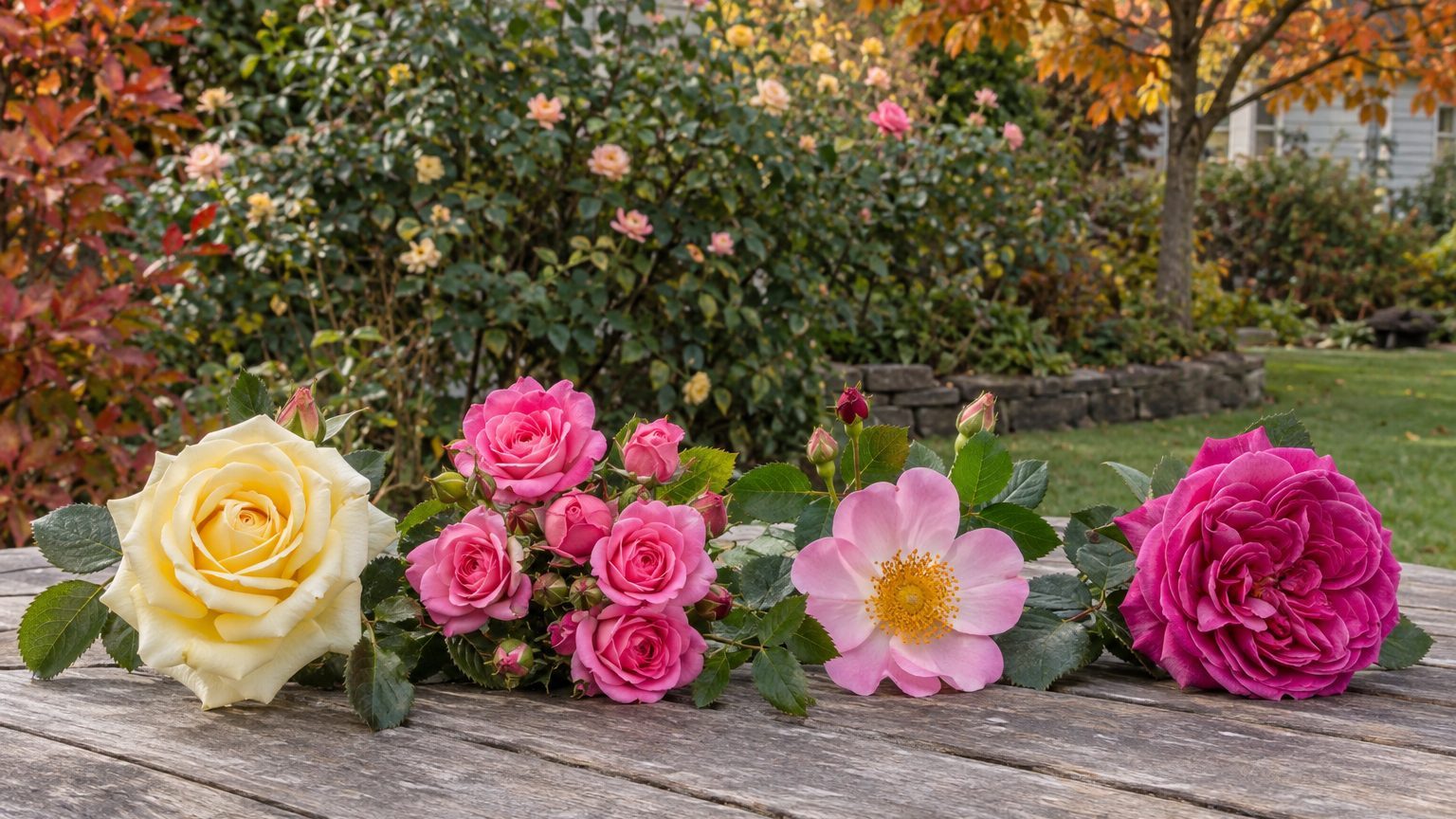
Roses in New Jersey face black spot on the leaves in humid summers and winters cold enough to damage the canes of tender types. Hardy shrub roses and disease-resistant varieties handle both without much fuss, while hybrid teas ask for more attention. Choosing the right type for your yard comes first, and the care follows from it.
Best Roses to Grow in New Jersey

Hardy shrub roses, old garden roses and disease-resistant landscape roses do well here, because winters fall in USDA zones 6a to 7b and humid summers invite leaf disease. Tender types can still succeed with some care. Each group below comes with what keeps it going in a New Jersey yard.
Knock Out and Other Shrub Roses
Most shrub and landscape roses are reliably winter hardy and need no extensive preparation for the cold months. Knock Out cultivars add strong resistance to black spot, the disease that once made roses a chore in damp summers. Plant them where you want color with little fuss.
Explorer Series Roses
The Explorer series is bred for cold and performs well without extra winter protection. That makes it a sensible pick for exposed corners, windy lots and gardeners who would rather not wrap canes in November.
Old Garden Roses
Many old garden roses tolerate cold extremely well, and they too need little winter preparation. Many of them bloom once, on last year’s wood, so prune them right after the flowers fade and never in early spring, which removes the buds.
Hybrid Teas, Grandifloras and Floribundas
Hybrid teas, grandifloras and floribundas are not reliably winter hardy. Expect to protect them each winter, and look for varieties noted as disease resistant, because they vary widely in how much black spot and mildew they pick up.
Climbing Roses
Some climbers are reliably hardy and others are not, so the label matters more here than the bloom color. Plants in exposed spots take the hardest hits, so give a tender climber a sheltered wall and protect it like a hybrid tea.
Own-Root Roses
Own-root roses are grown from cuttings rather than grafted onto a different rootstock. If the canes die back in winter, new ones often emerge from the deep roots. Even so, some may need protection, depending on how hardy the variety is compared with your garden’s zone.
New Jersey — the year and the numbers
- State
- New Jersey
- USDA zones
- 6a-7b
- Last spring frost
- March 29 to April 6
- First fall frost
- November 4 to November 16
- Annual rain
- 47 in
- Lawn zone
- transition-season
- Source
- NOAA NCEI U.S. Climate Normals 1991-2020, 32F freeze probabilities · Newark
How to Choose a Rose for a New Jersey Garden
Start with how much winter work you are willing to do, then look at how damp your summers feel. A hardy shrub rose asks for the least, and a hybrid tea asks for the most.
A rose bred for much colder zones needs little to no added protection in a milder garden, so a variety’s hardiness rating can work in your favor.
| Your situation | What suits it in New Jersey | Why |
|---|---|---|
| Cold winters or an exposed spot | Explorer series, hardy shrub roses, old garden roses | Reliably hardy, little winter preparation |
| Humid summers | Knock Out and other disease-resistant varieties | Strong resistance to black spot |
| Little time | Shrub and landscape roses | No extensive winter preparation needed |
| You want hybrid teas | Hybrid teas with winter protection, or own-root plants | Not reliably hardy, but own-root plants can regrow from the roots |
For a small space, miniature roses are worth a look, since some are reliably hardy, though you should check the variety before buying. Repeat-blooming roses such as hybrid teas are pruned in March or April, as the winter protection comes off.
Which Roses Suit Different Parts of New Jersey
USDA hardiness zones run from 6a to 7b across the state, so the same rose can need cover in one county and almost none in another.
- Sussex and Warren county highlands: Colder winters and higher ground make hardy shrub roses and the Explorer series the safer choice. Hybrid teas here need their protection put on carefully.
- Newark and central New Jersey: This middle ground suits shrub roses and, with winter protection, hybrid teas and floribundas. Disease-resistant varieties matter most for the humid summers.
- Jersey Shore and the south: Milder winters mean a cold-bred rose needs little added protection, so you can try tenderer types and own-root plants with less worry.
Gardens inland and uphill usually have a later last frost than the city figures suggest, so check your own county before planting.
Rose Buying Mistakes to Avoid in New Jersey
Buying a Tender Type and Skipping Protection
A hybrid tea, grandiflora or floribunda left bare through winter can suffer considerable cane damage. Wait for several killing freezes so the plant is dormant, then put the protection on in November. December also works if the weather held mild.
Choosing a Disease-Prone Variety
Hundreds of hybrid roses are sold, and their susceptibility to disease varies a great deal. A susceptible one in a humid summer means spotted, yellowing leaves and constant spraying. Choose disease-resistant varieties before you buy, since that choice matters more than any later treatment.
Overlooking Own-Root Plants
A grafted rose that is hit hard by winter can lose its top growth. An own-root rose is grown from cuttings and, if the canes die back, new ones often come from its deep roots. When you shop for tender types, ask whether the plant is own-root or grafted.
Where to Get Rose Advice in New Jersey
Local advice settles questions about varieties, timing and disease for your own corner of the state. Rutgers NJAES is the state’s extension service, and your county office adds local knowledge.
- The state extension site carries fact sheets on pruning flowering shrubs, useful to read before pruning begins in March.
- Your county extension office can tell you about local frost timing and which diseases are common nearby, so call it before choosing varieties in March or April.
Common Questions
Can You Plant a Rose in July in New Jersey?
Container roses can go in from April through midsummer, so July works if you water well. Bare-root roses are planted in March or April, before growth starts.
When Should You Feed Roses in New Jersey?
Feed from April through July: after pruning, at first bloom and again in mid-July. Stop feeding after July so soft new growth does not form just before cold weather.
When Should You Prune Roses in New Jersey?
Prune repeat-blooming roses in March or April, once the ground thaws and the protection is off. February can also work in an early spring, when the forsythia blooms.