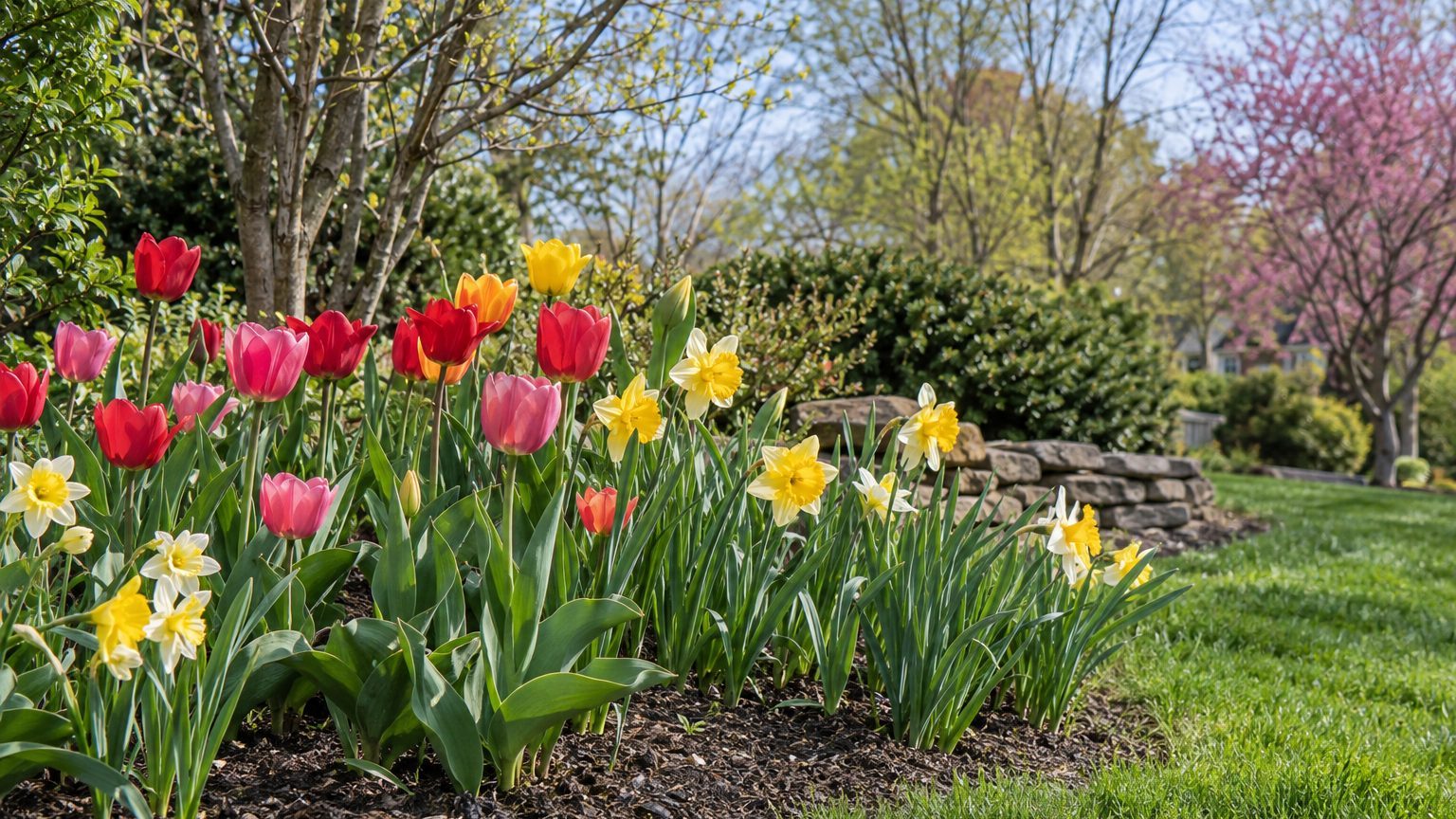
Daffodil leaves poke through cold soil, and weeks later the first tulip buds color up along a sunny foundation wall. In New Jersey, spring bulbs open across a long stretch of the season, and where your yard sits and how the weather runs decides which week your own beds peak.
When Do Tulips and Daffodils Bloom in New Jersey?

Tulips and daffodils bloom in New Jersey from March through April and into May, and a few early flowers can open as soon as February. Bloom follows how fast spring warms up, so a cold March pushes everything later and a mild one brings it forward.
| Bulb | When it blooms in New Jersey | What sets the timing |
|---|---|---|
| Crocus and daffodils | February to May, as part of the long spring run | Warming soil after winter cold has done its work |
| Tulips | March to May | Spring warmth, with early, mid and late types spreading the show |
| Hyacinths | March to May | Spring warmth after at least 12 to 16 weeks of cold |
| Alliums | Toward the end of the season, in May | Spring warmth after the cold of winter |
Most spring bulbs need about 12 to 16 weeks of cold before they flower, and New Jersey winters supply it without any help from you. According to Iowa State University Extension, alliums, like other spring bulbs, need the cold of winter to bloom. Planting in October gives roots time to settle before the ground freezes.
New Jersey — the year and the numbers
- State
- New Jersey
- USDA zones
- 6a-7b
- Last spring frost
- March 29 to April 6
- First fall frost
- November 4 to November 16
- Annual rain
- 47 in
- Lawn zone
- transition-season
- Source
- NOAA NCEI U.S. Climate Normals 1991-2020, 32F freeze probabilities · Newark
How to Tell Your Bulbs Are About to Bloom
Your own beds give better timing than any date, because the plants show you what the weather has been doing.
- Green tips pushing through the soil or mulch mean the bulb has woken up and the cold it needed is behind it.
- Leaves that keep lengthening in a sunny spot tell you flowers are on the way, since the bud rides up inside them.
- A flower bud swelling at the top of the stem means bloom is close, and a frost warning is the moment to think about protection.
- Buds that show color while still closed mean the flowers will open within a short spell of mild weather.
- Beds against a warm south wall wake before beds in open lawn, so check the sheltered spots first.
Bulbs that stay green but never produce a bud are usually shaded or crowded, a sign to lift and replant them after the leaves die back.
What to Do After Tulips and Daffodils Bloom in New Jersey
Snap off the faded flowers and leave everything else alone. The leaves are feeding the bulb for next year’s bloom, so they stay on the plant until they turn brown. Do not cut them or tie them into neat bundles while they are still green.
Expect different staying power from the two. Tulips are often short-lived in the garden, and many beds need fresh bulbs after a few years. Daffodils last longer and are the more reliable perennial bulb, returning year after year, which is why they suit naturalizing in clumps across a lawn edge or slope.
Wildlife shapes what survives. In New Jersey, tulips and crocuses are edible to voles, squirrels, rabbits and deer, while daffodils are left alone. If animals visit your yard, plant daffodils where you want a sure result and keep tulips near the house.
How Bloom Time Shifts Across New Jersey
The state runs from hardiness zone 6a to 7b on the USDA system, so bloom shifts a little from one corner to another. Frost dates in this article come from Newark, where the last spring frost falls between March 29 and April 6. Suburban and rural yards usually see it later, so check with your own county.
- Northwest highlands: Colder zones and higher ground warm later, so bulbs here open after those in the lower parts of the state.
- Newark and the northeast urban corridor: Warmth held by pavement and buildings nudges bloom earlier than in surrounding suburbs.
- Southern New Jersey and the Shore: Milder winters and an earlier spring warm-up bring bloom forward, though the same 12 to 16 weeks of cold still apply.
Within a single yard, a sheltered south-facing bed can lead an exposed one by a clear margin.
Where to Get Bulb Advice in New Jersey
Local answers beat general ones when a bed misbehaves or you need to choose bulbs for a tricky spot. Rutgers Cooperative Extension and your county office both know New Jersey soils and weather.
- Rutgers New Jersey Agricultural Experiment Station publishes fact sheets on spring flowering bulbs, which are worth reading before you shop in late summer.
- Your county Rutgers Cooperative Extension office can tell you how your area compares with Newark, so call before planting in early fall.
Common Questions
Can You Plant Tulip Bulbs That Are Still in the Bag?
Yes. A bulb still in the bag is better planted late than stored over the winter. Plant as long as the ground can be dug, even if it is past the usual window.
Do Daffodils Need to Be Dug Up Every Year?
No. Daffodils are hardy perennial bulbs that never have to be dug, and they return year after year. They also resist rabbits and deer, so they are a low-maintenance choice.
When Is the Best Time to Plant Spring Bulbs in New Jersey?
October is the main planting month, and September and November also work. Plant once the soil has cooled below about 60°F, so roots form before the ground freezes without the bulbs sprouting in fall.