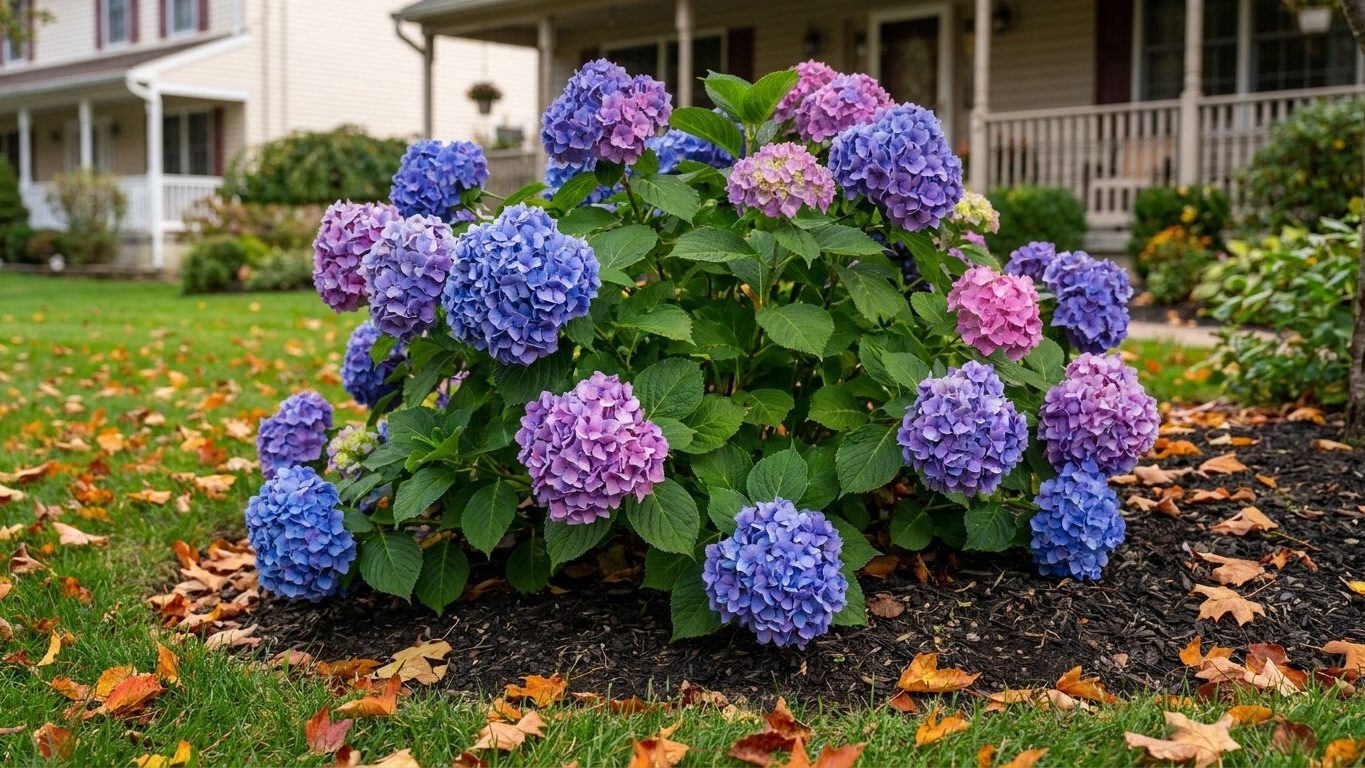
Plant hydrangeas in New Jersey in spring, from March into April, or again in fall, from September into October, once the soil has cooled but before the ground locks up. Newark’s frost dates and the state’s split hardiness zone decide which of those windows fits your yard, and bigleaf hydrangea pruning waits until June or July.
When to prune hydrangeas in New Jersey: The Short Answer
Newark’s last spring frost, according to NOAA NCEI U.S. Climate Normals 1991-2020, falls between March 29 and April 6, and that single window decides most of what follows below, month by month.
- January: The shrub sits dormant and needs nothing but a look for winter dieback. Skip pruning now, since cutting into wood this early only invites more cold damage.
- February: This is order-and-prep season, not planting season, with the ground in Newark still too cold to dig. Pick out bare-root stock or container plants so they’re ready once frost risk drops.
- March: Planting opens this month, but only after the frost risk has mostly passed. Fertilizing also starts in March, once new growth shows at the base of the shrub.
- April: The planting window stays open through April, right as the spring frost risk finally clears for good. Water new shrubs deeply twice a week until roots settle in.
- May: A second fertilizer application goes down in May, timed to feed the shrub as flower buds start forming. Mulch two to three inches deep to hold moisture through the coming heat.
- June: Pruning of bigleaf hydrangea belongs here, right after the first flush of blooms fades. Cut spent flower stems back to the first healthy set of buds, never lower.
- July: July carries both the last fertilizer round and the tail end of the bigleaf pruning window. Water during dry stretches, since summer heat pulls moisture out of the soil fast.
- August: No fertilizing or pruning this month, since late feeding pushes soft growth frost will punish. Deadhead spent blooms and keep watering steady instead.
- September: Planting reopens in September, and many Jersey gardeners prefer this window since the soil holds warmth while the air cools. Give new plants six to eight weeks before the ground freezes.
- October: October closes the fall planting window, with roots needing time to establish before the first frost arrives. Hold off on pruning here, since fresh cuts don’t heal well this late.
- November: Newark’s first fall frost lands between November 4 and November 16, and that’s the cue to mulch roots heavily for winter. Stop watering once the ground starts to freeze.
- December: The shrub is fully dormant again, and pruning or fertilizing both wait until the calendar says otherwise. Check mulch depth after heavy wind or snow.
New Jersey’s USDA Plant Hardiness Zone spans 6a to 7b, wide enough that a shrub thriving in Newark’s suburbs might struggle sixty miles inland. Check your own county before trusting this list outright.
New Jersey — the year and the numbers
- State
- New Jersey
- USDA zones
- 6a-7b
- Last spring frost
- March 29 to April 6
- First fall frost
- November 4 to November 16
- Annual rain
- 47 in
- Lawn zone
- transition-season
- Source
- NOAA NCEI U.S. Climate Normals 1991-2020, 32F freeze probabilities · Newark
How to Work Out the Dates for Your Own Yard
Finding your own dates starts with your county’s frost window, not the state’s, since the calendar above uses Newark as its reference point and your yard may run cooler or warmer.
- Find your local frost dates: NOAA NCEI Climate Normals lists Newark’s last spring frost at March 29 to April 6, but a county extension office or a personal weather log can adjust that window for your own soil and elevation.
- Count backward from the fall frost for planting: with first fall frost landing November 4 to November 16, a September or October planting date leaves several weeks of root growth before the ground locks up.
- Count forward from the spring frost for pruning: bigleaf hydrangea pruning waits until June or July, well clear of any lingering cold that could damage fresh cuts.
- Check your hardiness zone on the map: USDA places New Jersey between zone 6a and 7b, and a shrub rated for zone 7 alone is gambling in a 6a yard.
- Watch the shrub, not just the calendar: new growth at the base signals it’s safe to fertilize, regardless of what the date on the wall says.
None of this replaces a look at your own yard. A north-facing slope or a low spot that collects cold air can run behind the reference dates above.
New Jersey North to South: How the Dates Shift
New Jersey stretches from the Highlands in the north to the shore in the south, and that distance shows up in the calendar more than most homeowners expect.
- The Skylands and Highlands (Sussex, Warren, Morris counties): higher elevation and colder pockets push both frost dates later in spring and earlier in fall than the Newark numbers above suggest.
- The Piedmont and central corridor (Essex, Union, Middlesex counties): this band tracks closest to Newark’s own numbers, since the reference station sits inside this corridor.
- The Pine Barrens and inland south (Burlington, Ocean, Atlantic counties): sandy soil drains fast and warms early, often letting the safe planting date arrive ahead of the north.
- The shore and bay counties (Cape May, Monmouth, Cumberland): coastal water moderates temperature swings, softening both the spring cold snaps and the first hard frost of fall.
Check the state guide for New Jersey to see where your county lines up against these regional shifts.
Mistakes New Jersey Punishes
Pruning bigleaf hydrangea after summer
Bigleaf hydrangea sets its flower buds on the previous year’s wood, so a fall cut removes next summer’s blooms entirely. Keep pruning inside the June to July window and skip the urge to tidy shrubs in September or October.
Planting before the soil actually warms
A calendar page that says March feels safe, but NOAA NCEI Climate Normals puts Newark’s last spring frost as late as April 6, and cold wet soil rots new roots before they take hold. Wait until the ground has dried out, even into April.
Fertilizing into late summer
A feeding in August or later forces soft new growth that the first fall frost, arriving as early as November 4 in Newark, kills outright. Stop fertilizing after July and let the shrub harden off on its own.
New Jersey Extension Offices and County Contacts
The zone and frost numbers above are a starting point, not a final answer, and Rutgers New Jersey Agricultural Experiment Station keeps county-level guidance for exactly the gaps a statewide range leaves open.
- Your state page: the frost dates and the pruning window where you live, gathered in one place.
- Which ones hold up here: a variety-by-variety look at what actually survives a New Jersey winter.
- What goes wrong here: the pests and problems specific to hydrangeas in this state, month by month.
Call your county extension office before the next planting window opens.
Common Questions
Can I plant hydrangeas in New Jersey in the summer?
Summer heat stresses new roots before they’ve had a chance to establish, so the spring window of March through April and the fall window of September through October both work better than a July planting.
Do hydrangeas need winter protection in New Jersey?
In colder pockets of the state, a heavy mulch layer over the root zone before the first fall frost protects the shrub through winter, especially for bigleaf varieties that set buds on old wood.
What happens if I miss the June to July pruning window for bigleaf hydrangea?
Pruning outside that window risks cutting off next year’s flower buds, since bigleaf hydrangea blooms on the previous season’s growth. Wait for the next window rather than pruning off schedule.