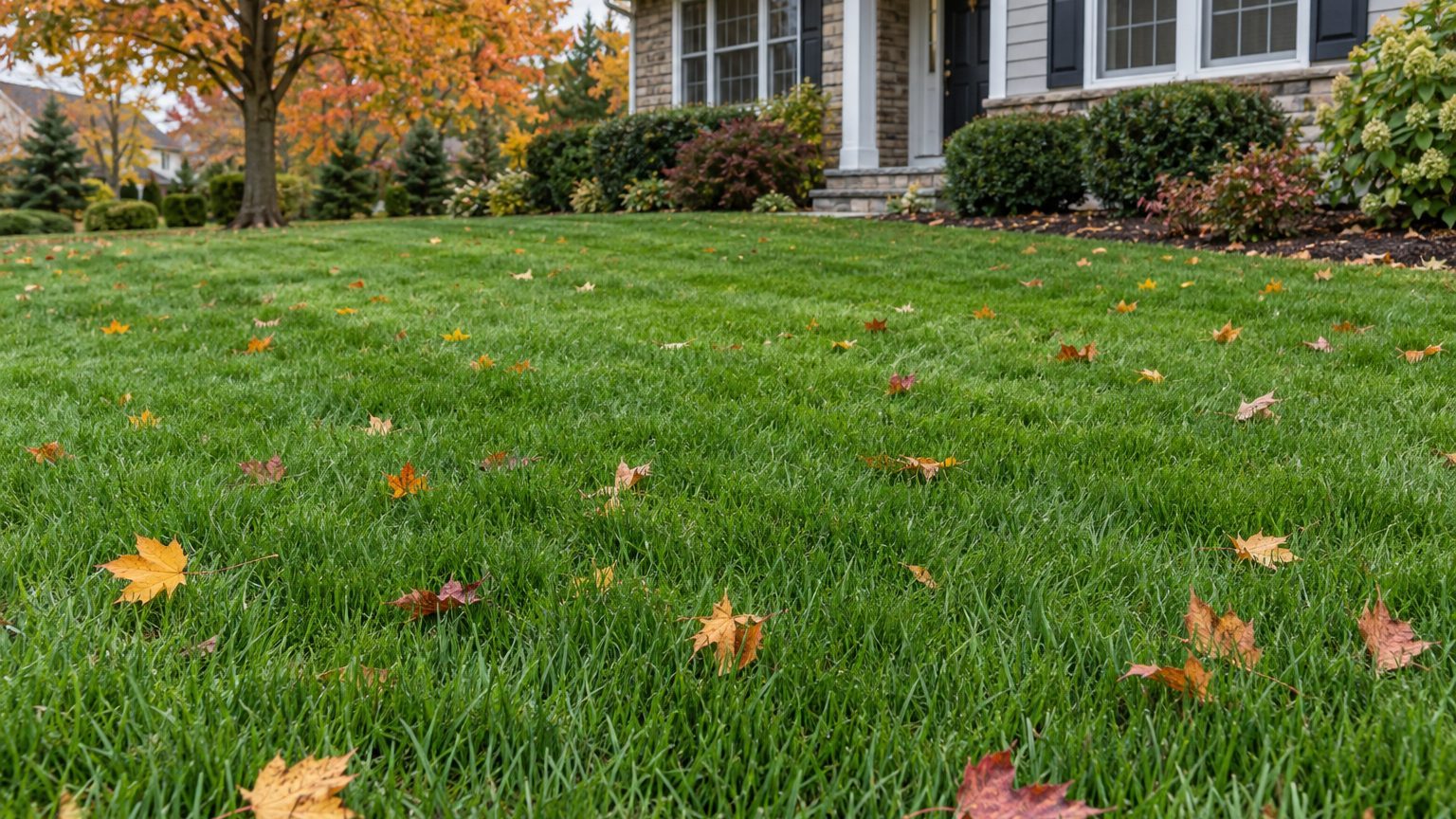
A New Jersey lawn does most of its growing in the cool weather of spring and early fall, then sulks through July heat and goes quiet by winter. Most of the work therefore lands in a few well-chosen months.
What to Do Each Month in a New Jersey Lawn

Cool-season grass sets the rhythm here. Spring is for light feeding and weed prevention, late summer is for repair, and the months between are for mowing and water.
| Month | In the lawn |
|---|---|
| January | Rest. The grass is dormant, so stay off frozen turf and let it sleep. |
| February | Rest. Still dormant. A good time to sharpen the mower blade before the season opens. |
| March | No mowing yet, since the grass has barely stirred. Crabgrass preventer also works this month if spring arrives early, though April suits it better. |
| April | Put down crabgrass preventer now, before the weed seed sprouts. Mowing begins as the grass picks up. If their preferred windows will not work for you, seeding, sod, aeration, dethatching and feeding can be done this month. |
| May | Feed the lawn now while growth is strong. Preventer still works if April slipped by. Mow regularly as growth speeds up. |
| June | Start watering as the weather turns dry and warm. Keep mowing, and watch for the lawn slowing in the heat. |
| July | Water deeply and keep mowing. Cool-season grass may fade to a tired color, which is normal stress and not a reason to fertilize. |
| August | Repair season opens. Core aerate, seed, lay sod, and dethatch only if the thatch layer is thicker than about an inch. Keep watering new work. |
| September | Feed the lawn again, and finish any aerating, seeding or sod. Warm soil and cooler air let new roots take hold before winter. |
| October | Keep mowing and clear fallen leaves so they do not smother the turf. If you missed September, sod still works now. |
| November | Mow until growth stops. A final feeding early in the month still helps, but New Jersey law bars lawn fertilizer after November 15 and before March 1. |
| December | Rest. The grass is dormant. Clean and store the mower and tools. |
Dates slide a little with the weather, so treat each month as a window rather than a deadline. A cool spring pushes the work later, and a hot, dry August can delay seeding until September.
New Jersey — the year and the numbers
- State
- New Jersey
- USDA zones
- 6a-7b
- Last spring frost
- March 29 to April 6
- First fall frost
- November 4 to November 16
- Annual rain
- 47 in
- Lawn type
- cool-season
- Source
- NOAA NCEI U.S. Climate Normals 1991-2020, 32F freeze probabilities · Newark
When Does the Lawn Season Start and End in New Jersey?
Grass wakes up when the soil warms, not when the last frost passes. Cool-season seed germinates when soil sits at 50 to 65 °F, which is why late summer is preferred and early spring can still work in New Jersey. Warm-season grasses need 65 to 70 °F, and they are a poor fit for most New Jersey lawns.
Frost dates matter mainly for young seedlings. Around Newark, the last spring frost falls between March 29 and April 6, and gardens in the suburbs and countryside usually see it later, often by one to two weeks. Tender new grass can be hurt if it sprouts just before a late freeze.
In fall, the first frost around Newark arrives between November 4 and November 16. Outside the city it comes earlier, and more so at elevation. That is why seeding belongs in late summer, so roots are established well before cold arrives. Check your own county’s dates, because your yard may run noticeably behind or ahead of the city.
How the Lawn Calendar Shifts Across New Jersey
New Jersey is small but not uniform, and the difference between the northwest hills and the southern shore is enough to move your timing.
- Sussex and Warren counties (the Skylands): Higher ground stays cooler, so spring growth starts later and fall cold arrives sooner. Aim for the early part of each window in late summer, and expect the last mowing to come earlier.
- The Jersey Shore: The ocean softens the cold, so the season runs a little longer in fall. Sandy soil drains fast and dries quickly, which means summer watering matters more than it does inland.
- South Jersey and the Pine Barrens: Warmer ground wakes up sooner in spring and holds heat longer into fall. In sandy, acidic parts of the region, soil dries quickly, so new seed needs closer attention.
Central New Jersey, around Princeton and New Brunswick, sits near the middle of the calendar as written.
Lawn Care Timing Mistakes to Avoid in New Jersey
Applying Preventer Too Late
Crabgrass preventer works by stopping seeds as they sprout. Once the weed is up, the product does little. April is the right moment, and March or May work as fallbacks. Apply early enough and the barrier is in place before warm soil triggers germination.
Seeding After September
Seed sown in October may sprout, but the seedlings have little time to root before cold arrives, and winter often thins them out. The reliable windows are August and September, with April and May as a backup. If September slips by, lay sod instead, since it still works in October.
Dethatching Healthy Turf
Raking a lawn hard when the thatch is thin only tears up good grass. Check by cutting a small plug, and if the spongy layer is thin, skip it and aerate instead.
Where to Get Lawn Advice in New Jersey
Local help can sharpen the timing for your own yard, since soil, shade and elevation vary from county to county. Useful local help is easy to find.
- Rutgers Cooperative Extension publishes turf guidance written for New Jersey conditions, and it is worth a look before the spring and late-summer work begins.
- Your county extension office can answer questions about local soil and grass types, and it is a good place to call when a patch looks wrong.
- Ask the county office about soil testing in early spring, so you know what the lawn needs before you buy fertilizer.
Common Questions
Should You Keep Mowing in November?
Yes, as long as the grass keeps growing. Mowing runs from April through November in New Jersey, and the last cut comes when growth slows.
Can You Aerate and Seed on the Same Day?
Yes. Aerating and seeding share the same windows, and seed dropped onto freshly aerated turf settles into the holes and meets bare soil. Water the area regularly afterward.
Is a Yellow Lawn in July a Sign It Needs Fertilizer?
Usually not. Pale, dry grass in midsummer, especially on sunny slopes or sandy ground, points to heat and thirst. Water deeply first, and save feeding for May and September.