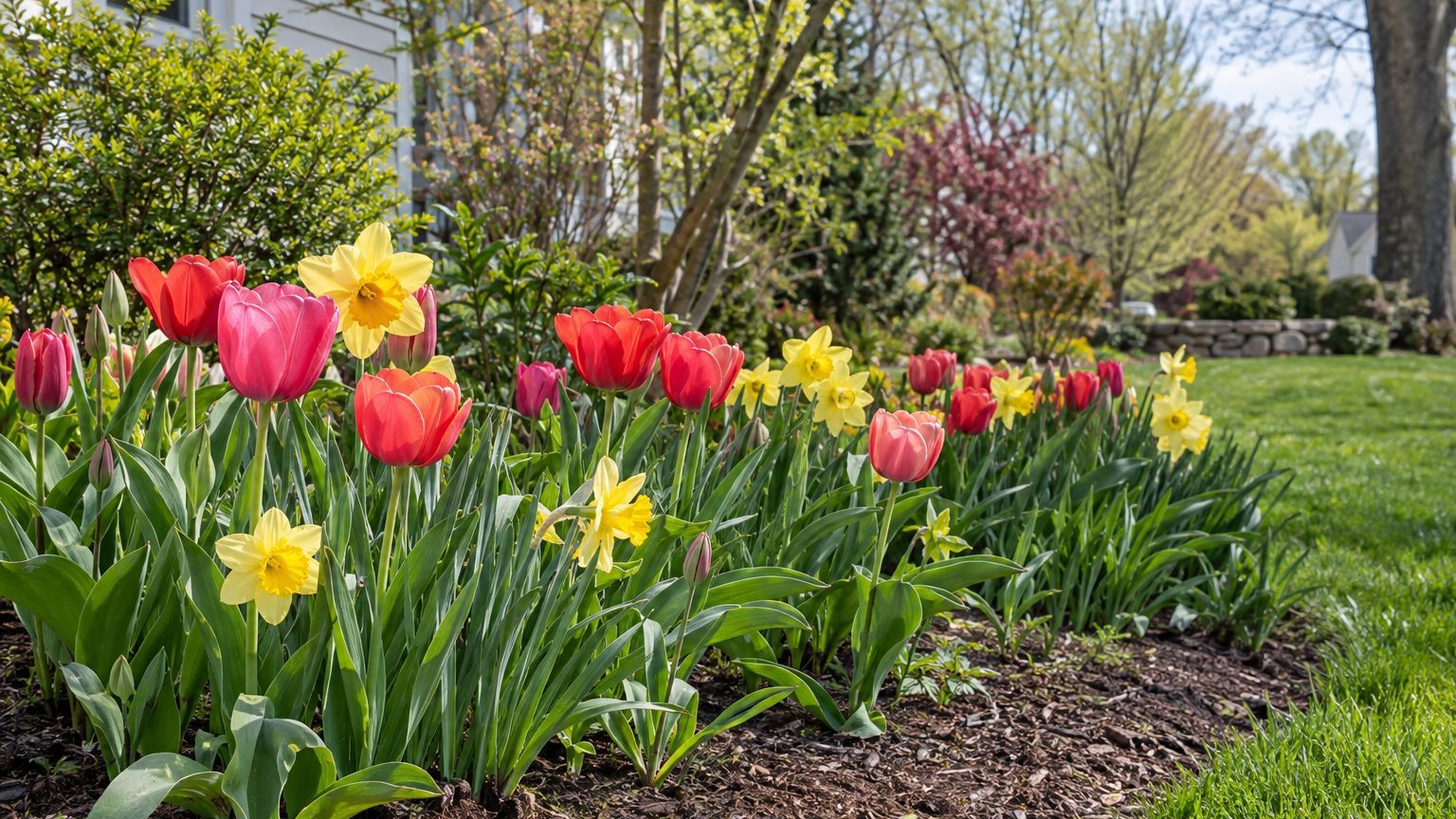
Daffodil spears push through the last patches of snow, and soon the tulips open in the same beds. The timing shifts with each spring, but New Hampshire follows a steady pattern from the first mild days of March through May. Here is when each bulb flowers across the state and what to do once the color fades.
When Do Tulips and Daffodils Bloom in New Hampshire?

Daffodils open in March or early April, and tulips follow in late April and May. Exact dates depend on how quickly spring warms, so a cold March pushes everything back, while a mild one brings the first flowers forward.
| Bulb | When it blooms in New Hampshire | What sets the timing |
|---|---|---|
| Daffodils | March to early April | Warming soil and air, with hardiness that suits the whole state |
| Tulips | Late April and May | Spring warmth arriving after daffodils have started |
| Alliums | Close out the spring succession | They follow the tulips as the season turns warmer |
Crocus and hyacinths also flower as spring warms, with crocus among the first color in the beds. Most daffodil species and hybrids are hardy to zone 3, so they can be grown throughout New Hampshire, including the coldest corners. Tulip varieties differ in how early they open, which is why a bed planted with a mix stretches color across several weeks of spring.
New Hampshire — the year and the numbers
- State
- New Hampshire
- USDA zones
- 3b-6a
- Last spring frost
- April 16 to April 27
- First fall frost
- October 13 to October 26
- Annual rain
- 40 in
- Lawn zone
- cool-season
- Source
- NOAA NCEI U.S. Climate Normals 1991-2020, 32F freeze probabilities · Manchester
How to Tell Your Bulbs Are About to Bloom
The bulbs give plenty of notice, and a quick walk along the beds on a mild day tells you what stage they have reached.
- Green tips poking through the soil or mulch mean the bulb has woken up, so rake back any heavy leaf litter that might smother them.
- Leaves that stand a few inches tall mean the flower stalk is forming inside, and a late frost at this stage usually leaves the foliage unharmed.
- A fat bud rising on a stalk above the leaves means flowers are days or weeks away, depending on the weather.
- A bud that shows color through its sheath or petals is close to opening, which is the moment to enjoy the bed before a warm spell speeds it along.
- Leaves up but no bud in a tulip clump often points to an aging bulb, and tulips are often short-lived in the garden.
Cold snaps pause the progress without ending it, so a stalled bud in April is normal and usually opens when the weather warms.
What to Do After Tulips and Daffodils Bloom in New Hampshire
Snip off the faded flowers and leave everything else alone. The leaves keep working after the petals drop, feeding the bulb for next year, so they stay on the plant until they turn brown. Never braid, tie or cut them while they are green, even when they look untidy.
To hide the fading foliage, plant perennials nearby that will grow up and cover it as the bulbs finish. A late-spring bed then stays tidy without anyone touching the leaves.
Daffodils last longer than tulips and are the more reliable perennial bulb. Daffodils naturalize well, especially in partly shady areas, and Fosteriana tulips also perennialize well. If your tulips thin out after a few years, fresh bulbs go in during October, once the soil has cooled below about 60°F, so the roots form before the ground freezes.
How Bloom Time Shifts Across New Hampshire
New Hampshire runs from the coast to the mountains, and bulbs follow that landscape, flowering earlier where it is milder and later where it is colder.
- Seacoast: The ocean tempers spring cold here, so bulbs along the coast are generally among the first in the state to show color.
- Merrimack Valley and southern New Hampshire: Towns around Concord, Manchester and Nashua warm up ahead of the hills, and tulips usually open here in the later part of the usual window.
- Lakes Region: Open water holds the chill, so beds near large lakes can lag slightly behind the inland towns around them.
- White Mountains and the North Country: Elevation and colder soil delay everything, so daffodils and tulips here open later than the bulbs in the southern valleys.
Frost risk runs on its own schedule. At the airport weather station, the last spring frost falls April 16 to April 27, and gardens in suburbs, rural areas and uplands often see it later.
Where to Get Bulb Advice in New Hampshire
University of New Hampshire Extension publishes seasonal bulb guidance written for New Hampshire gardens, and its county offices answer local questions.
- The extension website carries articles on naturalizing bulbs and fall planting, which are worth reading before you order bulbs in late summer.
- Your county extension office can tell you how your area compares with the state’s general pattern, so call it in early spring if your beds behave differently from the neighbors’ beds.
Common Questions
Can You Plant Bulbs in December in New Hampshire?
Yes, as long as the ground can still be dug. October is the usual time for planting, with November and December as a fallback. A bulb still in the bag is better planted late than stored over the winter.
Do Deer and Voles Eat Tulips and Daffodils?
Voles, squirrels, rabbits and deer eat tulips and crocus, but they leave daffodils alone. In New Hampshire, daffodils serve as deer training plants to protect tender plants that deer like to browse.
Do Spring Bulbs Need a Cold Winter to Bloom?
Most spring-flowering bulbs need about 12 to 16 weeks of cold to flower, which New Hampshire winters supply without help. Alliums need the cold of winter to bloom, just like other spring-flowering bulbs.