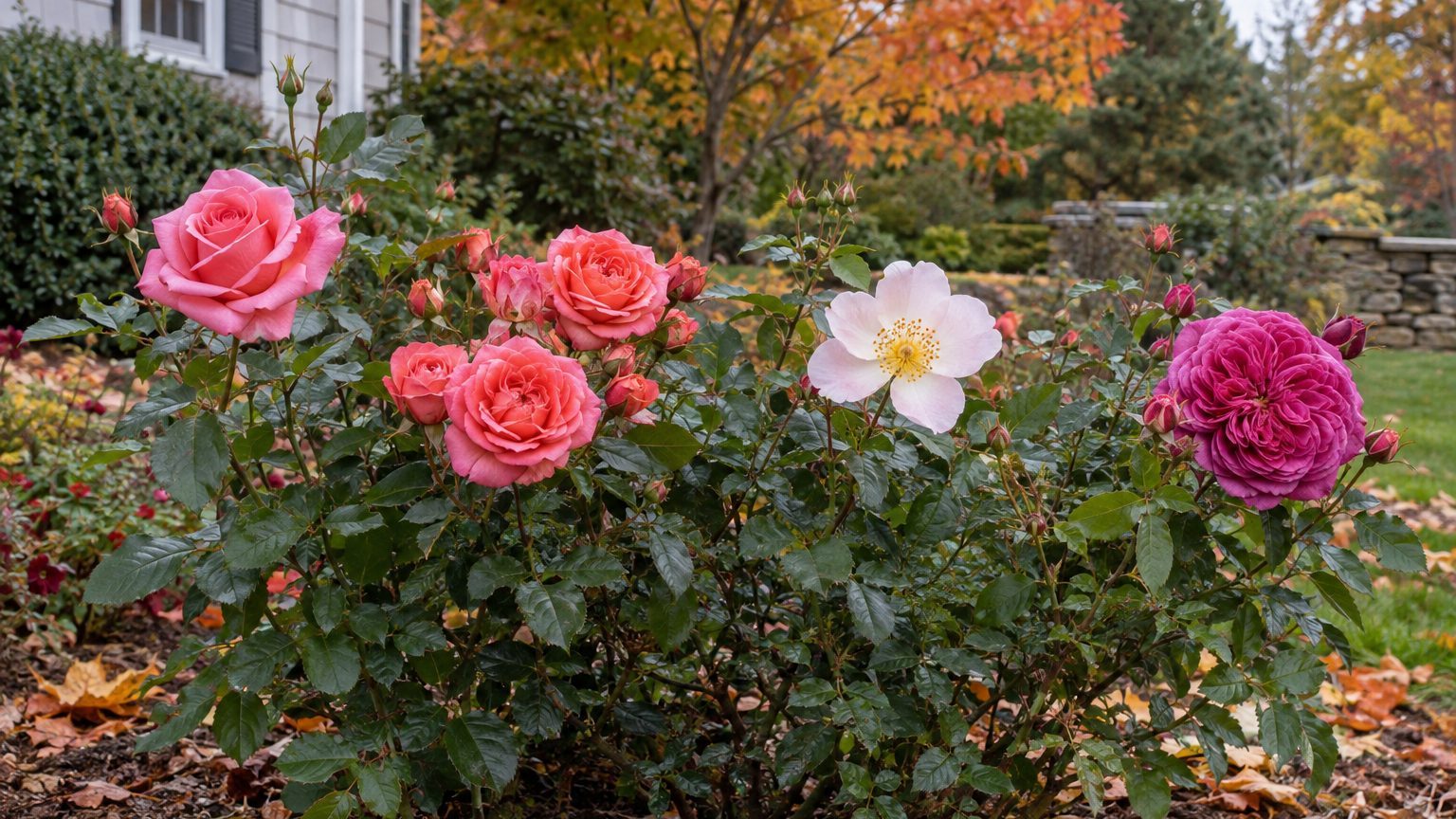
Walk a New Hampshire garden in April and some roses show green buds along their canes while others have died back to the ground. The difference usually comes down to the type planted. Hardy shrub roses shrug off the cold, and hybrid teas can still earn a spot if you tuck them in each November.
Best Roses to Grow in New Hampshire

Hardy shrub roses, rugosas, Explorer roses and the tougher old-fashioned types do best here, because winters range across USDA zones 3b to 6a and cold is the limit on what survives. Humid summers and heat matter less than picking a type that fits your zone.
Rugosa Roses
Rugosa roses (Rosa rugosa) are known for being hardy in most locations, even where winters are severe. That makes them a dependable first pick for a cold or exposed corner of the yard, and they rarely ask for winter protection.
Explorer Series
The Canadian Explorer series, named for explorers such as Champlain, Cabot and Kelsey, includes shrub and climbing roses bred for cold climates. Cold-hardy shrub roses of this kind perform well without extra protection, which saves you a November chore.
Meidiland Series
Meidiland hardiness varies by variety, so check the label against your own USDA zone before buying. In the colder parts of the state, check the specific variety before buying, and give it a sheltered spot to be safe.
Knock Out Roses
Knock Out is another hardy shrub rose that performs well without extra winter protection. It suits a gardener who wants repeat bloom with little fuss, and it pairs easily with rugosas or Explorers along a foundation or fence.
Floribundas and Polyanthas
Polyanthas, floribundas, hybrid perpetuals and many old-fashioned roses prove more winter hardy than hybrid teas and grandifloras. They still benefit from protection in a hard winter, but they forgive more than their showier cousins.
Hybrid Teas
Hybrid teas are the classic cutting rose, with upright growth, long stems and a single sweet-scented flower on each. They are less hardy than shrub roses and need winter protection in cold winters, so plant them where you can reach them in November.
New Hampshire — the year and the numbers
- State
- New Hampshire
- USDA zones
- 3b-6a
- Last spring frost
- April 16 to April 27
- First fall frost
- October 13 to October 26
- Annual rain
- 40 in
- Lawn zone
- cool-season
- Source
- NOAA NCEI U.S. Climate Normals 1991-2020, 32F freeze probabilities · Manchester
How to Choose a Rose for a New Hampshire Garden
Start with the winter, since that decides what survives. Choose only types hardy enough for the coldest average winter in your growing zone, and remember that winter protection is often needed for most garden roses. How much depends on the type and on where it sits in the garden.
After that, match the rose to the time and space you have. Whatever you pick, roses grow best in rich, loose soil with good drainage.
| Your situation | What suits it in New Hampshire | Why |
|---|---|---|
| Very cold winter | Rugosa or Explorer roses | Rugosas are hardy in most locations, and Explorers are cold-hardy choices |
| Little time | Knock Out or Explorer shrub roses | They perform well without extra winter protection |
| Small space | Climbing roses on a trellis or arbor | They can be trained to cover a trellis or arbor |
| Cut flowers wanted | Hybrid teas, with winter protection | Long stems and a sweet-scented single bloom, but less hardy |
| Borderline cold spot | Floribundas or polyanthas | They are more winter hardy than hybrid teas |
Bare-root roses go in during April and May, while potted roses can be planted later. Ask for a hardiness label before you buy, and match it to your own zone rather than to the state as a whole.
Which Roses Suit Different Parts of New Hampshire
Zone 3b gardens and zone 6a gardens both exist in the state, so the same rose can thrive in one town and struggle in another. Elevation can change local winter conditions.
- North Country and the White Mountains: Choose the hardiest types here, such as rugosas and Explorer roses. Treat hybrid teas as a project that needs full protection, or skip them.
- Lakes Region: Winters bite on hilltops and open ground, so lean toward shrub roses there. Sheltered, lower sites near the water give you a little more room to try floribundas.
- Seacoast: Milder winters widen the choice, and hybrid teas and Meidiland roses have a better chance. Still plan on covering the more tender kinds in late fall.
- Merrimack Valley and the south: Most types can work here, though the hardy shrub roses stay the easy path.
Gardens at higher elevations usually run colder than nearby valleys, so look up the zone for your own address before you shop.
Rose Buying Mistakes to Avoid in New Hampshire
Tender Roses Left Bare
Hybrid teas, grandifloras, floribundas and miniatures need winter protection when winters turn cold. Without it, canes can die back hard and the plant may not return. Cover them in late November, after hard frosts have killed the leaves, because covering earlier traps living growth.
Take the protection off in May, in early May before new growth begins. It can also be done in April.
Pruning Once-Bloomers in Spring
Old garden roses, ramblers and many climbers flower once a year, on last year’s wood. Cut them in early spring and you remove the buds, which costs you the whole season of bloom. Prune them right after they flower instead.
Repeat-blooming roses such as hybrid teas, floribundas and modern shrub roses flower on new wood. Prune them in April or May, once active growth begins. March is the outer limit, and only while the canes are still dormant.
Feeding Too Late
Feeding keeps roses blooming, and April through July is the working window. You can feed in August if needed, but stop then so new growth can harden off before winter.
Where to Get Rose Advice in New Hampshire
Local growers can tell you what has held up in your town, and a few places are worth a visit before you spend money on plants.
- University of New Hampshire Extension publishes fact sheets on rose hardiness and winter protection, and they are worth reading before you order.
- The county extension office can speak to your local conditions, and late winter is a good time to call, before planting season starts.
Common Questions
How Much Sun Do Roses Need?
Roses grow best in a spot with plenty of direct sunlight each day. A spot with morning sun and open air is a good place to start.
What Soil Do Roses Prefer?
Roses prefer rich, loose soil with plenty of organic matter and good drainage. Work compost into heavy soil before planting.
Should You Cut Back Hybrid Teas in Fall?
A good rule for tea roses is to cut less in the fall and more heavily in the spring. Leave the canes long enough to carry their winter cover, then shape the plant once growth starts.