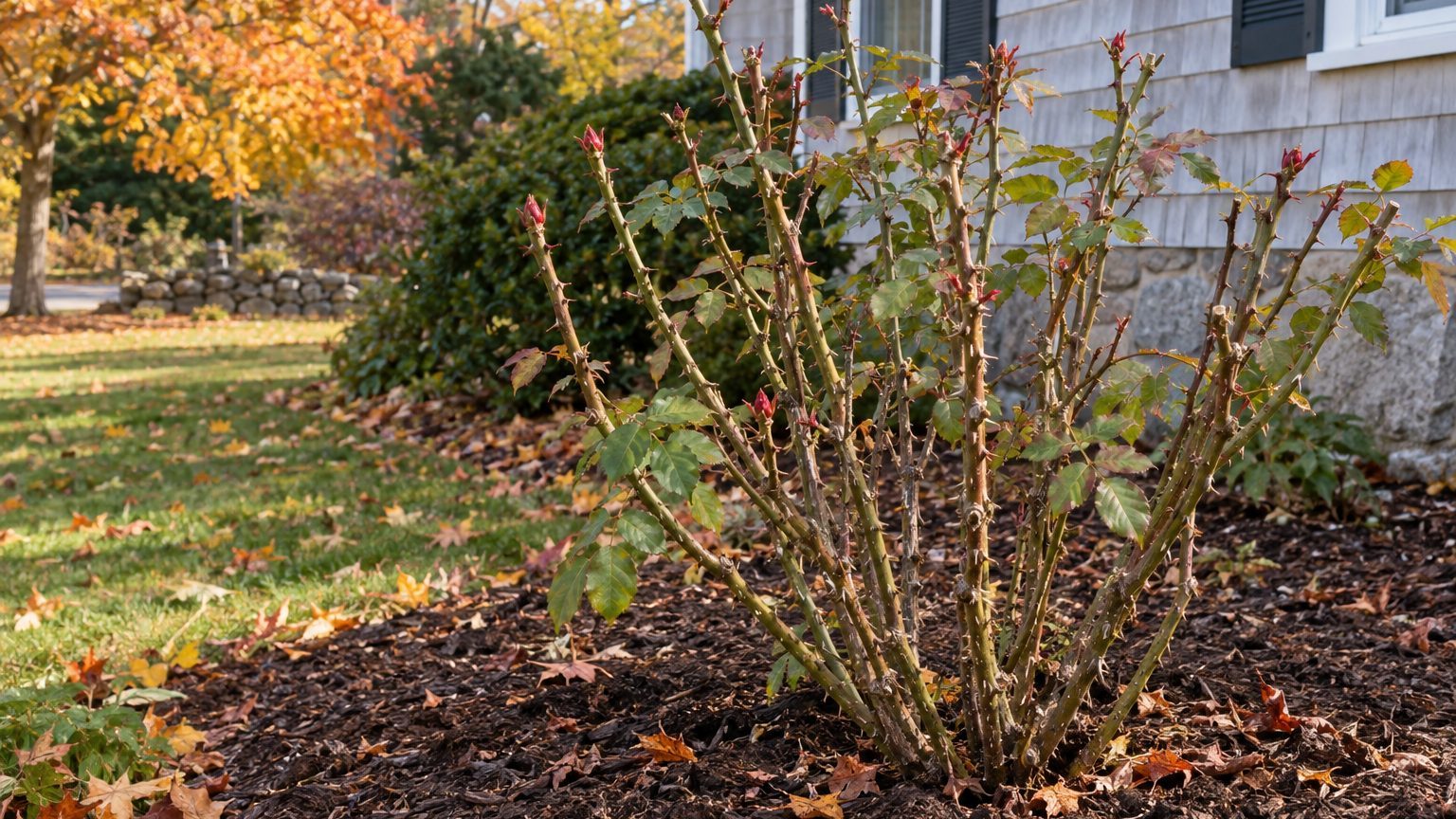
A rose cane that looks dead in March is often just waiting. In New Hampshire, the pruning shears come out in spring, once the buds start to wake, and the timing differs for roses that bloom once and roses that bloom again and again.
When to Prune Roses in New Hampshire

Repeat-blooming roses (hybrid teas, floribundas, modern shrub roses) are pruned in April and May in New Hampshire. They flower on new wood, so a spring cut sets up the growth that carries the blooms. March can also work if you wait for the buds to move.
Once-blooming roses follow a different rule. They flower on last year’s wood, so a spring cut removes the flowers before they form.
| Type of rose | When to prune in New Hampshire | Why |
|---|---|---|
| Hybrid teas, floribundas, modern shrub roses | April and May, or March once growth has started | They bloom on new wood, so pruning while dormant or just waking encourages fresh canes |
| Old garden roses, ramblers, once-blooming climbers | Right after they bloom, never in early spring | They flower once a year on last year’s wood, and spring pruning cuts off the buds |
Climbers that repeat bloom are a middle case. Treat the main framework gently and leave it mostly alone, then shorten the flowering side shoots in spring along with the other repeat bloomers. If you are unsure which kind you own, check the plant tag or watch what it did last summer: one flush of bloom means prune after flowering.
Roses that bloom on new wood can be pruned from late winter into early spring as dormancy ends. Waiting until the shoots begin to grow is a sensible guard against cutting too soon.
Frost dates in the Granite State vary by town, and the last spring frost at the reference city falls between April 16 and April 27. Suburban and rural yards usually see it a week or two later, and hill towns later still. Check your own county before you commit to a date.
New Hampshire — the year and the numbers
- State
- New Hampshire
- USDA zones
- 3b-6a
- Last spring frost
- April 16 to April 27
- First fall frost
- October 13 to October 26
- Annual rain
- 40 in
- Lawn zone
- cool-season
- Source
- NOAA NCEI U.S. Climate Normals 1991-2020, 32F freeze probabilities · Manchester
How to Tell When Your Roses Are Ready to Prune
The roses themselves give better timing than any date on a calendar, and these signs tell you the moment has come.
- Buds along the canes swell and turn from tight and dark to plump and reddish, which tells you the plant is awake and you can see where to cut.
- Forsythia comes into bloom, a familiar local cue that the worst of the winter cold has loosened its grip and pruning can begin.
- Hard freezes have passed, because a cut made just before a deep freeze invites fresh dieback on the new tissue.
- The winter mound of soil or mulch has come off, usually in early May before new growth begins, so you can see the base of every cane.
- New shoots have begun to grow, which lets you tell live wood from dead and cut back to green, healthy tissue.
Cut to wood that is green or white inside, and take out anything black, brown or shriveled.
Should You Prune Roses in Fall or Winter in New Hampshire?
Not much, and not hard. In fall, the only job is shortening very long canes so winter wind does not whip them around and loosen the roots. Leave the rest of the shape alone.
Severe pruning belongs to spring, after the plant has started to grow again. A heavy cut in autumn pushes tender new shoots that will not harden before cold arrives. Feeding follows the same logic: stop in August so growth slows down in time.
Winter protection goes on in late November, after hard frosts have killed the leaves. Do not cover the plants any sooner. Hybrid teas, floribundas and grandifloras need that protection in cold winters, while hardy shrub roses such as Knock Out or the Explorer series do well without extra help.
How Rose Pruning Dates Shift Across New Hampshire
The state spans USDA hardiness zones 3b to 6a, so spring arrives at very different times from one town to the next.
- The North Country: Spring comes later here, so pruning sits toward the May end of the window, and winter mulch comes off later too.
- The White Mountains and higher hill towns: Elevation delays the thaw and keeps frost risk around longer, so wait for the buds to swell before cutting.
- The Seacoast and Portsmouth area: The ocean moderates the cold, so spring work can start toward the April end of the window.
- Manchester and the southern valleys: Warmer, earlier conditions make these some of the first spots where buds break and shears can come out.
Wherever you garden, the buds set the day within the April to May window, not the town name.
Where to Get Rose Advice in New Hampshire
Questions about a stubborn cane, a rose that did not leaf out, or the right variety for your zone are best brought to people who know local conditions.
- University of New Hampshire Extension offers fact sheets on pruning and winter protection, and spring is the time to read them before the shears come out.
- Your county extension office can answer questions about your own soil and microclimate, so contact them in early spring when buds begin to swell.
Common Questions
Can You Prune Roses in March in New Hampshire?
Yes, for repeat-blooming roses, as long as the plant is still dormant or just starting to move. April and May are the usual months, so March suits a mild spell with the buds waking.
When Should You Prune Climbing Roses in New Hampshire?
It depends on how the climber blooms. A once-blooming climber is pruned right after its flowers fade, while a repeat-blooming climber gets its spring trim with the other repeat bloomers.
When Should You Take Winter Protection Off Roses in New Hampshire?
Early May, before new growth begins, is the usual moment, and April can also work in a mild spring. Pulling the mound back gradually lets you see the canes before you start to cut.