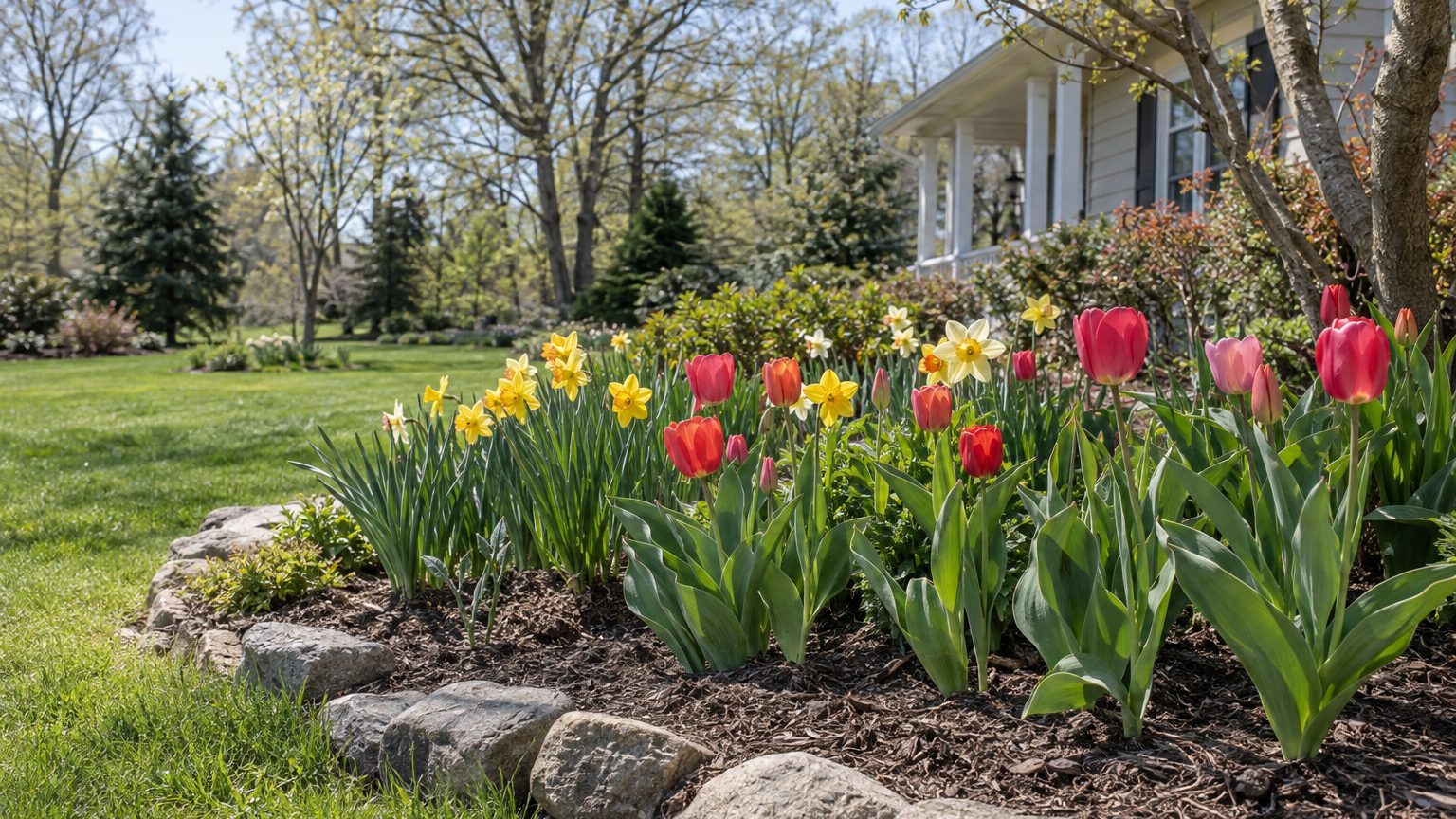
Green spears pushing through cold, damp soil and old leaf litter are among the first signs of spring in a Rhode Island yard. Those spears are tulips and daffodils, and when they open depends on how quickly the weather warms.
When Do Tulips and Daffodils Bloom in Rhode Island?

Tulips and daffodils bloom in Rhode Island mainly in April and May. The hardiest early bulbs can open as soon as March, while later varieties carry the show into late April and May.
Bloom follows the warming of spring, so a cool April holds flowers back and a mild one brings them on. Rhode Island gardens span USDA zones 6a to 7b, which is why neighbors a few miles apart can be days apart.
| Bulb | When it blooms in Rhode Island | What sets the timing |
|---|---|---|
| Snowdrops and winter aconites | Start of the spring bulb season, from March | Very hardy bulbs that wake with the first thaw |
| Daffodils | March into April for the earlier types, later types in April and May | Variety and how fast the soil warms |
| Tulips | April and May, later types in late April and May | Variety and spring warmth |
| Alliums | End of the spring bulb season | Open after the others, needs winter cold to bloom |
Crocus and hyacinths also belong to this early parade, though their dates shift with the weather in the same way. If you want color across the whole season, mix early and later types of tulips and daffodils instead of relying on one variety to carry the whole show.
Rhode Island — the year and the numbers
- State
- Rhode Island
- USDA zones
- 6a-7b
- Last spring frost
- April 7 to April 17
- First fall frost
- October 24 to November 3
- Annual rain
- 48 in
- Lawn zone
- cool-season
- Source
- NOAA NCEI U.S. Climate Normals 1991-2020, 32F freeze probabilities · Providence
How to Tell Your Bulbs Are About to Bloom
Bulbs give plenty of warning, and a quick walk around the beds on a mild day will tell you more than a calendar.
- Green tips breaking the soil mean the bulb has woken up and the roots are working, so leave the mulch loose and let them come through.
- A thickening clump of leaves tells you the plant is gathering energy, and the flower stem is usually tucked deep in the center.
- A fat bud rising from the middle of the leaves means open flowers are close, often after a few warm days.
- A bud showing color at the tip is the last stage before opening, and a cold snap now will hold it closed rather than harm it.
- Leaves that stall or look flattened after a hard freeze usually recover, so wait before deciding a bulb has failed.
Cut stems for a vase only when the bud has color, and take only a few so the plant keeps most of its leaves.
What to Do After Tulips and Daffodils Bloom in Rhode Island
Snip off the faded flowers and leave everything else alone. The leaves keep feeding the bulb for next year’s blooms, so they stay on the plant until they turn yellow and then brown. Do not cut them back or tie them in knots while they are green, however untidy they look.
Tulips are often short-lived in the garden, while daffodils last longer and are the more reliable perennial bulb.
For a tidy look, plant bulbs behind low perennials whose new growth will cover the fading foliage. Daffodils naturalize well, especially in partly shady spots, so they suit the edge of a tree canopy or a woodland bed.
How Bloom Time Shifts Across Rhode Island
Across the state, the Atlantic and the colder inland hills nudge the dates in opposite directions.
- Newport and the Narragansett Bay shore: Water keeps winter and spring milder here, so bulbs tend to wake and bloom earlier than inland.
- Providence and the surrounding suburbs: Bloom usually lands between the shore and the hills, and it comes sooner in sheltered, sunny beds against south-facing walls.
- Northwest Rhode Island (Burrillville, Foster and Glocester): This is colder, higher ground, so bulbs open later and a late freeze is more likely to catch the buds.
Your own yard matters too, since a spot with morning sun and shelter from wind can bloom ahead of a shaded, exposed one only a few steps away.
Where to Get Bulb Advice in Rhode Island
When a variety does not bloom the way you expected, local help is the quickest way to find out why. University of Rhode Island Cooperative Extension knows the state’s soils and weather.
- The extension’s gardening pages carry bulb guidance for the state, and they are worth a look in fall before you plant.
- Extension staff and local Master Gardeners can answer questions about your own yard, so bring a photo of the leaves or buds in spring.
Common Questions
Can You Plant Tulips and Daffodils Late in Rhode Island?
Yes. October is the preferred month for planting spring bulbs, so the roots form before the ground freezes, and November and December still work if the soil can be dug. A bulb still in the bag is better planted late than stored over the winter.
Do Tulips and Daffodils Need Winter Cold to Bloom?
Yes, most spring bulbs need about 12 to 16 weeks of cold to flower. Where winters are too mild, tulips and hyacinths are chilled in the refrigerator before planting. According to Iowa State University Extension, alliums need the cold of winter to bloom.
Will Deer and Rabbits Eat Tulips and Daffodils?
Voles, squirrels, rabbits and deer eat tulips and crocus, while daffodils are left alone. Daffodils are even used as deer training plants to protect tender plants that deer prefer to browse.