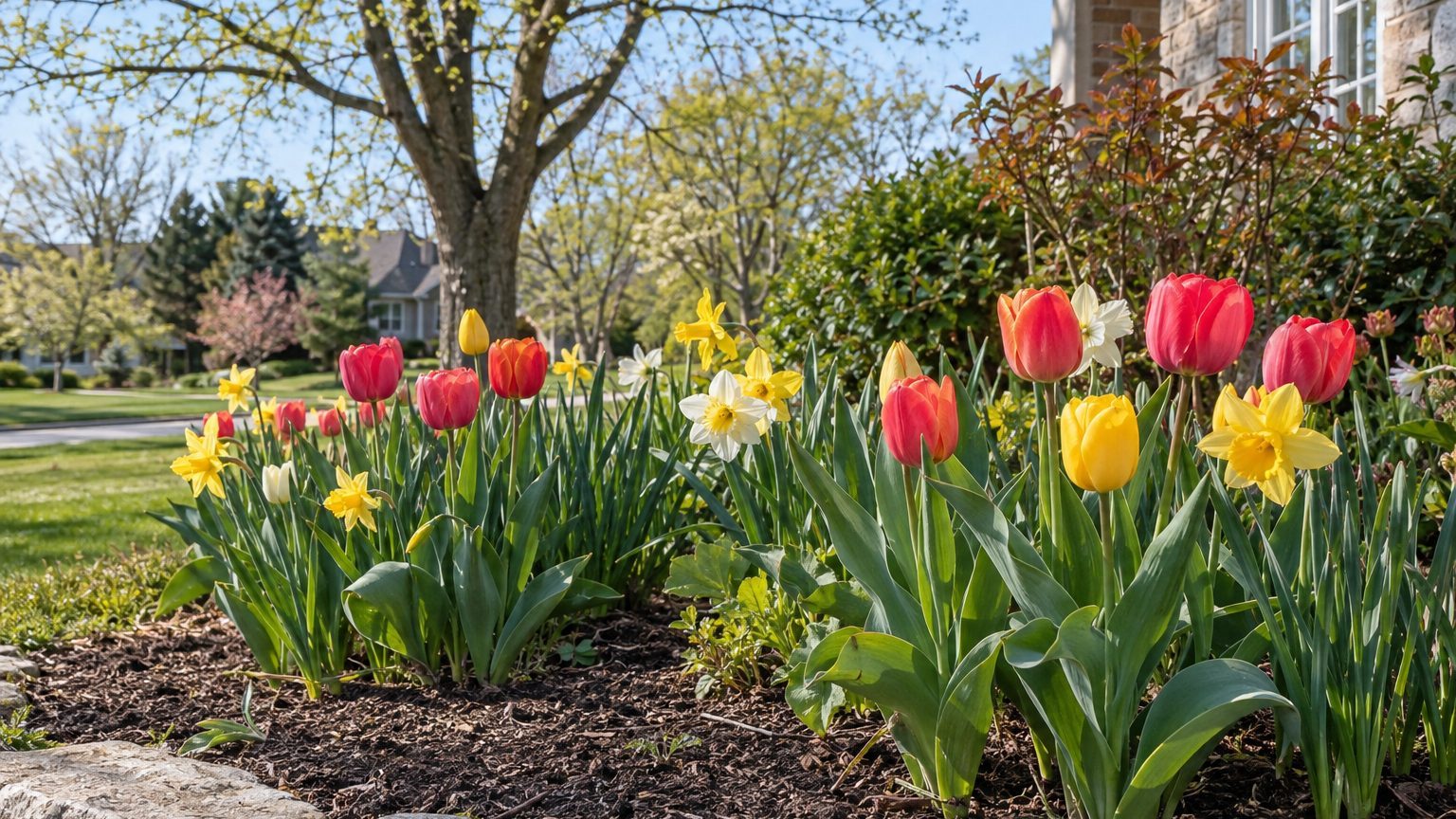
Green daffodil spears pushing through the last crusty snow are a sure sign of a Vermont spring, with tulips following as the soil warms. Bloom spreads mostly across April and May, and a few hardy bulbs open in March. Where you live in the state and how the spring unfolds decide the exact week in your yard.
When Do Tulips and Daffodils Bloom in Vermont?

Tulips and daffodils bloom in Vermont mainly in April and May, and the early hardy bulbs can start as soon as March. No fixed date applies, because flowering follows the warming of spring.
A cold, slow spring holds the buds back, while a mild one brings them out sooner. Vermont gardens fall in USDA hardiness zones 3b to 5b, and most daffodil and tulip species and hybrids are hardy to zone 3, so winter cold rarely limits them.
| Bulb | When it blooms in Vermont | What sets the timing |
|---|---|---|
| Early hardy bulbs | March | The first stretch of mild weather after winter |
| Tulips and daffodils | April and May | How quickly spring warms the soil |
| Later-blooming varieties | Late April and May | Their place later in the bloom succession |
Spring bulbs flower in a long succession, from snowdrops and winter aconites at the start of the season to ornamental onions, the alliums, at the end. According to Iowa State University Extension, alliums need a chill period to bloom. Plant a mix of early and later varieties and the color keeps coming for weeks instead of arriving in a single burst.
Vermont — the year and the numbers
- State
- Vermont
- USDA zones
- 3b-5b
- Last spring frost
- April 30 to May 10
- First fall frost
- October 3 to October 13
- Annual rain
- 38 in
- Lawn zone
- cool-season
- Source
- NOAA NCEI 1991-2020 Climate Normals, 32F freeze probabilities · Burlington
How to Tell Your Bulbs Are About to Bloom
Bulbs announce themselves well before the first petal opens, and the signs are easy to read if you walk the beds regularly.
- Pale green tips breaking the soil mean the bulb has finished its winter rest and is growing, so any mulch can be pulled back a little to let them through.
- Leaves that widen and rise into a clump tell you the plant is building the energy it will spend on its flower.
- A fat bud nestled in the center of the leaves means bloom is coming, and a hard frost at that stage is worth a thought if you plan to cover the bed.
- Buds that begin to show color, a stripe of red on a tulip or yellow on a daffodil, mean the flower will open soon.
- Stems that stretch and buds that nod upward show the flower is nearly ready, so cut stems for a vase just before the bud fully opens.
All of this rests on winter cold done properly, since most spring bulbs need about 12 to 16 weeks of it to flower.
What to Do After Tulips and Daffodils Bloom in Vermont
Snap off the faded flowers and leave everything else alone. Removing the spent bloom keeps the plant from putting energy into seed, while the leaves keep working. Leave the foliage in place until it turns brown, because tulips and daffodils flower next year on the energy those leaves store now.
Resist the urge to tie leaves into tidy knots or to cut them back while they are green. Both steps starve the bulb. A better way to hide the untidy foliage is to plant perennials nearby that grow up and cover it as the season moves along.
Plan for the difference between the two bulbs. Tulips are often short-lived in the garden, and many beds need fresh bulbs after a few seasons. Daffodils last longer and are the more reliable perennial bulb, and they naturalize well, especially in partly shady spots. Among tulips, the Fosteriana group also perennializes well, so it is a sensible choice if you dislike replanting.
How Bloom Time Shifts Across Vermont
Bloom moves with the length of the growing season, and Vermont’s lakes and mountains stretch that season in different ways.
- Burlington and the Lake Champlain shore: The lake keeps this corner milder than the rest of the state, so bulbs here tend to open earlier than elsewhere in Vermont.
- The Green Mountains: Higher ground has a shorter growing season, so expect bloom to arrive later as you climb, with tulips and daffodils flowering well after valley gardens.
- The Northeast Kingdom: Cold lingers here, and spring bulbs generally open later than in the Champlain Valley, often toward the later part of the April and May window.
A garden on a sheltered south-facing slope may open ahead of a neighbor’s on a shaded north-facing one, even within the same town.
Where to Get Bulb Advice in Vermont
For questions about your own soil, your own slope and the bulbs that suit them, University of Vermont Extension and your local county office are the best-fitting places to ask.
- The extension website carries gardening guidance written for Vermont conditions, and it is worth a look before you shop for bulbs in the fall.
- The county extension office can answer questions about your area, so call in the fall before planting, or in spring if bulbs came up thin.
Common Questions
When Should You Plant Tulip and Daffodil Bulbs in Vermont?
October is the planting month, so the roots form before the ground freezes. Wait until the soil has cooled below about 60°F, which keeps the bulbs from sprouting in the fall. If the ground is not frozen, November and December are a fallback. A bulb still in the bag goes in as soon as the ground can be dug.
Do Deer and Voles Eat Tulips and Daffodils?
Tulips and crocus are the favorites, and voles, squirrels, rabbits and deer will eat them. Daffodils are left alone. Planting daffodils around tulip beds can discourage browsing, since deer tend to avoid them and learn to leave nearby plants alone.
Will Daffodils Come Back Every Year in Vermont?
Yes, daffodils return reliably in Vermont. Most are hardy to zone 3, and Vermont gardens fall in USDA zones 3b to 5b, so winter rarely stops them. They spread slowly into larger clumps, especially in partly shady spots, and a clump that has stopped blooming can be dug and divided after the leaves have turned brown.