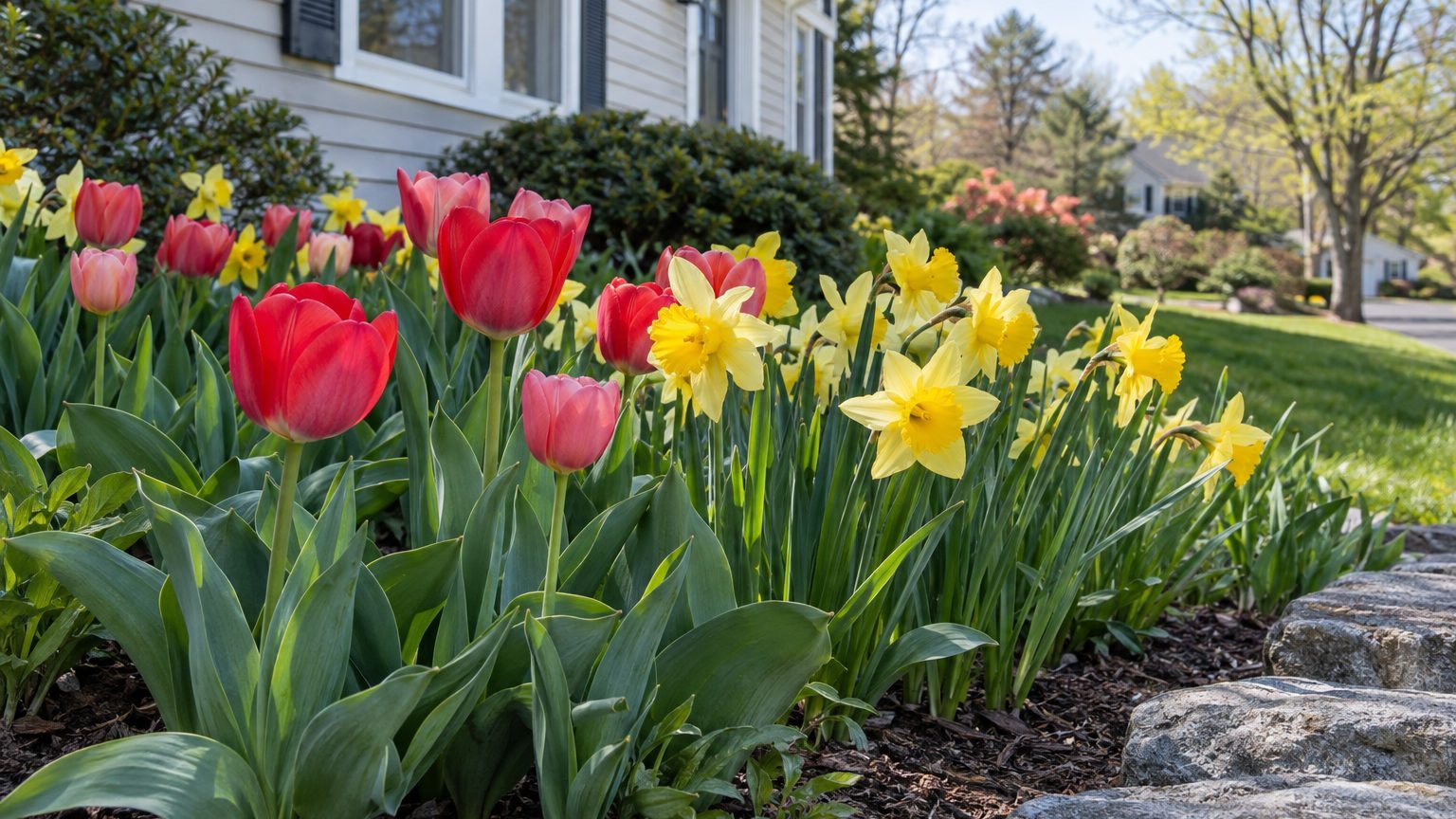
A tulip bed that comes back thinner each spring while the daffodils beside it keep multiplying is a familiar sight in New England yards. In New Hampshire, where winters give bulbs all the cold they could want, the choice of type matters more than the cold does.
Best Spring Bulbs to Grow in New Hampshire

Daffodils, tulips and crocus all take the winters here, and alliums fit in as well. Hardiness is rarely the problem. The USDA system puts the state at zones 3b to 6a, and most daffodils are hardy to zone 3, so they grow throughout New Hampshire. What separates the bulbs is how long they last and what eats them.
Daffodils
Daffodils are the dependable pick. A majority are hardy to zone 3, and they last longer in the garden than tulips do.
Voles, squirrels, rabbits and deer leave them alone. Daffodils also naturalize well, especially in partly shady spots, so a clump under a maple keeps widening on its own.
Tulips
Most tulip species and hybrids are hardy to zone 3, so the cold is no obstacle. They bloom from late April into May in New Hampshire, a little later than the earliest bulbs.
Tulips are often short-lived, and animals go after them. Expect to replant some regularly, or fence the bed.
Fosteriana Tulips
If you want tulips that stay, look for Fosteriana types. They perennialize well, which means they return instead of fading after a season or two.
They make a sensible compromise for a front bed where you would rather not replant every fall.
Crocus
Crocus are hardy and bloom early. They are also a favorite of chipmunks, voles, mice and rabbits.
Plant them where you can watch for damage, or tuck them close to daffodils, which animals avoid.
Alliums
Alliums are the ornamental onions that close out the bulb season. They do not need a chill period to bloom, though New Hampshire gives them plenty of cold anyway.
Because they are not on the animal menu the way tulips and crocus are, they pair well with the bulbs that are.
New Hampshire — the year and the numbers
- State
- New Hampshire
- USDA zones
- 3b-6a
- Last spring frost
- April 16 to April 27
- First fall frost
- October 13 to October 26
- Annual rain
- 40 in
- Lawn zone
- cool-season
- Source
- NOAA NCEI U.S. Climate Normals 1991-2020, 32F freeze probabilities · Manchester
How to Choose Spring Bulbs for Your New Hampshire Garden
Start with what your yard throws at a bulb: hard cold, hungry animals, shade, a small footprint, or limited time. Each of those points toward a different type.
Most spring bulbs need 12 to 16 weeks of cold to flower, and New Hampshire winters supply that, so no refrigerator chilling is needed.
| Your situation | What suits it in New Hampshire | Why |
|---|---|---|
| Very cold winter | Daffodils | A majority are hardy to zone 3, so they grow throughout the state |
| Deer, voles or squirrels visit | Daffodils and alliums | Animals eat tulips and crocus but leave daffodils alone |
| Little time for upkeep | Daffodils | They last longer than tulips and naturalize well |
| Partly shady spot | Daffodils | They naturalize well, especially in partly shady areas |
| Want tulips that return | Fosteriana tulips | They perennialize well |
| Wary of a chill requirement | Any hardy bulb, alliums included | Alliums need a chill period to bloom, and winters here supply it |
Daffodils planted near tulips can also act as deer training plants, drawing deer away from more tempting plantings. Whatever you choose, plant in October once the soil has cooled below about 60°F. Roots form before the ground freezes, and the bulbs do not sprout too early.
Which Spring Bulbs Suit Different Parts of New Hampshire
The zone range from 3b to 6a means a bulb that is easy in one corner of the state asks a little more care in another.
- White Mountains and the North Country: Stick with daffodils, which are hardy to zone 3 and handle the coldest winters. Tulips can work here too, since most are hardy to zone 3, but plan for animals.
- Lakes Region: Winters are cold but a bit gentler near the water, so daffodils, Fosteriana tulips and alliums all fit. Shady lakeside lots favor daffodils that naturalize.
- Seacoast: Milder winters give the widest choice, including tulips and crocus, though deer and squirrels still decide how long they last.
Your own county may differ from these broad strokes, so check local conditions before buying in quantity.
Spring Bulb Buying Mistakes to Avoid in New Hampshire
Buying Only Tulips and Crocus
Voles, squirrels, rabbits and deer eat both. A bed of them can vanish over a winter, and the loss repeats each year.
Mix in daffodils, which animals skip, and fence or protect the tulips you do want.
Expecting Tulips to Last Forever
Tulips are often short-lived in the garden. Buying them as a permanent planting sets you up for thinning beds and a yearly refill.
Choose Fosteriana types for staying power, or lean on daffodils for the long haul.
Planting Too Early or Holding Bulbs Over
Bulbs set out while the soil is still warm can sprout in fall. Wait until it cools below about 60°F, usually October.
A bag left over is better planted late than stored. November or December works as long as the ground can be dug.
Where to Get Spring Bulb Advice in New Hampshire
Local help fits the state’s mix of zones and soils. University of New Hampshire Extension publishes fall bulb guidance, and your county office can speak to your own soil and animal pressure.
- The UNH Extension website carries seasonal articles on naturalizing bulbs, worth reading before you order in late summer.
- Your county extension office can advise on deer and vole problems, best visited before you plant in October.
Common Questions
Should You Remove the Leaves After Bulbs Bloom?
Take off only the faded flowers. Leave the leaves until they turn brown, because they feed the bulb for next year’s bloom.
Can You Plant Spring Bulbs in December in New Hampshire?
Yes, as long as the ground is not frozen and can still be dug. October is better, but late planting beats leaving bulbs in the bag.
Do Bulbs Bloom in March in New Hampshire?
The earliest hardy bulbs can open in March or early April. Tulips and daffodils mostly bloom in April and May.