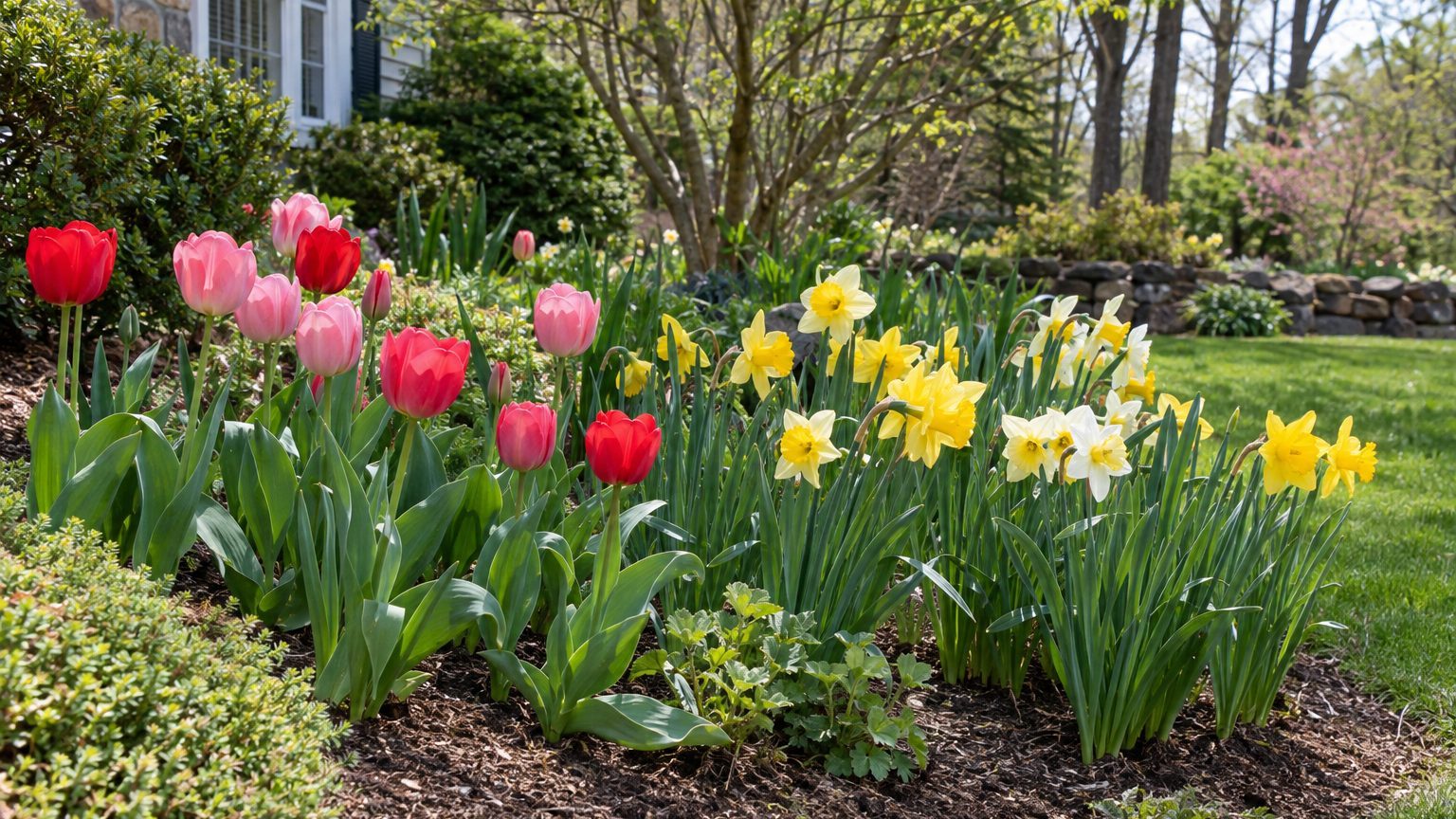
Daffodil spears push through cold ground, then a yard of tulips opens as the days warm. In Delaware, the show moves from the first crocus on a sunny bank to the tall flower heads of alliums, and the timing shifts a little with each spring’s weather.
When Do Tulips and Daffodils Bloom in Delaware?

Tulips and daffodils bloom in Delaware from March through May, and in a mild late winter the first of them can open as early as February. Bloom follows the warming of the soil and air, so a cool spring holds flowers back and a warm one pulls them forward.
| Bulb | When it blooms in Delaware | What sets the timing |
|---|---|---|
| Crocus | Opens early in the bulb season, from February into March | Late-winter warmth, often with a dusting of snow still around |
| Daffodils | March, April and May | Spring warming after the winter cold |
| Tulips | March, April and May | Spring warming, after a full winter of cold in the ground |
| Alliums | Close out the season, in May | Spring warming, after the winter cold |
Hyacinths join the same spring rush as daffodils and tulips. Early, midseason and late tulips are sold as separate groups, and mixing them in one bed stretches the color across the spring. Bulbs planted in October have the cool soil they need to root before winter.
Delaware — the year and the numbers
- State
- Delaware
- USDA zones
- 7a-8a
- Last spring frost
- April 3 to April 14
- First fall frost
- October 26 to November 7
- Annual rain
- 45 in
- Lawn zone
- cool-season
- Source
- NOAA NCEI 1991-2020 Climate Normals, 32F freeze probabilities · Wilmington
How to Tell Your Bulbs Are About to Bloom
Bulbs announce themselves well ahead of the flowers, and a few quick checks in the bed tell you how close the show is.
- Green tips breaking the soil mean the bulb has rooted and woken up, so leave mulch loose and keep the bed clear of debris.
- Leaves that stand several inches tall show growth is moving along.
- A fat bud rising from the center of the leaves tells you flowers are coming, so check the bed regularly.
- Buds that show a stripe or blush of color are close to opening.
- Flower stems that stretch and lean toward the light say the spot is shadier than the bulbs like.
A cold snap in the middle of this process slows everything down, and the buds simply wait for the next warm stretch.
What to Do After Tulips and Daffodils Bloom in Delaware
Snip off the faded flowers and leave everything else alone. The leaves are the bulb’s kitchen, and the energy they gather now becomes next year’s flowers. Wait until they turn yellow or brown before removing them.
Resist the urge to tie, braid or fold the leaves to tidy the bed. Green foliage that is bundled or cut cannot feed the bulb properly. Plant bulbs among perennials or low groundcovers that will grow up and hide the fading leaves.
Tulips are often short-lived in the garden and may thin out after a few seasons. Daffodils last longer and are the more reliable perennial bulb, so they are the better pick for a spot you want to leave alone for years.
How Bloom Time Shifts Across Delaware
Delaware is small, but a few degrees of difference between its parts can move bloom by days.
- Wilmington and northern New Castle County: Spring tends to arrive a little later than farther south, and bulbs here open a little behind those in the lower counties.
- Dover and central Kent County: Bloom runs on a middle schedule, and a sheltered, sunny wall brings bulbs up ahead of an open lawn.
- Sussex County and the Atlantic beaches near Rehoboth: The ocean tempers the cold, so crocus and early daffodils may open here first, though cool sea breezes can slow things in a spring that stays chilly.
Within any yard, a south-facing bed against a house wakes up before a shaded north-side planting.
Where to Get Bulb Advice in Delaware
Questions about varieties, soil or a bed that is not performing are best taken to the state’s Cooperative Extension service and the county office near you, where local growers know what works in Delaware soil.
- University of Delaware Cooperative Extension offers garden guidance and a way to reach your county office, and a call or visit in late summer helps before fall planting.
- Your county extension office can answer questions about the bed in front of you, so bring a photo of leaves or buds that look odd in spring.
Common Questions
Do Tulips Need a Cold Winter to Bloom?
Most spring-flowering bulbs need about 12 to 16 weeks of cold to flower. Where winters run too mild to give them that, tulips and hyacinths are chilled in the refrigerator before planting.
Which Bulbs Do Deer and Squirrels Leave Alone?
Voles, squirrels, rabbits and deer eat tulips and crocus, but daffodils are left alone. Hyacinth, allium, fritillaria and scilla are also bulbs that animals tend to pass over.
What If Bulbs Are Still in the Bag?
A bulb still in the bag is better planted late than stored over the winter. Plant as long as the ground can be dug.