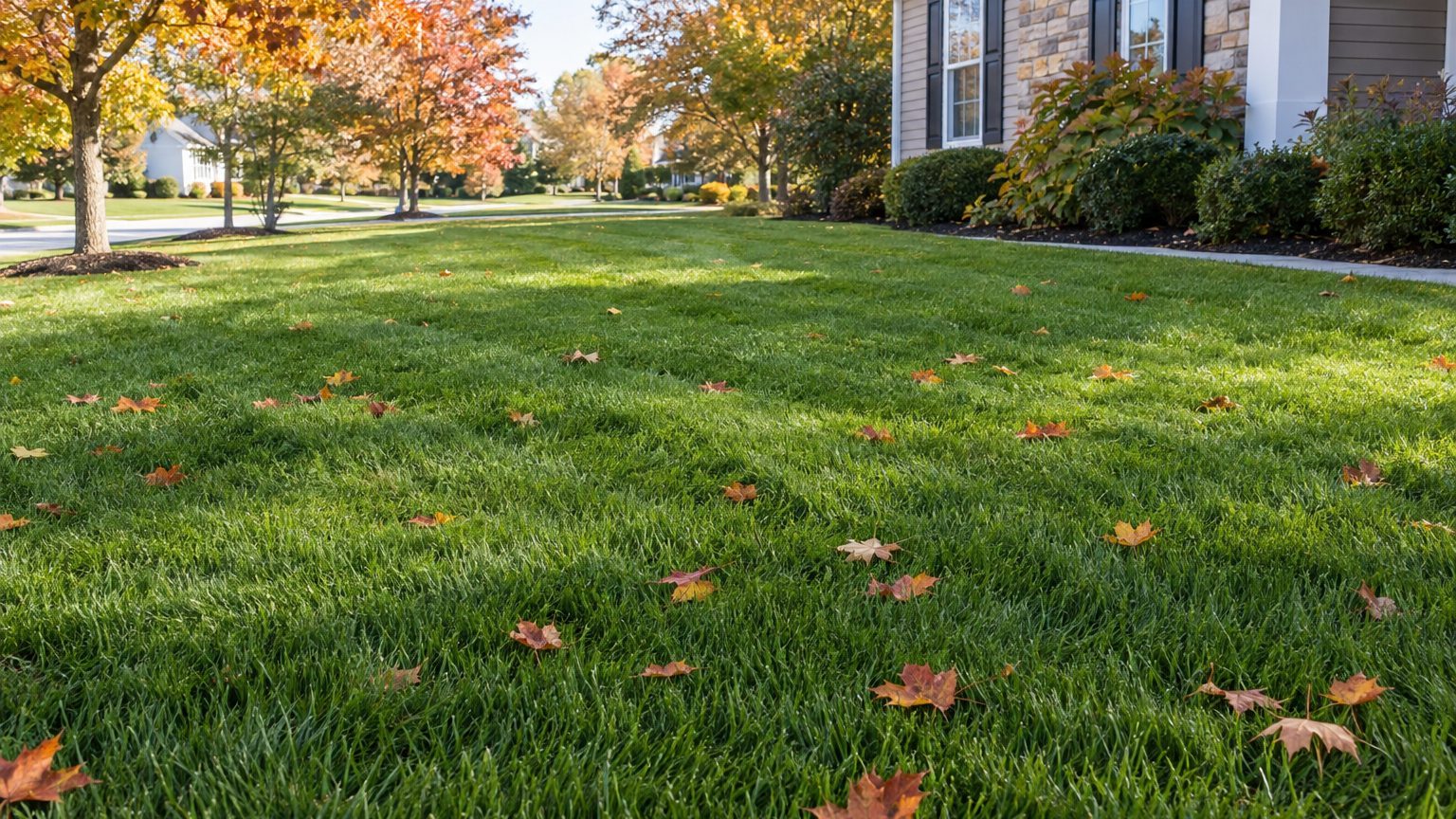
Crabgrass seedlings in a thin patch of July lawn, or a thick green carpet in October, both trace back to what happened months earlier. In Delaware, where cool-season grasses such as tall fescue and Kentucky bluegrass do most of the work, the schedule leans toward fall for building the lawn and spring for guarding it.
What to Do Each Month in a Delaware Lawn

Cool-season grass grows hardest in spring and again in early fall, so the big jobs cluster in those stretches. Summer is for mowing and careful watering, and winter is for rest.
| Month | In the lawn |
|---|---|
| January | Rest. The grass is dormant, so keep heavy traffic off frozen turf and let it sleep. |
| February | Rest. Dormancy continues, and the only job is to clear fallen branches before growth starts. |
| March | Crabgrass preventer can go down now if spring turns warm early. Hold off on seed and fertilizer until the grass wakes up. |
| April | Apply crabgrass preventer this month, before the weed seed sprouts. Mowing begins as growth picks up. Seeding, sod, aeration and dethatching also work now, and a light fertilizing is fine too. |
| May | Fertilize now while growth is strong. Preventer still works if April slipped by. Aeration, dethatching, seeding and sod also work in May, though young grass will have less time to root before heat arrives. |
| June | Mow regularly and start watering as the heat builds. Skip heavy work, since cool-season grass slows down. |
| July | Water deeply when rain falls short, and keep mowing. Brown, crisp patches may signal heat stress, so watch them rather than rush to reseed. |
| August | Core aerate, dethatch (only when thatch tops about an inch), seed and lay sod as the heat eases. Keep watering until the weather cools. |
| September | Prime time for aerating, dethatching, seeding and sod. Fertilize now to feed roots before winter. Soil is still warm, so seed sprouts quickly. |
| October | Keep mowing and lay sod if you missed September. Rake leaves so they do not smother new grass. |
| November | Mow until growth stops. A final fertilizing also works this month if September passed. |
| December | Rest. The grass is dormant, so clean and store the mower. |
Seed needs soil at 50 to 65 °F to sprout, which is why late summer and early fall beat the cold-soil weeks of early spring.
Delaware — the year and the numbers
- State
- Delaware
- USDA zones
- 7a-8a
- Last spring frost
- April 3 to April 14
- First fall frost
- October 26 to November 7
- Annual rain
- 45 in
- Lawn type
- cool-season
- Source
- NOAA NCEI 1991-2020 Climate Normals, 32F freeze probabilities · Wilmington
When Does the Lawn Season Start and End in Delaware?
Grass wakes up when the soil warms, not when the calendar says spring. A mild March can start growth early, and a cold April can hold it back. Cool-season lawns also slow in midsummer heat and surge again once nights cool.
Frost dates matter mostly for young seedlings. At Wilmington, the last spring frost usually falls between April 3 and April 14, and a seedling that sprouts before then can get nipped. Suburban and rural yards often see frost later in spring and earlier in fall.
In the fall, the first frost in Wilmington arrives between October 26 and November 7. September seed has time to root well before that. Check with your county office for the dates where you live, since they shift from one yard to the next.
How the Lawn Calendar Shifts Across Delaware
Delaware is small and low, so the differences are modest, but the water and the latitude still nudge the timing.
- New Castle County: The northern end runs a bit cooler, so spring growth can arrive later and fall frost earlier here than farther south. Seed in the early part of the late-summer window.
- Kent County: Central Delaware sits in the middle, and the standard calendar fits most yards well.
- Sussex County and the beaches: The south and the coast stay milder, which lets grass keep growing later into fall. Sandy soil near the shore dries fast, so watering matters more in summer.
Across the state, the calendar stays the same and only the edges move a little.
Lawn Care Timing Mistakes to Avoid in Delaware
Preventer Applied Too Late
Crabgrass preventer works only before the weed seed sprouts. Spread it after the plants appear and it does almost nothing. April is the month to do it, with March or May as backups.
Seeding in Midsummer
Tender seedlings in July or early August scorch and dry out before roots take hold. Wait for August and September, when the soil is warm and the air is easing, so the grass settles in before winter.
Heavy Fertilizer in Summer
Pushing cool-season grass with fertilizer in the hottest months feeds stress, not growth. Fertilize in May and September instead, when the grass can actually use it.
Where to Get Lawn Advice in Delaware
Local soil and shade vary from yard to yard, so a little local backup helps you fine-tune the schedule.
- The University of Delaware Cooperative Extension offers turf guidance, and it is worth a visit before seeding season.
- Your county extension office can advise on soil testing and local conditions, so call it before you fertilize.
Common Questions
Should You Rake Before Overseeding a Delaware Lawn?
Loosen the surface and clear dead grass and leaves so seed touches soil. Core aeration in August or September makes that contact even better.
Can You Mow Tall Fescue in November?
Yes. Mowing continues through November as long as the grass is growing, and you stop when growth stops.
Is a Soil Test Worth It Before Fertilizing?
It is. A test tells you what the soil actually lacks, so you avoid spreading nutrients the lawn does not need.