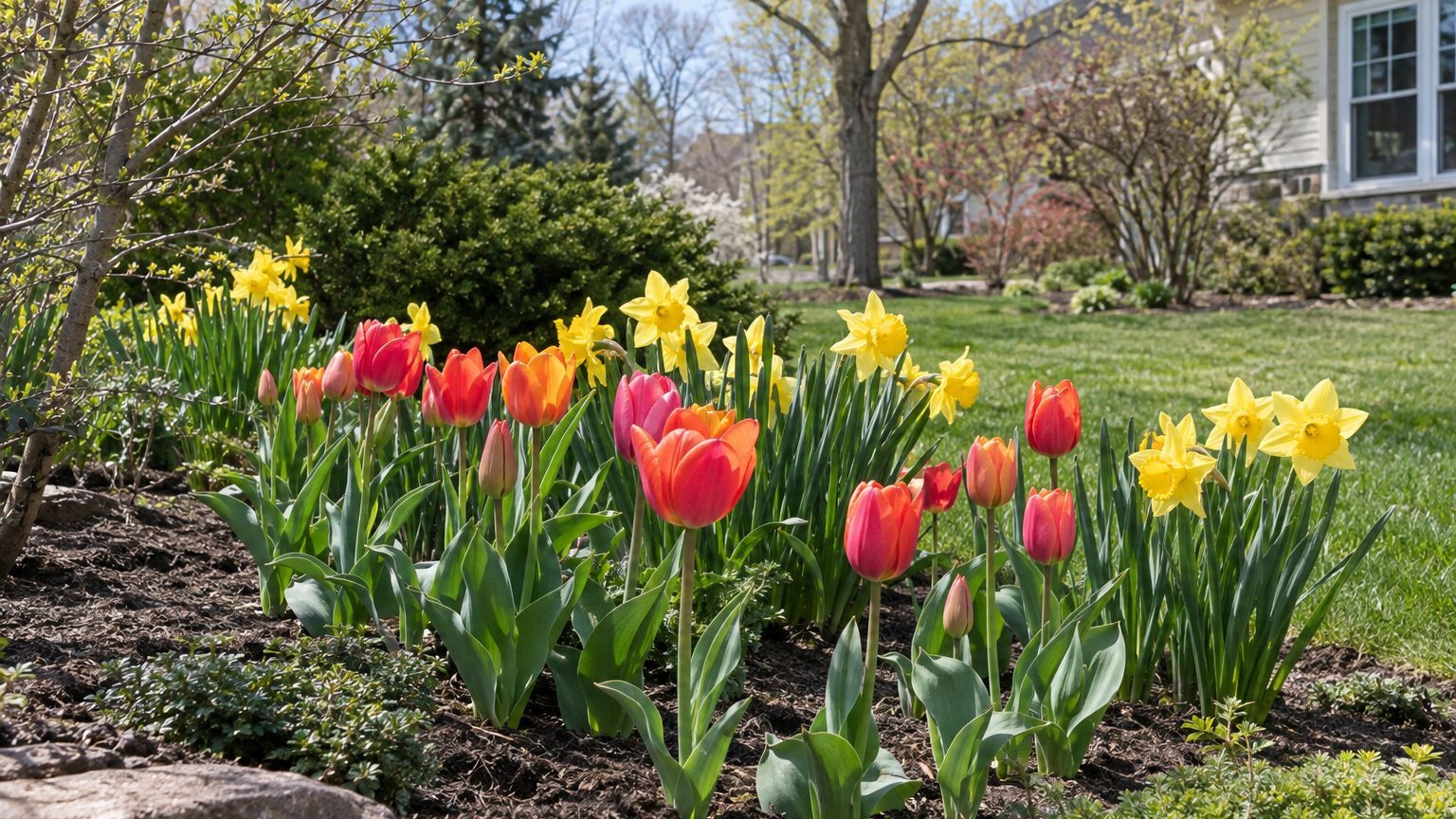
Green spears push through cold Colorado soil and then wait, because the bulbs you set in the ground the previous fall bloom when spring warmth arrives, not on a fixed date. Tulips and daffodils flower on that schedule every year, and the timing shifts from the Front Range plains to the high country.
When Do Tulips and Daffodils Bloom in Colorado?

Tulips and daffodils bloom when spring warms the soil and air, and that happens on a different date in each yard, so no single month applies statewide. What stays steady is the order of the season. Spring bulbs flower in a long succession, with alliums arriving at the end.
| Bulb | When it blooms in Colorado | What sets the timing |
|---|---|---|
| Daffodils | Across a spread of blooming periods | The variety you plant and how fast spring warms |
| Tulips | After the ground warms in spring | A winter chill of about 12 to 16 weeks, then spring warmth |
| Alliums | Near the end of the spring bulb season | Needs the cold of winter, then spring warmth |
Daffodils, also sold as narcissus, come in many heights, colors and flower types, which is why their blooming periods vary so much between varieties. Crocus, hyacinths and the different groups of tulips follow the same rule: warmth decides the day. Bulbs planted in September and October have time to root before the ground freezes, and that early root growth is what lets them respond when spring arrives.
Colorado — the year and the numbers
- State
- Colorado
- USDA zones
- 3b-7b
- Last spring frost
- May 1 to May 11
- First fall frost
- September 30 to October 12
- Annual rain
- 15 in
- Lawn zone
- transition-season
- Source
- NOAA NCEI 1991-2020 Climate Normals, 32F freeze probabilities · Denver
How to Tell Your Bulbs Are About to Bloom
The bulbs announce themselves in stages, and each stage tells you something you can act on.
- Green tips breaking the soil mean the bulb has had its winter chill and is responding to warmth, so leave the bed alone.
- Leaves that lengthen and open out are feeding the bulb for next year, which is why they must never be cut or tied while green.
- A bud that rises from the center of the leaves means flowers are close, and it is a good moment to check that nothing is crushing the stem.
- Buds that begin to show color mean bloom is near, so you can plan to cut a few stems or enjoy the display at its start.
- Pale or chewed tips on tulips and crocus point to voles, squirrels, rabbits or deer, which is when a barrier or repellent is worth putting out.
Alliums rise a little differently, and according to Iowa State University Extension, alliums need the cold of winter to bloom; the same watching applies to their leaves and buds.
What to Do After Tulips and Daffodils Bloom in Colorado
Snip off the faded flowers and leave everything else standing. Removing only the spent blooms keeps the plant from wasting energy on seed, while the leaves stay on to feed the bulb underground.
Leave the foliage in place until it turns yellow and then brown. It looks untidy for a while, but those leaves are storing the energy for next spring’s flowers. Do not braid, knot or tie them, and do not mow them off while they are green.
Plan for some turnover. Tulips are often short-lived in the garden, so expect to replant them, while daffodils last longer and are the more reliable perennial bulb. Daffodils are also left alone by voles, squirrels, rabbits and deer, which makes them the safer choice for beds that animals visit. For tulips, species types and Darwin hybrids bred to return for several years are worth looking for.
How Bloom Time Shifts Across Colorado
Colorado spans USDA hardiness zones 3b to 7b, so bloom time moves with where you live, and the differences are real.
- Denver and the Front Range plains: Spring warms earlier here than in the mountains, so bulbs generally wake first on the lower ground.
- Mountain towns such as Breckenridge: Seasons run far shorter and frost can return into summer, so bulbs come up later and flower into a short window.
- The Western Slope around Grand Junction: The climate differs again from both the plains and the high country, so local timing is worth checking with neighbors who grow bulbs.
Planting months stay the same across these places, but the bloom shifts with elevation and exposure, and a sunny south wall will flower ahead of a shaded bed.
Where to Get Bulb Advice in Colorado
Colorado State University Extension publishes guidance on fall-planted bulbs for the state’s different climates, and county offices can answer questions about your own elevation and soil.
- The Colorado State University Extension website carries bulb and corm guides, and fall is the time to read them, before you plant.
- Your county extension office can tell you which varieties suit your elevation, so call or visit before ordering bulbs.
- Your local county extension office can help you identify any bulb that looks off.
Common Questions
When Should You Plant Tulips and Daffodils in Colorado?
September and October give the bulbs time to root before the ground freezes. Wait until the soil has cooled below about 60°F, so the bulbs root without sprouting in the fall.
Can You Still Plant Bulbs That Stayed in the Bag?
Yes. A bulb still in the bag does better planted late than stored over the winter, so plant as long as the ground can be dug.
Which Bulbs Handle Colorado’s Dry Conditions?
Species tulips, snow iris and crocus are named among the best-adapted bulbs for droughty conditions, and that guidance suits dry Colorado yards well. Daffodils are a sturdy partner for them.