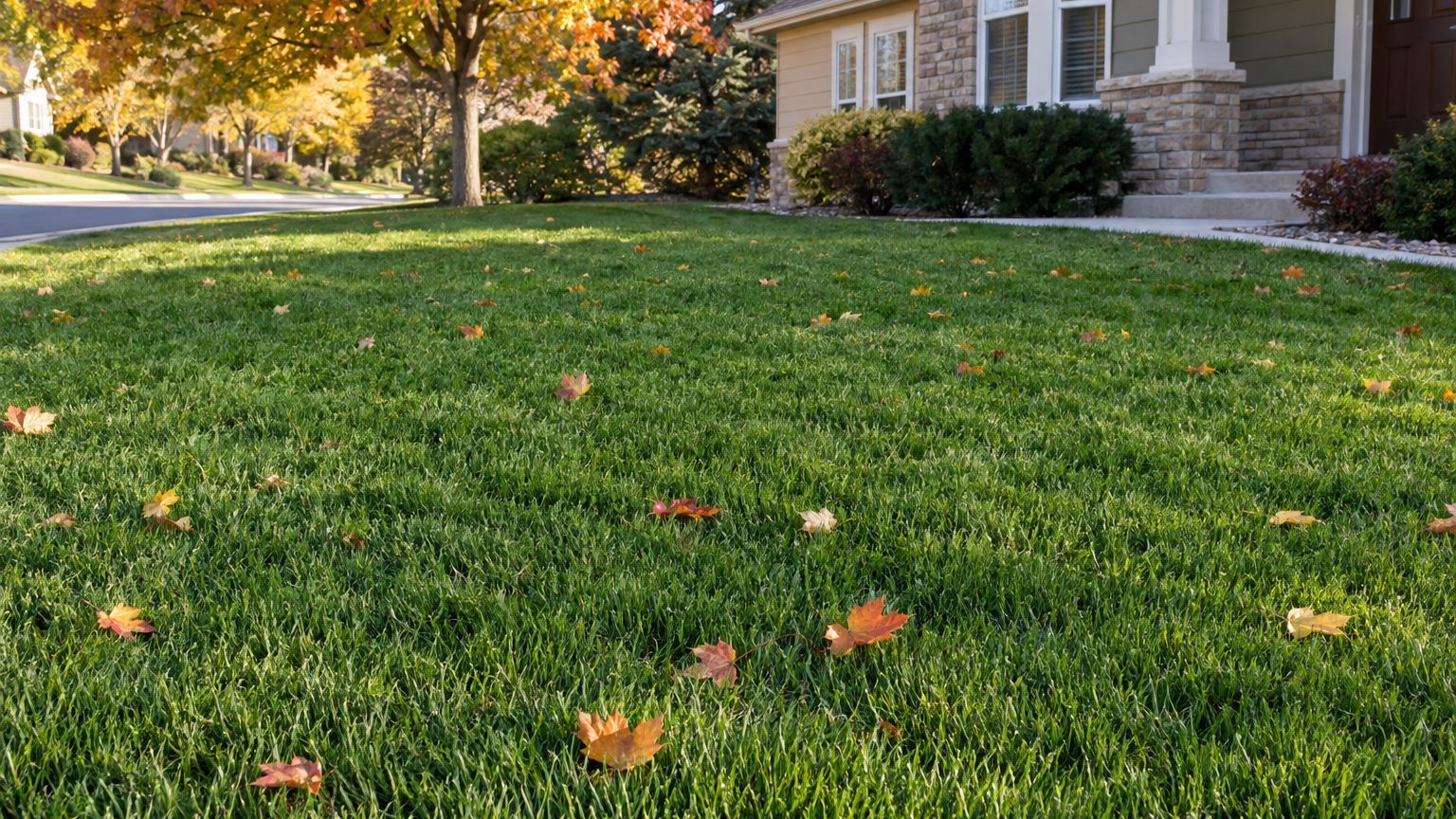
A Colorado lawn spends the winter tan and quiet, then greens up slowly once April sunshine warms the ground. The work that matters clusters in spring for crabgrass control and early fall for seeding, aerating and feeding.
What to Do Each Month in a Colorado Lawn

Cool-season grass such as Kentucky bluegrass does most of its growing in spring and fall, so the busiest months are April and September. Summer is for mowing and watering, and winter is for leaving the lawn alone.
| Month | In the lawn |
|---|---|
| January | Rest. The grass is dormant, so keep foot traffic light on frozen turf and watch for dry, windy stretches. |
| February | Rest. Dormant grass still dries out in a dry winter, so note any bare or thin patches to fix later. |
| March | Rest, mostly. The grass is waking slowly, so clear debris and hold off on heavy work until the soil warms. |
| April | Apply crabgrass preventer before the weeds sprout, and start mowing as growth picks up. Core aeration and dethatching also work now, and bare spots can be seeded if you want a head start. |
| May | Keep mowing as the lawn thickens. If you missed April, preventer still works now, and so do aeration, seeding and a light feeding. |
| June | Mow regularly and begin deep, regular watering as the heat and dry air build. |
| July | Water deeply through periods of summer heat and keep mowing. Brown, crunchy patches may point to drought stress. |
| August | Dethatch if the thatch layer is thick, then start seeding thin areas. Keep watering and mowing. |
| September | The big month: aerate, seed, dethatch and feed. Seed has warm soil and cooler nights to root before winter. |
| October | Keep mowing until growth stops. If you missed September, seeding and aeration are behind you, so focus on mowing and leaf removal. |
| November | Give the lawn a final feeding and a last mow as growth slows. Rake leaves so they do not smother the grass. |
| December | Rest. The grass is dormant, so put the mower away and keep an eye on dry, open stretches. |
Skipping a task is rarely a disaster, but the order matters. Aerate before you seed, and seed before the first hard freeze, so new grass has time to settle in.
Colorado — the year and the numbers
- State
- Colorado
- USDA zones
- 3b-7b
- Last spring frost
- May 1 to May 11
- First fall frost
- September 30 to October 12
- Annual rain
- 15 in
- Lawn type
- cool-season
- Source
- NOAA NCEI 1991-2020 Climate Normals, 32F freeze probabilities · Denver
When Does the Lawn Season Start and End in Colorado?
Grass wakes up when the soil warms, not on a calendar date. Cool-season seed germinates when the soil sits at 50 to 65 °F, which is why April and early fall suit it, while warm-season grasses such as buffalograss want 65 to 70 °F. Cool-season lawns on the Front Range green up early and slow down as cold arrives.
Frost dates matter mostly for young grass. In the Denver area, the last spring freeze usually falls between May 1 and May 11, and tender seedlings from an April sowing can get nipped if they sprout just before it. The first fall freeze usually arrives between September 30 and October 12, which is why seed needs to go down in August or September to be established first.
Mowing runs from April through November, following active growth. Once growth stops, put the mower away.
How the Lawn Calendar Shifts Across Colorado
Colorado’s hardiness zones run from 3b to 7b on the USDA system, so a Denver schedule needs adjusting elsewhere. Elevation strongly affects the timing.
- Denver and the nearby Front Range: Use the months above as a starting point for this plains area.
- Colorado Springs and Pueblo: Conditions differ with elevation and location, so check local timing before starting spring work.
- Summit County and Vail: Frost can arrive in July, so the season is far shorter. Seeding belongs in summer, and fall tasks shift earlier.
- Grand Junction and the western slope: Hotter and drier than the Front Range, with a different rhythm, so lean on local timing.
When in doubt, follow local conditions and keep the work safely ahead of the first frost.
Lawn Care Timing Mistakes to Avoid in Colorado
Applying Preventer Too Late
Crabgrass preventer works only before weed seeds sprout. Applied after crabgrass is up, it does little. April is the right time in Colorado, and May still works if spring was late.
Seeding in Late Fall
Seed sown too close to the first freeze may fail to establish enough roots. In the Denver area, the cold arrives from late September into October, so seed in August or September. April and May also work for thin areas, though summer heat is harder on seedlings.
Watering at the Wrong Time
Light, frequent sprinkling in spring wastes water and encourages shallow roots. Save deep watering for June through August, when the lawn really needs it. In cooler months, the grass takes what it needs from the soil, so let it be.
Where to Get Lawn Advice in Colorado
Colorado’s climate changes quickly with elevation, so local advice beats general rules. Local resources can answer many lawn-care questions.
- Colorado State University Extension offers grass choices, watering guidance and fact sheets, which are useful before you plan the season.
- Your county extension office can answer questions about soil, pests and local timing, so call before the spring and fall work.
Common Questions
Should You Rake Leaves Off a Colorado Lawn in Fall?
Yes, remove heavy layers of leaves. A thick mat blocks light and traps moisture, which weakens the grass going into winter. A light scattering can be mowed into small pieces and left in place.
Can You Water a Dormant Lawn in Winter?
Colorado winters are often dry, and a dormant lawn can dry out between snowfalls. Wait until the growing season resumes before watering.
Why Does a Lawn Look Brown in Summer Even When It Is Watered?
Brown can come from heat stress or from uneven coverage, and the clues are different. If the brown patches are crisp and the soil below feels dry, the lawn may need deeper watering. If the patches follow the sprinkler pattern or sit near pavement, the cause is likely uneven watering or reflected heat.