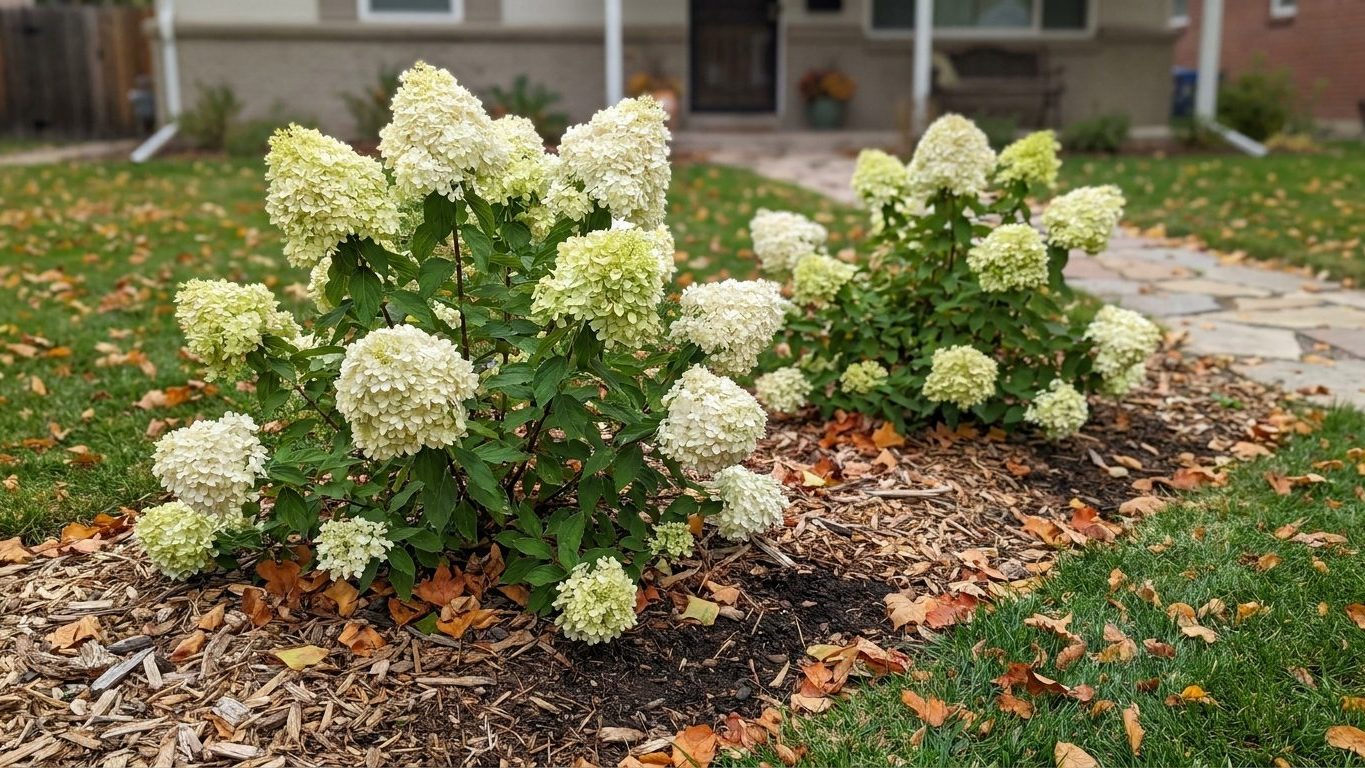
Plant hydrangeas in Denver once the last spring frost has passed, in the window of May 1 to May 11, or hold off until late summer and get them in before the first fall frost arrives between September 30 and October 12. Pruning depends on the shrub, not the calendar, since old-wood and new-wood bloomers respond to cuts in opposite ways.
When to prune hydrangeas in Colorado: The Short Answer
In Denver, the safest planting dates sit right after the last spring frost window of May 1 to May 11, or in the cooler weeks before the first fall frost, September 30 to October 12, so roots have time to grip the soil before either heat or cold takes over.
Neither window is a single date. NOAA NCEI 1991-2020 Climate Normals, 32F freeze probabilities (30-70% band), station USW00003017, treats spring and fall frost as a spread of possible mornings, not one fixed day, which is why a shrub planted on May 3 in one year can still catch a cold snap that a May 10 planting avoids the next. The same logic runs in reverse each fall.
- March and early April: soil is still cold, so hold off on planting. This is the window for dormant pruning on shrubs that bloom on new wood.
- Through May 11: treat this as the closing bell on frost risk. Container plants can go in once this window has passed.
- Late May through June: the main spring planting stretch, with steady watering as roots establish.
- July and August: skip new planting in the heat. Deadhead spent blooms instead.
- Late August into September: a second planting window opens, giving roots six to eight weeks before the fall frost range arrives.
- After October 12: stop pruning old-wood bloomers. Mulch heavily and let the shrub go dormant.
Species survival and the problems that strike them are covered elsewhere. This one stays on timing.
Colorado — the year and the numbers
- State
- Colorado
- USDA zones
- 3b-7b
- Last spring frost
- May 1 to May 11
- First fall frost
- September 30 to October 12
- Annual rain
- 15 in
- Lawn zone
- transition-season
- Source
- NOAA NCEI 1991-2020 Climate Normals, 32F freeze probabilities · Denver
How to Work Out the Dates for Your Own Yard
The statewide window is a starting point, not a guarantee, so work backward from it using your own address and elevation.
- Start from the reference window: NOAA NCEI 1991-2020 Climate Normals puts Denver’s last spring frost between May 1 and May 11, so treat mid-May as your safe target.
- Count back two to three weeks for hardening off: nursery hydrangeas need that transition period outdoors before they go into the ground for good.
- Check the ten-day forecast before you dig: a single night near 28°F after the window closes can still take out flower buds on old wood.
- Work the fall window backward too: count six weeks before the September 30 to October 12 range so roots settle before that frost arrives.
- Adjust for elevation: Denver sits at 5,280 feet on the plains, while mountain towns run far shorter seasons and can see frost into July.
- Match the shrub to your zone: Colorado’s range runs from 3b to 7b under the USDA Plant Hardiness Zone Map, based on 1991-2020 normals, and a lot two zones colder changes which shrub survives at all.
None of this replaces a look at your own yard. A north-facing bed against a fence behaves nothing like an open south-facing slope, even a mile apart.
Colorado North to South: How the Dates Shift
Colorado’s frost dates and hardiness zones move by elevation and terrain more than by latitude, which makes this state harder to generalize than most.
- The Front Range and Denver metro (roughly 5,000 to 5,500 feet): frost dates track closest to the reference window, May 1 to May 11 in spring and September 30 to October 12 in fall.
- The high mountains (resort valleys and higher elevations): frost can show up in July some years, compressing the whole growing season well below the statewide range.
- The Western Slope (Grand Junction and the river valleys): different air drainage and lower elevation can push both frost windows later in spring and later in fall than the Front Range sees.
- The Eastern Plains (open country east of the Front Range): wind exposure and lack of tree cover add stress that the frost date alone doesn’t capture.
The state guide page breaks these regional differences down further for anyone planting outside the Denver metro area.
Mistakes Colorado Punishes
Planting Before the Frost Window Closes
A warm stretch in late April tempts a lot of gardeners into planting early, then a hard freeze during the May 1 to May 11 window kills tender new growth. Wait for the window to fully pass before digging.
No Winter Protection on Old Wood
Old-wood bloomers set next year’s flowers by fall, and an unprotected shrub loses those buds to Colorado’s temperature swings over winter. A thick mulch layer and a loose wrap around the base carry buds through to spring.
Full Afternoon Sun at Altitude
Intense high-elevation sun and dry wind scorch leaves fast, even on shrubs rated for more sun elsewhere. Morning sun with afternoon shade keeps the same variety alive through a Colorado summer.
Colorado Extension Offices and County Contacts
The Denver frost dates are a starting point. Soil, exposure, and microclimate shift by county, and that’s where local extension offices fill in the gaps a statewide number can’t.
- Your state page: the frost dates and pruning window for Colorado gathered in one place.
- Colorado State University Extension: county offices, soil testing, and local planting calendars by region.
- Which ones hold up here: the species and cultivars suited to Colorado’s zone range, broken down county by county.
Common Questions
Can I plant hydrangeas in Colorado in the fall?
Yes, as long as they go in before the first fall frost window of September 30 to October 12, giving roots several weeks to settle before the ground cools for winter.
Do I need to protect hydrangeas over a Colorado winter?
Most old-wood bloomers benefit from mulch and a base wrap, since Colorado’s swings between mild days and hard freezes can damage the buds that were set the previous fall.
Why does elevation matter more than the calendar month here?
A date that works in Denver at 5,280 feet can be weeks off in a mountain valley, where frost risk lingers longer and the growing season is shorter to begin with.