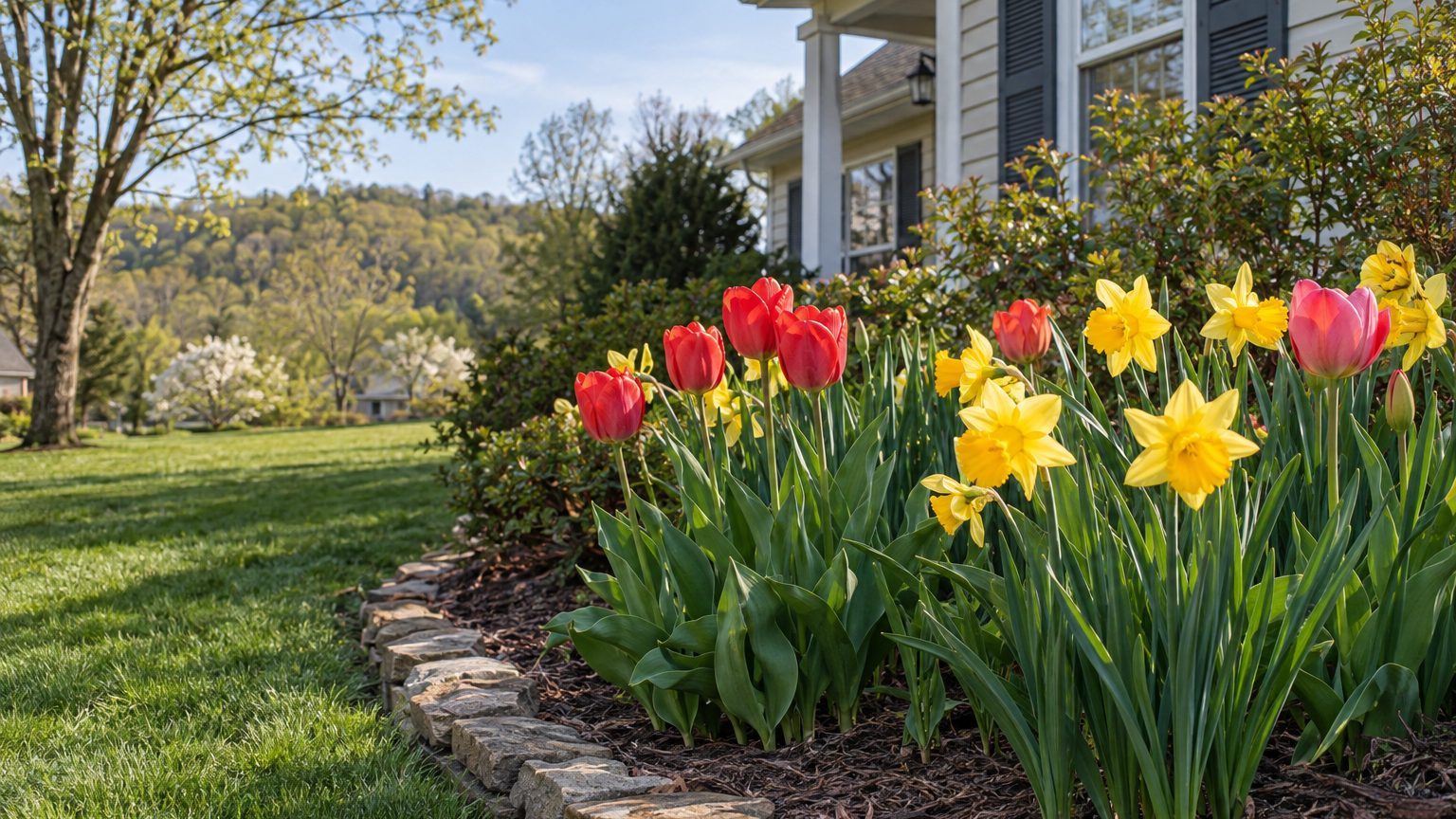
Green shoots pushing up through cold leaf litter in late winter are the payoff for a job done months earlier, when the soil was cooling and the garden looked finished. In West Virginia that job belongs to fall. The right weeks depend on how quickly the ground in your yard loses its summer heat.
When to Plant Tulips and Daffodils in West Virginia

October is the month to plant tulips and daffodils here, and the job can also be done in September or November when the weather or your schedule pushes you off that month. A bulb’s fall runs through a few clear moments.
- In September, buy bulbs while the selection is full and keep them in a cool, dry spot until the soil is ready for them.
- In October, plant once the soil has cooled down from its summer warmth, which gives roots time to form before the ground freezes without tempting the bulbs to sprout in fall. A soil thermometer settles any doubt.
- Through November, keep planting for as long as the ground can be dug, because a bulb still in the bag does better in the soil late than stored over the winter.
- Right after planting, water the bed and lay mulch over it to keep the soil temperature steadier through winter.
- In late winter and spring, shoots break the surface, and tulips and daffodils bloom from March through May, with a few starting in February.
In Charleston, a river valley, the first fall frost usually arrives between October 18 and November 1. Hardiness zones across West Virginia run from 5a to 7a in the USDA system, and higher ground freezes noticeably earlier in fall than the valley does.
West Virginia — the year and the numbers
- State
- West Virginia
- USDA zones
- 5a-7a
- Last spring frost
- April 9 to April 23
- First fall frost
- October 18 to November 1
- Annual rain
- 46 in
- Lawn zone
- cool-season
- Source
- NOAA NCEI 1991-2020 Climate Normals, 32F freeze probabilities · Charleston
Which Spring Bulbs Do Best in West Virginia?
Daffodils are the dependable choice, hardy bulbs that return year after year and that animals leave alone. Hyacinths and alliums also hold up well. Tulips and crocus will bloom, but tulips are often short-lived and both are favorite foods for hungry wildlife.
Daffodils overwinter in USDA zones 3 through 8, so every West Virginia zone sits comfortably inside their range. Gardeners with deer or squirrels in West Virginia pick daffodils, hyacinth, allium, fritillaria and scilla, a list that suits yards with these visitors.
| Bulb type | How it does in West Virginia | Why |
|---|---|---|
| Daffodils | Return year after year | Hardy perennial bulb that deer and rabbits leave alone |
| Tulips | Bloom well but often fade after a few years | Short-lived in the garden, and voles, squirrels, rabbits and deer eat them |
| Crocus | Pretty but at risk where animals roam | Voles, squirrels, rabbits and deer eat the bulbs |
| Hyacinths | Dependable where deer and squirrels visit | Animals tend to pass them by |
| Alliums | Good late-season color | They need winter chill to bloom and animals avoid them |
Fritillaria and scilla are worth a look if animals keep raiding the bed. Daffodils also naturalize well, meaning clumps scattered through a lawn edge or a woodland corner settle in and spread without any digging.
When to Plant, Chill and Care for Spring Bulbs in West Virginia
Fall carries the heaviest work, and spring asks mostly for patience. The jobs and their timing here are short.
| Task | Best timing in West Virginia | Why then |
|---|---|---|
| Plant spring bulbs | October, or September or November if needed | Bulbs settle in as the ground cools |
| Chill tulips and hyacinths | Not needed in West Virginia | Most spring bulbs need about 12 to 16 weeks of cold to flower, and winters here supply it |
| Leave the leaves after bloom | As long as the leaves are green, until they turn yellow and then brown | The leaves feed the bulb for next year’s flowers |
Refrigerator chilling is a habit for places with mild winters, so bulbs here go straight from the bag to the ground. After bloom, remove only the faded flowers and let the foliage do its work.
How Bulb Planting Time Changes Across West Virginia
Elevation does most of the sorting in a state this hilly, and the difference shows up in how soon fall cold settles into the soil.
- Charleston and the Kanawha Valley: River valley ground cools more slowly, so planting sits comfortably in October and can slide toward November without trouble.
- Allegheny Highlands: Higher ground freezes noticeably earlier in fall, so aim for the early side of the planting window and take a soil reading before the first hard freeze closes in.
Between those two, watch your own yard. A sheltered, low spot and an exposed ridge can sit in the same county and still cool on different schedules.
Where to Get Bulb Advice in West Virginia
West Virginia University Extension is the state’s land-grant resource for home gardeners, and its county offices can look at a problem bed in person.
- The county extension office can help with a soil test, best requested in late summer so results arrive before planting.
- Staff and master gardeners can help diagnose a bed where bulbs failed to return, and a visit with a photo or a sample works well in fall or spring.
Common Questions
Do Daffodils Need to Be Dug Up Every Year?
No. Daffodils never have to be dug, and they return year after year, which is why they suit planting in clumps that stay put.
Which Bulbs Will Deer Leave Alone?
The usual picks for deer country in West Virginia are daffodils, hyacinth, allium, fritillaria and scilla. Tulips and crocus are the ones that disappear.
Will Late Snow Hurt Early Spring Bulbs?
Early bulbs are built for it. In West Virginia, snowdrops push their blossoms up through snow, and crocus are often dusted with it.