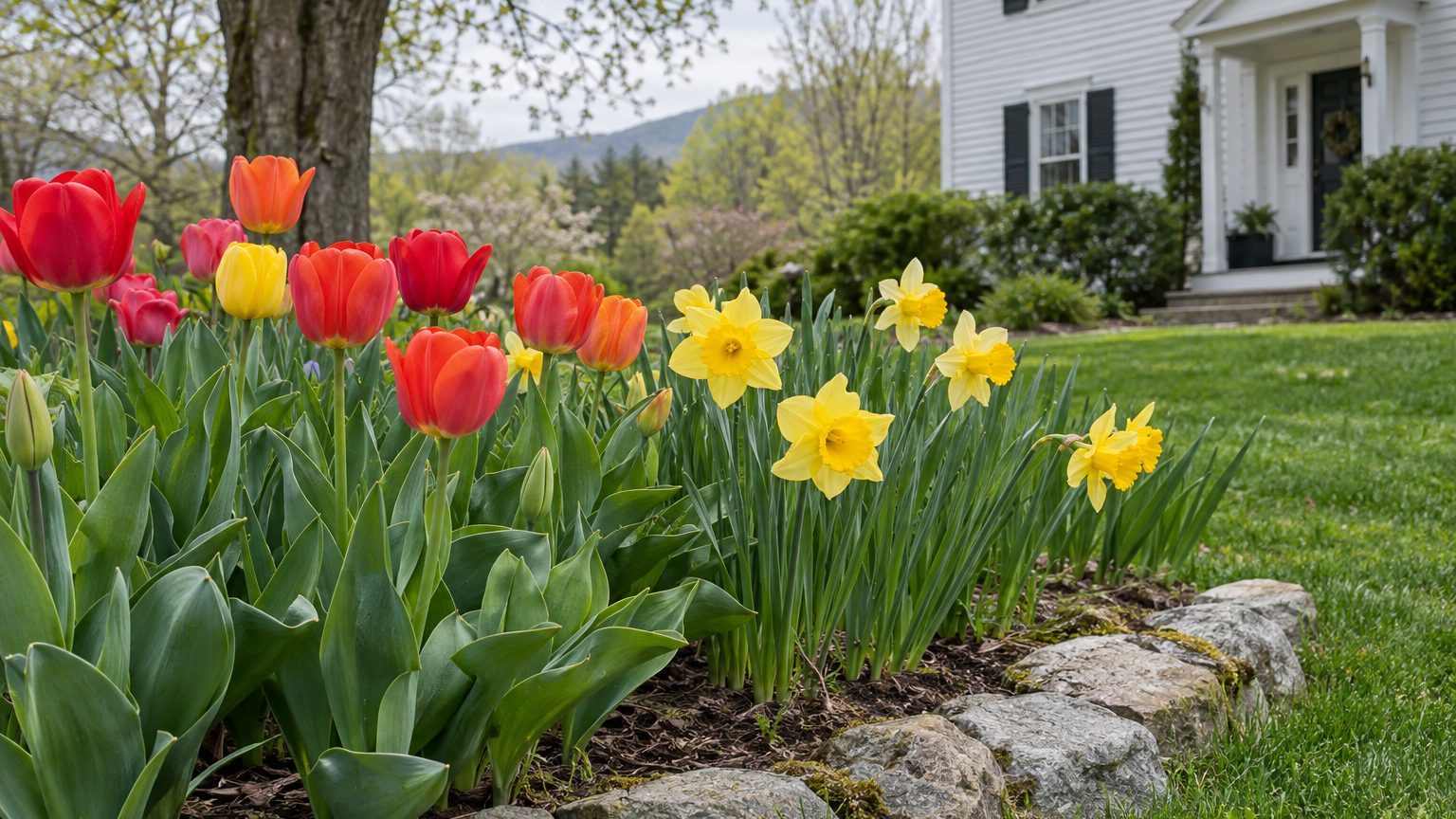
Daffodils lighting up the base of a stone wall as the last snow melts away are a familiar Vermont sight, and they start with a bulb pushed into cold soil months earlier. Planting tulips and daffodils in Vermont comes down to getting them in during the fall, then leaving winter to do the rest of the work.
When to Plant Tulips and Daffodils in Vermont

October is the month to plant tulips, daffodils, crocus, alliums and hyacinths in Vermont, and the planting can run into November and December if the ground has not frozen. The bulb’s year is mostly spent underground, and each stage has its own moment.
- In late summer and early fall, buy bulbs while the selection is good, and choose firm ones with no soft spots or mold.
- In October, plant once the soil has cooled below about 60°F, which is early enough for roots to form before the ground freezes and late enough that the bulbs do not sprout in the fall.
- In late fall, after the ground has frozen, spread a layer of mulch over the bed to keep the soil steady and keep thaws from heaving the bulbs.
- Through winter, no chilling in the refrigerator is needed, because Vermont’s own cold does that work in the ground.
- In early spring, green shoots push up as the soil warms, and the earliest hardy bulbs open from March.
In Burlington, the first fall frost typically arrives October 3 to October 13, a useful reminder that the soil cools fast after that. The USDA hardiness zone system puts Vermont between zones 3b and 5b, so other parts of the state run colder than Burlington.
Vermont — the year and the numbers
- State
- Vermont
- USDA zones
- 3b-5b
- Last spring frost
- April 30 to May 10
- First fall frost
- October 3 to October 13
- Annual rain
- 38 in
- Lawn zone
- cool-season
- Source
- NOAA NCEI 1991-2020 Climate Normals, 32F freeze probabilities · Burlington
Which Spring Bulbs Do Best in Vermont?
Daffodils are the dependable choice here. Most are hardy to zone 3, so they handle even the coldest corners of the state, and animals leave them alone. Tulips grow well too, though they are often short-lived and attract hungry wildlife.
Winters in Vermont give every spring bulb the cold it needs, so the question is less about whether a bulb can flower and more about what will survive in your yard.
| Bulb type | How it does in Vermont | Why |
|---|---|---|
| Daffodils | Reliable, and they last for years | Hardy to zone 3, and voles, squirrels, rabbits and deer leave them alone |
| Tulips | Beautiful but often short-lived | Voles, squirrels, rabbits and deer eat them |
| Crocus | Good where animals are kept off | Most species and hybrids are hardy to zone 3, but animals go after them as they do tulips |
| Alliums | Easy and cold-hardy | They need the cold of winter to bloom and open at the end of the bulb season |
Hyacinths are planted on the same schedule as the others and take to Vermont winters. Daffodils are the safer bet if deer or rabbits visit your yard regularly, since the other bulbs on this list may need protection.
When to Plant, Chill and Care for Spring Bulbs in Vermont
Most spring-flowering bulbs need about 12 to 16 weeks of cold to flower. Vermont winters supply that in the ground, so the chilling step that gardeners in mild climates handle in the refrigerator can be skipped.
Care after planting is simple, and the timing follows the bulb and the soil more than the calendar.
| Task | Best timing in Vermont | Why then |
|---|---|---|
| Plant | October, or November and December if the ground is not frozen | Roots form before the ground freezes |
| Chill | Not needed, winter does it outdoors | Cold enough in the ground to set the flower buds |
| Leave the foliage after bloom | As long as the leaves are green, until they turn brown | The leaves feed the bulb for next year |
After bloom, remove only the faded flowers. A bulb still sitting in the bag is better planted late than stored over the winter, so plant as long as the ground can be dug.
How Bulb Planting Time Changes Across Vermont
Vermont is small, but its mountains and its lake pull the planting window around. Soil cools sooner where the elevation is higher or the air is colder, and that moves the best day to plant within October.
- Champlain Valley: Lake Champlain keeps this area milder than much of the state, so the soil stays workable longer in the fall. Planting can run later here, with November still a fallback if the ground has not frozen.
- Green Mountains: Higher elevation means colder soil and an earlier freeze. Plant toward the early part of October so the roots get their head start.
- Northeast Kingdom: Winters come earlier and last longer here, and the growing season runs substantially shorter than in Burlington. Get bulbs in early in October and mulch once the ground has frozen.
Bloom follows the same pattern in spring, arriving later on the hills and in the Kingdom than along the lake.
Where to Get Bulb Advice in Vermont
Questions about a bed that fails year after year, a soil that stays wet, or a pest that keeps digging usually get a faster answer from someone who knows local conditions.
- The University of Vermont Extension answers gardening questions and offers guidance on soil testing, useful before a big planting.
- Your county extension office can help diagnose a bulb that fails to come up, and it is a good place to ask about local wildlife pressure.
- Visit either one before the ground freezes, then get your bulbs planted in October.
Common Questions
Which Tulips Come Back Year After Year in Vermont?
Tulips are often short-lived in the garden, but Fosteriana tulips perennialize well. Planting them in a spot where animals cannot dig easily improves the odds that they return.
Can You Plant Daffodils in Partial Shade?
Yes. Daffodils naturalize well, especially in partly shady areas, so the edge of a woodland bed or the ground under deciduous trees suits them.
Can Daffodils Help Protect Other Plants from Deer?
Daffodils can be used as deer training plants, set among tender plants that deer love to protect them from browsing. It is a useful trick for beds that deer visit.