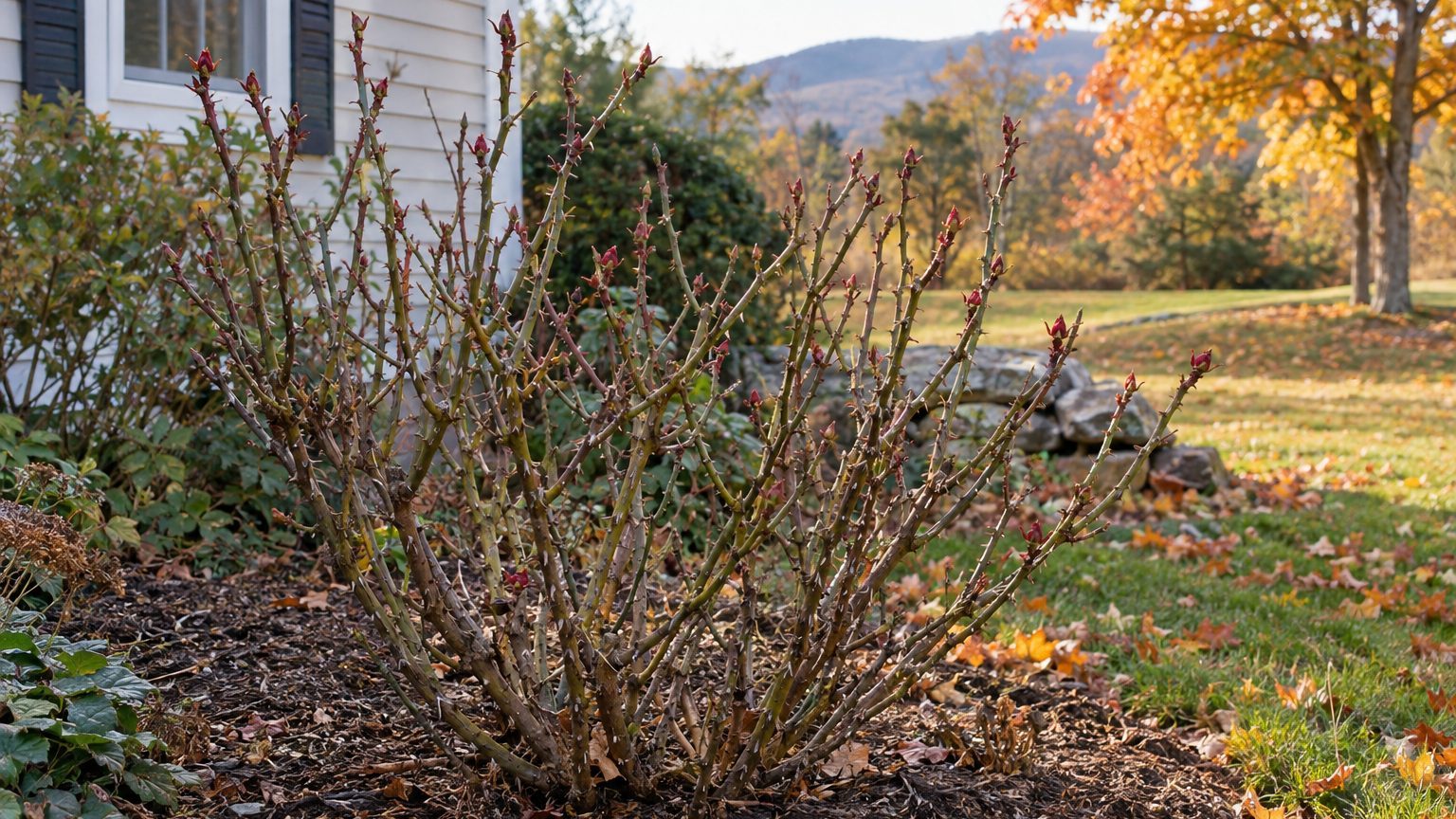
Snip a rose cane too early and the cut end can freeze back; wait too long and the plant has already spent energy on growth you remove. In Vermont, the sweet spot for repeat-blooming roses falls in spring, once the shoots begin to move and the worst of winter has passed.
When to Prune Roses in Vermont

Prune repeat-blooming roses in Vermont in April and May. It can also be done in March, but only if the plants show active growth, because late winter while the canes are still dormant is the outer limit.
Waiting for shoots to reach several inches long keeps you from cutting too soon, and the same pause shows you which canes made it through winter alive.
| Rose type | When to prune in Vermont | Why |
|---|---|---|
| Hybrid teas, floribundas, modern shrub roses | April to May, or March once growth starts | They bloom on new wood, so a spring cut shapes the canes that will carry this summer’s flowers |
| Old garden roses and once-blooming climbers | Right after they bloom, never in spring | They flower on last year’s wood, and a spring cut removes the buds |
| Repeat-blooming climbers | April to May, with the other repeat bloomers | They flower on new wood, so a spring cleanup of dead canes does no harm |
Once-blooming roses flower a single time each year on wood grown the season before, so the only safe moment to shape them is just after the flush fades. Cut them in spring and you trade that year’s bloom for tidiness. Rambler-type climbers follow the same rule as the other once-bloomers.
Vermont — the year and the numbers
- State
- Vermont
- USDA zones
- 3b-5b
- Last spring frost
- April 30 to May 10
- First fall frost
- October 3 to October 13
- Annual rain
- 38 in
- Lawn zone
- cool-season
- Source
- NOAA NCEI 1991-2020 Climate Normals, 32F freeze probabilities · Burlington
How to Tell When Your Roses Are Ready to Prune
Vermont springs rarely follow a tidy schedule, so the plant itself is a better guide than any single weekend on the calendar.
- Buds along the canes swell and turn from tight and dark to plump and reddish, which tells you the plant has woken up and you can see where live wood begins.
- New shoots reach several inches long, which is the point where cutting is safe and dead canes are easy to tell from living ones.
- Forsythia is in bloom nearby, a sign that the worst of the hard freezes has usually passed in your neighborhood.
- Winter mulch has come off the base of the plant, which in Vermont happens in early May before new growth begins (it can also come off in April) and tells you the crown is ready for inspection.
- Canes show green under the bark when you scratch a small patch with a fingernail, so you know that wood is alive and worth keeping.
Once the mound comes off, inspect the crown so you can see where healthy wood begins.
Should You Prune Roses in Fall or Winter in Vermont?
Mostly no. In fall, trim only the very long stems that would whip in the wind and loosen the plant’s roots, then leave the rest alone. A severe cut now would push new growth that cannot harden off before the cold.
Winter protection goes on in late November, after hard frosts have killed the leaves. That is the moment to mound the base, not to carry out a heavy prune. Hybrid teas, floribundas and grandifloras need that cover in cold winters, while hardy shrub roses such as the Explorer series do well without it.
The real pruning waits for spring, when the buds tell you what survived. Canes that look fine in winter can be dead by spring, and cutting them early only removes your clues.
How Rose Pruning Dates Shift Across Vermont
The spring window moves with elevation and distance from the lake, so use the months above as a range and let the buds settle the exact day. Burlington, on Lake Champlain, is the reference for the spring frost window of April 30 to May 10.
- Champlain Valley: the lake keeps this area milder than the northern parts of the state, so roses wake earlier here and pruning tends to land toward the front of the April to May range.
- Green Mountains: higher ground has a substantially shorter season, so buds swell later and pruning slides toward May.
- Northeast Kingdom: winters are harsher and spring arrives later than in the Champlain Valley, so wait longer for shoots to show and expect more cane dieback to trim away.
Hardiness runs from zone 3b to 5b across the state under the USDA system, which is why the Explorer series, mostly happy in zone 4, and the Meidiland series, hardy to at least zone 5, suit different parts of Vermont.
Where to Get Rose Advice in Vermont
Local conditions vary enough from town to town that a nearby expert saves guesswork. The state’s land-grant service, University of Vermont Extension, publishes rose guidance written for Vermont gardens.
- The extension site carries winter protection and variety advice for Vermont, so check it in late fall before you mound the crowns.
- Your county extension office can look at a cane you are unsure about, so bring a cutting in spring when the buds begin to swell.
Common Questions
Can You Prune Roses in Summer in Vermont?
Yes, for once-blooming roses, which are shaped right after their flowers fade. Repeat bloomers need only light deadheading in summer, since their main pruning belongs to spring.
Which Roses Survive Vermont Winters Best?
Polyanthas, floribundas, hybrid perpetuals, shrub roses and many old-fashioned roses prove more winter hardy than hybrid teas and grandifloras. The Canadian Explorer roses, named for people such as Champlain, Cabot and Kelsey, mostly live in zone 4.
When Should You Feed Roses After Pruning in Vermont?
Feeding runs from April through July and can continue in August. Growers should stop feeding late in the season so new growth can harden off before winter, and that reasoning holds for Vermont’s cold winters.