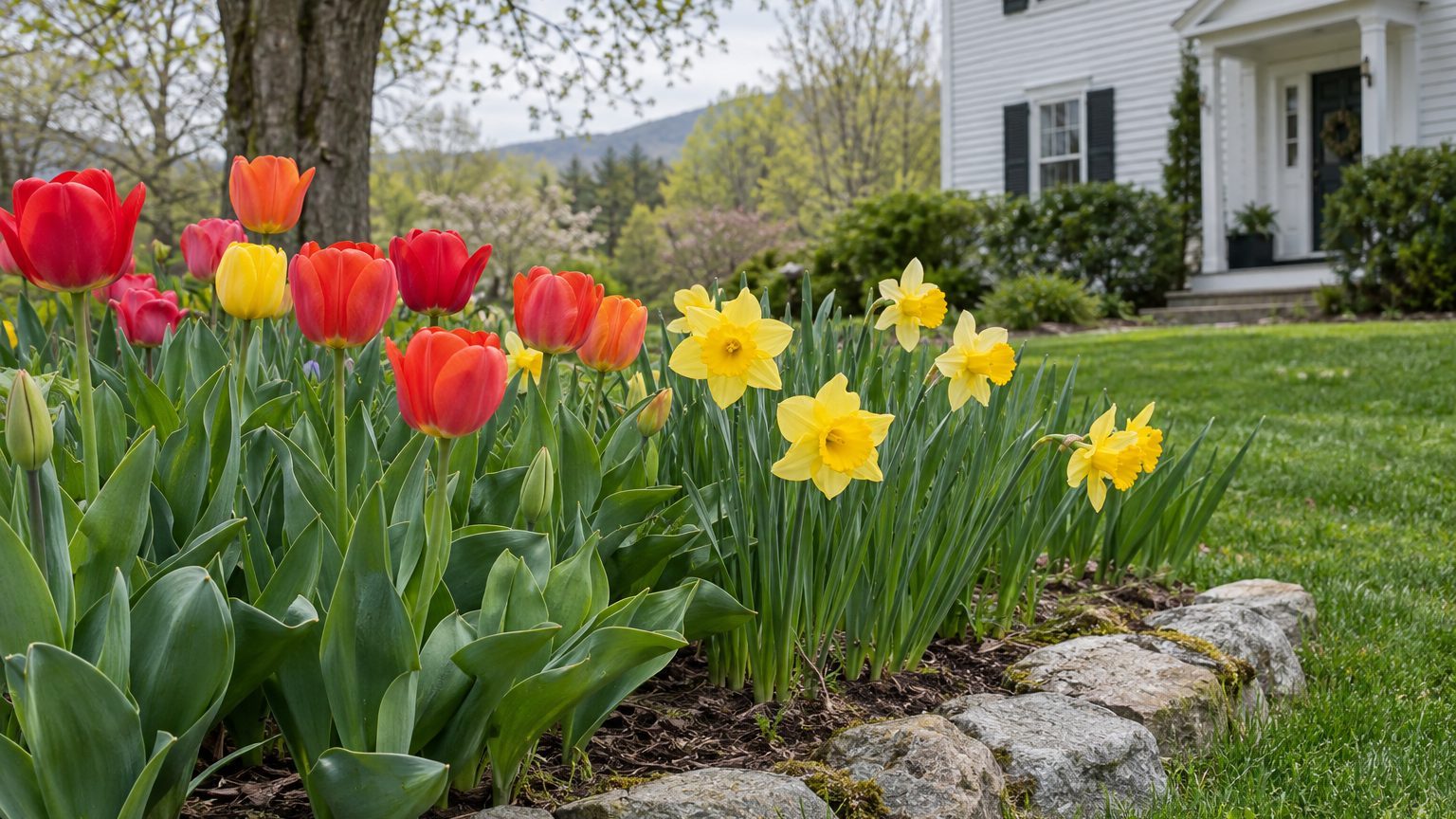
Daffodils nodding beside the last patch of snow are a Vermont spring signature, and they went into the ground the autumn before. Winters here are cold enough to give spring bulbs the rest they need, so the real question is which ones return year after year. Daffodils, fosteriana tulips and alliums answer it well.
Best Spring Bulbs to Grow in Vermont

Daffodils lead the list, with fosteriana tulips and alliums close behind. Vermont runs from zone 3b to 5b on the USDA hardiness system, and daffodils handle that range. Tulips and crocus also grow here, but animals make them a gamble.
Daffodils
Most daffodils are hardy to zone 3, so you can grow them in every corner of Vermont, from the Champlain shore to the coldest hill town.
They also naturalize well, especially in partly shady spots under trees or along a fence. Planted once, they settle in, spread and last longer than tulips. Squirrels, voles, rabbits and deer leave them alone.
Fosteriana Tulips
Tulips are often short-lived in the garden, and the usual pattern is a strong first spring followed by thinner bloom. Fosteriana tulips are the group that perennializes well, which makes them the sensible tulip for a Vermont bed where you want repeat color without replanting every fall.
Alliums
According to Iowa State University Extension, ornamental onions, the alliums, need a chill period to bloom. Vermont gives bulbs plenty of cold anyway, so alliums get the chill they need, but they are not forgiving in any bed without winter cold. They close out the bulb season, flowering after the tulips and daffodils have finished.
Tulips and Crocus
Voles, squirrels, rabbits and deer eat tulips and crocus, and those animals are common around Vermont yards and woodland edges. Hardiness is not the problem for these two. Plant them close to the house, or tuck them among daffodils, and expect to lose a few.
Vermont — the year and the numbers
- State
- Vermont
- USDA zones
- 3b-5b
- Last spring frost
- April 30 to May 10
- First fall frost
- October 3 to October 13
- Annual rain
- 38 in
- Lawn zone
- cool-season
- Source
- NOAA NCEI 1991-2020 Climate Normals, 32F freeze probabilities · Burlington
How to Choose Spring Bulbs for Your Vermont Garden
Pick by what your yard throws at the bulbs, not by what looks best in a catalog photo. Winter cold in Vermont is rarely the obstacle. Hungry wildlife, shade and the effort you want to spend are the real deciding factors.
| Your situation | What suits it in Vermont | Why |
|---|---|---|
| Very cold winter, such as the hills and north | Daffodils | Most are hardy to zone 3 |
| Little time for replanting | Daffodils | They last longer and are the more reliable perennial bulb |
| Want tulips that return | Fosteriana tulips | They perennialize well, unlike many tulips |
| Deer, voles and rabbits visit | Daffodils, with tulips and crocus kept close to the house | Animals leave daffodils alone and eat tulips and crocus |
| Partly shady beds | Daffodils | They naturalize well in partial shade |
| Need cold to bloom | Tulips and hyacinths go straight into the ground | Vermont winters supply the cold, so no refrigerator chilling is needed |
Hyacinths do not have a row of their own because they behave like tulips here. Plant them in the ground in fall and let Vermont winter do the chilling.
Which Spring Bulbs Suit Different Parts of Vermont
Vermont is small, but elevation and the lake change the odds for your bulb choices.
- Lake Champlain shore and Burlington: winters here are milder than in the hills, so tulips, including the fosteriana group, tend to last longer here than they do in the hills.
- Green Mountains: the growing season is shorter on the slopes, so build the bed around daffodils and alliums and treat tulips as a bonus.
- Northeast Kingdom: winters run coldest here, and daffodils, hardy to zone 3, are the dependable foundation for any planting.
Wherever you live, protection from deer and voles matters more than a few degrees of difference in winter low.
Spring Bulb Buying Mistakes to Avoid in Vermont
Bulbs Not Hardy Enough
A bulb rated for milder winters can rot or fail in a Vermont bed, and the loss shows only the following spring. Check the label before you buy. Daffodils and most spring bulbs here are hardy to zone 3, which covers the colder parts of the state.
Planting Before the Soil Cools
Bulbs set in warm soil can sprout in fall, and the green shoots then take a beating from winter. Wait until the soil has cooled below about 60°F. October is the right month in Vermont, so the roots form before the ground freezes. November or December still works if the ground is not frozen.
Storing Bulbs Over Winter
A bag of tulips or daffodils left in the garage will not improve with age. Plant any unplanted bulb as soon as the ground can be dug, even if the calendar says late. A late bulb in the ground beats a dry one in storage.
Where to Get Spring Bulb Advice in Vermont
University of Vermont Extension is the state’s source for gardening questions, and its county-level offices can speak to local conditions in your valley or on your hillside.
- The extension website has fall planting guidance, so check it in late summer before you order bulbs.
- Your county office can tell you how deer and voles behave in your area, which is worth asking before you plant tulips.
Common Questions
When Do Tulips and Daffodils Bloom in Vermont?
April and May is the usual window for tulips and daffodils. The hardy bulbs that come up first can start in March, while later varieties reach into late April and May.
Do Tulips and Hyacinths Need to Be Chilled in the Refrigerator Before Planting?
Not in Vermont. Most spring bulbs need about 12 to 16 weeks of cold to flower, and a Vermont winter delivers that outdoors. Refrigerator chilling is for places with winters too mild to do the job.
What Should You Do with Bulb Leaves After the Flowers Fade?
Remove only the faded flowers and leave the leaves on the plant until they turn brown. The leaves feed the bulb for next year, so cutting them while green costs you flowers in the following spring.