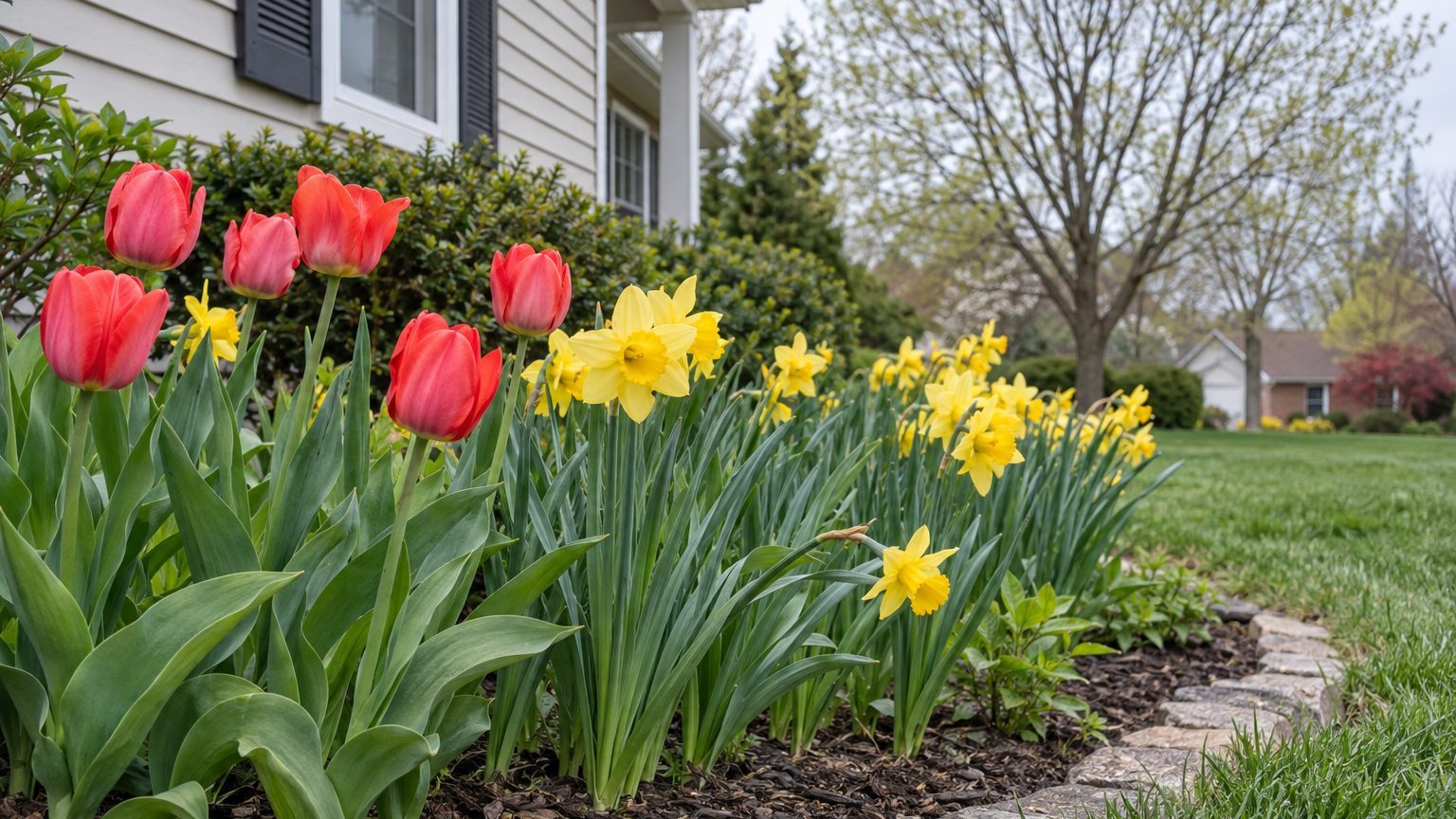
Green spears pushing through cold, damp soil in late winter are the payoff for work done months earlier, in autumn. Spring bulbs go into Pennsylvania ground when the weather turns cool and the leaves start to drop, long before anything shows. A few details decide whether that work pays off: the month, the soil, and which bulbs you choose.
When to Plant Tulips and Daffodils in Pennsylvania

Plant tulips and daffodils in October, with September and November also working when the weather or your schedule calls for it. A bulb’s year in Pennsylvania runs roughly like this.
- In September, shop for bulbs while the selection is full, and pick firm ones with no soft spots or mold. Keep them somewhere cool and dry until the ground is ready.
- Once the soil has cooled down enough that it is no longer warm to the touch, usually in October, dig them in. That timing gives roots a chance to form before the ground freezes, but it is cool enough that the bulbs will not sprout in the fall.
- In November, the same planting can still happen, and the first fall frost typically arrives in Philadelphia between November 5 and November 16. Bulbs that go in this late still have time to root if the ground is workable.
- After the soil has cooled, a layer of mulch over the bed evens out the temperature swings of winter. Pennsylvania winters supply the cold these bulbs need, so no refrigerator chilling is required.
- From March through May, the shoots rise, bloom, and fade. Some early flowers can open as soon as February.
Hardiness zones across the state run from 5a to 7b in the USDA system, so the calendar shifts a little from the southeast corner to the high country, as the regional notes further down explain.
Pennsylvania — the year and the numbers
- State
- Pennsylvania
- USDA zones
- 5a-7b
- Last spring frost
- March 29 to April 6
- First fall frost
- November 5 to November 16
- Annual rain
- 44 in
- Lawn zone
- transition-season
- Source
- NOAA NCEI U.S. Climate Normals 1991-2020, 32F freeze probabilities · Philadelphia
Which Spring Bulbs Do Best in Pennsylvania?
Winters here are cold enough for nearly every popular spring bulb, so tulips, daffodils, crocus, hyacinths and alliums can all flower. Soil and wildlife are what sort the winners from the losers. Drainage matters, and so do the voles, squirrels, rabbits and deer that eat some bulbs and ignore others.
That second factor shapes the choice more than the climate does. A bed that animals visit will reward daffodils and alliums, and a tulip planting may need protection.
| Bulb type | How it does in Pennsylvania | Why |
|---|---|---|
| Daffodils | Return year after year with little fuss | Hardy in USDA zones 3 through 8, and rabbits and deer leave them alone |
| Tulips | Lovely but often short-lived | Voles, squirrels, rabbits and deer eat them |
| Crocus | Grows well where animals stay away | Voles, squirrels, rabbits and deer eat them |
| Alliums | Reliable late-season color | Needs winter chill to bloom |
Hyacinths belong in the same conversation. Like alliums, they tend to be passed over by deer and squirrels, which makes them a safer pick than tulips for open front-yard beds. Daffodils also suit naturalizing, meaning scattered clumps across a slope or the edge of a lawn, because they never have to be dug up.
When to Plant, Chill and Care for Spring Bulbs in Pennsylvania
The year’s work with spring bulbs comes down to a few moments, and the first matters most. Most spring-flowering bulbs need about 12 to 16 weeks of cold to flower, which a Pennsylvania winter provides without help, so there is no need to chill bulbs in the refrigerator first.
The spring job is mostly patience. Once the bloom is over, the plant is busy refilling the bulb for next year.
| Task | Best timing in Pennsylvania | Why then |
|---|---|---|
| Plant tulips and daffodils | October, or September and November if needed | Roots establish while the soil is cool and workable |
| Plant bulbs still in the bag | As soon as the ground can be dug | A late bulb in the ground does better than one stored over the winter |
| Remove faded flowers | When the petals drop, March through May | The plant stops spending energy on seed |
| Leave the leaves alone | As long as they are green | The leaves feed the bulb for next year |
Trim off only the spent flower. The foliage stays until it turns brown, even when it looks untidy. Tying or cutting green leaves shortens the life of the bulb below.
How Bulb Planting Time Changes Across Pennsylvania
Pennsylvania stretches from a mild southeastern corner to cold, high plateaus, and the planting window moves with it.
- Philadelphia and the southeast: This area is warmer than the northern parts of the state, so the soil cools later. Planting leans toward the middle and later part of October, and November planting is a comfortable fallback.
- The Northern Tier: Spring arrives later here, and autumn cools off sooner. Plant in the earlier part of the fall window so roots settle before the ground hardens.
- The Allegheny Mountains: Higher elevations run cold, with spring coming later and soil cooling earlier. Start in the early part of the window and check soil temperature rather than the calendar. Bloom also comes later than in the lowlands.
In every region, the soil thermometer is a better guide than the date on the wall.
Where to Get Bulb Advice in Pennsylvania
Penn State Extension publishes bulb guidance for the state’s soils and weather, and its county offices and Master Gardener programs can answer local questions about drainage, pests and varieties.
- Penn State Extension’s online articles cover daffodils and other bulbs, and they are worth a look before you buy in late summer or early fall.
- Your county extension office can point you to local Master Gardeners who know which animals visit your neighborhood and which beds drain well.
- A soil test through the county office, done before planting, tells you whether the bed needs anything before the bulbs go in.
Common Questions
Is It Too Late to Plant Bulbs After the First Frost?
No. A frost date marks the risk of frost, not the end of planting. A bulb that is still in the bag goes into the ground as soon as the soil can be dug, since a late planting beats a bulb stored over the winter.
Are Daffodils Hardy Enough for Every Part of Pennsylvania?
Yes. Daffodils overwinter in USDA zones 3 through 8, and the state sits inside that range, from the Allegheny highlands to the southeast.
Do Daffodils Ever Need to Be Dug Up?
Not for the sake of the plant. Daffodils are good for naturalizing, so you can scatter clumps across a lawn edge or hillside and leave them in place.