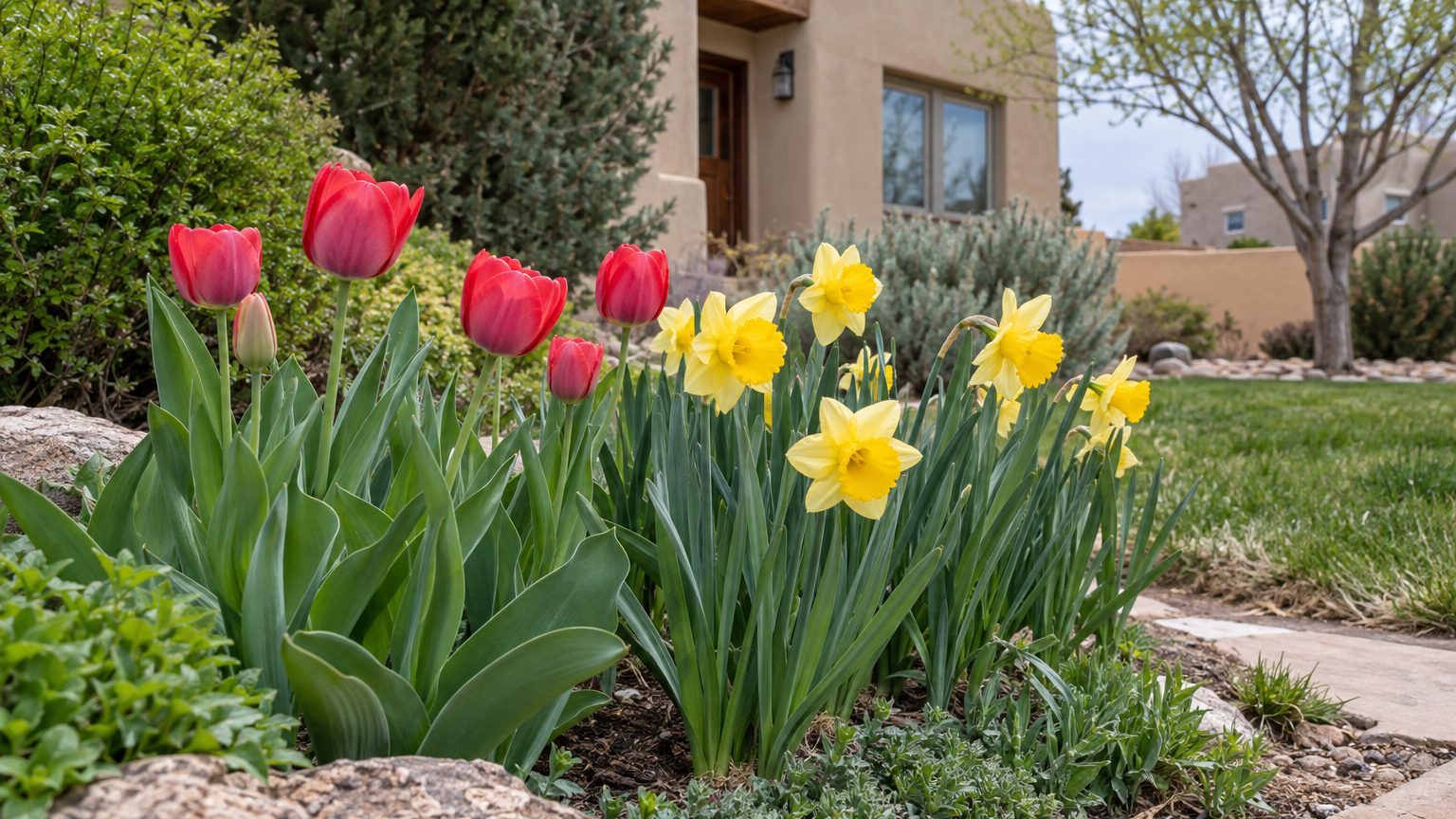
Tulip and daffodil bulbs go into New Mexico soil in autumn, then sit out the winter underground before sending up shoots. Garden centers start stocking bulbs while the days are still warm, which tempts plenty of people to plant too early.
When to Plant Tulips and Daffodils in New Mexico

September and October are the months for planting tulips and daffodils in New Mexico, and the same window works for crocus, alliums and hyacinths. A bulb’s autumn follows a clear order, and each step has its own season.
- In late summer, pick up bulbs while the selection is full, choosing ones that feel firm and heavy for their size.
- In September, tulips and hyacinths that need a head start on cold go into the refrigerator if your yard has mild winters. Daffodils and alliums skip this step.
- Through September and October, the bulbs go into the ground, pointed end up, in full sun and loosened soil.
- After planting, a layer of mulch evens out soil temperature and holds moisture through dry weather.
- Across late fall and winter, roots keep growing underground while the tops stay out of sight, and shoots show up as the weather turns.
Frost timing varies a lot across a state with USDA hardiness zones running from 4b to 9a. In Albuquerque, the first fall frost in a typical city garden arrives around October 29 to November 9, and suburban or rural yards there usually see it sooner, especially at higher elevation. Check with your county office for your own local date.
New Mexico — the year and the numbers
- State
- New Mexico
- USDA zones
- 4b-9a
- Last spring frost
- March 31 to April 12
- First fall frost
- October 29 to November 9
- Annual rain
- 9 in
- Lawn zone
- transition-season
- Source
- NOAA NCEI U.S. Climate Normals 1991-2020, 32F freeze probabilities · Albuquerque
Which Spring Bulbs Do Best in New Mexico?
Tulips and daffodils are both adaptable across New Mexico, and alliums manage well too, and according to Iowa State University Extension, they need the cold of winter to bloom. Crocus and hyacinths can work, though crocus draws hungry animals. Sun and drainage matter as much as the bulb type.
Give every bulb full sun and avoid low spots that stay wet in spring. Where drainage is poor, working compost into the planting hole loosens the soil and adds organic matter.
| Bulb type | How it does in New Mexico | Why |
|---|---|---|
| Tulips | Adaptable, but often short-lived | Voles, squirrels, rabbits and deer eat them |
| Daffodils | Dependable perennial bulb | Animals leave them alone |
| Alliums | Bloom reliably with winter cold | They need winter cold to bloom |
| Crocus | Worth planting, but at risk | Voles, squirrels, rabbits and deer eat them |
Hyacinths do well where winters are cold enough, and in a mild-winter yard they need a refrigerator chill first. If animals visit your garden often, daffodils and alliums are the safer picks for the front bed.
When to Plant, Chill and Care for Spring Bulbs in New Mexico
Bulbs ask for a few well-timed gestures over the year. Plant once the soil has cooled below about 60°F, which gives roots time to form before the ground freezes and keeps the bulbs from sprouting in fall.
A bulb still unplanted after the window is better in the ground than in storage, as long as the soil can be dug.
| Task | Best timing in New Mexico | Why then |
|---|---|---|
| Plant | September and October | Roots settle before winter without early top growth |
| Chill tulips and hyacinths | Before planting, only if winters in your yard are too mild | Most spring bulbs need about 12 to 16 weeks of cold to flower |
| Leave the foliage | After bloom, until the leaves turn brown | The leaves feed the bulb for next year |
After bloom, remove only the faded flowers and leave the leaves in place. Cutting or tying green foliage starves the bulb and costs you next spring’s show.
How Bulb Planting Time Changes Across New Mexico
New Mexico spans mountains, high desert and low basins, so the soil cools on different schedules. Lean toward the front of the September and October window where autumn arrives early, and toward the back where it lingers.
- Santa Fe and Taos: Cold arrives sooner at these higher elevations, so plant in September to give roots time before the ground firms up.
- Albuquerque and the Rio Grande Valley: Autumn cools more gradually, so October suits most beds, and September planting works if the soil has already cooled.
- Las Cruces and the southern desert: Soil stays warm longer here, so wait toward the end of October and refrigerate tulips and hyacinths first if winters are mild.
- Farmington and the San Juan Basin: Nights chill earlier than in the south, so September and early October planting fits well.
Your own yard may run earlier or later than the town nearby, especially on a slope or at a different elevation.
Where to Get Bulb Advice in New Mexico
When a bed fails or a bulb stays blind, local help beats guesswork. The state extension service and your county office can look at your soil, your yard’s exposure and your questions.
- The New Mexico State University Cooperative Extension Service publishes growing guidance, so check it before buying a large order of bulbs.
- Your county extension office can help with soil testing and plant problems, so call in late summer, before planting.
- A master gardener volunteer can tell you how your local elevation shifts the planting date, so ask before you dig.
Common Questions
Can You Plant Tulips and Daffodils After October in New Mexico?
Yes, as long as the ground can still be dug. A bulb left in the bag does worse than one planted late, so get it into the soil as soon as you can.
Do Tulips Come Back Every Year in New Mexico?
Often they do not. Tulips tend to be short-lived in the garden, so many gardeners treat them as a few seasons of color and replant. Daffodils last longer and make the better long-term bulb.
When Do Tulips and Daffodils Bloom in New Mexico?
Hardy spring bulbs bloom between January and May, depending on the variety and where in the state you garden. Warmer low-elevation yards run earlier than cold mountain gardens.