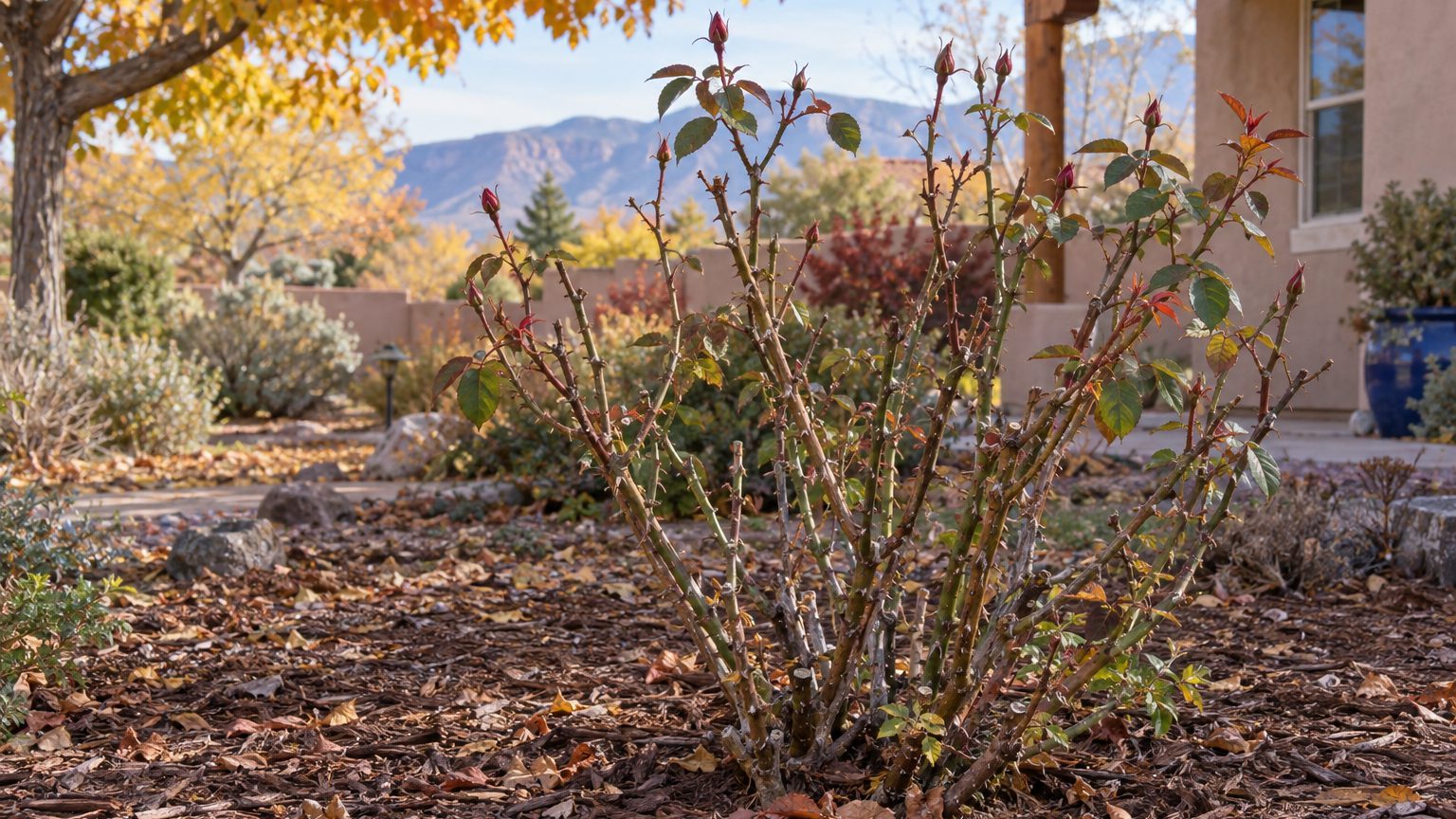
Pruning shears come out when the canes are still bare and the days are only starting to lengthen. In New Mexico, that moment falls in late winter, just ahead of the first leaves. Timing the cut for late winter helps avoid the extra damage that can follow fall or early-winter pruning.
When to Prune Roses in New Mexico

Repeat-blooming roses are pruned in February or March, in late winter before growth starts. Hybrid teas and floribundas are the roses most often grown in New Mexico, and they follow this timing.
Cutting in late fall or early winter can leave canes injured by cold and force a harder cut in late winter.
| Type of rose | When to prune in New Mexico | Why |
|---|---|---|
| Hybrid teas, floribundas and modern shrub roses (repeat-blooming) | February to March, in late winter | Cold can injure bushes cut in late fall or early winter, which means harsher pruning later |
| Old garden roses, ramblers and many climbers that bloom once | Right after they finish flowering, never in early spring | They flower once a year on last year’s wood, so a spring cut removes the buds |
Climbers that rebloom can be treated like other repeat bloomers, with a light late-winter tidy of weak or damaged wood. Once-blooming climbers wait until flowering is over.
New Mexico — the year and the numbers
- State
- New Mexico
- USDA zones
- 4b-9a
- Last spring frost
- March 31 to April 12
- First fall frost
- October 29 to November 9
- Annual rain
- 9 in
- Lawn zone
- transition-season
- Source
- NOAA NCEI U.S. Climate Normals 1991-2020, 32F freeze probabilities · Albuquerque
How to Tell When Your Roses Are Ready to Prune
The calendar gives the window, and the bush tells you the day. Watch the canes for these signs before the shears come out.
- Buds along the canes begin to swell, which tells you growth is about to start and you can see which buds are alive.
- Any mound of soil or mulch piled around the base for winter has been pulled back, so you can see where the healthy green wood begins.
- The hardest freezes of winter have passed, since a cut made too soon invites new growth that a late cold snap can burn.
- Canes that are black, brown or shriveled stand out clearly against green or plump canes, and those are the ones to remove first.
- Garden neighbors with the same roses are showing the first red leaf buds, a good cue that your own bushes are ready too.
In a cold pocket or on higher ground, give the bushes a little extra time and let the buds make the call. Frost dates are only a guide to risk. A reference city such as Albuquerque sees its last spring frost between March 31 and April 12, and gardens outside town often see it later, so check with your county before trusting any date.
Should You Prune Roses in Fall or Winter in New Mexico?
Skip fall and early-winter pruning, then prune repeat-blooming roses in late winter. In fall and early winter, leave repeat-blooming roses alone and wait for the late-winter pruning window. Leave everything else alone until growth resumes.
Severe pruning in late fall or early winter is what causes trouble. Canes cut hard in late fall or early winter can be damaged by cold and may need a deeper cut in late winter. Waiting makes live wood easier to see and avoids unnecessary cuts.
Once-blooming roses are the exception to the late-winter rule. Prune them right after they bloom, because they flower on last year’s wood and a winter cut takes the coming flowers with it.
How Rose Pruning Dates Shift Across New Mexico
New Mexico spans hardiness zones 4b to 9a in the USDA system, so the same late-winter window lands differently from place to place. Elevation does most of the work.
- Rio Grande Valley: Albuquerque and the lower valley warm earlier, so buds swell sooner and pruning tends toward the early part of the February to March window.
- Santa Fe and the northern mountains: Higher ground holds cold longer, so wait for swelling buds and lean toward March, and expect frost to linger into spring.
- Southern desert, around Las Cruces: Warmth arrives early, so February is a natural time to prune, with growth starting ahead of the rest of the state.
Whatever the location, the buds decide the exact day within the months given for the state.
Where to Get Rose Advice in New Mexico
Local conditions vary enough from county to county that a nearby expert saves guesswork. New Mexico State University’s Cooperative Extension Service publishes rose guidance written for the state, and your county office can speak to your elevation.
- The extension website carries growing guides for roses, worth reading before pruning season.
- Your county extension office can tell you how local frost timing affects your pruning day, so call or visit in late winter.
Common Questions
Can You Plant Bare-Root Roses at the Same Time You Prune?
Yes, the timing overlaps. Bare-root roses go in during February or March, and potted roses can be planted later. Bushes planted in fall or early winter usually die back more than those set out in late winter.
When Should You Start Feeding Roses After Pruning?
Feeding begins just before bud break in early spring and continues every four to six weeks. In New Mexico, extension advice is to apply nitrogen at four-week intervals until three weeks before the first fall frost.
Which Roses Are Grown Most Often in New Mexico?
Hybrid teas and floribundas are grown most often. Hybrid perpetuals, polyanthas, miniatures and climbers are also popular, and the repeat bloomers among them follow the late-winter pruning window.