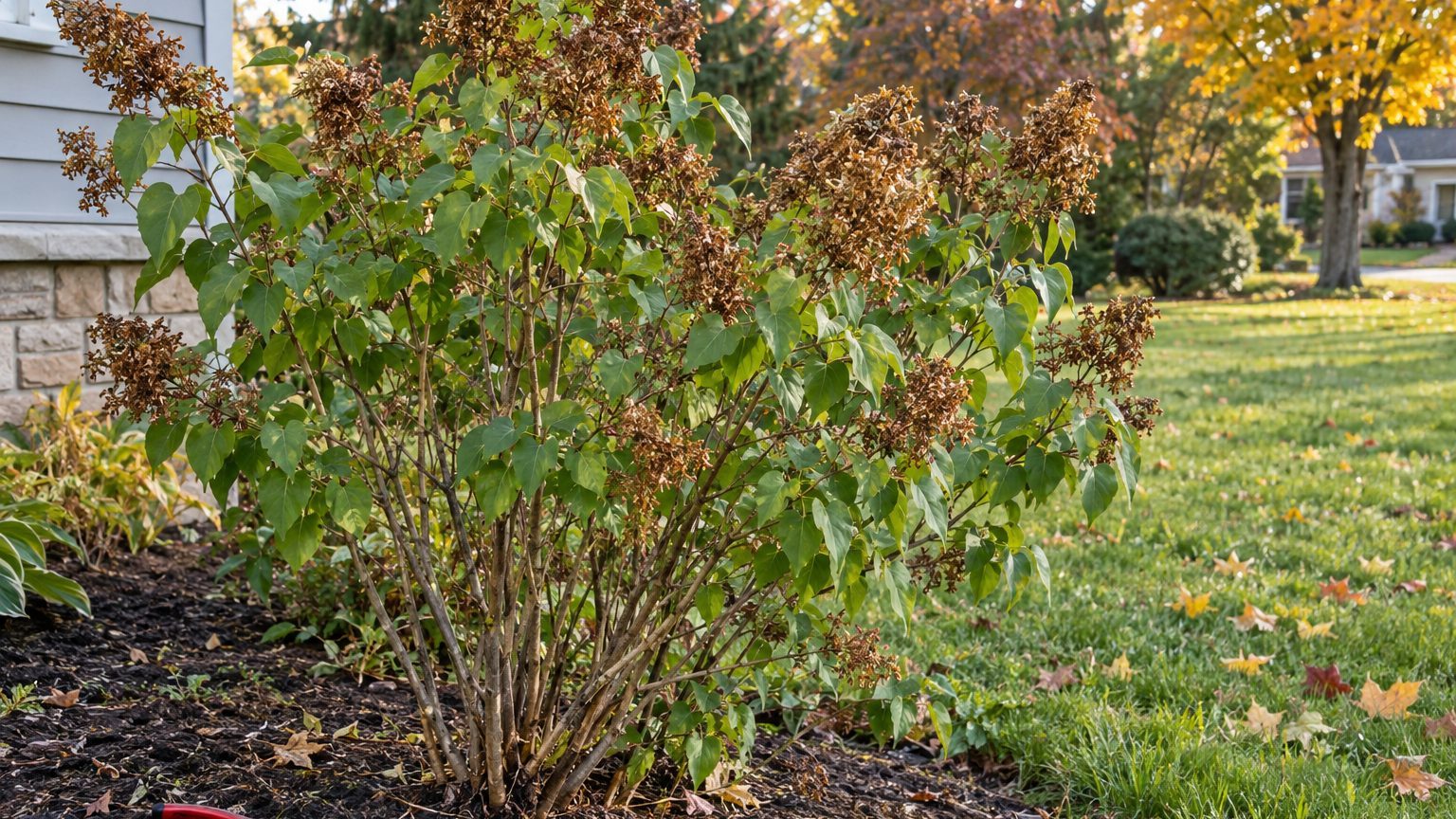
Lilac blooms fade to brown in the New Mexico spring, and that is the moment the pruning shears come out. The cut belongs right after the last flowers drop, because next year’s buds start forming soon afterward.
When to Prune Lilacs in New Mexico

Prune lilacs in New Mexico right after the last flowers fade. The bloom follows the local spring, so the sign in the shrub matters more than a date on the calendar.
| Type of pruning | When in New Mexico | Why |
|---|---|---|
| Routine shaping and removal of spent flower clusters | Right after the last flowers fade | The shrub sets next spring’s flower buds in summer, soon after it blooms |
| Cuts in late summer, fall or winter | Avoid | They remove the buds that would open the following spring |
Bigger jobs follow the same rule. Thinning out crowded stems on an old shrub still belongs right after bloom, since a heavy cut at any other time takes flowers with it. Lilacs also need a cold winter rest to mature their buds, so they do best where winters bite and struggle in hot, humid summers. In the warmer parts of New Mexico a lilac may flower poorly no matter how well it is pruned.
New Mexico — the year and the numbers
- State
- New Mexico
- USDA zones
- 4b-9a
- Last spring frost
- March 31 to April 12
- First fall frost
- October 29 to November 9
- Annual rain
- 9 in
- Lawn zone
- transition-season
- Source
- NOAA NCEI U.S. Climate Normals 1991-2020, 32F freeze probabilities · Albuquerque
How to Tell When Your Lilacs Are Ready to Prune
The shrub gives clear signals, and they matter more than any date.
- The flower clusters turn brown and the petals drop, which means the show is over and the shears can come out.
- Small green seed capsules begin to form where the flowers were, another sign that the bloom has ended.
- Scattered brown flower clusters among the green leaves show that the bloom is fading; wait until the last flowers are spent before pruning.
- Lilacs around your neighborhood have finished blooming, a useful cue in a state where spring arrives at different times in different yards.
- Fresh shoots appear below the spent clusters, a reminder that the plant is already preparing next year’s flower buds, so cut soon and keep the cuts modest.
Once these signs show up, the window is open, and it closes as summer moves on.
Should You Prune Lilacs in Fall or Winter in New Mexico?
No. Cutting in fall or winter takes off the buds that would have opened the next spring, and the shrub will leaf out but bloom little or not at all.
A late-winter reshaping cut works the same way. It tidies the shape, yet it costs that spring’s flowers, because the buds are already on the stems you are removing. Dead or broken wood can come out at any time, since it carries no flowers to lose.
If a lilac has grown too tall or leggy, wait for bloom to finish and make the cuts then, accepting fewer flowers while the shrub recovers.
How Lilac Pruning Time Shifts Across New Mexico
New Mexico covers cold mountain country and warm desert valleys, with USDA hardiness zones running from 4b to 9a, so the moment your lilacs finish blooming depends on where you garden.
- Taos and Santa Fe: Winters are cold, so lilacs get the chill they need and bloom reliably. Spring comes later at higher elevation, and so does the pruning.
- Albuquerque and the Rio Grande Valley: Bloom arrives earlier than in the mountains, and pruning follows soon after the flowers fade.
- Las Cruces and the warm south: Winters are milder, so common lilacs may flower poorly. Varieties sold as Southern lilacs, or Descanso hybrids such as Angel White and Blue Boy, are worth trying, and they are pruned right after their own bloom.
Whatever your location, the rule stays the same: wait for the flowers to finish, then cut.
Where to Get Lilac Advice in New Mexico
Local conditions vary a lot from one New Mexico town to the next, and the right help is close at hand. New Mexico State University Cooperative Extension offers garden guidance for the state, and your county office knows your area.
- The state extension site has plant care information, so check it before choosing a lilac variety for a warm yard.
- Your county extension office can tell you which lilacs do well locally, so call before planting or buying.
- Master gardener volunteers through the county office can look at a shrub that will not bloom, so bring photos in spring when the buds should show.
Common Questions
Which Lilacs Suit Warmer Parts of New Mexico?
Look for early-blooming varieties labeled Southern lilacs or lilacs for the South. They usually grow and bloom, though they are less fragrant than the classic common lilac. Descanso hybrids such as Angel White and Blue Boy are also worth trying. Even low-chill types do best with a cold winter rest.
Why Is a Lilac Leafy but Not Flowering?
Check where the shrub grows and when it was last cut. A lilac in a warm yard with mild winters may not get enough chill to mature its buds. A shrub that was pruned in late summer, fall or winter loses its buds the same way. Warm winters and poorly timed pruning can also work together.
Does a Late Spring Frost Change When to Prune?
No. Frost marks the risk of cold nights, not the day to cut. In Albuquerque the last spring frost falls between March 31 and April 12; suburban and rural yards often see it later, especially at elevation, so check the timing for your county. Prune when the flowers fade, whenever that happens in your yard.