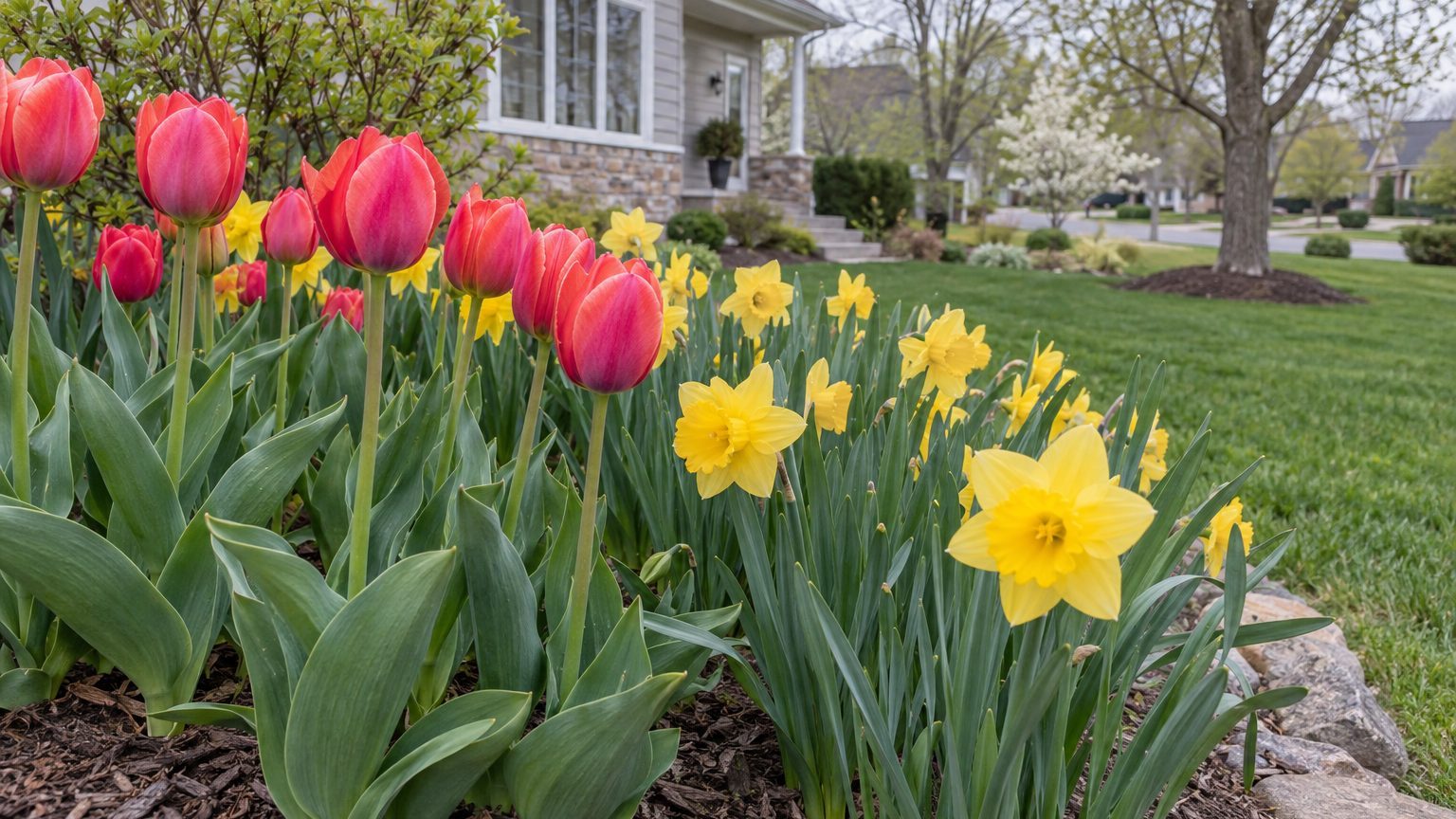
Daffodil shoots pushing through last year’s leaf litter are an early green sign of spring in Minnesota, made possible by what happened in the ground months earlier. The bulbs went in during autumn, well before the soil froze.
When to Plant Tulips and Daffodils in Minnesota

Plant tulips and daffodils from September through October, with mid-September through mid-October the sweet spot, so roots settle in four to six weeks before the ground freezes. A bulb’s year here runs like this:
- In late summer, shop for bulbs while selection is wide, and keep them somewhere cool and dry in a paper or mesh bag until planting day.
- In September, there is no need to chill anything in the refrigerator, because Minnesota winters supply all the cold the bulbs need.
- From mid-September into October, plant once the soil has cooled below about 60°F, which gives roots time to form without tempting the bulbs to sprout before winter.
- After the ground freezes, spread a layer of mulch over the bed so the soil stays evenly cold and does not heave during winter thaws.
- Daffodils and tulips bloom in April and May as the soil warms.
In the Twin Cities, the first fall frost typically arrives between October 11 and October 23, a useful marker for how little time is left once October is underway. Minnesota spans USDA hardiness zones 3a to 5a, so the north and the south run on different clocks, as the regional section explains.
Minnesota — the year and the numbers
- State
- Minnesota
- USDA zones
- 3a-5a
- Last spring frost
- April 17 to April 30
- First fall frost
- October 11 to October 23
- Annual rain
- 32 in
- Lawn zone
- cool-season
- Source
- NOAA NCEI 1991-2020 Climate Normals, 32F freeze probabilities · Minneapolis
Which Spring Bulbs Do Best in Minnesota?
Daffodils are the dependable choice, since they live longer than tulips and animals leave them alone. Alliums are easygoing too. Tulips bloom beautifully but often fade after a few years, and crocus tend to become a snack for wildlife.
Most hardy bulbs evolved in dry, Mediterranean-type climates, so heavy, wet clay soil is hard on many of them, hybrid tulips especially. Winter cold is not the issue here, since Minnesota delivers plenty of it.
| Bulb type | How it does in Minnesota | Why |
|---|---|---|
| Daffodils | Long-lived and more reliable than tulips | Animals skip them, and they last longer in soil than tulips |
| Hybrid tulips | Often short-lived, so treat them as annuals if need be | Years of hybridizing weakened their return, and wet heavy soil shortens their life |
| Species tulips | May return better than hybrids | Shorter plants with smaller flowers, closer to wild tulips |
| Alliums | Easy and forgiving | Needs winter chill to bloom |
| Crocus | Pretty but often eaten | Voles, squirrels, rabbits and deer go after them |
Hyacinths follow the same fall planting schedule as tulips and daffodils. They also need a long winter chill, which Minnesota provides without help.
When to Plant, Chill and Care for Spring Bulbs in Minnesota
Bulb care here comes down to planting in autumn, doing nothing about chilling, and leaving the leaves alone after bloom. Each one has a sign you can read in the yard as well as a month.
Minnesota gardeners can skip refrigerator chilling. Most spring bulbs need about 12 to 16 weeks of cold to flower, and a Minnesota winter in the ground covers that easily.
| Task | Best timing in Minnesota | Why then |
|---|---|---|
| Plant tulips, daffodils, crocus and hyacinths | September through October, once soil is below 60°F | Roots form before the freeze, and bulbs stay put instead of sprouting in fall |
| Plant alliums | September through October | They are less picky about timing than other bulbs |
| Chill in the refrigerator | Not needed | The ground supplies the cold |
| Leave the foliage after bloom | Until the leaves turn brown, after April and May flowers fade | Green leaves feed the bulb for next year |
After bloom, remove only the faded flowers and let the leaves yellow and brown on their own. Folding or braiding them early costs the bulb the energy it needs to flower again.
How Bulb Planting Time Changes Across Minnesota
Minnesota is long, and the same bulb calendar slides earlier as you move north, because frost and a frozen ground arrive sooner there.
- Twin Cities: The metro area is the mild part of the state, so planting can comfortably run into the later part of the usual window, with the soil cooling gradually through October.
- Northern Minnesota, including Duluth and the Iron Range: Cold arrives sooner and winter lasts longer, so aim for the early end of the planting window and get bulbs in the ground before the soil hardens.
- Southern Minnesota, including Rochester and Mankato: The season stretches somewhat longer than in the north, which leaves more room to plant in October, though frozen soil still ends the job.
Wherever you live, watch the soil as much as the calendar, since a cold snap can close the window earlier than expected.
Where to Get Bulb Advice in Minnesota
Local help can answer questions about a bed that never flowers or soil that stays soggy. University of Minnesota Extension publishes guidance written for Minnesota conditions.
- The extension website has planting guides and plant-problem pages you can read any time of year, especially in late summer before you buy bulbs.
- Your county extension office can point you to a soil test and help diagnose a bed where bulbs keep failing, which is worth doing before the next planting season.
- Bring sample bulbs and a description of the bed to the office, then use the answer to decide where to plant when the soil cools in September.
Common Questions
Can You Plant Tulips and Daffodils in the Same Bed?
Yes. Tulips and daffodils go in during the same fall window, and their bloom overlaps in April and May. Daffodils remain dependable as tulips fade over time.
Can You Plant Spring Bulbs in Spring in Minnesota?
Bulbs that miss their cold winter will not flower on schedule, so spring planting of tulips and daffodils is a poor bet. The recommended planting window is September through October, while the ground can still be dug.
What Should You Do If You Find Bulbs After October?
Do not treat planting after October as part of the regular schedule; aim for September or October.