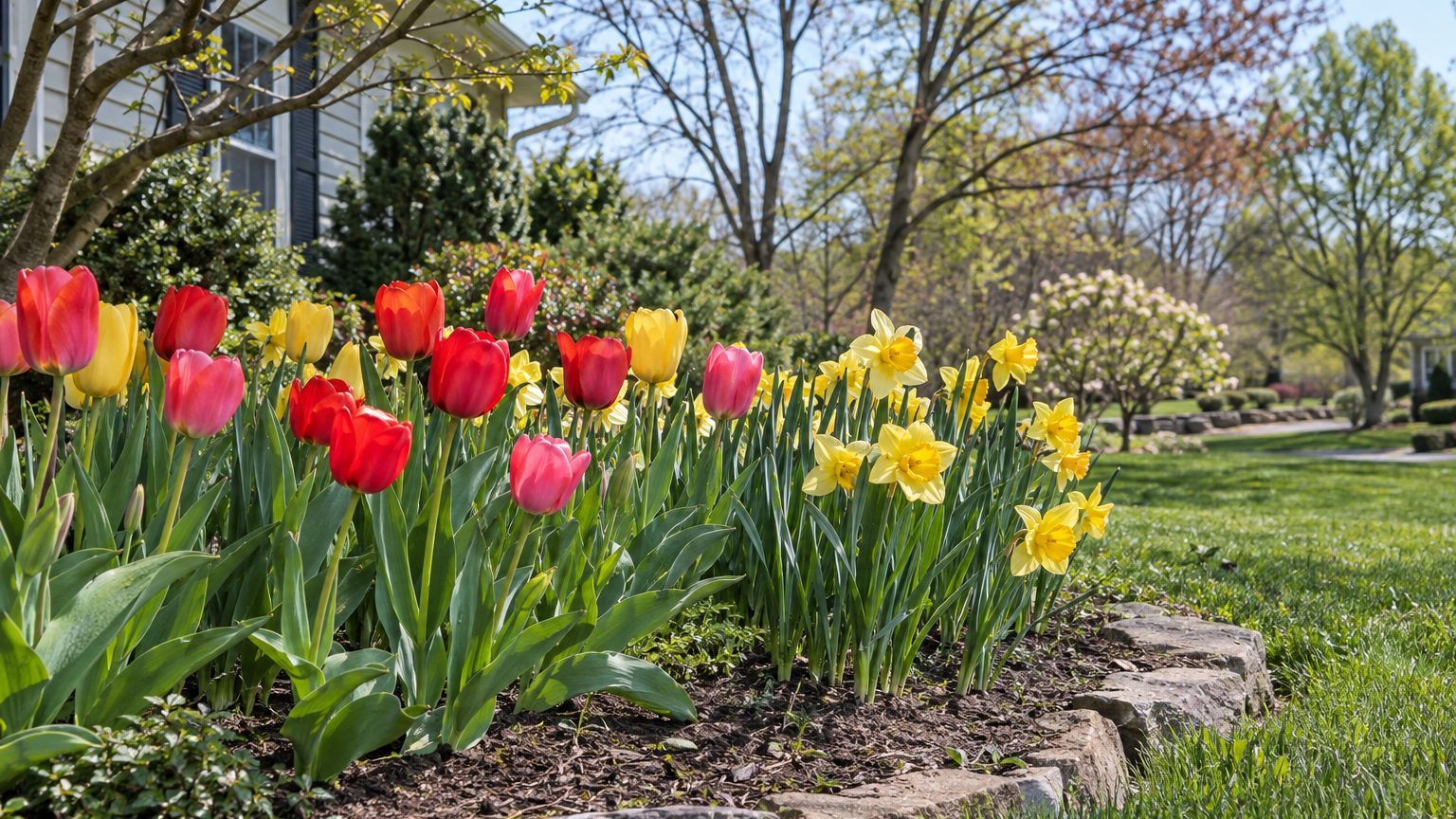
Green daffodil tips poke through the mulch while patches of snow still sit in the shade, and tulips follow once the soil has truly warmed. In Minnesota the show lands in spring, with timing that shifts by a week or so depending on the year and on where your yard sits.
When Do Tulips and Daffodils Bloom in Minnesota?

Tulips and daffodils bloom in Minnesota in April and May. Peak tulip color runs from late April to mid-May, though a cold spring pushes it later and a warm one pulls it forward.
| Bulb | When it blooms in Minnesota | What sets the timing |
|---|---|---|
| Daffodils | April to May | How fast the soil warms in your part of the state |
| Tulips | April to May, peak from late April to mid-May | Spring temperatures that year and the spot in the yard |
Crocus, hyacinths and alliums belong to the same long succession, which opens with snowdrops and winter aconites and closes with alliums. A south-facing wall gives you flowers sooner than a shaded bed on the north side of the house, even a few steps away.
Minnesota — the year and the numbers
- State
- Minnesota
- USDA zones
- 3a-5a
- Last spring frost
- April 17 to April 30
- First fall frost
- October 11 to October 23
- Annual rain
- 32 in
- Lawn zone
- cool-season
- Source
- NOAA NCEI 1991-2020 Climate Normals, 32F freeze probabilities · Minneapolis
How to Tell Your Bulbs Are About to Bloom
Bulbs announce themselves in the bed long before the first petal opens, and a few quick checks tell you how close you are.
- Pointed green tips breaking the surface mean the bulb has woken and roots are working, so pull back heavy winter mulch gently to let light in.
- Leaves that widen and stand taller show the plant is building toward flower stems, and a late snow at this stage rarely hurts them.
- A bud rising out of the center of the leaf rosette means bloom is close, and daffodils and tulips both show this clearly.
- Buds that swell and take on color at the tip tell you the flowers will open soon, so this is the moment to plan a bouquet or a photo.
- Foliage that appears but no buds at all usually points to a bulb that is worn out or too shaded, which is common with older hybrid tulips.
A bud that stays tight through a cold snap is simply waiting, and it opens quickly once the days warm.
What to Do After Tulips and Daffodils Bloom in Minnesota
Snip off the faded flowers and leave everything else alone. The leaves collect sunlight and send the energy down into the bulb, which is what pays for next year’s bloom, so they stay on the plant until they turn yellow and then brown. Never tie them in knots or cut them while they are green, however untidy the bed looks for a while.
Tulips are often short-lived in the garden, while daffodils last longer and are the more reliable perennial bulb. Hybrid tulips have lost some of their ability to come back year after year through generations of breeding. In Minnesota, heavy wet clay is one reason hybrids may return for only a few years, especially when thirsty annuals are planted right on top of them.
If you want tulips that return, shorter species tulips with smaller flowers may work better, or you can treat hybrid tulips as annuals and replace them in fall. Tuck daylilies or other leafy perennials in front of the bed, and they will hide the fading bulb foliage while it finishes its work.
How Bloom Time Shifts Across Minnesota
The Twin Cities are the mild south of the state, and bloom moves later as you travel north or toward Lake Superior.
- Twin Cities: This is the mild south, so tulips and daffodils here open earlier than they do farther north, and a sunny spot near the house often leads the neighborhood.
- North Shore of Lake Superior: The big lake keeps the shoreline cool through spring, so buds hold back and flowers open noticeably later than in the metro area.
- Northern Minnesota: Winters are tighter and spring arrives later, so expect bloom to slide toward May and the peak to sit later than in the south.
Minnesota also spans a wide range of hardiness zones in the USDA system, so a bulb that shines in St. Paul may need a more sheltered spot up north.
Where to Get Bulb Advice in Minnesota
For questions about varieties, soil or a bed that stopped blooming, the state’s land-grant extension service is the place to start. University of Minnesota Extension publishes research-based plant guidance, and your county has local help as well.
- University of Minnesota Extension has articles on bulb care and garden problems, and it is worth a visit in fall before you buy.
- Your county extension office can point you to local master gardeners who know how bulbs behave in your soil, so call when leaves appear but flowers do not.
Common Questions
Do Deer and Squirrels Eat Tulips and Daffodils?
Voles, squirrels, rabbits and deer eat tulips and crocus, while daffodils are left alone. Alliums have a slight skunky odor that repels rodents and deer, so they make a safe neighbor for tulips.
Do Alliums Need Winter Cold to Bloom?
Alliums, like other spring bulbs, need the cold of winter to bloom. In Minnesota, they are described as less picky than other bulbs and can go in the ground in September or October.
Can You Still Plant Bulbs After October?
Yes, as long as the ground can be dug. Mid-September through mid-October is the usual planting time in Minnesota, and a bulb still in the bag is better planted late than stored over the winter.